


Drop-in refrigerated display cases are designed to maximize display and freshness in compact stores, contributing to sales while easing staff workload. They differ from countertop or freestanding units by utilizing the interior of the counter space for storage, which minimizes clutter.
Drop-in refrigerated display cases are commonly used in various commercial settings, including salad bars, buffets, hotels, sushi restaurants, and Asian seafood displays, as well as for pre-packaged meals and snacks in convenience stores, and for desserts and beverages in cafes, bakeries, and other similar establishments.
The key benefits of using drop-in refrigerated display cases are seamless integration into counters or serving stations, consistent temperature control for food safety, enhanced customer visibility and impulse sales, and saving floor space while boosting aesthetics.
The most commonly used types of drop-in refrigerated display cases include flat glass, curved glass, self-service models, employee-service models, refrigerated wells for salads, and full showcase models for desserts or drinks.
5 essential buying considerations you should take into account when purchasing a unit, such as dimensions and cutout requirements, cooling system type (forced air vs. static cooling), display configuration (shelves, pans, lighting), NSF certification and food safety compliance, and energy efficiency and maintenance factors.
Browse top brands and models for drop-in displays to maximize your ROI and enjoy perks such as extended warranties and expansive support networks. Once you have settled on a unit, install it carefully, adhering to proper ventilation requirements and electrical specifications, while considering counter material compatibility and sealing tips.
What are Drop-In Refrigerated Display Cases?
Drop-in refrigerated display cases are compact cooling units designed to be installed directly into countertops or service areas, creating a seamless, built-in appearance and minimizing surface clutter. Drop-in cases are recessed into the counter to save space, unlike countertop or freestanding units, which sit on top of or beside surfaces.
Drop-in refrigerated display cases are ideal for keeping perishable items, such as salads, desserts, ice cream, beverages, and ready-to-eat meals, at chilled temperatures and are visually appealing to browsing customers. The typical applications of drop-in refrigerated display cases include cafés, delis, salad bars, buffets, and convenience stores, as they provide both functionality and a clean, professional aesthetic.
Everyday Use Cases in Commercial Kitchens
Common use cases in commercial kitchens include salad bars in buffets or hotels, sushi or seafood displays in Asian restaurants, pre-packaged meals and snacks in convenience stores, as well as desserts, pastries, and beverages in cafés or bakeries.
- Salad Bars in Buffets or Hotels: Drop-in refrigerated display cases are commonly used in salad bars to keep fresh greens, toppings, and dressings calm and safe for consumption throughout service hours. Greenery can spoil quite easily unless it is appropriately preserved. Leaves can suffer discoloration even before they become inedible, and drive away customers.
A drop-in refrigerated case can prevent such inventory and customer losses. Their built-in design enables easy access and a clean presentation that complements the aesthetics of upscale buffets or hotels. - Sushi or Seafood Displays in Asian Restaurants: These cases are ideal for showcasing sushi rolls, sashimi, and chilled seafood in Asian restaurants while maintaining proper food safety temperatures. The drop-in feature enables chefs to stock up on servings, and curved glass configurations allow customers to enjoy the bright and colorful display.
- Pre-packaged Meals and Snacks in Convenience Stores: Convenience stores can store their grab-and-go items, such as sandwiches, wraps, fruit cups, and beverages, in drop-in cases to make them easily accessible for customers. Their compact and built-in style maximizes limited space while maintaining a professional look. Drop-ins can be easily replenished throughout the day to meet the demands of rush hour.
- Desserts, Pastries, and Beverages in Cafés or Bakeries: For cafés and bakeries, drop-in refrigerated cases can be used to display cakes, tarts, parfaits, and bottled drinks attractively. Their well-lit and spacious interior can help keep your products fresh while encouraging impulse purchases, thanks to the inviting layout.
What are The Key Benefits of Using Drop-In Refrigerated Display Cases?
4 key benefits of using drop-in refrigerated display cases are: seamless integration into counters or serving stations, consistent temperature control for food safety, enhanced customer visibility and impulse sales, and saves floor space while boosting aesthetics.
- Seamless Integration into Counters or Serving Stations: Drop-in cases are designed to be built directly into existing surfaces, offering a clean, clutter-free appearance that blends effortlessly with the surroundings while utilizing what would otherwise be unused space. This integration is especially significant in front-of-house displays where your unit is subjected to customer scrutiny.
- Consistent Temperature Control for Food Safety: These units are equipped with reliable refrigeration systems that maintain steady, food-safe temperatures. This ensures that perishable items remain fresh and compliant with health regulations throughout service hours, promoting public health and safety. Good units have temperature stabilization features that kick in after the doors or cases are opened and closed to compensate for the lost temperature, which is crucial in display cases as they are used frequently.
- Enhanced Customer Visibility and Impulse Sales: Open or glass-top designs achieve enhanced customer visibility and impulse sales, as drop-in display cases make food items highly visible to customers. When products are placed below eye level and organized, it can encourage impulse purchases, especially for visually appealing items like desserts, salads, or drinks.
- Saves Floor Space While Boosting Aesthetics: Drop-in refrigerated displays are designed to save space since they’re built into counters. They are ideal for small kitchens or high-traffic service areas. Their sleek, minimalist design also enhances the overall look of the service station or display area.
What are The Types of Drop-In Refrigerated Display Cases?
The types of drop-in refrigerated display cases include flat glass, curved glass, self-service, employee-service, refrigerated wells for salads, and full showcase models for desserts or drinks. The type of glass and configuration have a direct impact on display quality and operational ease.
Flat Glass
Drop-in refrigerated display cases with flat glass cases feature a straight, transparent glass front for a clean and modern look. They provide a clear view of displayed items, making them ideal for showcasing desserts, drinks, or packaged foods in a minimalist setup. They usually have sliding, flat glass doors and are often used in grocery stores for grab-and-go items.

Curved Glass
Drop-in refrigerated display cases with curved glass are an excellent format for reducing glare and reflections, while adding a touch of elegance to your display. They are commonly used in bakeries and cafés to enhance the presentation of cakes, pastries, and other chilled goods. They enable stacked displays as well.
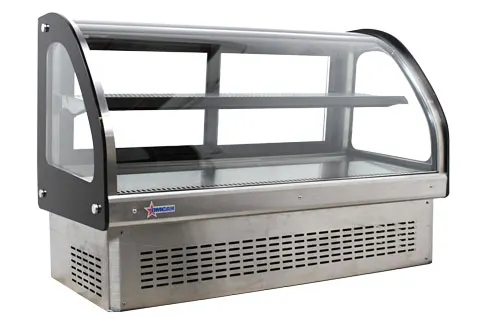
Self-Service Drop-In Refrigerated Display Cases
Self-service drop-in refrigerated display cases are designed to enable customer accessibility and facilitate self-service operation models. They are fully or partially open at the front to allow people to reach in and easily grab ready-to-eat items, such as salads, sandwiches, and beverages, making them perfect for buffets, convenience stores, cafeterias, and hotels where open buffets are a main attraction.

Employee-Service Drop-In Refrigerated Display Cases
Employee service configuration in drop-in refrigerated display cases involves units that are either fully or partially open at the rear, allowing employees to access the interior from behind the counter. They are ideal for delis, sushi bars, and food service lines, where employees constantly restock offerings and are responsible for portioning and serving. This setup facilitates portion control and ensures food hygiene.
Refrigerated Wells for Salads
Refrigerated wells for salads are a form of drop-in refrigerated display case that has open, drop-in cold wells built into countertops to hold salad ingredients or toppings at optimal temperatures. They’re a staple in salad bars and hotel buffets for quick access and customizable combinations.
Full Showcase Models for Desserts or Drinks
Full showcase models for desserts or drinks are specially designed, larger drop-in refrigerated display cases that feature multiple tiers or compartments to display a variety of chilled items, such as cakes, parfaits, or bottled beverages, simultaneously. Their spacious design and clear visibility promote impulse purchases and organized storage while maximizing cleaver space utilization.
What are 5 Important Buying Considerations of Drop-In Refrigerated Display Cases?
Important buying considerations of drop-in refrigerated display cases include dimensions and cutout requirements, cooling system types, display configurations, NSF certification and food safety compliance, energy efficiency, and maintenance factors. Taking these into account will ensure you end up with a good unit that can meet your needs and last you a long time.
- Dimensions and Cutout Requirements: Dimensions and cutout requirements ensure that the unit fits seamlessly into your existing counter or service station by checking both the external dimensions and the required cutout size. Accurate measurements are crucial for a secure and professional installation. Your provider may ask you to take the measurements yourself; request additional guidance if you are unsure about the results.
- Cooling System Type (Forced Air vs. Static Cooling): Cooling system types for drop-in refrigerated display cases are either forced air systems or static cooling systems. Forced air systems circulate cold air evenly, providing consistent cooling, which is ideal for open or high-traffic displays, such as self-service setups. Static cooling, on the other hand, offers quieter operation and is better suited for enclosed cases with limited air movement needs, such as flat glassed units mainly used for ingredient storage.
- Display Configuration (Shelves, Pans, Lighting): Display configurations for drop-in refrigerated display cases encompass shelves, pans, and lighting considerations. You need to plan how to present your products in a way that makes them appealing to your customers. In this regard, top options include adjustable shelves, GN pans, and integrated LED lighting, all of which impact visibility, accessibility, and the overall look of the display. With all these combined, you can ensure that your products are seen and ready to make an impact.
- NSF Certification and Food Safety Compliance: NSF certification and food safety compliance in drop-in refrigerated display cases signify that the unit meets health and safety standards for commercial food service operations. Certification ensures that the case maintains safe temperatures and is made from food-safe materials.
- Energy Efficiency and Maintenance Factors: Examining energy efficiency and maintenance factors in drop-in refrigerated display cases can provide valuable insights into long-term operational costs. They can significantly reduce electricity spending and carbon footprint, as well as the likelihood of frequent breakdowns. Also, evaluate ease of cleaning, accessibility of components, and the availability of replacement parts to ensure long-term reliability and low maintenance.
Top Brands and Models to Consider
Continental Refrigeration, Turbo-Air, Victory Refrigeration, and Coldline are the top brands to consider for drop-in refrigerated display cases.
Continental Refrigerator
Continental Refrigerator units are known for their durability, high-performance refrigeration equipment, and long-term reliability. Continental units are ideal for high-volume commercial use. Their most popular models include the following:
- Continental RA68N-D Drop-In Refrigerated Display Case: Ideal for use in salad bars or buffets in restaurants and hotels.
- Continental D1RXNSA Drop-In Refrigerated Display Case: A compact option suitable for grab-and-go setups in cafés and convenience stores.
Victory Refrigeration
Victory is known for reliable, NSF-certified units designed with energy efficiency in mind.
- Victory VWRD-60HC Drop-In Refrigerated Display Case: A dual-well refrigerated drop-in unit, ideal for storing salad ingredients or toppings in fast-paced kitchens.
- Victory VWRD-27HC Drop-In Refrigerated Display Case: Compact and perfect for countertop installation in grab-and-go or deli counters.
Turbo Air
Turbo Air provides sleek, modern refrigerated display solutions with efficient cooling systems and is endorsed by world-renowned chefs.
- Turbo Air TOS-40NN-S Drop-In Refrigerated Display Case: A stylish open-display model for bakeries or self-service beverage counters.
- Turbo Air TOM-50MW(B)-N Drop-In Refrigerated Display Case: A multi-level drop-in display merchandiser, ideal for displaying drinks, pre-packaged meals, or desserts.
Coldline
Coldline is a budget-friendly yet dependable choice. Coldline offers flexibility for small businesses and cafés.
- Coldline DC80-SS 79” Drop-In Refrigerated Display Case: Great for employee access and daily stocking of sandwiches or snacks in delis and casual eateries.
- Coldline SDC71 71” Drop-In Refrigerated Display Case: Ideal for under-counter drop-in installations in space-limited bakery setups.
Installation Tips for Drop-In Display Cases
Installation tips for drop-in display cases typically include meeting proper ventilation requirements and electrical specifications, as well as considering counter material compatibility and sealing details.
Drop-in display cases need adequate airflow around the unit to prevent overheating and ensure efficient cooling. Ensure the counter cutout allows for ventilation around the condenser and compressor, typically located at the front, back, or bottom of the unit. Avoid placing units in tightly enclosed spaces without airflow.
The rule of thumb in these situations is typically 2-4 inches (5.08-10.16 cm) off the surrounding surfaces. Then, verify the unit’s voltage and amperage requirements before installation. Most commercial models require a dedicated circuit and should be connected to a properly grounded outlet.
Always follow the manufacturer’s guidelines or consult a licensed electrician to avoid power issues, as any mishaps on your part may void the warranty. Finally, the counter surface must be able to support the weight and operation of the unit. Materials like stainless steel, granite, or sealed wood are best. Apply a food-safe, waterproof sealant around the edges of the cutout to prevent moisture seepage and maintain hygiene standards. Getting professional help for sealing is your best bet for long-lasting results.
FAQs About Drop-In Refrigerated Display Cases
What’s the difference between drop-in and built-in?
The primary difference between drop-in and built-in display cases lies in their design. Drop-ins are designed to be inserted into a cutout in an existing counter or service area, sitting within the surface. Built-in units refer to any refrigeration equipment permanently installed as part of the cabinetry or structure, often with more complex integration and custom cabinetry work. They tend to be on the more expensive side and require more careful maintenance.
How do I clean and maintain a drop-in unit?
You clean and maintain a drop-in unit by regularly wiping down surfaces with a mild detergent and food-safe cleaner. You should clean the condenser coils monthly to maintain energy efficiency, and check the gaskets and seals for wear to prevent insulation leaks. Follow the manufacturer’s guidelines for deeper maintenance, such as defrosting or filter replacement if applicable, and do so regularly.
Can I retrofit a counter with a drop-in display?
Yes, you can retrofit a counter with a drop-in display as long as the counter has sufficient space and can structurally support the unit. You’ll need to cut an opening according to the manufacturer’s specifications and ensure that there’s adequate ventilation and electrical access.
Do these cases require drainage?
Yes, some cases do require drainage, particularly those that utilize cold wells or where condensation is likely to accumulate. Check the unit’s specifications to determine if drainage is needed, and ensure that the drain and plumbing are correctly routed to comply with health codes and prevent water damage.
Conclusion
Drop-in refrigerated display cases are a smart, space-saving solution for any commercial kitchen, café, deli, or convenience store that needs to keep food fresh and present it attractively.
Their seamless integration into counters, consistent cooling, and customer-friendly design make them an ideal refrigerated display case choice for both back-of-house efficiency and front-of-house appeal. With various styles and configurations, ranging from curved glass showcases to salad wells and self-service models, operators can find a unit tailored to their specific needs.
By carefully considering dimensions, cooling types, display options, and certifications, and by selecting from trusted brands, you can ensure a reliable investment that enhances both workflow and sales.
Proper installation and maintenance further extend the life of your unit, protecting both your food and your bottom line. Whether you’re upgrading your buffet station or outfitting a new café, drop-in refrigerated display cases deliver the professional look, functionality, and performance modern foodservice businesses demand.

