


Draft beer systems are a cornerstone of serving fresh, high-quality, uncontaminated beer in bars, restaurants, and even at home. They enable users to dispense beer from a keg without exposing it to external contaminants. This isolation protects the carbonation of the beer, keeping it fresh, flavorful, bubbly, and healthy. While a kegerator might be the first thing that pops into your head when you think of draft beer systems, Glycol-cooled systems, air-cooled systems, direct draft systems, long draw systems, portable draft systems, mobile draft systems, and custom configurations are the central draft beer systems.
Draft beer systems are all united under one title by their objective to keep beer safe and tasty, and their standard components include a keg, a CO2 tank, draft lines, coolers, faucets and taps for dispensing, regulators and gauges, couplers and connections, and glycol systems. Regardless of its format, a well-maintained system within your establishment is crucial for achieving and maintaining optimal beverage quality.
Bars, restaurants, hotels, and clubs where beer is a top choice among customers require a draft beer system in their setup to achieve maximum customer satisfaction and ensure the security of their beverages, which are often purchased in bulk. A significant portion of them could spoil if not properly preserved.
Draft beer temperature control mechanisms play a crucial role in achieving this objective by creating optimal serving temperatures, offering various cooling system types, implementing temperature monitoring, and managing glycol systems. Understanding temperature maintenance and troubleshooting cooling issues helps keep your operations running smoothly.
Gas systems and pressure controls are the second most important technical components of draft beer systems, and they require you to know about CO2 systems, mixed gas systems, pressure requirements, regulator settings, gas blending, and safety considerations surrounding these matters.
Draft line considerations, including line length calculations, material types, insulation requirements, installation best practices, line resistance factors, and cleaning access points, are the third most important component you should learn about before installing and operating a draft beer system in your establishment. In this sense, proper staff training can save you a lot of trouble and make your operations run more smoothly.
Once you have obtained the necessary information, install your unit in your bar setup. Take space planning, power requirements, ventilation needs, line installation, drainage systems, and safety compliance into consideration when installing a draft beer system in your commercial kitchen. To achieve higher efficiency and increased customer satisfaction, properly install and integrate the unit with other bar equipment.
To maintain the benefits from this investment, you need to keep your unit clean and address potential problems promptly. Establish a regular cleaning frequency, develop cleaning procedures for your staff, conduct periodic preventive maintenance, employ sanitization methods, perform regular equipment checks, and create a troubleshooting guide for minor issues. Once everything is in order, learn proper pint-pouring techniques, beer styles, and use the correct glassware to observe a significant rise in sales.
What are Draft Beer Systems?
Draft beer systems are commercial units designed to hold, cool, maintain, and dispense draft beer without exposing it to air and external contaminants that might affect the quality and taste of the beer. Almost all draft beer systems possess the same 10 components, including a keg, a CO2 tank, draft lines, coolers, faucets and taps for dispensing, regulators and gauges, couplers and connections, and glycol systems.
Types of Draft Beer Systems
8 main draft beer system types: direct draw systems, long draw systems, kegerators, portable draft systems, glycol-cooled systems, mobile draft systems, custom configurations, and air-cooled systems. Each system has unique applications. Portable draft systems are ideal for seasonal or mobile catering operations, and kegerators are perfect for large pubs.
1. Direct Draw Systems
Direct draw systems place the kegs close to the taps, keeping the beer line short for efficient and quick service. They are ideal for home use, as well as bars and restaurants where back bar space is sufficient to accommodate the keg directly over the tap.
2. Long Draw Systems
In long draw systems, beer kegs are placed remotely and connected to the bar area through insulated beer lines. These systems free up space in the back bar area, making it easier to incorporate a draft system into a bar setup. Long draw systems utilize CO2 or nitrogen to push beer from the keg to the tap, maintaining carbonation. They are perfect for large bars where multiple kegs need to be in use simultaneously, as well as stadiums, breweries, and bars where kegs should be stored out of the way from the serving area.
3. Kegerators
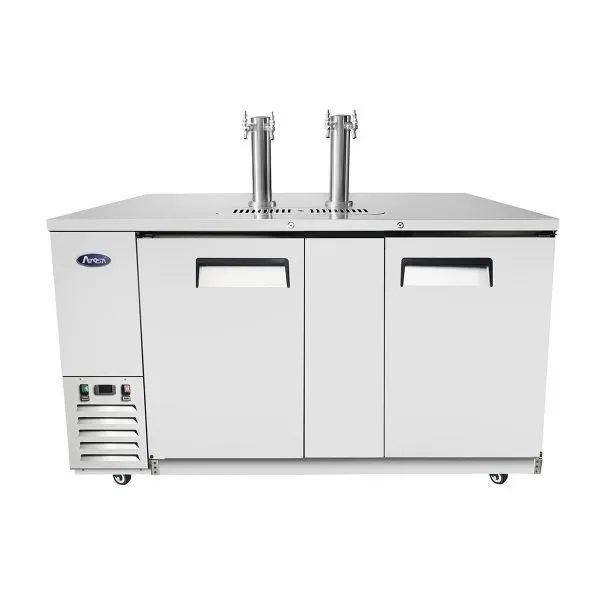
Kegerators are refrigerated draft beer systems designed to hold one or more kegs in a single setup. They are easy to use and can be plugged in and operated right out of the box. Keg coolers can be used in home bars, small-scale pubs, and office settings with weekly happy hours.
4. Portable Draft Systems
Portable draft systems are designed to be lightweight and mobile, making them ideal for use in catering events and mobile stations. Their CO2 tanks and hand-pump mechanisms are comparatively small, which helps decrease the unit’s weight. They can be easily set up and taken apart for use elsewhere. They are ideal for caterers, outdoor event organizers, food trucks, festivals, and any temporary setup.
5. Glycol-cooled Systems
A glycol-cooled systems use chilled glycol lines along beer lines to maintain consistent temperatures from kegs to tap. These systems are often employed in long draw systems, as the distance from the keg to the tap is longer, and the beer is exposed to room temperatures more frequently. This method is essential in bars and large restaurants with multiple long-draw draft beer systems.
6. Mobile Draft Systems
Mobile draft systems are self-contained units that integrate refrigeration, taps, and kegs within a single cart or vehicle. They often feature battery or generator-powered cooling to discard the need for a plug. They can be used in weddings, corporate events, festivals, pop-up shops, and all outdoor events where beer is a must.
7. Custom Configurations
Custom draft beer systems are tailored to the needs of the buyer. They are primarily purchased for high-end bars and craft breweries where beer and customer satisfaction take center stage. You can collaborate with brands like Perlick that manufacture custom bar equipment for exclusive establishments.
8. Glycol-Cooled vs. Air-Cooled Systems
Glycol-cooled vs. air-cooled systems are a question of insulation for the beer line. Glycol-cooled systems are ideal for long beer lines and large venues where the beer line is exposed to heat. Air-cooled systems rely on air circulation to keep the beer cool, and they are less costly compared to glycol-cooled models. While their insulation is not as effective, they are perfectly functional in short beer lines that are under 25 feet (7.6 meters) in length.
8 Essential Components of Draft Beer Systems
8 essential components of draft beer systems, including keg storage and cooling, CO2 and gas systems, draft lines and tubing, coolers, faucets and taps, regulators and gauges, couplers and connections, and glycol systems. Combined, these elements make up great draft beer systems capable of keeping your beer in top condition.
1. Keg Storage and Cooling
Keg storage and cooling are the foundation of draft beer systems. They are used to hold and cool the beer till it is dispensed. Their temperature settings are typically 36-38°F (2-3°C) to maintain the perfect serving temperature. These temperatures also prevent spoilage and excessive foaming that could destroy the entire keg.
2. CO2 and Gas Systems
CO2 and gas systems push the beer from the keg to the tap while preserving the necessary carbonation for the beer’s flavor. The type of gas used in the unit depends on the length of the beer line and the unit’s configuration.
3. Draft Lines and Tubing
Draft lines and tubing are where the beer travels from the keg to the tap. Suppose the lines and tubing are made of high-quality materials such as vinyl or barrier tubing. In that case, the beer will be protected from oxygen exposure, which may cause bacterial buildup and loss of flavor. It is essential to have the proper length and diameter for the specific unit to achieve the necessary pressure, which facilitates the beer flow.
4. Coolers
Coolers are used to maintain the temperature of the keg and the lines. Large draft beer systems can be stored within walk-in coolers to save money and space. Smaller kegerators and air-cooled boxes can serve the same purpose in small-scale businesses.
5. Faucets and Taps
Faucets and taps are where the beer is dispensed, and they are designed to control the pressure of the pour and the flow of the beer. They come in various models, such as flow-control and nitro-faucets, for different needs. Stainless steel is the top material for taps, thanks to its durability and antimicrobial properties.
6. Regulators and Gauges
Regulators and gauges are used to control gas pressure and ensure proper beer flow and carbonation levels. With dual-gauge regulators, you can monitor both the tank pressure and the output pressure and adjust them as needed.
7. Couplers and Connections
Couplers connect the keg to the draft system, allowing gas to enter and beer to flow out. Different keg styles require specific couplers (e.g., D, S, A, G, U, M types) based on the brewery and region.
Different breweries and regions utilize various keg valve types, making it crucial to select the correct coupler. Here are the 6 most commonly used couplers:
- D-Type (American Sankey): Most common in the U.S., used by domestic breweries such as Budweiser, Coors, and Miller.
- S-Type (European Sankey): Common for many European beers, including Heineken, Stella Artois, and Amstel.
- A-Type (German Slider): Used for brands like Hoegaarden, Franziskaner, and Bitburger.
- G-Type (Guinness Type): Used for some British and European beers, including Guinness and Boddingtons.
- U-Type (U System): Common for some specialty European kegs like Harp and some varieties of Guinness.
- M-Type: Less common, mainly used for certain German breweries like Schneider Weisse.
8. Glycol Systems
In long-draw draft beer systems, glycol cooling systems keep beer lines chilled over long distances. A glycol chiller circulates a refrigerated liquid alongside the beer lines to maintain consistent temperatures.
Draft Beer Temperature Control
- Optimal serving temperatures: The optimal serving temperatures for beer vary depending on the type of beer, as they are best suited to bring out its best flavors and textures. Lagers and pilsners should be served between 36-38°F (2-3°C) to maintain their crisp and refreshing qualities.
Ales, such as pale ales and IPAs, are best served slightly warmer at 38-45°F (3-7°C) to allow their flavors to develop. Stouts and porters benefit from an even higher range of 45-50°F (7-10°C) to bring out their rich malt complexity. Nitro beers, such as Guinness, should be stored between 38°F and 42°F (3-6°C) to preserve their creamy texture. For most commercial draft systems, maintaining beer at 36-38°F (2-3°C) is the standard to ensure consistency and prevent foaming. - Cooling system types: Several types of cooling systems are used to regulate the temperature of draft beer, including direct draw cooling systems, kegerators or walk-in coolers, glycol-cooled systems, and air-cooled systems. Each system has its advantages depending on the setup and operational needs. They all aim to keep the beer at the desired temperature until it reaches the tap.
Glycol-cooled systems use glycol for cooling, while air-cooled systems circulate cold air through insulated tubing to maintain the beer at the correct temperature. They are more suitable for shorter runs under 25 feet, and walk-in coolers can hold several kegs. - Temperature monitoring: Monitoring beer temperature is essential to prevent fluctuations that can affect taste and pour quality. Digital thermometers and sensors can be installed in coolers and beer lines to provide real-time temperature tracking. Infrared temperature guns are helpful for quick checks on kegs, lines, and taps.
Glycol chiller readouts display the system’s current temperature, ensuring it operates within the correct range. Regular monitoring helps detect issues early, preventing costly mistakes and maintaining consistent quality. Regularly use external thermometers to check the temperature readings of the installed thermostats. If the installed thermometer malfunctions, your data won’t be helpful and could endanger the entire operation. - Glycol system management: Glycol system management is key to ensuring good pressure and temperature in glycol-based draft beer systems. You should periodically check the glycol levels to prevent overheating and ensure smooth circulation of beer. The glycol-to-water ratio in the tubes should be 35-40%, and you should maintain this ratio for efficient cooling. Inspect and clean glycol lines and tubing regularly to prevent build-ups and avoid malfunctions.
- Temperature maintenance: This ensures that the beer is kept at the optimal serving temperature for maximum customer satisfaction. To this end, you should regularly monitor the thermometers on the kegs and the lines. Kegs should always be stored in a temperature-controlled environment, and beer lines should be properly insulated to minimize temperature fluctuations.
Avoiding excessive movement of kegs helps prevent sudden temperature changes that lead to foaming. Additionally, regular cleaning of beer lines ensures proper beer flow and prevents contamination, which could impact both temperature regulation and beer quality. - Troubleshooting cooling issues: When cooling issues arise, quick troubleshooting is necessary to maintain proper beer temperature and quality. While you should always have professional help in your phone book, common troubleshooting knowledge can save you a lot of time and money. For instance, if beer is coming out warm, the cooler may be set too high, or the glycol system may not be functioning properly. Another common problem is foamy beer. Foamy beer is often a result of warm temperatures or over-carbonation due to improper CO₂ pressure. Frozen beer lines usually indicate that the cooler is too cold or that the glycol mixture is incorrect. If beer tastes off, poor insulation or contamination in the system may be the cause. Identifying and resolving these issues promptly will ensure that your beer is always served at the ideal temperature, preserving both its flavor and consistency.
Gas Systems and Pressure Control
Gas systems and pressure control mechanisms are designed to create and maintain the proper carbonation levels within the beer, ensuring a smooth pour and spot-on flavors, while preventing issues such as excessive foaming or completely flat beer. Pressure controls are essential to ensure that the beer from the keg can flow properly to the tap.
- CO2 systems explained: Carbon dioxide is the primary gas used in draft beer systems since it naturally occurs in beer during fermentation and is responsible for maintaining carbonation and delivering that crisp, refreshing taste. In addition to being accountable for flavor, CO2 is stored in pressurized tanks and is used to push beer from the keg through the draft lines to the tap. Maintaining the correct CO2 pressure is crucial for both flavor and preventing excessive foaming, as well as for the proper functioning of the entire draft beer system.
- Mixed gas systems: Some draft beer setups utilize mixed gas systems, which combine CO2 with nitrogen (N) to achieve specific carbonation levels for various types of beer. Nitrogen is a standard gas used to enhance the texture and mouthfeel of different beverages, including coffee and beer.
A typical mixture in draft beer systems is 75% nitrogen and 25% CO2, often used for stouts, porters, and nitro beers like Guinness to create a smooth, creamy texture. High-nitrogen blends reduce carbonation and allow for a denser, cascading pour, enhancing the beer’s visual appeal and mouthfeel. Mixed gas systems are also used in high-pressure draft systems to prevent over-carbonation in long-draw setups.
- Pressure requirements: Maintaining the correct pressure is crucial for consistent beer quality. CO2 pressure settings depend on factors such as beer style, keg temperature, and the length of beer lines. Most beers require a pressure range of 10-14 PSI (pounds per square inch) at a temperature of 36-38°F (2-3°C).
Beers that require more carbonation, such as wheat beers and some lagers, may need slightly higher pressures. Nitro beers, on the other hand, require higher pressure settings, typically between 25-35 PSI, due to the use of nitrogen gas. Also, as the beer line gets longer, the required pressure will rise as well. - Regulator settings: Gas regulators control the pressure at which CO2 or mixed gas enters the draft system. A regulator consists of an adjustment knob, a pressure gauge, and an output valve that connects to the keg. Primary regulators attach directly to the gas tank and manage the overall pressure, while secondary regulators allow for multiple pressure settings for different kegs in a system.
Properly calibrate the regulators to help maintain stable carbonation levels. Over-carbonation will cause the beer to be foamy, while under-carbonation will cause it to go flat. Since both are unwanted results and technically represent a loss of outstanding inventory, you should ensure the calibrations are accurate. - Gas blending: In advanced draft beer setups, gas blenders are used to create precise CO2 and nitrogen mixtures on-site, eliminating the need for pre-mixed gas tanks. While you can get pre-mixed gas tanks for regular models, if you are serving several different beers with varying degrees of gas requirements, an advanced model with gas blenders is precisely what you need.
By fine-tuning the gas ratio, you can optimize the texture, carbonation, and pouring performance of each beer tap. Gas blending systems ensure consistent quality across all orders. Ensure that your staff are trained on the ratios and adhere to them. Even though an advanced draft beer system with gas blending tends to be more expensive upfront since pre-mixed gas is quite costly, you can easily break even in the long run. - Safety considerations: Safety considerations for handling pressurized gas in a draft beer system include proper staff training and gear, periodical cleanings and maintenance runs, and establishing emergency procedures in advance. Pressurized gas comes with certain risks, such as leaks, equipment malfunctions, and potential health hazards. CO2 leaks can be hazardous in enclosed spaces, as the gas is odorless and can displace oxygen, leading to symptoms such as poisoning, confusion, loss of consciousness, and headaches.
The equipment may malfunction entirely if there is a leak, and this could result in significant repair costs. To prevent these hazards, regular inspections of gas lines, connections, and regulators are a must.Additionally, CO2 tanks should always be stored upright in a secure location, away from heat sources and excessive vibrations, such as stoves and ovens, to minimize the risk of a leak. Ensure the pressure relief valves are in place to prevent over-pressurization, which is often the primary cause of equipment damage or keg ruptures. Regardless of the size and format of your draft beer system, you’ll have to deal with pressurized gas, and proper training of the staff in gas handling and emergency procedures is essential to prevent health and safety hazards.
6 Installation Requirements of Draft Beer Systems
The installation requirements of draft beer systems comprise six main points: space planning, power requirements, ventilation needs, line installation, drainage systems, and safety compliance.
- Space planning: Space planning for draft beer systems is crucial for safely and effectively storing kegs, cooling equipment, gas tanks, and draft lines. Draft beer systems have sizable components that need individual consideration and space allocation. Each component should be easily accessible for use, restocking, and maintenance purposes, and securely attached to the others. Ensure the gas tanks and beer line are positioned away from any heat-generating equipment, such as stoves and ovens, to ensure safety and optimal performance.
- Power requirements: Draft beer systems have several electrical components and require a dedicated power source to function. Read the manufacturer’s guide to your unit to find out the voltage and amperage requirements, and make sure that your power source is capable of meeting those needs. Mobile units will function with a simple plug and low voltages, but larger draft beer systems can have significant energy needs.
- Ventilation needs: Proper ventilation and air circulation are essential to any cooling unit to prevent overheating. All coolers must be 2-4 inches (5.08-10.16 cm) away from the walls and the ceiling to allow air circulation, and the beer line and keg should be placed away from any heat sources or enclosures that might block cool airflow.
- Line installation: Draft beer lines are where the beer travels from the keg to the tap, and their proper installation is crucial to the functioning of the entire system. Draft lines must be accurately sized in terms of length and diameter, insulated adequately based on the cooling system used, and routed securely. Also, you need to consider the cooling the unit will employ. If it will be a glycol-based unit, you’ll need glycol lines to keep the beer cold over the line.
- Drainage systems: Drainage systems in draft beer systems are responsible for preventing spills and condensation, as well as aiding in cleaning. You can place drip trays under the taps and connect them to the drain to keep beer from spilling around. While this measure may seem like a minor detail, due to the sticky nature of beer, spills can pose a real danger to your staff, and preventing them is crucial.
- Safety Compliance: Draft beer systems must adhere to local and federal safety compliance standards, including CO2 storage guidelines, electrical safety standards, sanitation requirements, and OSHA regulations. Your staff must be adequately trained and equipped to handle a draft beer system, including the gas tanks. The CO2 tank should be placed away from heat and vibration, and vertically.
6 Draft Line Considerations
Draft line considerations include 6 main points: line length calculations, material types, insulation requirements, installation best practices, line resistance factors, and cleaning access points.
- Line length calculations: Line length calculations are more often than not provided by the seller along with the unit, since the beer line length defines flow rate, carbonation, foam levels, and more. You need to strike a balance between gas pressure and resistance to ensure a smooth pour. In long draft systems, the pressure needs to be higher to push the beer to the tap while maintaining its carbonation. In shorter lines, it needs to be lower to prevent over-carbonation.
- Material types: The most common material types for draft lines are vinyl, polyethylene, and barrier tubing. Vinyl is the most affordable option of the three, but its insulation properties are not excellent, and it can absorb flavors over time. Barrier tubing is slightly more expensive, but it also offers better insulation and lasts longer.
- Insulation requirements: The insulation requirements for the draft line aim to prevent temperature fluctuations and issues with the texture and flavor of the beer that may result from improper storage. Foam-wrapped tubing or glycol-cooled systems are reasonable measures to avoid over- or under-carbonation and off-flavors.
- Installation best practices: For draft beer lines, it is recommended to keep them as straight as possible and at a proper height that won’t negatively impact the internal pressure of the unit.
- Line resistance factors: Line resistance factors in draft beer lines are affected by line length, elevation changes, and the type of tubing. Balancing the pressure and resistance is crucial to maintaining a reasonable beer flow rate. The longer the beer line is, the more resistance it will create. Tubing diameter also factors into the calculations. Narrower lines will create more resistance. Elevation changes, such as placing the tap higher than the keg, will naturally add resistance. Material types with friction surfaces will also increase the resistance. If the resistance is high, you must raise the CO2 pressure to compensate for that.
- Cleaning access points: Cleaning access points on the beer line can be easily disconnected for cleaning runs to prevent yeast, mold, and bacterial build-up. You should label these points to make them visible and sanitize the beer line periodically to prevent health hazards.
Maintenance and Cleaning of Draft Beer Systems
Maintenance and cleaning of draft beer systems can be carried out through 6 main measures: line cleaning frequency, cleaning procedures, preventative maintenance, sanitization methods, equipment checks, and a troubleshooting guide.
- Line cleaning frequency: The recommended line cleaning frequency for draft beer systems is once every two weeks to prevent bacterial build-up. You can perform line cleaning weekly if you have an extra-large unit with high traffic in your establishment.
- Cleaning procedures: Establishing and agreeing upon cleaning procedures among staff members is essential to ensure a smooth operation. Cleaning procedures for draft beer systems typically include flushing the lines with a food-grade beer line cleaner, flushing it with water for rinsing, and deep cleaning at least once every three months to get rid of beer build-up. You should also scrub the faucets, couplers, and keg connectors during the deep clean. You can clean around the tap daily to be extra safe.
- Preventive Maintenance: It aims to address potential issues before they escalate, preventing the need for a complete unit breakdown. Such maintenance runs may include checking for leaks, inspecting the seals, verifying the accuracy of thermometers and pressure panels, monitoring CO2 levels, and ensuring that all components function smoothly without issue.
- Sanitization methods: Sanitization methods for draft beer lines include the use of food-grade sanitizers to eliminate bacterial and mold growth. You should carefully sanitize the tap handles, couplers, tap nozzles, and beer lines. Train your staff to clean the tap as frequently as possible, since it is exposed to air and comes into contact with many people, as well as the beer itself.
- Equipment checks: Perform routine equipment checks of gas tanks, regulators, draft lines, and coolers to ensure all is in order and there are no signs of issues or wear and tear. Also, keep a close eye on the CO2 levels, beer flow, and carbonation. Make adjustments if the beer is flowing too fast or too slow, or if it is coming out foamy or flat.
- Troubleshooting guide: Common troubleshooting for draft beer systems includes spotting foamy or flat beer, inconsistent pressure, leaks, and more, and attempting to resolve them with minor adjustments. If the beer is too frothy, reduce the carbonation, and if the beer is flat, increase the CO2 levels. If there are leaks, flush the system to spot them and replace the broken part. If there seems to be an issue with the beer flow, recalculate the resistance and pressure ratios and adjust them accordingly. If the flow appears to be getting interrupted, inspect the beer line for leaks and the taps for clogging.
Draft Beer Systems in the Context of Bar Refrigeration
Draft beer systems require proper integration with other equipment to increase efficiency in high-volume bars and enhance the customer experience. A well-integrated draft beer system works seamlessly with other bar refrigeration equipment, such as back bar coolers, undercounter refrigerators, and glass chillers, to create an efficient and organized beverage service.
By maintaining kegs at the correct temperature and ensuring the use of cold, clean glassware, these systems can enhance the consistency and presentation of draft beer at your establishment. Consistency is extremely valuable for businesses seeking to establish a loyal customer base. If you own a high-volume bar, pairing your draft beer systems with reliable refrigeration units will streamline your operations by reducing wait times, meeting demand, and minimizing beer waste due to temperature fluctuations. Such a smooth operation will translate to high customer satisfaction and reflect on your sales.
Pouring the Perfect Pint
There are three components to pouring the perfect pint: learning proper pouring techniques, deciding on the beer style, and picking the appropriate glassware. The ideal pour starts with holding the glass at a 45-degree angle, allowing the beer to flow smoothly down the side.
As the glass fills, gradually straighten it to a 90-degree angle, creating a controlled head of approximately 1-1.5 inches, which enhances aroma and presentation while minimizing excess foam. Different beer styles require slight adjustments in pouring technique; for example, lagers should be poured gently to maintain clarity, while ales and stouts benefit from a more aggressive pour to release carbonation and aromas.
Lastly, selecting the proper glassware enhances the beer’s appearance, smell, and flavor. Pilsners are best served in tall, narrow glasses to showcase their carbonation, while wheat beers need wider-rimmed glasses to allow for a proper head and aroma retention. A well-poured pint in the appropriate glass ensures the best drinking experience for your customers and enhances their overall satisfaction.
FAQs About Draft Beer Systems
How do I clean my draft beer lines?
You can clean your draft beer lines by flushing the system with a food-grade beer line cleaning solution every two weeks, followed by a clean water flush to remove buildup and bacteria.
What’s the optimal serving temperature for draft beer?
The optimal serving temperature for draft beer is typically 36-38°F (2-3°C), but this may vary depending on the type of beer. For instance, ales and stouts may be better off served at a slightly warmer temperature of 38- 50°F (3- 10 °C).
Can I use my draft beer system outdoors?
Yes, you can use your draft beer system outdoors as long as it is well-insulated and a portable, lightweight system that can be easily moved around.
What’s the difference between CO2 and nitrogen systems?
The difference between CO2 and nitrogen systems is that CO2 is used to maintain the carbonation levels of the beer, while nitrogen is used to improve the beer’s texture.
How do I troubleshoot foamy beer pours?
Troubleshoot foamy beer pours by ensuring that the draft beer system is set to the correct temperatures, which are typically 36- 38°F (2- 3°C), and that the CO2 pressure is set correctly, which should usually be 10-14 PSI for most beer types. Over-carbonation and improper storage are two main reasons behind foamy beer, and these two simple adjustments can solve the issue.
Conclusion
Draft beer systems are essential for delivering fresh, high-quality beer in a controlled environment, thereby ensuring optimal flavor, carbonation, and shelf life. While kegerators are popular, various other systems, such as glycol-cooled, air-cooled, direct-draw, and long-draw systems, offer solutions tailored to different operational needs.
These systems rely on key components, including kegs, CO₂ tanks, draft lines, coolers, faucets, regulators, couplers, and glycol systems, all of which work together to preserve beer quality. Proper temperature control, gas system management, and draft line considerations are crucial for smooth operation, while correct installation and integration with other bar equipment can significantly enhance efficiency.
Regular cleaning, maintenance, and troubleshooting should be prioritized to maintain peak performance, preventing costly issues and ensuring customer satisfaction. Once the system is in place, mastering proper pouring techniques, understanding beer styles, and using the correct glassware all enhance the drinking experience.
By implementing these best practices and staying informed on common concerns, establishments can maximize the benefits of their draft beer systems, leading to improved operations and increased customer satisfaction.

