


Serving draft beer is easier and more efficient with a kegerator. These advanced systems ensure optimal storage and dispensing conditions for draft beer, preserving its freshness and enhancing its flavor. Kegerators are essential for bars, restaurants, and beer enthusiasts looking to upgrade their draft beer services. They seamlessly integrate into bar refrigeration setups as a pivotal part of commercial bar equipment. Their cooling technology, ease of maintenance, and flexible customization options attract bar operators aiming to establish or improve a reliable draft beer service.
Kegerators offer a wide range of benefits that help optimize beer quality and customer satisfaction. Businesses can evaluate their needs and choose the ideal kegerator from diverse types, including undercounter, freestanding, dual-tap, and outdoor kegerators. Key features like temperature control, energy efficiency, and durable construction ensure kegerators meet the demands of busy bars. Kegerators excel as the centerpiece of bar refrigeration solutions by offering versatile customization to enhance customer experience with fresh beer on tap.
What is a Kegerator?
A kegerator is a specialized refrigeration unit for storing and dispensing draft beer. Kegerators combine a refrigeration system with a CO2 tank and a draft tower to keep beer at the perfect serving temperature while maintaining freshness, flavor, and carbonation levels. Standard dimensions for one-keg coolers span from 33-in (83.82 cm) to 36-in (91.44 cm) in height, 20-in (50.8 cm) to 24-in (60.96 cm) in width, and 25-in (63.5 cm) to 30-in (76.2 cm) in depth. Larger multi-keg models can accommodate up to 5 full-size kegs and reach widths of approximately 95 in (241.3 cm).
Keg coolers have a refrigerated cabinet base that houses the keg and includes components like draft towers and faucets for easy dispensing. Additional features like drip trays and customizable tap handles enhance functionality and aesthetics. A complete draft beer system, of course, encompasses more parts. Note that the main components outlined below do not often come with the keg cooler package: you usually need to buy some essentials like the CO2 tank, coupler, and regulator separately.
Main Components of a Kegerator
- CO2 Tank: The CO2 tank provides the pressure to push beer from the keg to the faucet, ensuring consistent carbonation and flow.
- Regulator: Connected to the CO2 tank, the regulator allows precise adjustment of pressure, typically set between 10 and 14 PSI, depending on the beer style.
- Keg Coupler: The coupler connects the keg to the gas and beer lines, allowing CO2 to enter the keg and beer to flow out. Different coupler types are available to fit specific keg styles.
- Beer Line: This tube carries the beer from the keg to the draft tower for dispensing. Insulated beer lines help maintain consistent temperatures.
- Gas Line: The gas line connects the CO2 tank to the coupler, delivering pressure to the keg. Durable tubing ensures efficient gas flow and prevents leaks.
- Refrigerated Cabinet: The cabinet stores the keg at a consistent temperature, typically ranging from 33°F (0.556°C) to 40°F (4.44°C), preserving beer freshness and flavor.
- Draft Tower: The draft tower, located on the top of the cabinet, holds the faucet and beer lines. It can feature multiple taps for serving a variety of beers.
- Faucet: The faucet is where the beer is poured. Faucets come in different materials, such as chrome-plated brass or stainless steel, to suit various needs.
- Drip Tray: The drip tray is beneath the faucet and collects spills and excess beer for easier cleanup.
- Tap Handle: The tap handle allows users to control the beer flow. Customizable handles can reflect personal or business branding.
Kegerators operate using a straightforward system. The process begins with a CO2 tank that applies pressure to the keg, forcing beer through the coupler and up the beer line to the faucet. Regulators connected to the CO2 tank allow precise adjustments to maintain consistent pressure, ensuring optimal carbonation. The beer travels through refrigerated lines to the draft tower and faucet, where it is dispensed. This setup keeps the beer fresh for weeks, with proper cooling and pressurization, prolonging its shelf life by up to 4 months. The integration of these components ensures smooth operation and premium pours.
Kegerators are common in commercial and private spaces to preserve and refine beer flavor. They improve customer satisfaction by delivering fresh, perfectly poured draft beer. They are equipped with advanced cooling systems and precise pressure controls to maintain the unique characteristics of each brew. Kegerators reduce waste and enable businesses to enrich their beverage service. These functions make them a cornerstone of effective bar refrigeration systems, whether a busy sports bar or an upscale restaurant.
What are The Types of Kegerators?
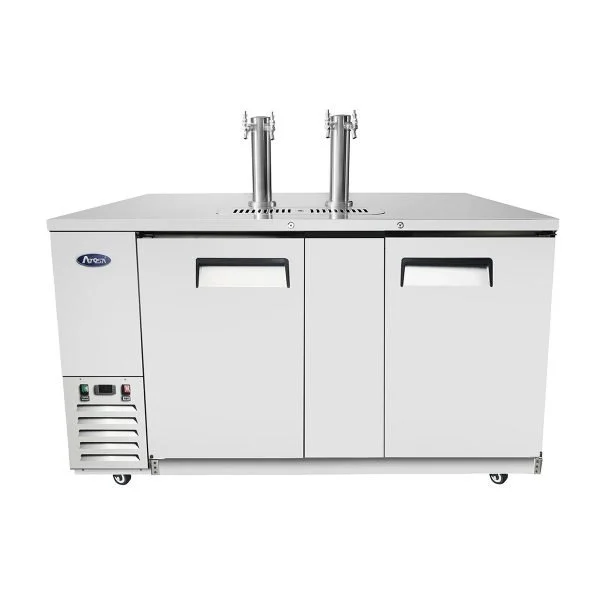
Undercounter, freestanding, dual tap, commercial-grade, outdoor, mini, built-in, full-site, six-barrel, and Cornelius are 10 types of kegerators. All kegerator types serve specific purposes, catering to diverse business needs and applications. Bars, restaurants, and even outdoor venues can set up or upgrade their draft beer services by choosing the right type of kegerator. For example, built-in kegerators integrate seamlessly into custom bar setups, while freestanding models provide portability. Undercounter, outdoor, and mini kegerators offer unique advantages for a perfect fit.
Undercounter Kegerators
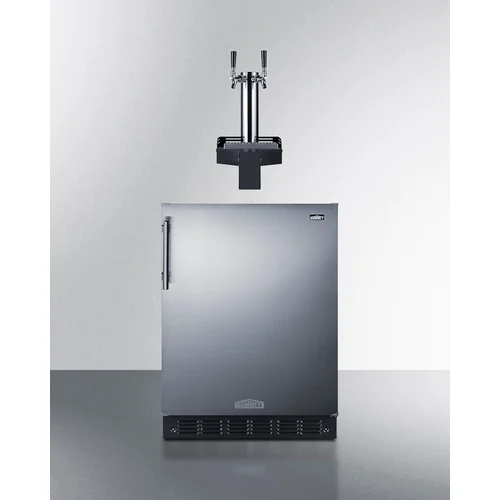
Undercounter kegerators, also called built-in kegerators, are for installation in enclosed spaces such as between cabinets or beneath countertops. These models are vented from the front, which prevents overheating even when pushed against walls or surrounded by cabinetry. It is essential to ensure sufficient space and ventilation when planning the installation. Some undercounter models allow draft towers to be built directly into the countertop for a seamless, upscale appearance and a luxurious touch to the setup.
The operation and installation of undercounter kegerators differ from freestanding units due to their integration into cabinetry. Unlike freestanding models, which require plugging, built-in units often involve more complex installation processes. This complexity and features like built-in fans that enable zero-clearance installation typically result in higher costs. However, their ability to blend into interior designs makes undercounter kegerators a worthwhile investment for many bars and upscale home setups.
Freestanding Kegerators
Freestanding kegerators are the most common and affordable style for home and commercial use. They plug into standard wall outlets and require minimal assembly, making them a convenient option for those seeking an easy-to-use draft beer system. Many models come equipped with casters, allowing the unit to be easily moved between locations, poolside, in a garage, or at the end of a kitchen island. Sizes range from compact units serving 1.32 gal (5 liters) to larger models that accommodate full-size kegs holding 15.5 gal (58.67 liters), which serve up to 124 pints.
Freestanding kegerators require proper ventilation for optimal performance and longevity. Warm air is vented from the back of the unit, so leaving a clearance of 2 in (5.08 cm) to 5 in (12.7 cm), depending on the model, ensures sufficient airflow. Unlike built-in kegerators, these models are not for countertop installations and can overheat if improperly positioned. Freestanding kegerators are particularly useful for commercial applications, such as catering services, outdoor bars, wedding receptions, and off-site events. Bars and restaurants often utilize these units for temporary setups like outdoor festivals.
Dual Tap Kegerators
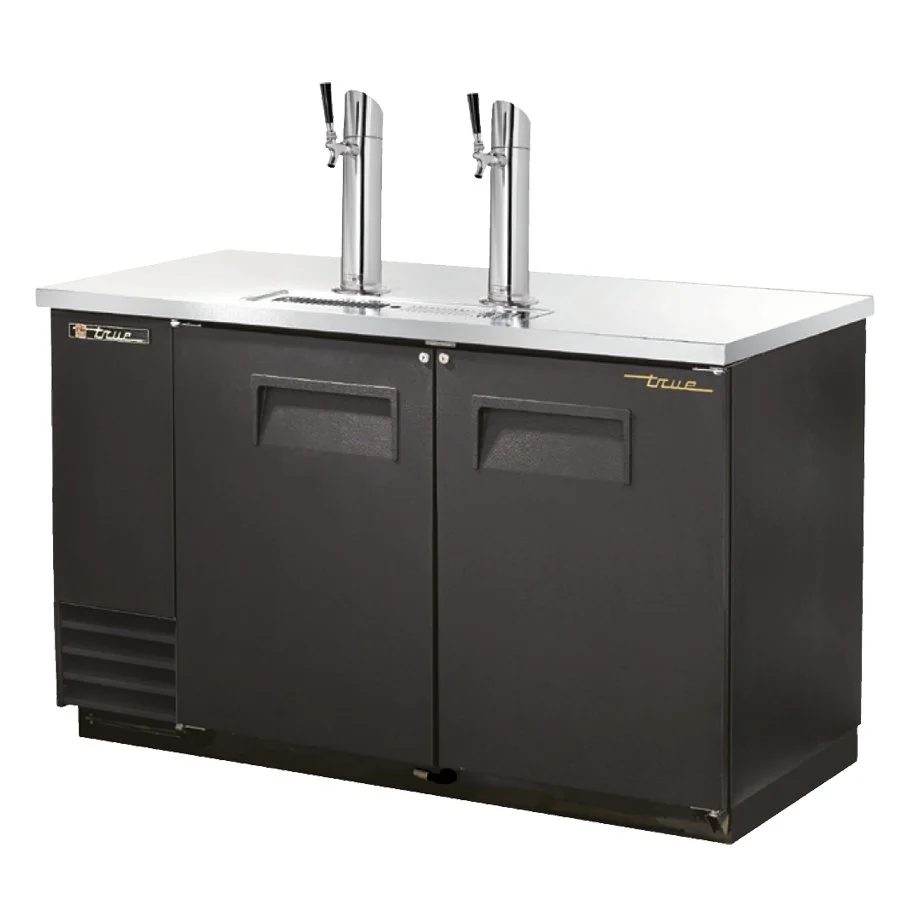
Dual tap kegerators offer the advantage of serving two different beers simultaneously. They feature dual draft towers, a single refrigeration unit, and an advanced CO2 system with split regulators. These units are ideal for establishments aiming to cater to diverse customer tastes. Capacities vary but typically hold 2 sixth-barrel kegs or one full-size keg, ensuring flexibility in beverage offerings. Bars using dual tap kegerators enhance their customer experience by providing variety without additional equipment. The ability to serve multiple beverages optimizes customer satisfaction and allows businesses to distinguish themselves through diverse drink options.
Commercial-Grade Kegerators
Commercial-grade kegerators meet the high-volume demands of bars, restaurants, and event venues. These units resist corrosion and wear with reinforced stainless steel interiors and exteriors. They include advanced cooling systems that maintain precise temperatures for the best beer quality, even during extended service hours. Some models also incorporate steel floor plates, door alarms, and interior lighting for increased usability and durability. Of course, these extras come with a premium price and higher maintenance requirements, but they are a well-worth long-term investment due to their versatility and robust construction.
Size and capacity set commercial-grade kegerators apart. These units can store multiple full-size (half-barrel) kegs or a mix of sixth-barrel and Cornelius kegs, with capacities ranging from 10 cu ft (283 L) to over 20 cu ft (566 L). They are available in freestanding or built-in configurations and can support one or multiple draft towers, enabling the simultaneous service of several beer varieties. Additional shelved space in some units accommodates bottles, cans, or other bar supplies, making them multifunctional.
Outdoor Kegerators
Outdoor kegerators perform reliably in varying weather conditions. Therefore, they are perfect for patios, outdoor bars, and backyard parties. Their rust-resistant stainless steel exteriors and UV-resistant finishes withstand rain, humidity, and extreme temperatures. Insulated walls and robust cooling systems ensure stable temperatures, typically ranging from 34°F to 45°F (1°C to 7°C), even in fluctuating climates. Outdoor keg coolers are available in freestanding and built-in designs. Many models are Energy Star-rated for efficiency and include sealed backs to protect electrical components. Outdoor kegerators are compatible with mini, 1/6-size, and 1/2-size barrels to serve multiple beverages.
Outdoor kegerators are also known as wet-rated kegerators. They are especially suitable for damp areas like pergolas or poolside spaces. They deliver convenience and durability but tend to have a shorter lifespan due to exposure to the elements and come at a higher cost than indoor units. Accessories like storage covers and insulating tower sleeves can extend the lifespan of kegerators in extreme climates. These units are an excellent choice for outdoor entertaining, offering the draft beer experience wherever the party occurs.
Mini Kegerators
Mini kegerators provide an affordable and compact solution for casual beer enthusiasts or those with limited space. They measure less than 20 (50.8 cm) in height and width, making them highly portable and comfortably fit on countertops. They are ideal for small apartments, offices, or occasional use at parties and tailgates. Mini kegerators hold 169.07-oz (5-L) kegs, amounting to fourteen 12-oz (354.882-ml) pours. Their compact size and low price point make them an excellent entry-level option for those not ready to invest in full-size kegerators.
Built-in Kegerators
Built-in kegerators integrate seamlessly into custom cabinetry and bar setups, creating a cohesive and polished appearance. Unlike freestanding models, these units feature front-venting systems, allowing safe placement in enclosed spaces. Typical features include digital thermostats, multiple tap towers, and durable construction, often made with stainless steel. Their capacities range from single 1/2-size to multiple sixth-barrel kegs. Restaurants and upscale bars benefit from built-in kegerators due to their aesthetic appeal and space-efficient design.
While built-in kegerators offer unmatched aesthetic appeal and functionality, they tend to be more expensive than freestanding models due to their specialized ventilation systems and installation requirements. These units generally require professional installation, particularly for undercounter or countertop integration. Although built-in kegerators lack portability, they blend seamlessly into spaces and upgrade the design of modern kitchens or bars. They are a worthwhile investment for those seeking a permanent and visually striking draft beer solution.
Full-Size Kegerators
Full-size kegerators are standard units that accommodate one full-size (half-barrel) keg or smaller kegs with additional shelving options. Full-size kegerators hold approximately 15.5 gal (58.673 L) of beer or around 124 pt. They often have spacious interiors with advanced cooling systems to maintain consistent temperatures. Many models include single or dual tap towers for versatile beverage options. Their durable construction ensures long-lasting reliability in commercial or residential environments. They are staples of high-volume beer service in bars, restaurants, and homes hosting significant events.
Sixth-Barrel Keg Kegerators
Sixth-barrel kegs, also known as sixtels, are compact kegs holding approximately 5.16 gal (19.553 L) of beer, equivalent to around 41 pt. One 24-in (60.96 cm) keg cooler accommodates 4 sixth-barrel kegs. These kegerators are a popular choice for craft beer enthusiasts and venues that want to offer a variety of beverages without requiring significant storage space. Their smaller size makes them ideal for kegerators with limited capacity, enabling the simultaneous service of multiple beer styles. Sixth-barrel kegs are widely used in bars, restaurants, and home setups that prioritize variety in beer styles over volume.
Cornelius Keg Kegerators
Cornelius kegs, commonly called “corny kegs,” are a favorite among home brewers for crafting and storing beer. These kegs have a capacity of approximately 5 gal (18.927 L), equivalent to about 40 pints, making them comparable to sixth-barrel kegs. Cornelius kegs are practical for small-scale brewing thanks to their easy cleaning and refilling design. Standard kegerators can hold up to 3 Cornelius kegs simultaneously, offering home brewers a convenient way to serve multiple varieties of their creations from one unit.
Key Features To Look For In A Kegerator When Buying
Evaluating key features is crucial when buying a kegerator to ensure it meets your bar’s needs and optimizes draft beer service. Assessing your bar’s specific requirements, such as the type of beverages served, expected volume, and available space, helps select the right kegerator. This evaluation guarantees that your investment furthers both operational efficiency and customer satisfaction. Buying a kegerator equipped with the following key features guarantees a reliable draft beer system.
- Temperature Control
- CO2‚‚ Systems and Pressure Control
- Durable Construction
- Energy Efficiency
- Capacity and Size
- Tap and Draft Tower
- Ease of Maintenance
- Mobility and Placement Flexibility
- Compatibility with Different Beverages
- Aesthetic Appeal
- Customization Options
- Brands and Models
Temperature Control
Precise temperature control is vital for maintaining beer quality and carbonation. Most kegerators offer adjustable thermostats with ranges between 33°F (0.556°C) to 40°F (to 4.44°C), catering to different beer styles. Electronic thermostats with LED displays are preferable for accuracy when purchasing a commercial model. Establishments prioritizing craft beer preservation benefit from units that maintain consistent cooling, ensuring every pour matches the brewer’s intent.
CO2 Systems and Pressure Control
Efficient CO2 systems regulate carbonation and ensure smooth dispensing. A dual-gauge regulator is ideal, allowing users to monitor tank pressure and output pressure. Bars offering diverse beer styles often need adjustable pressure settings, ranging from 10 PSI to 14 PSI, to match specific beverage requirements. High-quality CO2 systems preserve beer freshness and improve dispensing performance by using premium kegerators, including built-in pressure relief valves, to protect against over-pressurization. High-traffic venues benefit from systems with extra CO2 storage for uninterrupted service during peak hours.
Durable Construction
Kegerators from stainless steel or other durable components withstand heavy use in commercial environments. Rust-resistant interiors and reinforced doors enhance longevity. Models with heavy-duty hinges and locks provide added security. Commercial models typically have heavy-duty wire shelves inside the cabinet. Their coated evaporator coils effectively resist corrosion. Businesses aiming to optimize long-term performance invest in kegerators with robust construction. Models designed for outdoor use incorporate weatherproof materials like UV-resistant coatings.
Energy Efficiency
Energy-efficient kegerators reduce operating costs while maintaining consistent cooling. Look for units with Energy Star certification, advanced compressors, and eco-friendly refrigerants like R-290. Bars using energy-efficient models benefit from lower utility bills and a reduced environmental footprint. Kegerators with CFC-free refrigerants, thick high-density insulation, and shatterproof LED interior lighting are the key energy-saving features.
Capacity and Size
Capacity and size must align with the bar’s volume needs and available space. Full-size models typically hold 1 half-barrel keg or 2 sixth-barrel kegs, while compact units accommodate smaller volumes. Venues offering various beverages evaluate multi-keg systems to expand their selection. Familiarize yourself with kegerator sizes and how many kegs each accommodates. For instance, a 68-in (172.72 cm) wide model holds up to 3 full-size, or 8-quarter, or 12 sixth-barrel kegs. Use the standard US keg capacities below in your evaluation:
- Full-Size (Half-Barrel) Keg:124 pt (58.67 L)
- Quarter Keg (also called a Pony Keg or Slim Quarter): 62 pt (29.335 L)
- Sixth-Barrel Keg: 42 pt (19.873 L)
- Cornelius Keg: 40 pt (18.927 L)
- Mini Keg: 10.6 pt (5.015 L)
Tap and Draft Tower
Tap and draft towers are the focal points of any kegerator system, playing a crucial role in dispensing beer and contributing to the overall functionality and appearance of the setup. A draft tower, sometimes called a beer tap tower or draft arm, connects the faucet to the beer line through a shank and allows filling glasses, pitchers, or growlers effortlessly. Draft towers come in various sizes, styles, and materials to suit diverse needs and decor preferences.
Standard draft towers usually feature a cylindrical design with a 3-in (7.62 cm) diameter column and stand about 14 in (35.56 cm) tall, accommodating 1 to 3 taps. Larger or specialty towers hold significantly more faucets.
Types and Styles of Draft Towers
- Standard Towers feature tall cylindrical designs mounted on bar tops or kegerators, holding up to 3 faucets for direct-draw systems.
- T-Towers have cylindrical bases with box-shaped tops, capable of supporting 2 to 8 taps, and are ideal for air-cooled or glycol-cooled systems.
- Double-Pedestal Towers, or pass-through or H-towers, maximize draft options with up to 20 taps.
- Wall-Mounted Towers attach to vertical surfaces and hold up to 12 faucets.
- Underbar Mounted Towers fit below bars or counters to save surface space while accommodating 4 to 12 taps.
- Specialty Towers add a customized touch to bars or events with unique materials like ceramic, wood, or black iron pipe.
Draft towers utilize 2 cooling systems. Air-cooled towers direct chilled air from the keg cooler into the tower, while glycol-cooled towers circulate glycol through cooling blocks for consistent beer temperatures over long distances. High-traffic setups benefit from features like insulated towers to prevent foam buildup, illuminated designs for visibility, and quick-connect systems for efficient keg changes.
Taps complete the towers to control beer flow. They come in multiple finishes, including stainless steel for durability, brass for a vintage look, and chrome for modern aesthetics. Their design also varies based on use. Standard taps are the most common. Flow-control taps provide adjustable flow rates for different beer styles. Stout taps are for nitrogenated beers, creating a creamy head with their restrictor plates.
Ease of Maintenance
Features like removable drip trays, easy-access compartments, and self-cleaning systems simplify upkeep. Regularly cleaning beer lines and CO2‚ systems is crucial for maintaining hygiene and prolonging equipment lifespan. Some models include self-cleaning functions for the beer lines, ideal for bars with limited staff. Buying beer line cleaning kits is also helpful. They prevent bacteria growth inside the lines. Bars prioritizing convenience usually evaluate kegerators for ease of maintenance.
Mobility and Placement Flexibility
Mobility and placement flexibility enhance a bar’s operational versatility. Portable kegerators with lockable casters are well-suited for catering services and event spaces. Front-venting systems allow built-in kegerators to integrate seamlessly into cabinetry without compromising cooling performance. Outdoor units with heavy-duty wheels and weatherproof designs offer reliable performance in changing layouts.
Compatibility with Different Beverages
Compatibility with various beverages enhances a kegerator’s versatility, adding value to it. Models supporting nitrogen systems expand drink menus by accommodating stouts, cold brew coffee, and kombucha. Bars offering diverse drink options can attract a broader customer base by providing versatile draft systems. Units capable of holding multiple keg types, such as Cornelius or sixth-barrel kegs, cater to diverse customer preferences. Kegerators with interchangeable parts upgrade flexibility in beverage service.
Aesthetic Appeal
Aesthetic appeal contributes to the ambiance of the bar. Stylish kegerators with sleek exteriors and LED lighting enhance the visual appeal. Stainless steel finishes with sleek designs are standard for modern venues, while customizable panels integrate well with themed interiors. Aesthetic features like illuminated tap handles promote a distinctive and memorable customer experience. Bars aiming for a refined appearance consider models that align with their overall branding.
Customization Options
Customization options help bars tailor kegerators to their unique needs. Personalized tap handles, branded tower decals, and interchangeable keg configurations support diverse operations. Establishments focusing on innovation and variety benefit from units designed for modular upgrades.
Top Kegerator Brands and Models
Brand and model selection ensures a wise investment for any business or personal use. Reputable kegerator brands are known for reliable performance, innovative features, and robust warranties. Comparing models based on capacity, energy efficiency, and price allows buyers to select equipment tailored to their needs. Below are some standout brands and their key features.
- True Refrigeration: True Refrigeration’s kegerators are number one in sustainability and durability. They have foamed-in-place, CFC-free polyurethane insulation for superior strength and efficiency. Their environmentally friendly R290 refrigerant ensures zero ozone depletion potential (ODP) and zero global warming potential (GWP). True’s equipment comes with an industry-leading warranty of 3 years on parts and labor and 7 years on the compressor for HC models, providing peace of mind with every purchase.
- Summit: Summit kegerators are for those seeking European craftsmanship combined with American innovation. The brand offers a unique blend of quality and design, with models manufactured in Europe and modified in the USA. These units deliver high performance, focusing on elegant and efficient beverage service.
- Continental Refrigerator: Continental kegerators have models with a textured baked black enamel finish exterior, stainless steel countertops, and reinforced stainless steel floors. Advanced features include R290 refrigerant for eco-friendly cooling, magnetic snap-in door gaskets, cylinder-keyed security locks, and an electronic controller with a digital display and hi-low alarm.
- Everest Refrigeration: Everest kegerators combine cutting-edge technology with eco-conscious design. The Everest EBD1 is a versatile bar equipment model designed to meet the diverse needs of the food and beverage industry. It features customizable draft faucets and hybrid storage options for canned and bottled drinks. Equipped with the innovative Blizzard R290 cooling cartridge, it ensures rapid cooling, safety, and hassle-free replacement. This eco-friendly system uses natural hydrocarbon refrigerants, meeting U.S. Department of Energy and EPA standards while reducing energy costs and carbon emissions. The Everest EBD1 delivers reliable, efficient, and sustainable performance for modern bar setups.
- Beverage-Air: Beverage-Air models stand out with their 3-in-1 Draft Solution, which uses a single stainless-steel tap to serve beer, wine, coffee, or non-alcoholic beverages through anti-microbial, silver-lined tubing. These kegerators offer a blend of versatility and robust construction for diverse applications. Their construction incorporates a durable black-painted steel exterior, galvanized steel interior walls, and heavy-duty stainless steel tops and floors.
- Atosa USA is a top contender, providing robust kegerators built for high-volume use. Models like the Atosa MKC23GR, a single-tap unit with durable stainless steel construction, and the Atosa MKC58GR, a dual-tap kegerator, excel in energy efficiency and versatility.
- Kegco: Kegco kegerators are renowned for their reliability, durability, and diverse models catering to home and commercial use. They are equipped with key features such as adjustable temperature settings, dual-tap options, and energy-efficient cooling, making them a top choice for beer enthusiasts and professionals alike. Among their popular models is the Kegco K309, which boasts digital temperature control and a spacious interior accommodating multiple kegs. Another standout model is the Kegco HBK209, known for its adjustable temperature, dual-tap options, and efficient cooling capabilities, ensuring consistent performance and an exceptional draft beer experience.
- EdgeStar: EdgeStar is another favorite, particularly for compact and affordable kegerators suited for home use. The EdgeStar KC2000 is budget-friendly and perfect for small spaces, while the KC3000 offers a broader temperature range and larger capacity, making it ideal for beer enthusiasts.
- Danby: Danby is well-known for its user-friendly models and modern designs. Their DKC054A1BSL2DB is a compact, single-tap kegerator that offers adjustable shelving and affordability.
- Beer Meister: For heavy-duty performance, Beer Meister delivers kegerators tailored for long-lasting use. Their Commercial Series is particularly suitable for high-volume bars and restaurants.
- NitroBrew: NitroBrew focuses on kegerators designed for nitro beverages like cold brew and nitro coffee, with their Single-Tap System being a popular choice for nitrogen-infused drinks.
- Versonel: Versonel offers affordable and functional kegerators for home users. The Versonel VSL155TDSS Stainless LCD Temp Full Keg Kegerator is a compact, single-tap model that is easy to set up and provides reliable cooling.
- Turbo Air: Turbo Air is a leading brand known for its high-quality kegerators designed to meet commercial and home use demands. Turbo Air kegerators stand out for their advanced cooling technology, energy efficiency, and durable construction. Popular models include the Turbo Air TBD-1SB, a single-tap kegerator with a sleek design and efficient cooling, and the Turbo Air TBD-4SB, a high-capacity model ideal for busy bars and restaurants. With precise temperature control, spacious interiors, and user-friendly maintenance, Turbo Air kegerators are a reliable choice for ensuring perfectly chilled draft beer in any setting.
Benefits of Kegerators for Bars
Kegerators offer numerous advantages for bars, enhancing the quality of draft beer service while streamlining operations. Purchasing a reliable kegerator enables businesses to provide consistently fresh and perfectly chilled beer, reduce operational costs, and create a memorable customer experience. The following benefits highlight why kegerators are crucial to any bar setup.
Perfect Beer Temperature
Kegerators maintain the ideal temperature for draft beer, preserving its flavor, aroma, and carbonation. These units integrate precise cooling systems that ensure beers like lagers are served at 34°F (1.11°C), while ales are kept at 40°F (4.44°C). Bars benefit from kegerators’ ability to keep beer fresh from the first pour to the last, elevating the overall drinking experience. Consistently perfect beer temperature contributes to customer satisfaction, encouraging repeat visits.
Cost-Effectiveness
Kegerators reduce costs by minimizing beer wastage and lowering packaging expenses compared to bottled or canned options. Buying a kegerator creates the same financial efficiency as buying other drinks or food ingredients in bulk. Serving draft beer through kegs costs up to 40% less per serving than packaged beer. Businesses operating high-volume venues, such as sports bars, benefit from these savings while offering competitive pricing to customers. Additionally, energy-efficient kegerators lower electricity bills, enhancing overall cost-effectiveness.
Customer Experience
Kegerators enhance the customer experience by delivering fresh, perfectly poured beer. The visual appeal of a draft beer flowing from a sleek tap system adds to the atmosphere, while the superior taste of draft beer compared to bottled options creates lasting impressions. Establishments equipped with kegerators distinguish themselves as premium beer destinations, fostering customer loyalty and positive reviews.
Space-Saving Design
Kegerators’ compact and efficient designs optimize space in bars of all sizes. Built-in and undercounter models integrate seamlessly into bar layouts, freeing up valuable counter space. Portable kegerators provide flexible placement options for smaller venues or those with unique layouts. Maintaining a clutter-free bar environment enhances operational efficiency and improves aesthetics.
Fresh Beer On Tap
Kegerators keep beer fresh for weeks by maintaining proper temperature and carbonation levels. CO2 systems ensure consistent quality by preventing oxidation and spoilage. Kegerators keep fresh beer on tap for months, depending on the beer style. Pasteurized beer stays fresh for up to 4 and non-pasteurized for 2 months. Bars that prioritize freshness benefit from improved product turnover and customer satisfaction. This capability is particularly valuable for craft beer-focused establishments that serve unique brews requiring careful preservation.
Customization for Beer Lovers
Kegerators equipped with multi-tap systems allow bars to offer various beer options, catering to diverse customer preferences. A dual-tap kegerator, for instance, serves both a light lager and a robust stout, enhancing the overall selection. This customization empowers bars to provide a tailored experience for beer enthusiasts and distinguish themselves in the competitive hospitality industry.
Aesthetic Appeal
The polished appearance of modern kegerators adds to the ambiance of any bar. Units with sleek stainless steel finishes, LED lighting, and customizable tap handles enhance visual appeal. Bars that prioritize aesthetic features create a sophisticated atmosphere. This helps them to leave a lasting impression on customers. The aesthetic appeal of kegerators contributes to an overall memorable experience, encouraging patrons to return.
Maintenance Tips for Kegerators
Regular maintenance optimizes kegerators’ performance and prolongs their lifespan. Proper upkeep not only preserves the quality of draft beer but also minimizes costly repairs. Essential maintenance practices include cleaning beer lines, monitoring CO2 levels, inspecting seals and components, and troubleshooting common issues. Following these tips helps bars continue garnering the benefits of using kegerators.
Cleaning the Lines
Cleaning the beer lines prevents the buildup of yeast, bacteria, and mold that affect flavor. Experts recommend cleaning the lines every two weeks or after switching kegs. A beer line cleaning kit with an alkaline cleaner is used to flush the system thoroughly. Clean each line individually for bars serving multiple beers to maintain flavor integrity. Proper line cleaning preserves beer quality and prevents contamination, ensuring a consistent and enjoyable drinking experience.
Monitoring CO2 Levels
Monitoring CO2 levels ensures beer is dispensed with the correct carbonation. Depending on the beer style, a CO2 pressure gauge displays a consistent range, typically between 10 PSI and 14 PSI. Check the tank regularly for leaks and refill it when pressure drops below optimal levels. Maintaining proper CO2 levels prevents flat or over-carbonated beer. The result is every pour meets customer expectations.
Inspecting Seals and Components
Inspecting seals and components is necessary to prevent leaks and maintain cooling efficiency. Check door gaskets for cracks or wear and replace them if required. Examine connections in the CO2 system and draft lines for signs of wear or damage. Bars that routinely inspect seals and components reduce downtime and ensure uninterrupted draft beer service.
Troubleshooting Common Issues
Troubleshooting common issues helps resolve problems quickly. Common issues include temperature fluctuations, foamy beer, and inconsistent pouring. Ensure the thermostat functions correctly and adjust it if temperatures deviate from the desired range. Clean the draft tower and lines to address foam issues and inspect the CO2 system to resolve dispensing problems. Prompt troubleshooting keeps kegerators running efficiently and minimizes service interruptions.
FAQs About Kegerators
Understanding the answers to common questions about kegerators helps businesses and individuals make informed decisions. These insights are crucial for ensuring the optimal performance and longevity of kegerators.
What Size Kegerator Do I Need For My Bar?
The size of a kegerator depends on your bar’s volume requirements and available space. A single half-barrel kegerator suffices for small bars or limited spaces. Medium-sized bars benefit from dual-tap models accommodating 2 sixth-barrel kegs or one full-size keg. High-volume venues need commercial-grade kegerators with widths exceeding 78-in (198.12 cm), supporting multiple kegs. So, evaluate your needs carefully to align them with bar refrigeration capabilities for efficient beer service.
How Often Should I Clean My Kegerator Lines?
Clean your kegerator lines every two weeks to maintain beer flavor and hygiene. Weekly cleaning may be necessary to prevent yeast and bacteria buildup in high-traffic bars. Use an alkaline cleaner with a beer line cleaning kit and flush the system thoroughly.
What Types of Beverages Can I Serve in a Kegerator Besides Beer?
You can serve beverages beyond beer, including cider, kombucha, cold brew coffee, and carbonated water. Bars offering diverse drink menus can outfit kegerators with nitrogen systems for stouts or coffee. Choosing kegerators compatible with various beverages enhances the versatility of your bar supplies.
How Long Can Beer Stay Fresh In A Kegerator?
Beer can stay fresh in a kegerator for 2 to 4 months if stored at the proper temperature and under ideal CO2 pressure. Pasteurized beer lasts up to 120 days longer, while non-pasteurized varieties should be consumed within two months.
Is a CO2 Tank Required for a Kegerator To Work?
Yes, a CO2 tank is necessary for most kegerators as it regulates carbonation and facilitates beer dispensing. The tank ensures a steady beer flow and maintains the carbonation level, which is critical for taste and presentation.
What are The Uses of a Kegerator?
The uses of a kegerator include storing and dispensing draft beer in bars, restaurants, and private settings and preserving beverages like cider, soda, and cold brew coffee.
How Long Does a CO2 Tank Typically Last in a Kegerator?
A CO2 tank typically lasts 6 to 8 half-barrel kegs if it is a standard 5-lb (2.267 kg) tank. This depends on usage, of course. High-traffic venues may require refilling more frequently due to increased beer flow. Smaller kegs, such as the 7.75-gal (29.335-L) quarter-barrel kegs, need around 0.5 lb (0.226 kg) of CO2 to dispense it all. Monitoring the pressure gauge ensures timely refills and uninterrupted draft beer service.
Does a Kegerator Run on Electricity?
Yes, a kegerator runs on electricity to power its refrigeration systems and maintain consistent temperatures. Energy-efficient models reduce electricity consumption without compromising performance. Outdoor kegerators require weatherproof outlets for safe operation. Ensuring proper electrical connections is vital for optimal functionality and safety.
Conclusion
Kegerators are indispensable for bars and establishments aiming to optimize their draft beer service. These systems offer unmatched benefits, including maintaining perfect beer temperature, enhancing customer satisfaction, and improving operational efficiency. Businesses can evaluate their needs and choose the ideal system, from compact undercounter models to high-capacity commercial-grade kegerators. Key features like temperature control, CO2 regulation, and durable construction ensure consistent performance and beer quality. Regular maintenance practices, such as cleaning lines and monitoring CO2 levels, prolong the lifespan of kegerators and keep service uninterrupted.

