


The primary difference between medical and household refrigerators is their design and construction, which are engineered for their intended use. They have a similar look and function for storing temperature-sensitive items, but they differ significantly in features and specifications that affect the safety of the stored items.
A kitchen fridge can keep your food safe. Still, it cannot be used to store medications or vaccines, which must be preserved under strict standards that protect temperature-sensitive materials worth thousands of dollars and, sometimes, lives.
A key distinction lies in temperature control and accuracy. Medical refrigerators operate within a narrow, stable range of 36°F to 46°F (2°C to 8°C), following CDC and FDA guidelines, with precision often within 32.9°F (±0.5°C), thanks to microprocessor-based controllers and Glycol-filled probes that ensure accurate readings. In contrast, household refrigerators rely on analog thermostats and can fluctuate by ±3°C (5°F), leading to unsafe storage conditions.
Medical units utilize forced-air circulation systems to maintain uniform cooling and prevent hot or cold spots. At the same time, household models often suffer from uneven temperatures, especially near doors or corners.
The construction, security, and certification standards differ greatly. Medical refrigerators feature enhanced insulation, wire shelving, open layouts for airflow, and lockable doors with keyed or digital access systems, often recording every entry for compliance documentation.
They are certified under WHO Good Storage Practices, CDC vaccine storage guidelines, and ISO 13485 medical device standards, ensuring their suitability for critical healthcare use. Household refrigerators, on the other hand, lack these safety measures, regulatory certifications, and internal layouts optimized for storing medical supplies, making them unsuitable for professional environments.
Medical refrigerators come equipped with advanced monitoring and alarm systems, including alerts for temperature excursions, power failures, and door openings, as well as data logging and remote monitoring capabilities. These features protect valuable inventory and support regulatory compliance. Household fridges, by comparison, only signal when the door is left open.
Medical refrigerators are not advanced home fridges; instead, they are specialized, precision-built medical devices essential to maintaining public health and operational integrity in clinics, hospitals, laboratories, and pharmacies.
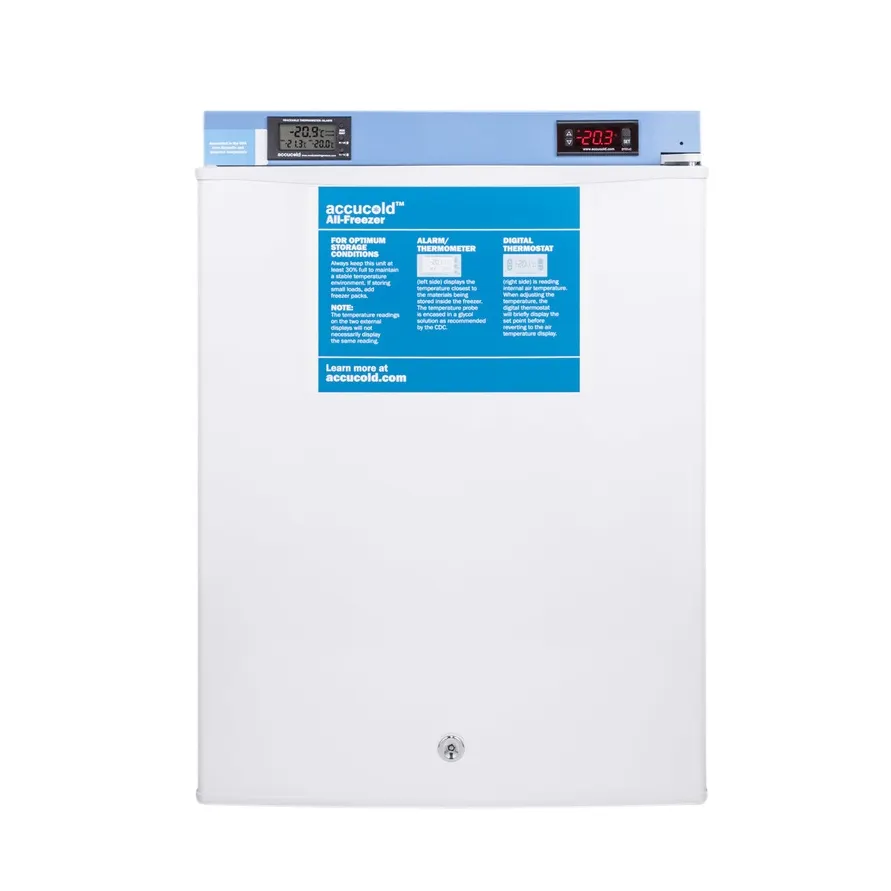
1. Temperature Control and Accuracy
The significant advantage of medical refrigerators is their ability to maintain an incredibly tight temperature range of 36°F to 46°F (2°C to 8°C), as recommended by the CDC and FDA for storing vaccines, biologicals, blood, reagents, and many pharmaceuticals.
Medical coolers use intelligent microprocessor temperature controllers that continuously monitor and adjust cooling to maintain precise temperatures, often with an accuracy of ±32.9°F (±0.5°C).
Most units, such as Everest medical refrigerators, use Glycol-filled temperature probes to ensure accurate measurements. However, household refrigerators rely on basic analog thermostats that fluctuate by ±3°C (5°F) throughout the day, which can destroy the effectiveness of temperature-sensitive medications.
This difference between thermostatic regulation (household) and microprocessor regulation (medical) is not just a technical detail but a vital factor determining the safety of medications, biological samples, and vaccines.
2. Air Circulation and Temperature Uniformity
Some parts of the fridges are cooler or warmer than the set temperature. For instance, vegetables or greens freeze when placed at the back or the door shelves, and milk barely keeps cold. Household refrigerators are designed for family use, which leads to uneven cooling and hot and cold spots throughout the interior, especially near the doors and in corners.
Medical refrigerators feature fan-assisted forced-air circulation systems that continuously circulate air throughout the cabinet, eliminating temperature variations. So, medical coolers maintain a uniform temperature throughout the cabinet, providing optimal storage conditions for vials, samples, and medicines.
While household fridges feature auto-defrost that can cause temperature fluctuations during defrost cycles, medical refrigerators use carefully controlled defrost systems that never compromise the storage environment.
3. Storage Design and Interior Layout
In addition to the temperature and air circulation systems, medical refrigerators differ significantly from household coolers with their interior design and layout organization:
| Feature | Medical Refrigerators | Household Refrigerators |
| Shelf Material | Wire or perforated metal for efficient airflow | Solid glass or plastic shelves |
| Door Storage | Minimal or none to prevent hot spots | Extensive door bins and compartments |
| Drawer Design | Temperature-controlled compartments | Crisper drawers for produce |
| Interior Organization | Open layout for air circulation | Varied compartments and zones |
| Capacity Focus | Efficient storage of boxes and containers | Flexible storage for various food items |
4. Security and Access Control
Medical fridges include keyed locks or digital keypad systems to restrict access and prevent unauthorized access. Digital locks on modern medical refrigerators can maintain physical access logs, creating an audit trail that documents every time the door opens and who opened it.
These security measures help labs, pharmacies, hospitals, and research centers comply with the DEA storage regulations that require controlled substances to be stored in locked, secure environments.
Medical institutions and hospitals face serious legal consequences for failing to comply with these regulations. Therefore, for facilities that store narcotics, vaccines, or other controlled substances, lockable access to the medical coolers is mandatory.
On the contrary, household refrigerators lack such precautions and locks, which is a common comedy topic, often involving chained doors to prevent family members from eating the freshly made cake. Therefore, using a household refrigerator in healthcare facilities and laboratories endangers the safety of pharmaceuticals, vaccines, and samples.
5. Compliance and Certifications
Health industry processes are highly sensitive due to their profound effects on human health. Therefore, Medical refrigerators carry certifications that prove they meet specific healthcare standards:
- WHO Good Storage Practices: The worldwide report for the pharmaceutical storage.
- The CDC: Guide for vaccine storage and handling practices.
- ISO 13485: Medical device quality management.
These certifications define a framework for the proper storage conditions and data logging practices. Medical refrigerators are engineered and manufactured in accordance with these regulations and other guidelines. However, household refrigerators do not carry any of these certifications because they’re not designed or tested for medical use.
6. Alarm Systems and Monitoring Capabilities
Refrigeration applications preserve temperature-sensitive items, extending their condition for later use. However, unexpected situations that require immediate attention may spoil the valuable contents stored in the coolers. Medical and home coolers also differ in this case:
Advanced Monitoring Features in Medical Units
Medical refrigerators come equipped with sophisticated monitoring, alarm, and data logging systems:
- Temperature fluctuation alarms that trigger immediately when temperatures move outside safe ranges.
- Door ajar alerts notify the operator to prevent accidental warm-up.
- Power failure alarms and backup battery systems that notify you when power is off and retain the interior chill until the transfer of stored items.
- Remote alert integration via SMS, email, Wi-Fi, or cloud platforms.
- Continuous temperature and door opening data logging with exportable reports for compliance inspection and documentation.
Monitoring Features in Home Fridges
Despite the advanced monitoring and alarm systems in medical fridges, household coolers have only a basic alarm function. It starts beeping if the door stays open. Household refrigerators do not have data-logging systems, temperature monitoring, or a power backup system.
When to Use Medical vs. Household Refrigerators in Healthcare
Medical Refrigerators are Used For:
- Vaccine storage in compliance with CDC and WHO regulations and guidelines
- Lab samples, reagents, and biologicals to preserve these sensitive items
- Pharmaceutical storage in clinics, pharmacies, and hospitals
- DEA-controlled medication storage
- Medical and sample storage in veterinary clinics
Household Refrigerators May Be Acceptable For
- Non-clinical break rooms or general food storage in medical facilities (separate from patient care areas)
- Cosmetic products
- Storage of over-the-counter products in non-clinical environments
Can You Use a Household Refrigerator for Medical Purposes?
No, household refrigerators are not appropriate for storing vaccines, insulin, blood, or lab materials. They lack temperature consistency, logging, and security, as well as compliance certifications. Using household fridges for medical items can result in product spoilage, legal liability, or loss of accreditation.
Summary Table: Medical vs. Household Refrigerators
| Feature | Medical Refrigerators | Household Refrigerators |
| Temperature Accuracy | ±0.5°C accuracy with microprocessor control | ±3°C fluctuation with analog thermostat |
| Air Circulation | Forced-air with internal fans for uniform cooling | Fan supported air circulation which cause hor spots and uneven temperature |
| Certifications | CDC, WHO, ISO 13485 | None for medical use |
| Locking Mechanisms | Keyed or digital locks with access logs | No built-in security |
| Alarm Systems | Temperature, door, power failure alerts with remote monitoring | Open-door alarms |
| Suitable Use Cases | Vaccines, medications, lab samples, biologicals | Food storage only |
| Compliance Readiness | Full documentation and data logging | No compliance features |
| Price Range | $1,000 – $15,000+ | $500 – $3,000 |

FAQs About Differences Between Medical and Household Refrigerators
What temperature should a medical refrigerator be set at?
The medical refrigerators are set around 5°C (41°F) to provide a buffer from both freezing and warm excursions.
How much does a medical refrigerator cost compared to a household model?
Medical refrigerators typically range from $1,000 to $15,000 or more, depending on size and features, while household refrigerators cost $500 to $3,000.
Can I convert a household refrigerator into a medical refrigerator?
No, you cannot convert a household refrigerator to meet medical standards since the differences aren’t cosmetic but result from the design and construction.
Do medical refrigerators use more electricity than household models?
Yes, medical refrigerators typically use slightly more electricity due to continuous monitoring systems, fan-assisted circulation, and more frequent compressor cycling to maintain tight temperature ranges.
How often do medical refrigerators need temperature checks?
CDC guidelines recommend checking and documenting the temperature of the medical refrigerator at least twice daily, once at the start of the workday and once at the end. However, medical refrigerators with continuous digital monitoring and data logging systems automatically record temperatures at set intervals (often every few minutes).
Explore Certified Medical Refrigerators at Chef’s Deal
Choosing certified equipment from the start saves money, protects inventory, and ensures compliance. Chef’s Deal offers a comprehensive range of medical-grade refrigerators that meet CDC guidelines and carry the necessary certifications for healthcare facilities.
Whether you need vaccine storage for a busy clinic, pharmaceutical refrigeration for a hospital pharmacy, or laboratory-grade units for research facilities, proper equipment isn’t an expense; it’s protection for valuable inventory and patient safety.

