


Medical refrigeration maintains the precise temperatures required to store vaccines, medications, blood, and biological samples, ensuring their safety and compliance. Types of medical refrigerators and freezers are undercounter units, pharmacy fridges, lab refrigerators, blood bank fridges, dual-temperature models, and ultra-low-temperature freezers, each designed for specific use cases in clinics, hospitals, labs, and mobile units.
Key features include microprocessor controls, digital temperature displays, alarm systems, locking doors, backup power, and data logging for regulatory compliance with CDC, WHO, FDA, and USP standards. Medical refrigerators differ from standard commercial units in that they offer tighter temperature control, specialized shelving, and advanced monitoring systems.
Choosing the right unit involves evaluating storage needs, available space, workflow, budget, and maintenance plans to ensure a suitable fit. Chef’s Deal offers a wide range of certified medical refrigeration solutions from trusted brands, along with expert support, financing, and nationwide delivery.
What is a Medical Refrigerator?
A medical refrigerator is a specialized cold-storage unit designed to maintain a precise temperature range for sensitive medical products, including vaccines, pharmaceuticals, blood, and biological samples. They typically feature a temperature range of 36°F and 46°F (2.222°C to 7.778°C) for refrigerators and 5°F and -13°F (-15°C to -25°C) for medical freezers.
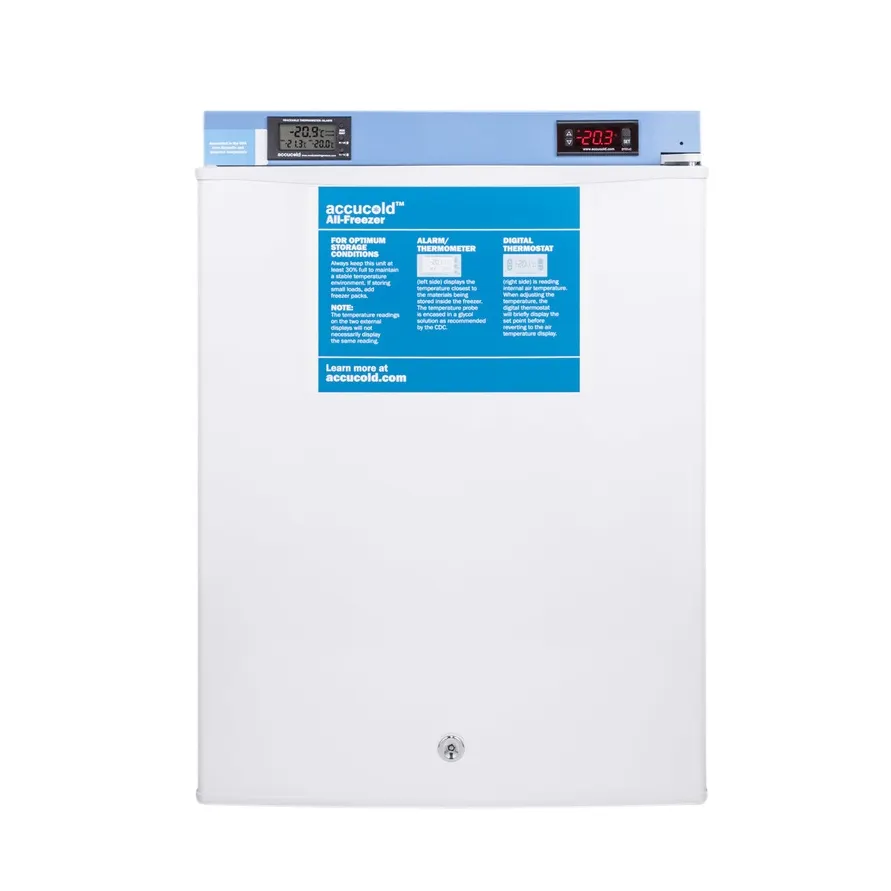
Medical freezers and refrigerators provide consistent temperature retention, precise temperature control, advanced alarm systems, and certification to healthcare standards. Medical refrigerators have advanced temperature monitoring systems, uniform cooling distribution, and data logging capabilities to ensure compliance with healthcare regulations.

What are The Types of Medical Refrigeration Equipment?
The types of medical refrigeration equipment include undercounter, pharmacy, laboratory, vaccine, blood bank, and dual-temperature refrigerators.
Undercounter Medical Refrigerators
Undercounter medical refrigerators feature a compact, space-saving design that fits seamlessly under countertops, at workstations, or in narrow spaces. Hence, they are ideal for small clinics, doctors’ offices, and medical facilities that require immediate access to frequently used medications and vaccines.
Pharmacy Refrigerators
Pharmaceutical Refrigerators are glass-door storage solutions designed to preserve medications, insulin, and other pharmaceuticals, making pharmacy refrigeration the best choice for pharmacies, hospitals, and senior living centers.
Laboratory Refrigerators
Laboratory refrigerators are designed for storing biological samples, including tissues, enzymes, DNA, reagents, and research materials. Research laboratory refrigerators feature microprocessor-based temperature controllers, enhanced insulation, and a powerful air circulation system to maintain optimal conditions for preserving samples and biological specimens.
Vaccine Refrigerators & Freezers
Vaccine refrigerators and freezers maintain the safe storage of valuable vaccines at temperatures ranging from 36°F to 46°F (2.222°C to 7.778°C) for refrigerated vaccines and -5°F to -13°F (-20.556°C to -25°C) for compliance with the required CDC Vaccine Storage Guidelines in hospitals, labs, and doctors’ offices.
Blood Bank Refrigerators
Blood bank refrigeration systems store blood packs, plasma, and blood components at a precise temperature of 39.2°F (4°C). These medical refrigerators feature intuitive alarms, displays, and robust construction for reliable performance in hospitals, blood banks, transfusion services, and emergency medical facilities.
Vaccine refrigerators and freezers are designed to maintain a stable temperature range for immunization storage. In contrast, blood bank refrigerators must meet stricter AABB and FDA standards to ensure temperature uniformity and traceability of blood components. These key differences in regulation, temperature precision, and usage make proper selection critical; learn more about how they compare here.
Ultra-Low Temperature Freezers (-40°F and -130°F (-40°C to -90°C))
Ultra-low-temperature freezers provide extreme-cold storage for the long-term preservation of biological samples, pharmaceuticals, research specimens, and certain vaccines (e.g., COVID-19), as mandated by the US Centers for Disease Control and Prevention. Ultra-low-temperature freezers maintain temperatures as low as -130°F (-90°C) and feature backup systems to prevent temperature excursions. Therefore, ultra-low-temperature freezers are ideal for research institutions, biotechnology companies, and hospitals.
Dual Temperature Medical Refrigeration (Refrigerator + Freezer in One)
Dual-temperature medical refrigeration systems combine refrigeration and freezer compartments in a single, compact unit at a lower cost. These multi-functional units maintain temperatures of 36°F to 46°F (2.222°C to 7.778°C) in the refrigerator section and -5°F to -13°F (-20.556°C to -25°C) in the freezer section. Thus, dual temp medical refrigerators offer operational advantages for small hospitals, clinics, pharmacies, veterinary practices, and multi-service medical practices.
What are The Key Features to Consider When Buying a Medical Refrigerator?
The key features to consider when buying a medical refrigerator and freezer are listed below:
- Microprocessor Temperature Control: These advanced digital controllers maintain temperature within 1°F (+/-0.5°C) of the setpoint, ensuring consistent storage conditions.
- Digital Temperature Display & Alarms: Digital temperature displays provide real-time temperature monitoring with enhanced visibility, while alarms and audible alerts notify operators of temperature deviations, power failures, and door ajar conditions, enabling immediate action to mitigate potential risks.
- Uniform Temperature Distribution (Forced Air Cooling): The temperature must remain uniformly stable throughout the cabinet. Hence, choose a fan-forced air circulation system that eliminates hot spots and ensures consistent temperatures throughout the storage compartment.
- Locking Doors for Security: Door locks prevent unauthorized access to valuable medications and controlled substances, meeting security requirements for pharmaceutical storage while helping operators to maintain the interior temperature.
- Battery Backup or Fail-Safe Systems: To ensure the cold chain is maintained, choose a backup power system that keeps operations running during power outages or during transport. At the same time, fail-safe mechanisms protect stored products even in the event of equipment failure.
- Data Logging & Remote Monitoring: State authorities (such as Virginia) require a digital data logger to record temperature with a precision of +/- 1°F (0.5°C) at 30-minute intervals.
- Glass vs. Solid Doors for Visibility/Security: Glass doors provide visibility to check inventory without opening the doors, thereby reducing the frequency of door openings. In contrast, solid doors offer better insulation and security for high-value products.
- NSF / UL / CE / ISO Certifications: These certifications ensure the unit meets safety, performance, and quality standards required for medical applications.

Regulatory Compliance and Storage Guidelines
Medical services are subject to strict regulations, and operators must comply with guidelines, including the use of compliant medical refrigeration equipment. Therefore, medical refrigerators and freezers must comply with FDA guidelines for the storage of medications, vaccines, and biological samples, even though there is an FDA approval process for medical devices.
In addition, the storage and transportation of vaccines, pharmaceuticals, and blood must follow strict protocols in accordance with WHO, USP, and CDC regulations. According to the WHO Immunization Handbook for Medical Officers, vaccines must be stored in proper refrigeration (36°F and 46°F (2.222°C and 7.778°C) or -13°F and 5°F (-25°C and -15°C)) for weeks to months, depending on the vaccine type, as explained by the Michigan Department of Health and Human Services.
However, once removed from refrigeration, most vaccines must be used within hours to days. Always consult the vaccine manufacturer’s guidelines for specific storage times.
FDA/USP General Chapter <1079> for Pharmaceuticals defines the storage requirements for pharmaceutical products, emphasizing the importance of maintaining optimal storage conditions from the möanufacturer to the end user with a continuous cold chain. Medical refrigerators help ensure compliance by providing the precise temperature control required for various medications.
Common Use Cases for Medical Refrigeration
The most common uses of medical refrigeration are:
- Clinics: Medical coolers and freezers are used to store general medications, routine vaccines, and safely stored insulin. Undercounter or dual-temperature refrigerators work well for most clinic applications.
- Pharmacies: Pharmacy refrigerators are the ideal solution for these medical facilities to handle inventory storage with good visibility and efficient management. Their adjustable shelving, large capacity, and glass doors optimize workflow.
- Laboratories: Frequently handling biological samples, blood products, medicines, and vaccines, labs require precise temperature control and specialized storage configurations. Therefore, laboratory equipment, such as lab refrigerators, ultra-low-temperature medical freezers, and blood bank refrigerators, is essential for laboratories.
- Hospitals: With central pharmacies, laboratories, and clinics, hospitals require a wide range of medical coolers and freezers, from undercounter units in patient care areas to large-capacity units in the central pharmacy.
- Veterinary Offices: Although veterinary-specific medications and vaccines may require different temperature ranges for storage, veterinary clinics still need medical refrigeration to accommodate their diverse storage needs.
- Mobile Clinics: Compact or portable refrigeration solutions that can operate on alternative power sources. Battery-powered or 12V units designed for mobile applications are ideal.
Medical Refrigeration vs. Standard Commercial Refrigeration
Medical refrigeration systems are equipped with powerful compressors, high-quality gaskets, and sturdy construction, similar to those found in standard commercial refrigeration solutions. However, standard commercial coolers and freezers are not suitable for use in clinics, hospitals, or laboratories since medical refrigeration features a special design for:
- Precision and Stability of Temperature: Medical units maintain temperatures within +/- 1°F (0.5°C), while commercial units may fluctuate by 37.4°F-41°F (3-5°C).
- Alert/Alarm Systems: Medical refrigerators are equipped with comprehensive alarm systems that monitor temperature excursions, power failures, and door ajar conditions.
- Shelving Layout for Vials and Sample Trays: Medical units feature specialized shelving designed for pharmaceutical packaging, sample tubes, and vaccine vials.
- Compliance and Warranty Considerations: Medical refrigerators come with documentation, certifications, and warranties that support regulatory compliance.
A restaurant refrigerator cannot be used in a medical facility to store samples, vaccines, or medicines due to inconsistent temperature control, the compliance documentation required for safe medical storage, and the absence of established alert systems.
How to Choose the Right Medical Refrigerator for Your Facility
To choose the right medical refrigerator or freezer for your facility, you are recommended to follow the 5 steps below:
1. Calculate Your Storage Needs
Assess your current and projected storage requirements, considering peak storage periods, and allow 20-30% additional capacity to ensure proper air circulation by avoiding overpacking units.
2. Match Refrigerator Type to Use Case
Review the various types of medical refrigerators and align the equipment specifications (data logging, microprocessor temperature controls, and locking doors) with your specific applications, such as vaccine, blood, or sample storage.
3. Consider Placement (Undercounter, Upright, Portable)
Evaluate your layout and workflow requirements to determine the location. Then choose the best option: undercounter (space-saving but low-capacity), upright (larger footprint with higher capacity), or portable (flexible use).
4. Factor in Budget, Warranty, and Energy Use
Medical refrigerators are a significant investment, and choosing the right equipment helps prevent costly product loss. Consider the total cost of ownership, including energy consumption, maintenance, and potential replacement costs. Evaluate warranty coverage and manufacturer support.
5. Plan for Temperature Monitoring and Maintenance
Establish procedures for daily temperature checks, data logging, and regular maintenance to ensure proper operation and extended service life.
If you need help choosing the right medical refrigeration solution for your facility, contact our experts or explore our medical refrigeration category.
Featured Medical Refrigeration Brands We CaChef’s
CCaChef’saChef’sins a large collection of medical refrigerators and freezers by the industry-leading brands:
- True Manufacturing
- Follett
- Accucold by Summit
- Everest Refrigeration
- Continental Refrigerator
- Nor-Lake Scientific
- Habco
- Koolmore
- Migali
- Summit
- Scotsman
- Manitowoc
- Ice-O-Matic
- Hoshizaki

FAQs About Medical Refrigeration
What temperature should a medical refrigerator be set at?
Most medical refrigerators should be set between 36°F and 46°F (2°C and 8°C) for pharmaceutical storage. Always follow manufacturer guidelines for specific products.
How is a pharmacy refrigerator different from a lab fridge?
Pharmacy refrigerators typically operate between 36°F and 46°F (2.222°C and 7.778°C) and feature glass doors for clear visibility. In comparison, lab refrigerators operate at 36°F (2°C to 10°C) and have solid doors to prevent light.
How often should the temperature of a medical fridge be recorded?
Temperature monitoring should occur at least twice a day (at the beginning and end of the workday) with continuous data logging.
What happens if medical refrigeration fails?
You must transfer all products to the backup refrigeration system, document the temperatures, and contact technical support if the medical refrigeration fails to function correctly.
Get Reliable Medical Refrigeration at Chef’s Deal
Medical refrigeration is a gentle process that protects medications and biological materials, both essential to saving lives. Chef’s decades of experience in commercial-grade refrigeration, along with a wide selection of medical-grade coolers and freezers, has helped healthcare facilities select the right equipment for their specific needs.
Our team of refrigeration experts maintains constant contact with our vendors. It helps operators select the right equipment, from small clinic vaccine refrigerators to large hospital laboratory freezers.
We provide access to medical refrigeration at competitive prices, with flexible financing options and nationwide shipping, for hospitals, clinics, and laboratories. We provide comprehensive warranty support for all customers’ecustomers’ers’frigeration equipment.
Contact our medical refrigeration specialists today or explore our complete medical refrigeration category to find the perfect solution for your facility.

