


Research lab refrigeration protects sensitive scientific materials, such as reagents, tissues, biologics, and cryopreserved cells, by maintaining precise, stable temperatures. Unlike commercial or clinical refrigeration, research refrigeration must support a much broader temperature range (39.2°F (4°C) for reagents, –112°F (–80°C) for tissue samples, and –320.8°F (–196°C) for cryopreserved cells), stricter access control, and specialized performance features due to the volatile or irreplaceable nature of lab samples.
Core features that define laboratory refrigerators include tight temperature uniformity, access security, digital monitoring and alarms, energy efficiency, and ergonomic storage layouts. Technologies such as forced-air circulation, microprocessor control, and magnetic sealing help ensure internal conditions remain consistent. Advanced systems also offer remote monitoring and battery-backed alarms to prevent sample loss in emergencies.
Research environments demand tailored refrigeration solutions. For example, explosion-proof refrigerators protect flammable chemicals, ULT freezers preserve DNA and tissue samples over the long term, and cryogenic storage preserves reproductive cells indefinitely. Chromatography refrigerators include pass-through ports for in-process access, while controlled-rate freezers prevent ice crystal damage during freezing cycles.
Proper refrigeration is a matter of regulatory compliance and safety. Laboratories must adhere to standards set by CDC, USP, OSHA, NFPA, and more. Key operational practices include daily temperature logging, separation of incompatible materials, emergency power backups, and labeling protocols. Ignoring these practices risks failed experiments, costly audit violations, or even catastrophic sample loss.
Ultimately, selecting the right refrigeration equipment and operating it in accordance with documented procedures are essential to protecting the integrity of research, preventing financial waste, and maintaining accreditation in any advanced scientific environment.
What are The Core Features of Research Lab Refrigeration to Consider Before Buying?
The core features of research laboratory refrigeration include precise temperature control and uniformity to protect sensitive samples; robust security systems to restrict unauthorized access; comprehensive monitoring with alarms and remote alerts for 24/7 oversight; energy-efficiency and low-noise operation; and storage organization to enhance usability and compliance.
While these systems share some characteristics with clinical cold storage, their specialized functions extend well beyond medical refrigeration, making them essential for high-stakes research applications.
Precise Temperature Control & Uniformity
Temperature swings and fluctuations are the primary threat to the safety of million-dollar research and sensitive medical specimens and medicines. Lab freezers and refrigerators, such as Koolmore KM-PHF-4C, offer ±0.18°F (±0.1°C) temperature stability, microprocessor-controlled operation, high-density insulation, and an electronic thermostat. Research refrigerators and freezers are equipped with forced-air circulation systems to ensure a uniform temperature throughout the cabinet, from the front shelf to the back corner, and from top to bottom.
Security and Access Control
Research materials are highly valued items with scientific, financial, and pharmaceutical importance. Therefore, it is necessary to limit access to prevent unauthorized use, temperature fluctuations, and protocol breaches. Basic models use key locks. More advanced units offer digital keypads, RFID card readers, or even biometric scanners. Digital security systems offer a tracking advantage by providing data on who accessed the refrigerator and when.
Advanced Monitoring and Alarms
Modern lab refrigerators include visual monitoring systems, such as LCD screens, that allow operators to check temperature and humidity levels. They feature visual and audible alarms and notifications that alert operators to high or low temperatures, unauthorized access, door openings, or abnormal ambient conditions. Some lab coolers and freezers have battery backups for alarm systems and enable remote notifications sent to your phone or email.
Capacity, Layout & Organization
Capacity is another thing to consider when buying a lab refrigerator or freezer for your facility. Match your storage needs with the available floor space. First, determine the volume and number of items to be stored, and verify the usable capacity of the lab’s refrigeration equipment.
Lab coolers with pull-out drawers provide better organization, preventing small items from getting lost at the back. Adjustable shelving lets you configure the storage area and offers higher storage capacity, but it is challenging to organize, particularly when you work with smaller items. Wire shelving improves air circulation compared to solid shelves.
Energy Efficiency and Low Noise
Lab refrigerators run 24/7 for years. Therefore, energy efficiency is the key to lowering your bills. Research lab refrigerators feature superior insulation within the walls, using high-density foam. The doors have magnetic seals and a small-angle closure to reduce opening time and minimize cold loss. Thus, look for ENERGY STAR ratings for minimum energy consumption and variable-speed compressors that adjust output based on load rather than cycling on and off.
Research lab refrigerators and freezers operate in laboratories, so noise levels are critical to maintaining a comfortable working environment. Modern units with improved insulation and optimized airflow operate at 40-50 decibels, comparable to a quiet library.
Specialized Refrigeration Technologies for Research Labs
Research labs handle specialized medical and biological samples, materials, and specimens, which require specialized equipment. Lab coolers and freezers are therefore equipped with cutting-edge technologies to address specific challenges that standard units cannot.
Explosion-Proof Units
Electric sparks can ignite the volatile materials, compounds, and solvents, causing an explosion or fire. Therefore, lab coolers and freezers feature spark-free interior construction and explosion-proof ifans and earthed construction for discharging static electricity.
These explosion-proof lab refrigerators do not have interior lights, switches, or exposed electrical connections. The compressor, thermostat, and other spark-generating components are sealed or located outside the storage area. OSHA regulations and NFPA codes require spark-free storage of flammable materials in laboratories and research centers to ensure the safety against fires and explosions.
Chromatography Refrigerators
Chromatography refrigerators provide a continuous method for maintaining highly sensitive elements at the desired temperature. They feature built-in ports that allow tubing to pass through the cabinet wall, enabling the installation of chromatography instrumentation without compromising temperature or creating gaps.
Ultra-Low Temperature (ULT) Freezers
Ultra-low temperature freezers operating at –112°F to –148°F (-80°C to -100°C) are used for long-term storage of biological specimens, DNA, RNA, proteins, tissue samples, and cell lines that would degrade at higher temperatures, as explained by Kypraiou and Varzakas at Evolution and Evaluation of Ultra-Low Temperature Freezers: A Comprehensive Literature Review.
ULT freezers typically use a cascade refrigeration system with two compressors operating in series, each stage lowering the temperature. The cabinet construction includes several inches of high-density insulation to minimize heat infiltration.
Cryogenic Storage Systems
Cryogenic storage uses liquid nitrogen (LN₂) to reach extreme temperatures of around –320.8°F (–196°C). At these temperatures, all biological activity ceases completely. Water molecules can’t move, chemical reactions stop, and cellular structures remain frozen in time indefinitely. This level of preservation is critical for stem cells, oocytes, sperm, embryos, and other cells intended for future use. Biobanks storing samples for decades rely on cryogenic systems.
Controlled-Rate Freezers
Controlled-rate freezers are designed for enhanced control and high accuracy in freezing and thawing cells, embryos, stem cells, mammalian cells, spermatozoa, and rodent organs. Because ice crystal formation during rapid freezing ruptures cell membranes, killing the cells you’re trying to preserve.
Controlled-rate freezers address this by cooling samples in precise, programmable steps, typically 1.8°F per minute (1 °C per minute) for most cell types, though protocols vary. The temperature remains at –148°F (- 100 °C) at the end of the cycle, and the systems are equipped with uninterruptible power supplies to prevent failures.
Remote Monitoring and IoT Integration
Laboratory equipment doesn’t stop working after hours, but your lab staff probably does. Remote monitoring systems bridge this gap, giving you 24/7 visibility into the status of refrigerators and freezers from anywhere with internet access. Modern systems go beyond simple temperature alerts.
You can view real-time temperatures, access historical data, receive notifications across multiple channels (text, email, phone), and even resolve specific issues remotely. Some platforms aggregate data from multiple units across various locations, giving facility managers a complete overview.
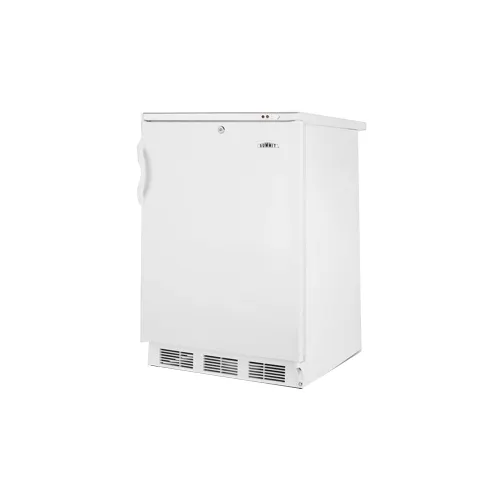
Lab Refrigeration Use Cases
Laboratory refrigerators and freezers are available in various configurations and types, supporting a range of refrigeration applications for everyday laboratory needs.
Tissue Samples and Biological Specimens
Tissue samples are among the most demanding materials to store. Short-term storage for hours to a few days is possible at 39.2°F (4°C) in a standard lab refrigerator. Medium-term storage uses –4°F (–20 °C) freezers for samples that will be processed within weeks to months. For extended storage measured in years, ultra-low-temperature freezers at –112°F (–80°C) are required.
Reagents, Enzymes, and Lab Supplies
According to the Accreditation Commission for Health Care, most reagents require storage at 35.6–46.4°F (2–8°C), the standard range for laboratory refrigerators. This includes buffers, solutions, antibodies, growth media, and many other supplies used in daily workflows. These biological samples and materials lose activity rapidly at room temperature but remain stable for much longer when refrigerated.
Chemical and Chromatography Standards
Chromatography materials require careful storage and refrigeration to maintain optimal conditions and integrity. Chromatography processes are subject to the standards set by the United States Pharmacopeia (in harmonization-november-2021 document in 〈621〉CHROMATOGRAPHY section), which specify the procedures and conditions for chromatographic separations and tests. Hence, if the materials deviate from these ranges, the sample degrades and voids the certification.
Chromatography materials typically require refrigeration throughout the workflow. Therefore, Chromatography refrigerators offer pass-through ports to keep them accessible during the process. Many chromatographic solvents are flammable (e.g., methanol, acetonitrile, hexane) and require spark-free storage, which can only be offered with specially designed lab refrigerators and freezers.
Cryopreserved Cell Lines
Cryopreservation maintains the safety and integrity of hepatocytes, pancreatic islets, sperm, oocytes, and stem cells during long-term storage. According to the article titled “Cryopreservation: An Overview of Principles and Cell-Specific Considerations” by David Whaley et al., primary cells must be stored at −220°F to −320.8°F (−140/−196°C) to ensure cell health and recovery.
The freezing process is just as important as the storage temperature. Controlled-rate freezing at approximately 1.8°F per minute (1°C per minute) gives the best results for most mammalian cells. Faster freezing causes intracellular ice formation that ruptures membranes. Slower freezing leads to excessive dehydration, which damages cells differently.
Temperature Ranges & Storage Table for Research Lab Refrigeration
| Storage Type | Temperature | Stored Materials | Notes and Considerations |
| Refrigerator | 35.6°F to 46.4°F (2°C to 8°C) | Reagents, enzymes, buffers, antibodies, bacterial cultures, medications, fresh tissue samples | Most common lab cold storage; requires daily temperature logging; avoid overloading to maintain air circulation; separate food-grade from lab units |
| Freezer | 5°F to –22°F (–15°C to –30°C) | Frozen stocks, medium-term biological samples, proteins, some enzymes, plasma, serum | Frost-free models may cause temperature fluctuations; manual defrost preferred for research; document door openings for compliance tracking |
| ULT Freezers | –76°F to –122.8°F (–60°C to –86°C) | Long-term tissue samples, DNA, RNA, cell pellets, blood products, rare reagents, biobanked specimens | High energy consumption; install temperature redundancy; inventory management critical; recovery time affects sample quality |
| Cryogenic | –238°F to –320.8°F (–150°C to –196°C) | Stem cells, oocytes, sperm, embryos, immortalized cell lines, long-term biobank samples, cord blood | Requires liquid nitrogen supply; vapor phase reduces contamination risk; personal protective equipment mandatory; oxygen monitoring essential in storage rooms |
Compliance and Lab Safety Considerations
Proper storage temperature is only a part of the lab procedures and safety standards. To ensure full compliance with the regulatory standards and utmost safety, you should maintain a reliable operational procedure with:
- Daily temperature logging & calibration: Most regulations require documented manual checks and data logging for verification. Additionally, annual calibration using NIST-traceable standards is necessary to match actual internal conditions.
- Sample separation and clear labeling: Store incompatible materials in separate units or, at a minimum, in individual compartments. Clearly label every container with contents, date, owner, and any hazard warnings. Color-coding systems can speed identification during emergencies.
- “No food” signage and dedicated units: This seems obvious, but remains a common violation. Lab refrigerators must never be used to store food or drinks to prevent cross-contamination. Post clear signage on every lab refrigerator. Provide separate break room refrigerators if needed.
- Flammable chemical handling and spark-free models: Any refrigerator storing flammable materials must be rated for that use. Standard household-style refrigerators are never appropriate for laboratory flammables, even in small quantities.
- Biohazard containment and freezer decontamination: To store biohazard materials, use sealed, unbreakable containers with absorbent materials surrounding samples in case of leaks. Clean spills in refrigerators immediately using appropriate disinfectants.
- Emergency power backups (generators, LN₂, UPS): Critical storage units should connect to emergency power systems. Uninterruptible power supplies (UPS) bridge the gap during power transfer to generators. For the most critical samples, maintain manual backup options such as dry-ice or liquid-nitrogen systems that don’t require electricity.
- Sustainable practices and refrigerant compliance: Older refrigerants like CFCs and HCFCs are being phased out globally. When replacing equipment, choose units that use low-global-warming-potential (GWP) refrigerants and comply with current regulations.
Conclusion
Research lab refrigeration requires careful selection and proper operation to ensure the safety of stored materials and employed personnel. Hence, it is essential to choose the right equipment that protects your work, meets compliance requirements, and prevents catastrophic sample loss that can set research back by months or years.
Consider your storage needs and map out what you’re storing, required temperatures, space requirements, and access patterns. Evaluate the potential growth in your storage needs over three years and balance it against the available budget to minimize the total cost of ownership, including energy consumption, maintenance, and compliance documentation, not just the purchase price.
Precision, uniformity, security, and monitoring capability should be central to your decision. Modern laboratory refrigerators offer microprocessor control, high-density insulation, forced-air circulation, and digital access systems to protect valuable and irreplaceable scientific assets.
Specialized units, including explosion-proof models, chromatography refrigerators, ULT freezers, cryogenic systems, and controlled-rate freezers, address specific technical challenges that standard equipment cannot. Matching each storage need with the right technology ensures reliability, operational safety, and long-term preservation of critical samples.
Storage expectations vary widely across research applications, making temperature accuracy non-negotiable. Tissue samples, reagents, chromatography standards, DNA/RNA, long-term biological specimens, and cryopreserved cell lines all require different conditions to maintain integrity.
Adhering to validated temperature bands and industry standards, including USP guidelines, ACHC, OSHA, and NFPA requirements, supports sample viability, reproducible results, and consistent regulatory compliance.
Effective refrigeration management extends beyond the equipment itself. Daily temperature logging, routine calibration, organized sample labeling, and strict separation of incompatible materials all strengthen operational safety.
Labs handling flammable compounds must use spark-free units, while cryogenic storage demands oxygen monitoring and appropriate personal protective equipment. Backup power solutions like the UPS systems, generators, or LN₂ alternatives provide critical safety during outages. When combined with remote monitoring and automated alerts, these measures create a robust infrastructure that protects your research around the clock.

