

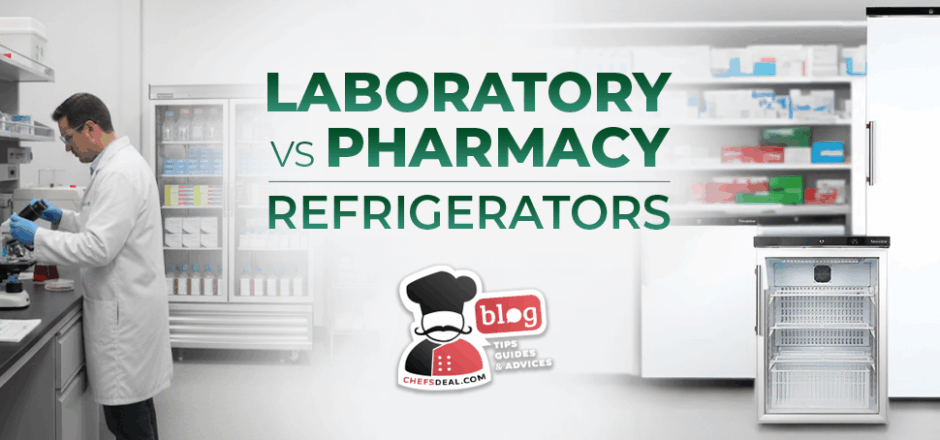
Laboratory and pharmacy refrigerators serve distinct purposes in medical and research environments.
Laboratory refrigerators are designed for scientific use, providing a flexible temperature range of 35.6°F to 59°F (2°C–15°C) for storing biological samples, reagents, and chemicals, with precise control and documentation. Pharmacy refrigerators, on the other hand, maintain a narrower temperature range of 35.6°F to 46.4°F (2°C–8°C) to preserve vaccines, insulin, and medications in compliance with CDC, WHO, and USP guidelines.
While labs prioritize sample integrity and temperature flexibility, pharmacies focus on regulatory compliance, patient safety, and consistent performance. Choosing between the two depends on the stored materials, operational environment, and certification requirements.
What is a Laboratory Refrigerator?
Laboratory refrigerators are high-precision medical refrigeration systems designed to store biological samples, reagents, enzymes, culture media, and various chemicals used in research and diagnostic testing. They typically offer a temperature range of 35.6°F to 59°F (2°C to 15°C), with some models extending to 77°F (25°C), prioritizing sample integrity to ensure accuracy. Lab coolers feature precise temperature settings, internal air circulation for uniform cooling, data logging for safe operational records, and lockable doors to prevent unauthorized use. Lab coolers are primarily used in
- Research laboratories and universities
- Diagnostic centers and pathology labs
- Biotech and pharmaceutical facilities
- Quality control testing environments
- Forensic laboratories
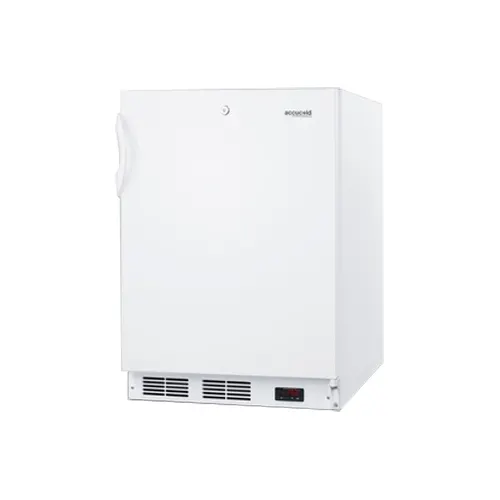
What is a Pharmacy Refrigerator?
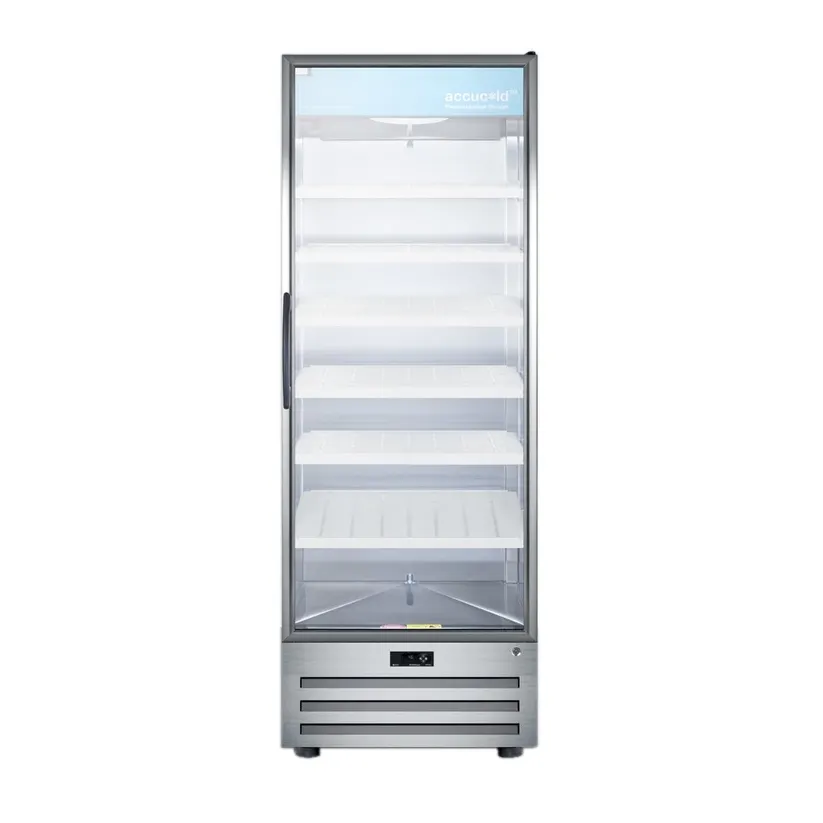
Pharmacy refrigerators are medical-grade cooling units engineered to store medications, vaccines, insulin, and other pharmaceutical products. These medical refrigerators have a temperature range of 35.6°F and 46.4°F (2°C to 8°C), which is ideal for storing most drugs and vaccines. Furthermore, pharmacy coolers feature microprocessor-controlled temperature management, high- and low-temperature alarms, and glass-door options, ensuring compliance with strict regulatory standards, drug efficacy, and patient safety. Pharmacy refrigerators are used by:
- Retail and hospital pharmacies
- Outpatient clinics and medical offices
- Long-term care facilities
- Vaccination centers
- Home healthcare providers
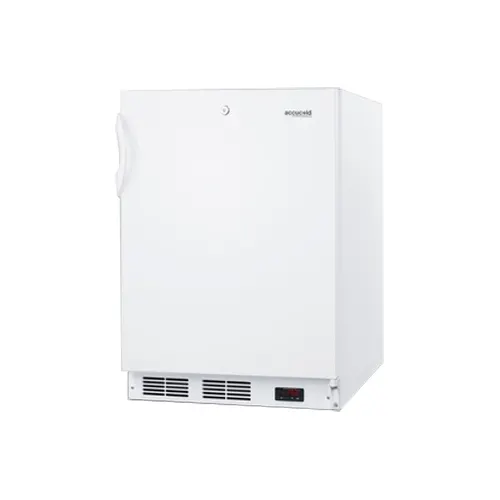
Side-by-Side Comparison: Lab vs. Pharmacy Refrigerators
| Feature | Laboratory Refrigerator | Pharmacy Refrigerator |
| Use Case | Research samples, reagents, chemicals | Medications, vaccines, insulin |
| Temperature Range | 35.6°F and 59°F (2°C and 15°C) (flexible) | 35.6°F and 46.4°F (2°C to 8°C) (strict) |
| Standards Compliance | ISO/IEC 17025, internal protocols | CDC guidelines, WHO PQS, USP <1079> |
| Regulatory Requirements | Lab-specific certifications | Medical device regulations |
| Door Visibility | Solid doors common | Glass doors preferred |
| Alarm Systems | Temperature deviation alerts | High/low temp + power failure alarms |
| Air Circulation | Natural or forced air | Forced air for uniformity |
| Shelving Options | Adjustable wire or solid shelves | Fixed or adjustable with inventory organization |
| Common Buyers | Research facilities, diagnostic labs | Pharmacies, clinics, medical facilities |
| Price Range | $800 – $5,000+ | $1,200 – $8,000+ |
Compliance & Regulatory Considerations for Laboratory and Pharmacy Refrigerators
Pharmacy and laboratory refrigerators preserve sensitive items, such as biological samples, vaccines, and medications. There are stringent regulations and requirements to ensure the safety of these valuable stocks. Hence, leading institutions and regulatory bodies define codes and rules to standardize the storage and transfer processes that medical coolers must comply with.
Pharmacy Refrigerators Must Meet:
- CDC Vaccine Storage Guidelines: The Centers for Disease Control and Prevention requires that pharmacy refrigerators used for vaccine storage maintain temperatures between 2°C and 8°C, with continuous monitoring and documentation.
- WHO PQS Certification: The World Health Organization sets standards for the Performance, Quality, and Safety of prequalification holders to meet international vaccine storage requirements, particularly important for facilities receiving government-funded vaccines.
- USP <1079> Compliance: United States Pharmacopeia Chapter 1079 outlines good storage and distribution practices for drug products, including specific temperature monitoring and alarm requirements.
- FDA Regulations: U.S. Food and Drug Administration presents an advice list for the medical refrigeration systems to help you operators deal with the exposure to high temperatures.
Laboratory Refrigerators Must Meet:
- ISO/IEC 17025 Standards: Providing an international standard for testing and calibration laboratories, ISO/IEC 17025 shows the accuracy and validity of laboratory tests and research through documentation.
- Internal Research Protocols: Many research institutions, such as the Perelman School of Medicine at the University of Pennsylvania, have specific requirements for sample storage, including temperature validation and monitoring procedures.
- Safety Considerations: Labs storing volatile or hazardous materials may need explosion-proof or specially ventilated refrigeration units.
- Good Laboratory Practice (GLP): The World Health Organization and the FDA provide regulations for laboratory studies that require documented temperature control and monitoring for sample integrity.
Which One Should You Buy?
Choose a Laboratory Refrigerator if you:
- Work in research, diagnostic, or academic laboratory settings.
- Store biological samples, enzymes, reagents, or research chemicals.
- Need flexible temperature ranges for different types of specimens.
- Require secure storage with lockable access.
- Focus primarily on sample integrity rather than regulatory compliance.
- Have varying storage needs across different research projects.
Choose a Pharmacy Refrigerator if you:
- Store vaccines, insulin, or temperature-sensitive medications.
- Operate a clinic, pharmacy, or outpatient medical facility.
- Need certified units for patient safety and regulatory inspections.
- Require continuous temperature monitoring with alarm systems.
- Must comply with CDC, WHO, or USP storage guidelines.
- Need clear visibility of inventory without compromising temperature.
Still hesitant about which medical refrigerator to choose after reviewing laboratory refrigerators vs pharmacy refrigerators? Contact our experts and explore our curated medical refrigeration collection.
Brands Offering Both Lab & Pharmacy Refrigeration
High-quality brands are offering both lab and pharmacy refrigeration systems for laboratories, pharmacies, research centers, hospitals, and clinics:
- Accucold: Pharmacy vaccine refrigerators, medical lab coolers.
- Nor-Lake Scientific: Environmental rooms and controlled temperature room systems.
- Everest Refrigeration: High-efficiency laboratory refrigerators and freezers with electronic locks and data loggers.
- Follett: Pharmacy refrigerators and freezers with intuitive alarms, display interface, and heavy-duty compressors.
- Helmer Scientific: Pharmacy and laboratory refrigerators for superior temperature uniformity and reliable operation.
- Summit Appliances: Compact to full-sized vaccine, laboratory, and pharmacy refrigerators.
- Koolmore: UL-listed pharmacy and laboratory refrigerators with multi-level emergency alarms and back-up battery options.
- USA Lab Equipment: Laboratory-focused cooling solutions.
- Thermo Fisher Scientific: High-end research and medical refrigeration systems.
FAQs About Pharmacy vs. Laboratory Refrigerators
Can a lab fridge be used for vaccines?
Generally, no. Vaccines require refrigerators that meet specific CDC guidelines and maintain a stable temperature between 35.6°F and 46.4°F (2°C to 8°C / mostly around 41°F (5°C)).
What temperature should a pharmacy refrigerator be maintained at?
Pharmacy refrigerators should maintain temperatures between 35.6°F and 46.4°F (2°C and 8°C) according to CDC guidelines.
Are lab refrigerators more expensive?
Mostly yes. Laboratory refrigerators often feature alarm systems, data loggers, locks, and additional functions for use in laboratories or pharmacies.
What’s the best fridge for storing reagents?
The best refrigerator for storing reagents is a laboratory refrigerator, designed explicitly for reagent storage.
Can I use a pharmacy refrigerator in a lab?
Yes, pharmacy refrigerators can work well in laboratory settings, especially for storing temperature-sensitive biological samples that require a strict temperature level.
Conclusion
Finding the perfect match in the comparison of laboratory refrigerators vs. pharmacy refrigerators ultimately depends on your specific storage needs, regulatory requirements, and budget.
Laboratory refrigerators offer flexibility and are ideal for use in research and testing environments. Pharmacy refrigerators provide the strict compliance and monitoring necessary for medical applications.
Consider your use cases and decide what to store in your equipment, thereby understanding the necessity for a flexible temperature range, alarms, and compressor capacity.
Evaluate the features and functions, such as data logging, electronic locks, and alarm systems, to ensure the perfect fit for your needs when comparing laboratory refrigerators versus pharmacy refrigerators.
Additionally, medical refrigeration is subject to regulations by national and international organizations such as the FDA and WHO. When selecting a medical refrigerator, verify the unit’s specifications to ensure compliance with laws and the safety of stored items and samples.
Please read our ‘Medical Refrigeration: What You Need to Know Before Buying‘ blog for detailed considerations for buying a medical refrigeration unit.
Shop Lab & Pharmacy Refrigerators with Chef’s Deal
Chef’s Deal presents a rich inventory of medical refrigeration solutions. We offer laboratory and pharmacy refrigerators from industry-leading brands in the field of scientific and medical refrigeration. Our selection includes compact, full-size, countertop models as well as solid and glass door models.
Explore our full range of lab and pharmacy refrigeration solutions or request a free consultation from our experts today to find the perfect cooling solution for your specific needs and compliance requirements, meeting the standards of the CDC, WHO, and other regulatory bodies.

