

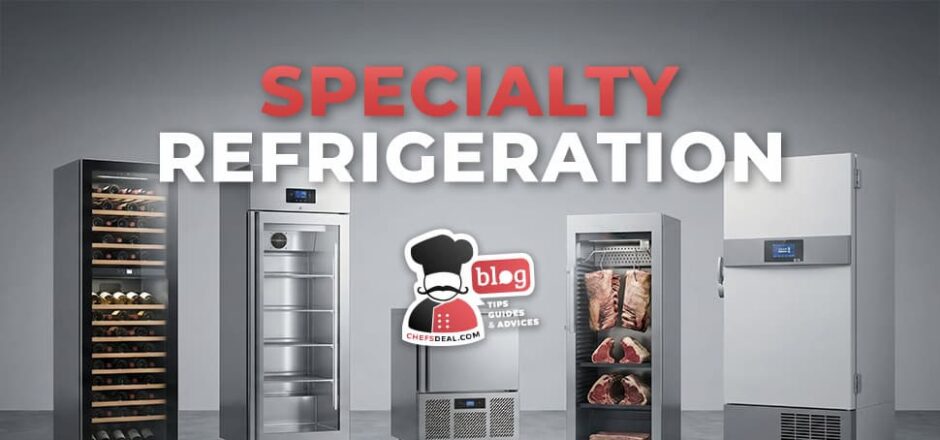
Specialty refrigeration provides precise, reliable cooling for sensitive products across industries such as healthcare, biotech, education, hospitality, and floristry. Unlike standard commercial units, these systems provide precise temperature control, humidity management, and regulatory-compliant features critical for storing vaccines, breast milk, flowers, wine, and more.
Key characteristics include application-specific design, portable and built-in options, multi-zone cooling, and IoT-enabled monitoring. As demand rises for safer, more efficient storage, specialty refrigeration ensures protection, performance, and compliance where it matters most.
What is Specialty Refrigeration?
Specialty refrigeration refers to purpose-built cooling equipment engineered to maintain precise, stable, and application-specific conditions that standard commercial units cannot reliably achieve.
Specialty refrigeration supports narrow temperature ranges, controlled humidity, and strict contamination-prevention requirements essential for sensitive products. Specialty models are critical for the medical, floral, education, biotech, and hospitality industries, as their unique designs address non-standard refrigeration requirements.
Why Specialty Refrigeration Matters
Specialty refrigeration is necessary because standard commercial refrigeration cannot meet every industry’s needs: standard units are designed for bulk food storage and tolerate wider temperature swings, making them unsuitable for sensitive items that require validated conditions. On the other hand, specialty units maintain narrower ranges, integrate alarms and data logging, and support humidity control, features general systems lack.
Industries across healthcare, biotech, education, floral, corporate, and hospitality rely heavily on specialized cooling:
- Medical facilities must have pharmaceutical‐grade fridges for vaccines, insulin, blood, and samples.
- Biotech operations require ultra-low-temperature (ULT) freezers and humidity-controlled cold rooms.
- Field clinics, mobile units, and emergency operations rely on portable refrigerators to safely transport temperature-sensitive essentials.
- Schools use milk coolers to maintain safe temperatures.
- Floral operations need high-humidity coolers.
- Hospitality settings prefer small, quiet hotel refrigerators in guest rooms.
- Daycare centers, employee wellness venues, and nurseries benefit from the specialized storage conditions provided by breast milk coolers.
- Offices prefer break room refrigerators & freezers that promise long-lasting performance with minimal maintenance.
- Bars and restaurants stock wine coolers with vibration-dampening compressors, UV-shielded glass, and dual-zone chambers that protect flavor, aroma, and long-term aging quality.
Specialty refrigeration plays a critical role in ensuring product safety and protection. Each unit provides a product-specific storage environment:
- Floral units are maintained at 80%–95% humidity to prevent dehydration.
- Absorption fridges in hotel rooms generate less than 35 dB of noise, maximizing guest comfort.
- Wine refrigerators maintain a precise 45°F-65°F (7°C-18°C) range with 50%–70% relative humidity to prevent cork drying, oxidation, and flavor loss during storage or aging.
- Medical-grade models prevent potency loss in vaccines, reagents, and medications by maintaining temperatures between 36°F and 46°F (2°C and 8°C).
- Blood bank refrigerators maintain whole blood, red blood cells, plasma, and platelets within a temperature range of 34°F to 43°F (1°C to 6°C).
- Portable medical refrigerators feature dual AC/DC power options, solar compatibility, and battery backup, enabling healthcare providers to operate in unpredictable settings.
These units improve efficiency through faster recovery, advanced airflow, and optimized workflows that reduce cross-contamination and spoilage. Built-in monitoring, remote alerts, and audit-ready logging support operational alignment. This combination of accuracy, documentation, and reliability makes specialty systems essential for industries where compliance and safety are central to operations.
Specialty Refrigeration vs. Standard Commercial Refrigeration
A comparison of specialty refrigeration and standard commercial refrigeration centers on differences in engineering, performance, and regulatory requirements.
Standard units comply with FDA and NSF/ANSI 7 sanitation guidelines for food and beverage storage. Specialty units, by contrast, cater to high-sensitivity applications that demand narrow set points, humidity control, precise uniformity, rapid recovery, and integrated monitoring systems.
Standard refrigeration maintains broad temperature ranges suitable for restaurants and retail; specialty refrigeration serves specific needs such as vaccine storage, blood banking, floral preservation, ultra-low freezing, and biologic protection. These units maintain consistently stable conditions even under heavy load changes, frequent door openings, or extreme temperature requirements.
Specialty models use microprocessor controls, multi-point sensors, forced-air systems, and advanced insulation for tight temperature precision. Floral and biotech units feature active humidity control. Medical units offer alarm systems, remote monitoring, and continuous data logging. Portable cold-chain units use battery or Phase Change Material (PCM) technology to maintain stability for 24 to 126 hours.
Construction materials also differ, with corrosion-resistant interiors, sealed electronics, antimicrobial coatings, and tamper-resistant features common in specialty models. Outdoor refrigerators, for instance, are engineered to withstand sun, rain, heat, and fluctuating ambient conditions. Their reinforced build quality keeps temperatures stable in patios, rooftop kitchens, stadiums, and other exposed areas.
Another point of comparison is the mandatory specifications. Standard commercial equipment primarily follows the FDA Food Code, USDA FSIS guidelines, and HACCP principles. Specialty systems must meet stricter standards, including CDC vaccine guidelines, VFC requirements, FDA blood storage rules, USP standards, NSF/ANSI 456 vaccine certification, WHO PQS cold-chain requirements, EPA SNAP refrigerant policies, and the AABA international benchmark for blood refrigeration.
This evaluation rounds out the decision on when to choose specialty refrigeration. Opt for specialty systems when storing sensitive, high-value, or regulated items—vaccines, biologics, blood products, flowers, milk, reagents, or hazardous materials. Specialty units are also necessary when documentation, alarms, narrow tolerance bands, or humidity control are mandatory, or when institutional policies require validated performance.
The table below summarizes the key differences between specialty refrigeration and standard units. It highlights essential features that determine which system is appropriate for regulated, high-sensitivity, or mission-critical applications.
Specialty vs. Standard Commercial Refrigeration: Comparison Table
| Feature | Standard Commercial Refrigeration | Specialty Refrigeration |
| Primary Focus | General food storage & display | Sensitive, regulated, or high-value storage |
| Temperature Range | 34–40°F standard | Application-specific (e.g., 36°F to 46°F for vaccines, high-humidity for floral, ULT –40°F to –123°F) |
| Temperature Fluctuations | Wider variance | Tight uniformity ±1°F or better |
| Monitoring | Basic thermostat/display | Microprocessor control, data logging, alarms |
| Recovery Time | Slower, not validated | Rapid pull-down, validated uniformity |
| Humidity Control | Not always actively controlled | Controlled humidity (floral, biotech) |
| Regulatory Certifications | FDA, NSF/ANSI 7, UL | CDC/VFC, NSF/ANSI 456, WHO PQS, FDA, HACCP, AABA |
| Construction | Standard stainless steel or coated interiors and shelving | Enhanced materials: corrosion-resistant metals, sealed electronics, clean-room safe, task-specific designs |
| Security Features | Basic locks (optional) | Tamper-resistant locks, access control |
| Portability Options | Limited | Portable cold-chain units with extended holdover |
What are the Key Features That Define Specialty Refrigeration?
The key features that define specialty refrigeration include advanced engineering, product-specific temperature and humidity control, and purpose-built layouts aligned with safety and regulatory needs.
These systems deliver precision far beyond standard units, preserving sensitive goods. Their features ensure consistent protection and performance across medical, floral, beverage, foodservice, and scientific applications.
- Temperature Accuracy and Stability: This refersto a unit’s ability to maintain a narrow, consistent range without drift or sudden swings. Specialty systems use microprocessor controls, multi-point sensors, and forced-air circulation to maintain uniformity within ±1°F (0.5°C).
- Humidity Management: Flowers, biomedical materials, and sensitive perishables need different humidity levels. Floral coolers typically maintain 80%–95% humidity with gentle airflow to prevent dehydration; pharmaceutical storage requires 30%–60% relative humidity.
- Design for Specific Products: Design-product match ensures each item receives its ideal environment. School milk, fresh breast milk, wines, flowers, and vaccines require different temperature ranges.
- Specialized Materials and Interior Layout: The material selection and interior layout influence durability, hygiene, and airflow. Outdoor refrigerators, for example, feature marine-grade stainless steel and corrosion-resistant frames to withstand weather exposure.
- Portability and Mobility Options: Mobility matters for field clinics, mobile labs, catering, camping, and emergency medical transport. It ensures temperature-sensitive materials remain protected during travel, off-grid use, or onsite patient care.
- Multi-Zone Cooling Capabilities: Units with multiple temperature zones enable different storage conditions within a single cabinet. They improve storage flexibility, reduce footprint needs, and maintain precise conditions for diverse inventory types.
- Integration with Architecture or Limited Spaces: Compact, space-saving designs make a significant difference across every industry. Architectural and outdoor models include panel-ready fronts, shallow depths, and ADA-compliant heights to maximize functionality without sacrificing performance.
School Milk Coolers: Keeping Student Meals Safe & Efficient
School milk coolers are specialized refrigeration units that hold large quantities of milk cartons or crates under consistent, food-safe temperatures. These systems are purpose-built to support high-volume school meal programs. School milk coolers feature reinforced cold-air circulation, oversized evaporators, and insulated cabinets that keep dairy colder than domestic and standard commercial units.
Dedicated milk coolers are essential in educational environments because milk is highly perishable and sensitive to temperature fluctuations. High-traffic school cafeterias require equipment that quickly recovers temperature, even with repeated door openings. Precise cooling between 33°F and 38°F (0.556°C and 3.3°C) prevents spoilage and protects students from foodborne illness. General-purpose refrigerators fail to maintain this uniformity across densely packed crates.
Milk coolers are available in a range of capacities, measured in crate counts rather than cubic volume. A standard milk crate holds 64 half-pint (236.588 mL) cartons, and most coolers accommodate 8, 12, or 16 crates. Smaller schools serving 200 students typically need equipment that holds 192–288 cartons; large campuses require storage for 384–576 cartons or more.
Access height is another critical specification. Top-opening designs with sliding lids average 34 in (86.36 cm) high, while side-access units with insulated hinged panels present milk at more ergonomic heights. Some manufacturers offer industry-leading serving heights as low as 16 in (40.64 cm) for elementary students.
Food safety standards for educational environments require compliance with the FDA Food Code, the USDA School Meal Program guidelines, and local health department codes. Certifications such as NSF food equipment listing and UL electrical safety are essential markers of reliability. Many units feature stainless-steel interiors, removable floor racks, and vinyl gaskets to support daily sanitation routines.
Proper placement in cafeterias ensures efficient service flow and operational safety. Milk coolers require adequate ventilation clearance and are ideally positioned near serving lines to reduce student wait times. Dual-sided units are especially effective in high-capacity cafeterias, allowing simultaneous access from two lines. Schools often integrate coolers into built-in counters or recessed wall openings that separate kitchen loading from student retrieval.

Breast Milk Refrigerators: Precision Cooling for Infant Nutrition Safety
Breast milk refrigerators serve hospitals, Neonatal Intensive Care Units (NICUs), daycare centers, and lactation facilities that prioritize infant health. These fridges preserve the nutritional, immunological, and microbiological integrity of expressed milk for premature and medically fragile infants who rely on exact feeding schedules.
- Hospitals use breast milk refrigerators to manage donor milk banks, coordinate NICU feedings, and maintain strict chain-of-custody controls.
- Daycare facilities depend on them to safely store milk for multiple infants.
- Workplaces and homes use compact versions that support flexible pumping routines.
Strict temperature requirements distinguish these units from standard medical refrigerators. CDC guidelines specify that freshly expressed milk can remain refrigerated at 40°F (4.4°C) for up to 4 days. Breast milk refrigerators use microprocessor controls, internal fans, and tight uniformity systems to maintain stable cooling during frequent door openings, preventing bacterial growth and nutrient degradation.
Sanitary interior design is another defining asset. Units typically use seamless stainless steel interiors, rounded corners, and removable shelving to ensure fast, thorough cleaning. Some advanced models incorporate antimicrobial coatings or UV sanitation lighting to reduce pathogens. Many commercial-grade breast milk refrigerators feature keyed locks or digital access controls to enhance privacy and security in shared environments.
Regulated storage standards further enhance safety. The CDC strictly discourages storing breast milk in refrigerator doors, where temperatures fluctuate during usage. Freshly expressed or pumped milk lasts for up to 4 days at 40°F (4.4°C) in refrigerators and 6 months at 0°F (–17.778°C) or colder, though up to 12 months is acceptable (CDC).
Breast milk refrigerators incorporate features tailored to infant feeding workflows, compared with standard medical units. These include lockable compartments for multi-user settings, integrated microwaves for controlled warming, and modular storage options, such as lockers or wire shelving. Combination refrigerator/freezer configurations support facilities that manage both fresh and long-term frozen milk inventories.

Portable Refrigerators & Freezers: Mobility for Catering, Outdoor, & Remote Operations
Portable refrigerators and freezers provide on-the-go temperature control for foodservice, medical, travel, and emergency applications. Compressor-based portable units deliver precise temperature regulation comparable to that of full-size refrigerators. Their compact, lightweight construction allows easy transport in vehicles, carts, trailers, or field stations.
Flexibility in power is central to the design of portable refrigeration. Most models support both DC vehicle power and AC wall outlets, enabling use in cars, RVs, boats, and buildings. Advanced units integrate lithium-ion batteries that provide 24–72 hours of runtime, with some up to 95 hours. Solar-ready systems connect directly to photovoltaic panels. Units with PCM technology continue cooling for up to 5 days.
Portable refrigeration supports a wide range of use cases.
- Emergency operations use them to preserve vaccines, insulin, blood, and samples during disaster response, rural immunization campaigns, or military deployments.
- Outdoor recreation facilities need them to store their food during camping, tailgating, and long-haul trucking.
- Construction sites keep portable fridges to ensure workers have safe, cold food in locations without grid power.
Temperature performance is again vital. Compressor models typically offer a range from –4°F to 46°F (–20°C to 8°C). Specialized medical units maintain 36°F–46°F (2°C–8°C) for pharmaceuticals and 34°F–43°F (1°C–6°C) for blood products. Durability is also critical; premium models use reinforced polymer shells, shock-absorbing frames, and sealed electronics to withstand vibration, dust, moisture, and outdoor heat exposure.
Food trucks and mobile caterers benefit significantly from portable refrigeration, which helps maintain food safety during transit and during busy service periods. These units support prep-on-the-go operations, preserve chilled ingredients during events, and ensure cold storage continuity when generators fail. Their mobility allows chefs and caterers to expand menus, reduce waste, and comply with off-site food safety standards.

Hotel & Hospitality Refrigeration: From Guest Rooms to Luxury Suites
Hotel and hospitality refrigeration includes a diverse category of compact cooling appliances designed to enhance guest comfort and streamline hotel operations. Hotel refrigeration units highlight the role of refrigeration in luxury amenities and in-room dining.
- Guest rooms include minibars or compact refrigerators, with the most popular capacities ranging from 1.7 cu ft (48.136 L) to 3.2 cu ft (90.613 L).
- Suites often feature mid-sized refrigerator-freezer combinations or undercounter drawer-style refrigerators that integrate seamlessly into cabinetry.
- Hotels use NSF-listed display coolers and beverage centers that provide quick access in high-traffic public areas, such as lobbies and breakfast stations.
- Premium hotels also rely on advanced beverage equipment, including wine coolers, open-bottle wine dispensers, and commercial-grade kegerators, to deliver elevated guest experiences.
These refrigerators enhance guest satisfaction by offering convenience, comfort, and personalization. Guests can store leftovers, medications, beverages, and infant formula safely in their rooms. Stocked minibars also generate revenue and enhance perceived hotel value.
Noise levels are a priority in hotel environments, and most in-room refrigerators operate at ≤35 dB, which is quiet enough for uninterrupted sleep. Absorption and thermoelectric minibars are nearly silent, making them preferred in premium rooms. Aesthetics are equally important; minibars and drawer units come in panel-ready, stainless-steel, matte-black, or glass-front options to complement interior design themes.
Energy efficiency helps hotels reduce operational costs across hundreds of rooms. ENERGY STAR–rated units, low-wattage compressors, eco modes, and timed power-saving systems minimize long-term electricity use. Models consuming 70 W or less are ideal for large properties seeking to meet sustainability goals.
Proper refrigerator integration is essential: standard minibars typically range from 19 in (48.26 cm) to 23 in (58.42 cm) in height, with some models reaching 36 in (91.44 cm). They are easy to install under counters, within custom cabinetry, or behind decorative panels. Drawer-style built-ins are popular in luxury suites, maximizing space efficiency and maintaining a seamless aesthetic.

Break Room Refrigerators & Freezers: Meeting Staff & Office Needs
Break room refrigerators and freezers provide employees with dependable, dedicated storage for meals, snacks, and beverages throughout the workday. These units support healthier eating habits by allowing staff to bring fresh food from home, reduce daily spending, and avoid time lost leaving the office to grab meals. Therefore, break room units enhance workplace comfort and productivity.
Choosing the right size depends on employee volume and available space.
- Small offices often rely on compact 20 in (50.8 cm) to 24 in (60.96 cm) undercounter units.
- Medium- to large-sized workplaces require single-door or top-freezer refrigerators with capacities ranging from 10 cu ft (283.168 L) to 20 cu ft (566.336 L).
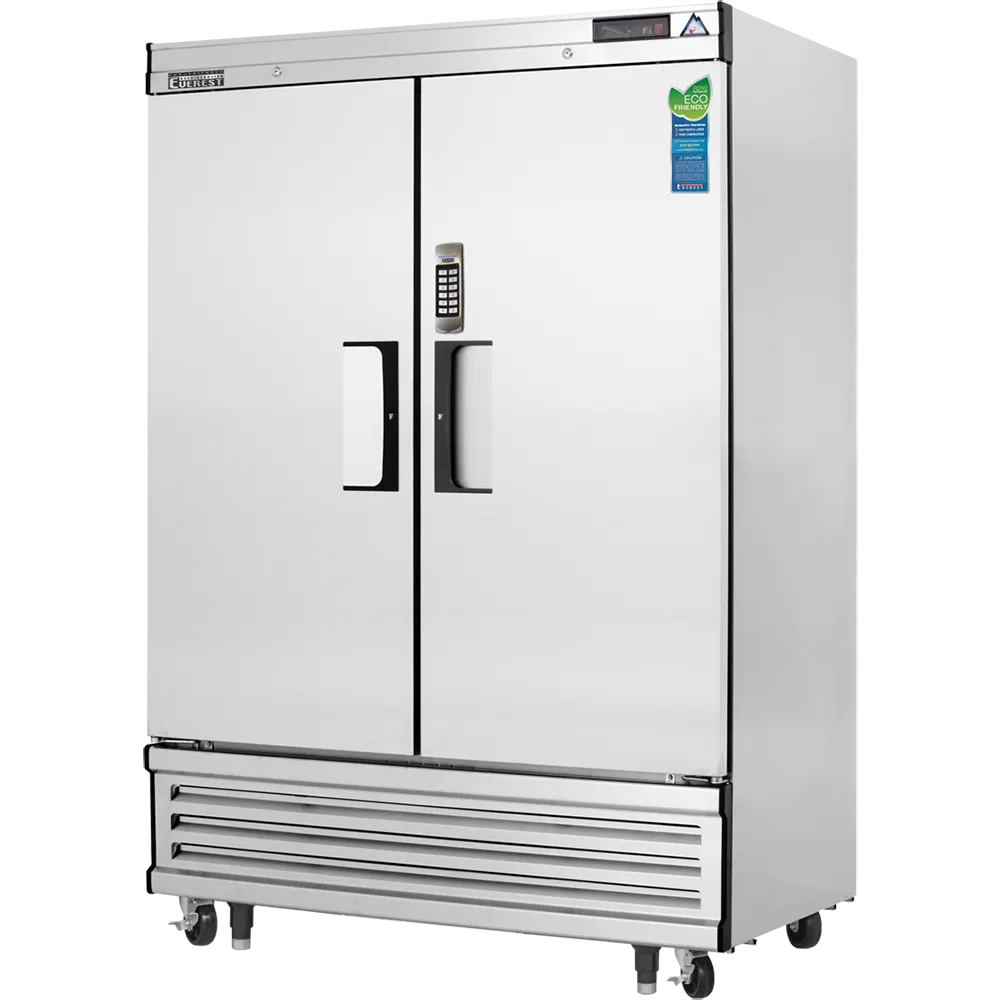
- Corporate break rooms or cafeterias benefit from side-by-side, bottom-freezer, or 2 and 3-section commercial reach-ins.
- Beverage coolers and snack fridges offer additional amenities for high-traffic meeting rooms or customer-facing spaces.
Commercial break room refrigerators are engineered for the heavy traffic common in offices, clinics, warehouses, call centers, and industrial facilities. They feature durable stainless-steel exteriors, reinforced hinges, robust door gaskets, and adjustable shelves that withstand repeated use. Their compressor systems maintain temperature more reliably during peak usage periods, with digital controls or dial thermostats for precise adjustment.
Food safety is critical in shared environments. Adequate ventilation clearance is a top priority in placing break room refrigerators to avoid overheating. They must remain level for proper condensation drainage. Door locks add security, and routine cleaning prevents cross-contamination. Electrical connections must comply with commercial safety codes.

Floral Refrigeration: Temperature & Humidity for Fresh Blooms
The purpose of floral refrigeration is to preserve cut flowers, bouquets, and arrangements; it is not for food storage. Flower coolers maintain the correct temperature and high humidity that flowers require. Standard commercial refrigerators are too cold and too dry for florals, which can shock blooms, brown petals, and shorten vase life.
Humidity control is the most salient feature of floral coolers. Food units are typically operated at low humidity to reduce mold growth and maintain product texture, but this environment can cause flowers to dehydrate. Floral coolers maintain 80–95% humidity, supported by oversized evaporators and gentle, low-velocity airflow that keeps stems hydrated. This design allows flowers to stay vibrant far longer.
Floral coolers are available in both display configurations and storage coolers, each serving a different purpose.
- Display floral units feature glass doors, LED lighting, and adjustable shelving to showcase arrangements in retail shops, grocery floral departments, and event venues.
- Storage floral coolers typically have solid doors, deeper shelving, and optimized airflow for large volumes of stems, buckets, and arrangements.
- Both types maintain consistent temperatures between 34°F and 38°F (1.1°C and 3.3°C), low enough to slow respiration, but not so low that flowers freeze or bruise.
These systems support a wide range of use cases. In every setting, floral refrigeration ensures color retention, hydration, and longevity, protecting valuable product and reducing waste.
- Retail florists rely on floral coolers to maintain product quality throughout the day.
- Event florists use them to stage large installations and protect arrangements before transport.
- Supermarkets depend on floral coolers to keep bouquets fresh on display.
- Hotel event centers use them to store large floral orders for weddings and conferences.

Medical Refrigeration
Medical refrigeration maintains narrow, highly controlled temperature ranges essential for the safety and integrity of pharmaceuticals, reagents, vaccines, and biological samples. These units operate within strict tolerances, typically 2°C–8°C (36°F–46°F) for vaccines and 1°C–6°C (34°F–43°F) for blood products. Medical refrigerators rely on microprocessor controls, internal fans, and glycol-buffered probes to ensure tight stability and uniformity.
ULT freezers support biotech, research, and laboratory applications by achieving temperatures between –40°C and –86°C (–40°F to –123°F). These systems preserve DNA, RNA, enzymes, and long-term biological samples that cannot survive warmer storage conditions. Their design includes heavy-duty polyurethane insulation, advanced compressor cascades, and alarm redundancy to maximize uptime.
Household and standard commercial refrigerators are unsafe for medical materials because they cannot maintain strict uniformity or provide validated temperature monitoring. Medical units incorporate DDLs, microprocessor controls, and temperature-buffered glycol probes that reflect the product temperature, not the ambient air temperature.
Wine & Beverage Specialty Cooling: Precision for Flavor Preservation
Wine and beverage specialty refrigeration provides the precision required to preserve flavor, carbonation, structure, and aroma—capabilities standard refrigerators lack. Beverage coolers accommodate canned and bottled drinks at ideal serving temperatures; wine coolers maintain controlled temperature and humidity conditions tailored to wine chemistry. These systems are essential for bars, tasting rooms, and collectors who demand high standards.
Beverage coolers differ substantially from standard refrigerators. Traditional food refrigerators operate between 34°F and 40°F (1.1°C–4.4°C) to keep perishable items out of the FDA “Danger Zone.” Beverage coolers, by contrast, run at a warmer range than the food fridge’s maximum.
That’s because many beverages, including some craft beer, red wine, and specialty sodas, are best served slightly above 40°F (4.4°C). Wine coolers require even higher temperatures, ranging from 45°F to 65°F (7°C–18°C), depending on the varietal. They also feature UV protection, humidity regulation, and horizontal racking—none of which are standard in general-purpose refrigeration.
Dual-zone wine cooling is essential for mixed wine collections. These models incorporate 2 independently controlled compartments, allowing red and white wines to be stored and served at their ideal temperatures simultaneously. The upper zone maintains cooler temperatures for whites and sparkling wines; the lower zone supports slightly higher temperatures suitable for reds. Multi-zone models extend this capability for collectors with diverse inventories.
Low-vibration engineering sets wine coolers apart from other beverage appliances. Vibrations disrupt sediment and alter wine aging, compromising flavor and clarity. Thermoelectric wine coolers operate with minimal vibration, making them ideal for delicate or aged wines. Compressor-based units use vibration-dampening mounts and slow-cycle technology to protect bottles while maintaining temperature stability, ensuring the long-term integrity of each vintage.
Beverage and wine refrigeration also performs a visual function in bars, lounges, retail establishments, and tasting rooms.
- Units often include UV-treated glass, soft LED lighting, and premium finishes to enhance display appeal.
- Built-in wine coolers integrate seamlessly into luxury kitchens.
- Commercial environments benefit from open-bottle wine dispensers, single-drawer chillers, and countertop units that improve workflow and elevate the guest experience.
Specialty beverage refrigeration requires precise engineering for consistent flavor performance: whether cooling carbonated drinks for bar service, chilling rosé for a tasting flight, or maintaining cellar-like conditions for collectible vintages.

Outdoor & Built-In Architectural Refrigeration: Weather-Ready Cooling
Outdoor and built-in architectural refrigeration delivers stable performance in environments where temperature, humidity, and exposure fluctuate unpredictably. These systems are essential for patios, outdoor kitchens, poolside bars, event venues, and luxury residential spaces that require reliable cold storage in outdoor environments without climate-controlled interiors. Weather-resilient design and specialized insulation ensure reliable cooling in both hot summers and freezing winters.
Stainless steel construction plays a key role in outdoor durability. High-grade stainless steel, such as 304 or 316, resists corrosion, humidity, and salt air, optimizing longevity in coastal, humid, or rainy environments. Weatherproof outdoor refrigeration features sealed electronics, reinforced door gaskets, and UV-resistant finishes that withstand direct sunlight, wind, and moisture.
Outdoor refrigeration enhances a wide range of spaces, from backyard patios and pool houses to commercial outdoor bars and event venues.
- Residential users rely on outdoor refrigerators, freezers, beverage centers, ice makers, and wine coolers to support grilling and entertainment zones.
- Commercial operations use weatherproof units for outdoor dining, resort service stations, and mobile kitchens.
- Specialty outdoor appliances, such as kegerators and built-in beverage drawers, offer expanded utility for sophisticated hospitality layouts.
Built-in outdoor refrigeration requires precise ventilation planning to maintain cooling performance. Front-venting systems draw air through the front grille, keeping the appliance within the cabinet without overheating. Manufacturers typically recommend at least 2 in (5.08 cm) to 3 in (7.62 cm) of clearance around the item. Poor ventilation causes compressors to overwork, shortens equipment life, and leads to temperature instability.
Rust resistance and insulation further distinguish outdoor models from indoor counterparts. Outdoor appliances require thicker insulation because they operate under intense ambient temperature swings. This robust insulation not only stabilizes internal temperatures but also reduces energy consumption. These features, combined with rust-resistant stainless steel construction, protect the unit from long-term wear and environmental stress.
Each specialty refrigeration outlined so far supports specific workflows, temperature requirements, and environmental conditions. The next step is to identify the best model that aligns with your unique requirements and expectations.
How to Choose the Right Specialty Refrigerator
Choosing the right specialty refrigerator begins with aligning the appliance’s performance capabilities with your operational demands. Evaluate temperature precision, environmental conditions, space limitations, and long-term cost efficiency to ensure safe, reliable cooling that meets regulatory and workflow requirements.
- Identify your specific use case: Every specialty refrigerator must match the product’s sensitivity, whether it’s vaccines, floral arrangements, wine, or grab-and-go beverages. Consider whether the unit supports long-term storage, frequent access, outdoor exposure, or mobility needs.
- Measure the space and review installation requirements: accurate measurements help avoid issues during delivery and installation. Built-in units need front-breathing ventilation and enough clearance to prevent overheating. Freestanding models require space for air intake and service access. Always verify that cabinetry cutouts, hallways, and electrical connections comply with the unit’s specifications.
- Verify temperature needs and compliance standards: Different products require strict temperature ranges and stability tolerances. Only choose units with third-party certifications, such as NSF, UL, CDC/VFC compliance, or medical-grade DDL monitoring, when needed.
- Determine budget tiers and total cost of ownership: Budgeting should account for the unit’s initial purchase price, energy consumption, maintenance, and potential product-loss risks. Premium outdoor, medical, and multi-zone wine models cost more upfront but significantly reduce long-term waste and repairs. Assess each tier based on long-term reliability rather than initial price alone.
- Evaluate energy efficiency and long-term savings: Energy-efficient refrigerators reduce utility costs and stabilize performance under demanding conditions. ENERGY STAR–rated units, improved insulation, and efficient compressors can cut operating costs by thousands over the unit’s lifespan.
Common Mistakes to Avoid When Choosing Specialty Refrigeration
Common mistakes to avoid when choosing specialty refrigeration generally involve misjudging environmental conditions, product sensitivity, and installation requirements. Overlooking humidity control, temperature precision, or ventilation space often results in product loss, equipment failure, and significantly higher long-term costs.
- Using standard units for specialized needs: Standard commercial refrigerators are not engineered for pharmaceutical stability, floral humidity, or proper wine aging. Using the wrong unit can lead to spoilage, contamination, and regulatory non-compliance. Always choose purpose-built refrigeration when handling sensitive materials or working in specialized storage environments.
- Ignoring humidity: Humidity affects everything from cork integrity in wine to bloom hydration in floral coolers. Too little moisture causes oxidation or wilting, while inconsistent humidity shortens product lifespan. Specialty units with controlled humidity prevent costly deterioration that standard refrigerators cannot, given their low-humidity design.
- Not accounting for traffic/access: High-traffic environments require refrigerators with robust compressors, rapid temperature recovery, and layouts optimized for fast-paced workflows. Frequent door openings cause temperature swings that harm sensitive products. Choosing a unit that matches your traffic pattern ensures consistent performance and product safety.
- Selecting incorrect temperature ranges: Setting temperatures too cold or too warm can damage wine, flowers, medical samples, or specialty foods. Thermoelectric coolers fail in hot climates, and food refrigerators are unsuitable for wine storage. Always confirm the exact operational range required for the product category before purchasing.
- Underestimating sizing or capacity: Units that are too small cause overcrowding, impede airflow, and overwork the compressor. Oversized models waste space and energy. Matching the unit’s internal volume to actual usage improves cooling performance without compromising the contents.
- Forgetting ventilation space: Insufficient ventilation traps heat around the condenser, leading to overheating, premature compressor failure, and temperature instability. Built-ins require precise cabinetry cutouts, and freestanding models need clearance on all sides. Even front-venting units need ventilation space for airflow.
Trends & Innovations in Specialty Refrigeration
Trends and innovations in specialty refrigeration reflect rapid advancements in energy efficiency, digital monitoring, sustainability, and modular design. New technologies focus on precise temperature control, reduced environmental impact, improved mobility, and enhanced reliability across demanding sectors, including healthcare, education, hospitality, floral retail, and off-grid operations.
- Smart monitoring (IoT sensors, remote alerts): IoT-enabled systems allow continuous remote oversight through cloud dashboards, mobile apps, and automated alerts. These tools detect temperature deviations in real time, support predictive maintenance, and reduce downtime through AI-driven performance analysis.
- Energy-efficient compressors: New-generation compressors use low-GWP refrigerants, such as R290 and R600a, to meet global environmental standards. Variable-speed technology adjusts output to real-time demand, cutting energy use by 30–40% and improving temperature stability.
- Compact & modular specialty refrigeration: Modular systems offer scalable, space-efficient storage solutions that adapt to evolving business needs. Built-in, undercounter, and drawer-style designs allow seamless architectural integration in restaurants, hotels, and residential spaces.
- Battery-powered portable cooling: Portable refrigerators increasingly support AC/DC, lithium-ion battery, and solar operation for versatility in the field. High-capacity battery packs allow 24–72 hours of off-grid cooling; PCM packs extend passive holdover time beyond 5 days for medical transport.
- Demand rising in education, healthcare, and hospitality: Hospitals and clinics require reliable refrigeration for vaccines, breast milk, blood products, and laboratory samples, driving rapid market expansion. Schools rely on milk coolers for safety compliance and waste reduction; hotels increasingly invest in quiet, energy-efficient minibars and display coolers.
FAQs About Specialty Refrigeration
What makes specialty refrigeration different from standard commercial refrigeration?
Unlike general commercial units, specialty refrigerators are engineered for niche needs, offering tighter temperature accuracy, humidity control, and purpose-built interiors. They also meet stricter industry regulations (FDA, CDC, HACCP) that standard models often don’t support.
Why is humidity control important in floral and medical refrigeration?
Floral refrigerators require high humidity to keep blooms fresh, while medical units need low humidity to protect pharmaceuticals and biological samples. Specialty refrigerators are designed to meet these contrasting environmental needs precisely.
What trends are shaping the future of specialty refrigeration in 2025 and beyond?
Key innovations include IoT-enabled smart monitoring, modular design for flexible installation, and growing demand for energy-efficient, battery-powered units in healthcare, education, and hospitality sectors.
What are the most overlooked factors when selecting a specialty refrigerator?
Common mistakes include underestimating space and ventilation requirements, overlooking humidity specifications, and selecting inappropriate temperature ranges for stored materials, especially when repurposing general-use units for sensitive items such as breast milk or reagents.
Can I use the same portable refrigerator unit for catering and emergency medical services?
Not ideally. While both benefit from mobility and off-grid power options, medical units require tighter temperature tolerances and monitoring systems. Always choose models built for the specific regulatory and safety needs of your industry.
Conclusion: Specialty Refrigeration Keeps Industries Safe, Efficient & Compliant
Specialty refrigeration supports safety, efficiency, and performance across key sectors by maintaining strict temperature ranges, controlling humidity, and delivering reliable long-term storage. Floral coolers, wine units, medical fridges, milk coolers, portable solutions, and weather-ready outdoor models all meet unique operational needs. Chef’s Deal partners with trusted brands that promise long-term performance, safety, and peace of mind in specialty refrigeration.

