


Pizza shop equipment sets are specially designed commercial units for preparing, baking, and serving pizza in the most delicious way possible. Using specialized equipment instead of generic tools enables chefs to create authentic recipes with perfectly crisp crusts.
The top essential pizza shop equipment list is made up of 10 main categories, including dough preparation equipment, pizza preparation equipment, pizzeria cooking equipment, ventilation systems, refrigeration equipment, serving and display equipment, pizza shop storage equipment, cleaning and janitorial equipment, POS and technological equipment, and safety and compliance equipment.
Each pizza shop equipment category has specific products that make the pizza creation and service process flawless, memorable, and delicious.
Budgeting, selecting the right pizza shop equipment models based on the menu and kitchen layout, and considering factors such as energy efficiency, durability, and maintenance are critical steps for success. Avoiding the most common mistakes when buying pizzeria equipment helps prevent costly errors. Applying practical tips on cleaning and utilizing the must-have tools for small or large pizzerias provides valuable support to ensure smooth operation and long-term growth.
What is Pizza Shop Equipment?
Pizza shop equipment is specialized tools designed specifically for professional pizza-making operations. Using specialized equipment to bake and serve pizza, rather than general kitchen tools, makes all the difference in terms of taste, ease of preparation, service quality, and safety. You can streamline your preparations, get branded and efficient packaging, improve dough quality and overall flavor, and create a safer work environment for you and your staff with the right pieces of equipment.
What is The Essential Pizza Shop Equipment?
Essential pizza shop equipment is listed below:
- Dough preparation equipment: dough mixers, dough rounders, dough sheeters, pizza dough press machines, dough storage containers and trays, and proofing cabinets.
- Pizza preparation equipment: pizza prep tables, cutting boards and guides, pizza dough dockers, pizza cutters and pizza wheels, portion scales, pizza paddles (pizza peels), and pizza dough storage and proofing containers.
- Pizzeria cooking equipment: deck ovens, conveyor ovens, brick ovens, wood-fired ovens, gas ovens, electric ovens, convection ovens, portable ovens, countertop ovens, charbroilers and grills, deep fryers, salamanders, and cheese melters
- Ventilation systems
- Refrigeration equipment: walk-in coolers for bulk ingredient storage, undercounter refrigerators, reach-in refrigerators and freezers, and pizza prep refrigerators (refrigerated prep tables).
- Serving and display equipment: pizza display cases, heated holding cabinets, salad bars, beverage coolers, serving ware, pizza pans and screens, and pizza cutters.
- Pizza shop storage equipment: dry storage shelving, ingredient storage bins, labeling supplies, walk-in coolers, and freezers for bulk storage.
- Pizza takeout and delivery supplies include pizza boxes, pizza bags, and disposable serving supplies (such as disposable pizza pans, portion cups, napkins, plates, utensils, cups, lids, and straws).
- Cleaning and janitorial equipment includes commercial dishwashers, hand-washing and sanitizing sinks, mop sinks, cleaning tools, and sanitizing supplies.
- POS and technological equipment: restaurant POS systems, inventory tracking software, online ordering and delivery integration tools, and customer loyalty systems.
- Safety and compliance equipment includes first aid kits, fire suppression systems, protective clothing such as gloves, aprons, and hairnets, as well as food thermometers.
Selecting the right combination of pizza shop equipment is crucial to ensure efficient workflow, food safety, and outstanding product quality in any pizza operation.
1. Dough Preparation Equipment
Dough preparation equipment includes units such as dough mixers, dough rounders, dough dividers, dough sheeters, pizza dough press machines, dough storage containers and trays, and proofing cabinets.
These units streamline the dough preparation process, enabling chefs to achieve perfectly rounded portions at the exact thickness they desire. Dough preparation equipment ensures dedicated containers and cabinets for storage purposes.
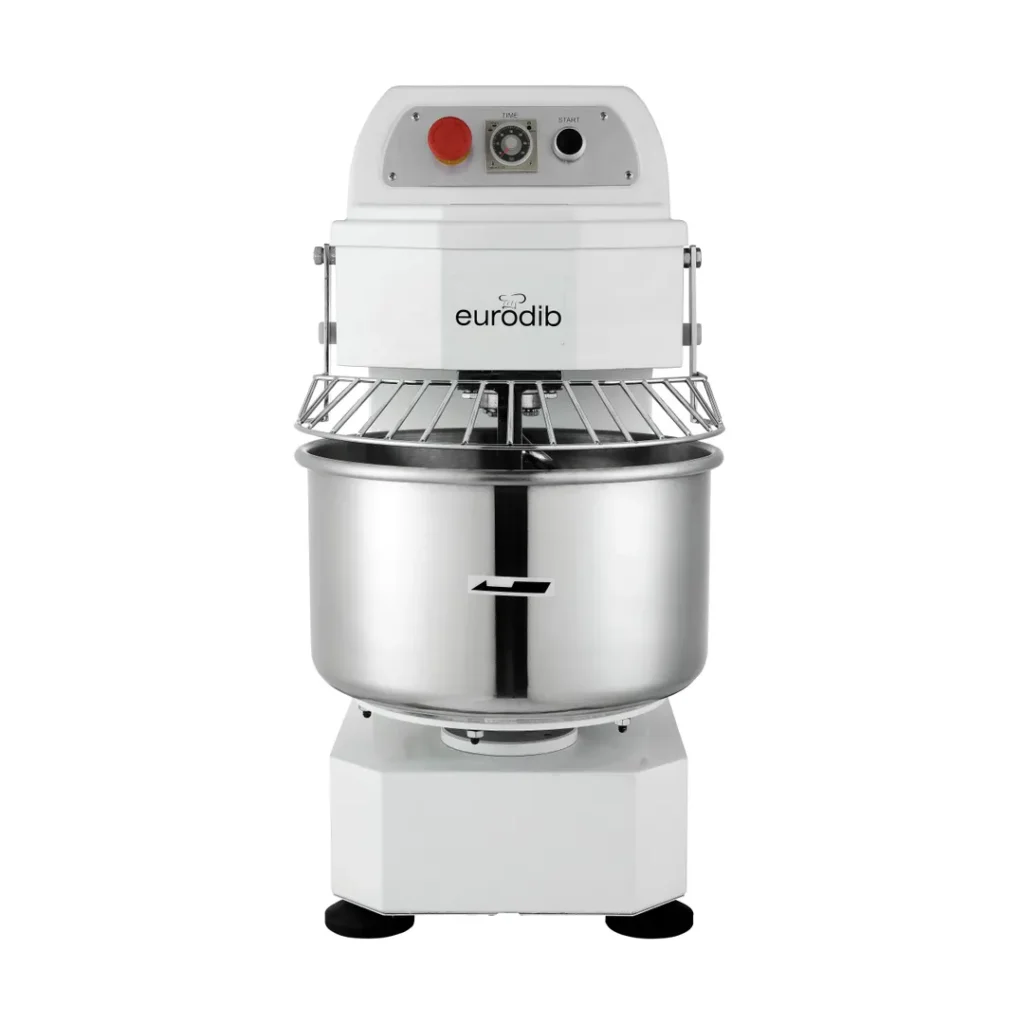
Dough Mixers: Dough mixers are machines designed to efficiently mix large quantities of dough. Mixing dough is a laborious task, and it is challenging to achieve a uniform texture throughout. So, a dough mixer can save you time and effort while enabling you to achieve and uphold standards in your pizzas. There are two types of mixers: planetary and spiral mixers. Planetary mixers are versatile and great for various mixing needs, while spiral mixers are specially designed for denser pizza doughs.
Dough Rounders: Dough rounders help shape divided dough portions into uniform balls. This step improves portion and shape consistency across all orders.
Dough Dividers: Dough dividers are used to accurately and efficiently cut and portion large batches of dough. Using dough dividers ensures that all portions are equal in size and weight, a crucial factor in customer satisfaction.
Dough Sheeters: Dough sheeters are used to flatten dough balls into sheets of dough at desired thicknesses. These tools enable pizzerias to serve different crusts, such as thin, deep-dish, or regular, in uniform size and texture every single time.
Pizza Dough Press Machine: Pizza dough press machines are similar to dough sheeters, as they are used to flatten dough balls into thin sheets. However, they utilize heat and pressure, allowing for greater control over the dough’s thickness while preserving air bubbles.
Dough Storage Containers and Trays: Dough storage containers and trays are used to organize and store prepped dough in refrigeration units, preventing the dough from drying out or becoming contaminated. Proper storage is key to quickening service and preserving the texture of the prepped dough.
Proofing Cabinets: Proofing cabinets provide a warm and humid environment for dough fermentation before baking. The dough in a proofing cabinet rises properly and faster, and having a controlled environment ensures consistency throughout all production.
2. Pizza Preparation Equipment
Pizza preparation equipment includes pizza prep tables, cutting boards and guides, pizza dough dockers, pizza cutters & wheels, portion scales, pizza paddles, pizza dough storage and proofing containers. These units enable pizzerias to prepare pizzas quickly and consistently.
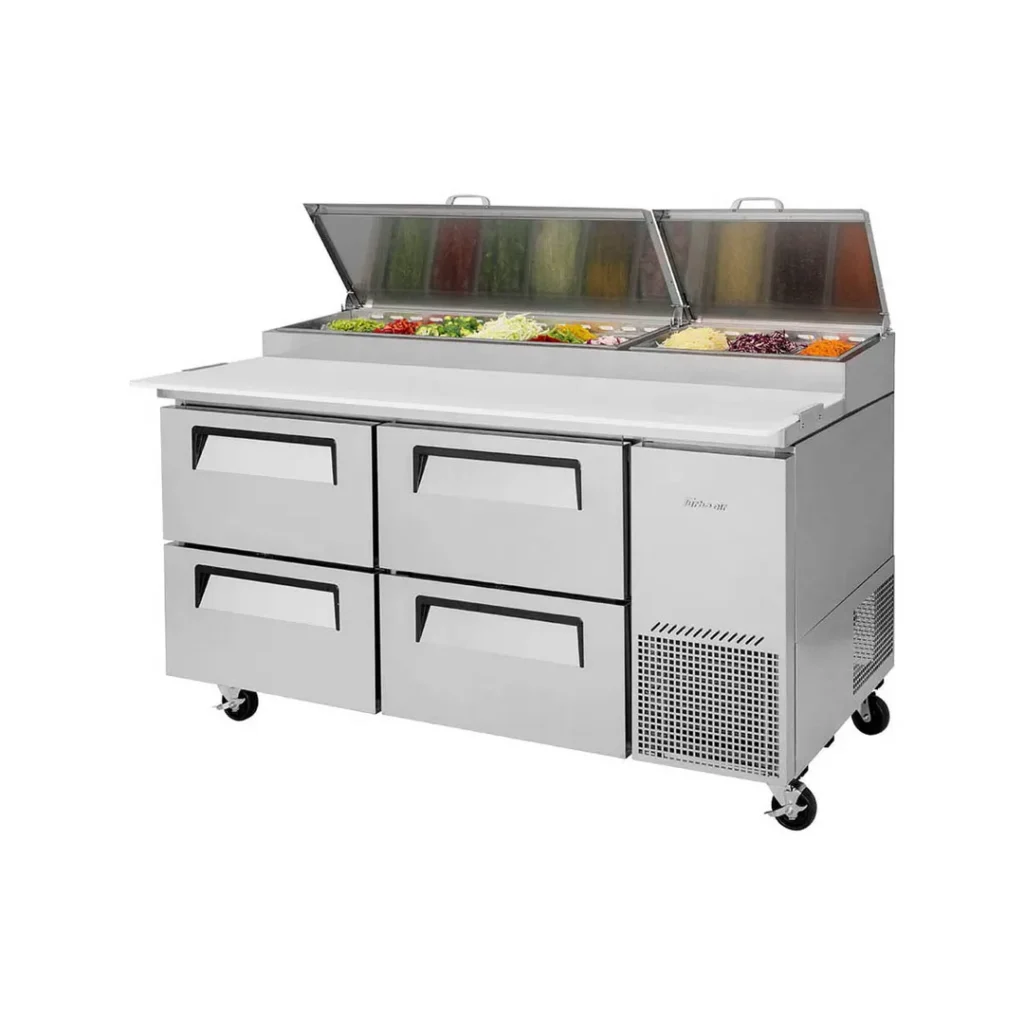
Pizza Prep Tables: Pizza prep tables are multifunctional workstations that combine refrigerated storage with a spacious prep surface. They keep toppings and ingredients fresh and within your chef’s arm’s reach while offering a sanitary area to assemble pizzas. Pizza prep tables include ingredient pans, cutting surfaces, undercounter storage, and trash bins. Combining all these elements in one unit makes prep tables a critical component in pizza kitchens.
Cutting Boards and Guides: Cutting boards and portioning guides are used to prepare ingredients and slice pizzas with accuracy and cleanliness. You should opt for color-coded boards to avoid cross-contamination.
Pizza Dough Dockers: Pizza dough dockers are handheld tools that press small holes into dough to prevent it from bubbling during baking. This ensures a flatter, more even crust, which is necessary for thin crust orders. Semi-automating what would otherwise be a tedious and time-consuming task is a great time-saver.
Pizza cutters & Pizza Wheels: Pizza cutters & pizza wheels are used to slice pizza equally and efficiently without tearing or dragging toppings around. They are very sharp and thin, allowing for consistent, good results. You should cut your pizza right after it is done baking for the best and cleanest results.
Portion Scales: Portion scales are used to weigh dough balls and toppings, ensuring consistent portioning and product quality. Controlling ingredient amounts not only improves uniformity in taste and appearance but also reduces food waste and helps manage food costs more effectively. Also, your customers will be more satisfied to see the same quality and portions every time.
Pizza Paddles (Pizza Peels): Pizza peels are long-handled tools used to transfer pizzas safely and efficiently in and out of hot ovens. They come in wood or metal varieties, with different shapes for loading raw dough versus retrieving baked pizzas. A good peel helps prevent burns, preserves pizza shape, and speeds up oven workflow. They are absolute must-haves for staff safety.
Pizza Dough Storage and Proofing Containers: Pizza dough storage and proofing containers are designed to store dough balls during proofing or refrigeration. They protect dough from air exposure, cross-contamination, and drying out, while also allowing for easy stacking and storage. Their use enhances dough quality and extends shelf life during preparation operations, allowing pizzerias to maintain a sufficient amount of dough on hand for rush-hour service.
3. Pizzeria Cooking Equipment
Pizzeria cooking equipment includes pizza ovens, charbroilers and grills, deep fryers, salamanders, and cheese melters. With this equipment at your disposal, you can easily bake a pizza and prepare a nice variety of side dishes such as fries or onion rings with cheese on top.
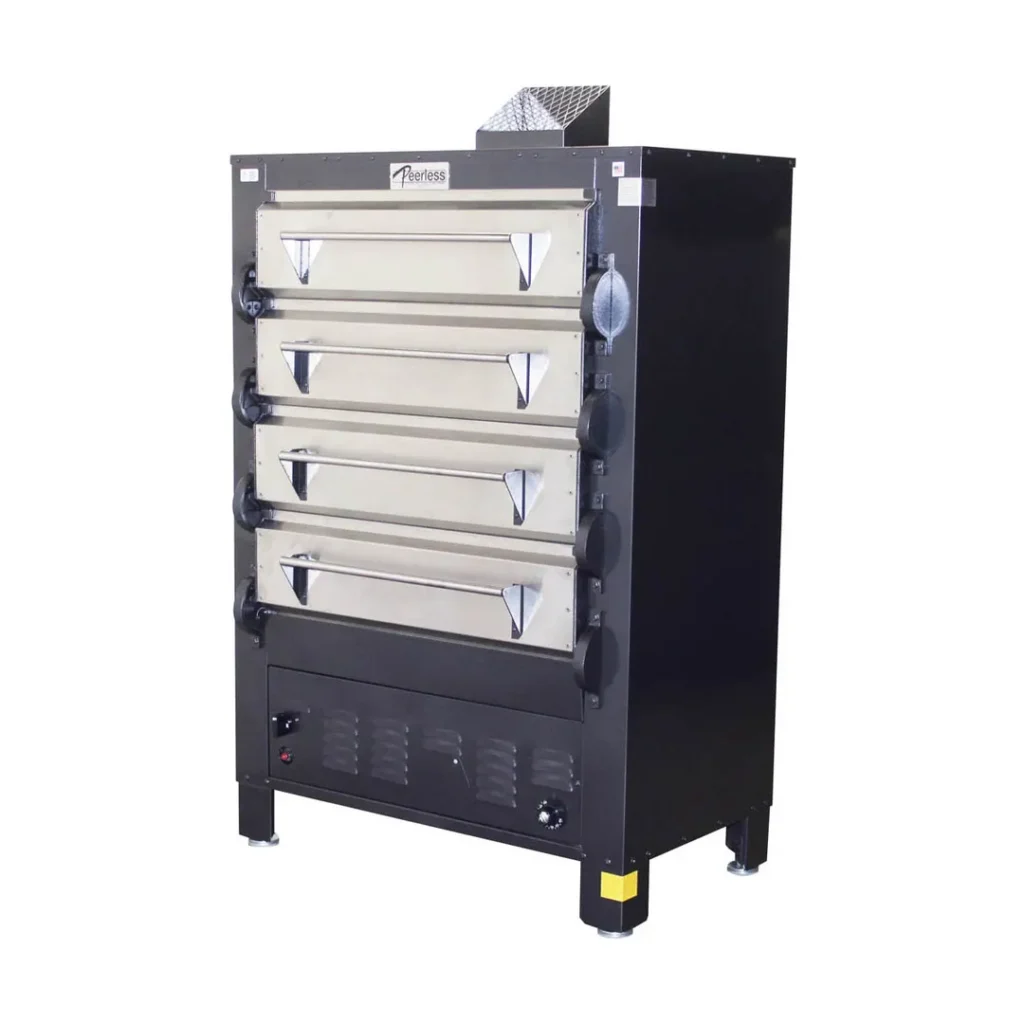
Commercial Pizza Ovens (Deck, Conveyor, Brick, Wood-fired): Commercial pizza ovens are designed to cook pizzas quickly and evenly at high temperatures. There are several types available to suit different needs and pizza styles.
- Deck ovens are popular for their even heat distribution and ability to cook multiple pizzas at once. Conveyor ovens utilize a moving belt to consistently cook pizzas, making them ideal for high-volume operations. Brick ovens and wood-fired ovens offer an artisanal touch with high heat and distinctive flavor, making them preferred for Neapolitan or rustic-style pizzas.
- Gas ovens are efficient and fast-heating, while electric ovens offer precision and ease of installation. Other options include convection ovens for airflow-driven even baking, portable ovens for mobility, and countertop ovens for space-saving setups in smaller operations. Consider the type of pizza you wish to serve, the capacity you need, and your kitchen space when purchasing the best pizza oven for your pizzeria.
Charbroilers and Grills: Charbroilers and grills are essential for pizzerias that offer grilled toppings or menu items beyond pizza, such as roasted vegetables, grilled chicken, or steak. They provide intense, direct heat and smoky flavor that enhances ingredient quality. These units are versatile, fast-heating, and contribute to a more diverse menu offering.
Deep Fryers: Deep fryers are commonly used in pizza shops that serve sides like mozzarella sticks, chicken wings, or French fries. A commercial fryer allows consistent, crispy results and fast turnaround times. You need to properly filter and maintain fryers to handle high volumes while retaining food quality and minimizing oil waste.
Salamanders and Cheese Melters: Salamanders and cheese melters are compact broiling units used for finishing dishes with molten cheese. You can use these to add melted cheese to baked pasta or to achieve a golden-brown finish on your pizzas. These high-heat devices provide a professional final touch, enhancing presentation and flavor without overcooking the dish.
4. Ventilation Systems
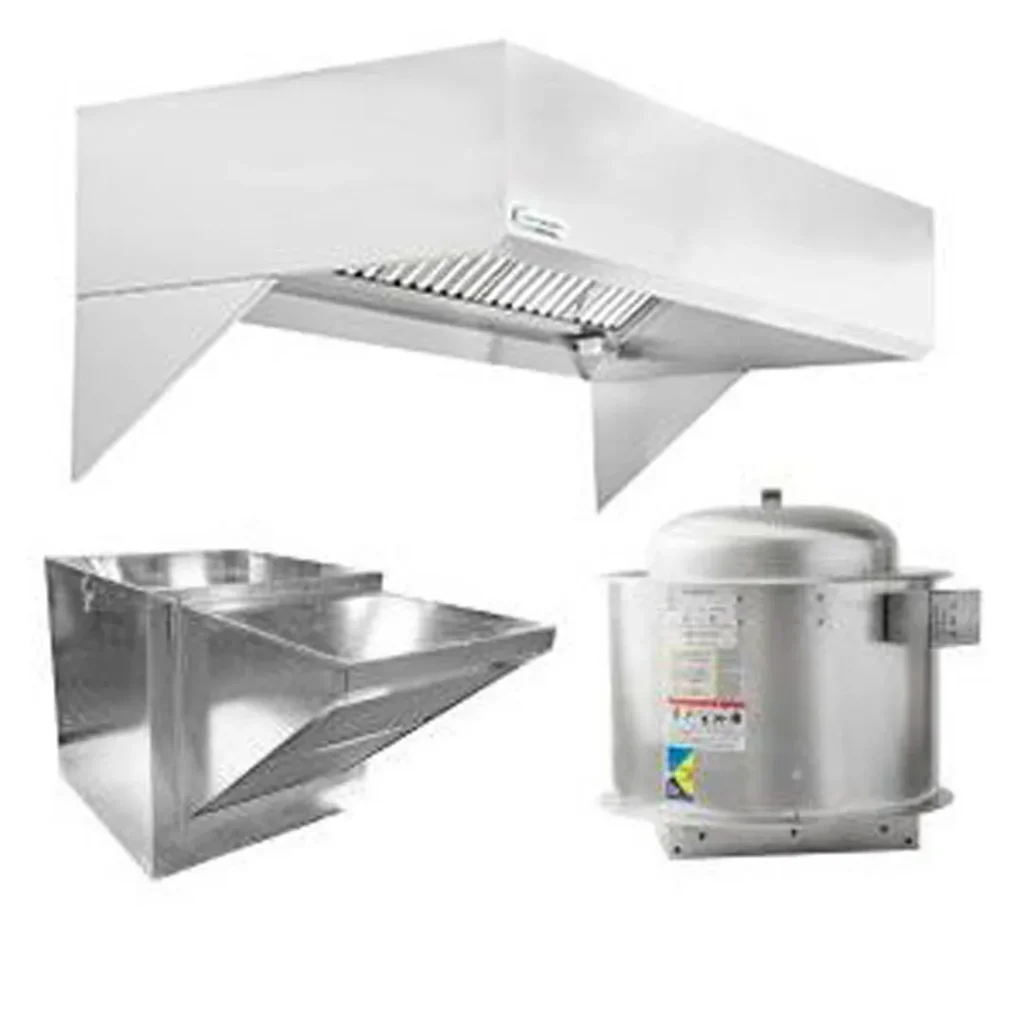
Ventilation systems are critical components in pizzerias, ensuring safe air circulation and compliance with health and safety regulations. Good ventilation systems remove heat, smoke, steam, and airborne grease from your workspace.
A well-designed ventilation setup typically includes commercial restaurant hoods, exhaust fans, and ductwork that work together to maintain indoor air quality, reduce odors, and prevent grease buildup. Proper ventilation contributes to employee comfort, equipment longevity, and fire safety, making it a non-negotiable investment for all commercial pizzerias.
5. Commercial Refrigeration Equipment for Pizza Shops
Commercial refrigeration equipment for pizza shops includes walk-in coolers, undercounter refrigerators, reach-in refrigerators/freezers, pizza prep refrigerators, and serving and display equipment.
Walk-in Coolers (for Bulk Ingredient Storage): Walk-in coolers provide ample space to store large quantities of pizza ingredients, including cheese, sauce, and dough. Their spacious design helps pizza shops stay stocked during peak hours and reduces the frequency of deliveries. They are ideal for high-volume operations that require storing large quantities of ingredients simultaneously.
Undercounter Refrigerators: Undercounter refrigerators are compact refrigeration units placed under worktables or counters to keep frequently used ingredients within your reach. These units save space and improve workflow by allowing staff to quickly access toppings, sauces, or beverages without having to leave the prep area. They’re instrumental in small kitchens where space optimization is crucial.
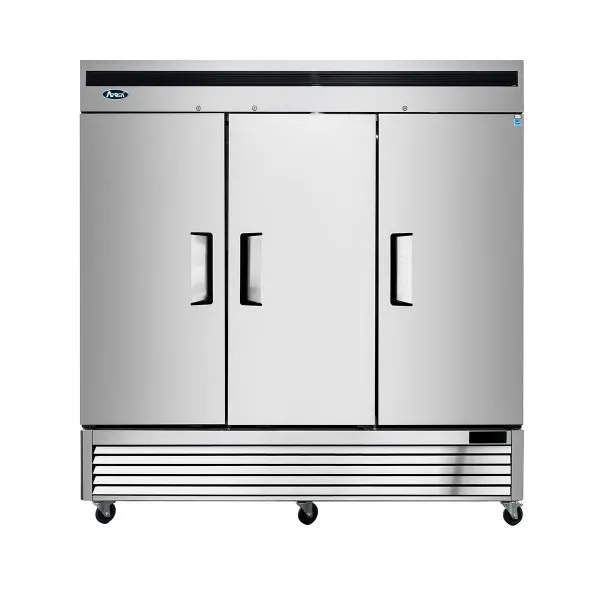
Reach-in Refrigerators/Freezers: Reach-in units are upright, front-access refrigerators and/or freezers used for storing general ingredients. They come in one-, two-, or three-section models and can be used to store items used daily, as they provide quick and easy access to chilled or frozen goods.
Pizza Prep Refrigerators (Refrigerated Prep Tables): Pizza prep refrigerators are equipped with a refrigerated base, a cutting surface, and an ingredient storage rail on top. This multifunctional unit keeps toppings cold and organized while providing a space to assemble pizzas. It’s a staple in every pizza shop to streamline the preparation process and ensure that ingredients remain safe from spoilage.
Serving and Display Refrigerators: Serving and display refrigeration equipment, such as glass-door merchandisers and countertop coolers, is designed to store and showcase beverages, desserts, or prepackaged salads while maintaining the ideal serving temperature. This equipment boosts impulse sales by providing customers with quick and attractive access to cold items near the register.
6. Serving and Display Equipment for Pizza Shops
Serving and display equipment for pizza shops includes pizza display cases, heated holding cabinets, salad bars, beverage coolers, serving ware, pizza pans and screens, and pizza cutters. With these pieces of equipment at hand, you can serve and display your pizza and sides professionally, ensuring even portions across all orders.
Pizza Display Cases: Pizza display cases are heated or non-heated cabinets designed to showcase ready-to-eat pizzas while maintaining their freshness and appetizing appearance. These units enhance visual appeal and promote impulse purchases by allowing customers to see the available selections. They are extremely popular in shops that sell pizza by the slice. Heated models maintain optimal serving temperature without drying out the product.
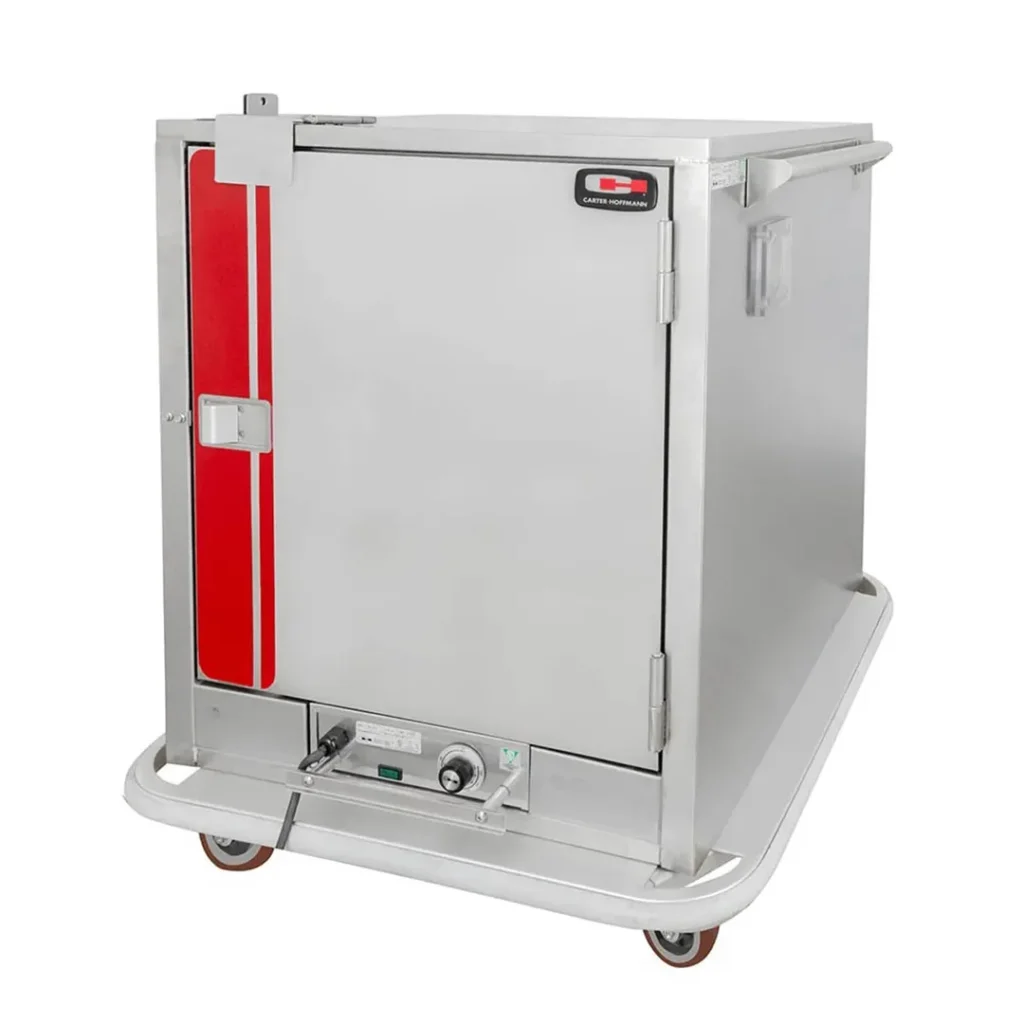
Heated Holding Cabinets: Heated holding cabinets maintain the safe temperature of cooked pizzas, sides, and other hot foods until they are ready to be served or delivered, preventing them from drying out. These cabinets help maintain food quality and prevent temperature-related spoilage during busy service times.
Especially in the summer, uncontrolled external heat can spoil the cheese, which makes a heated holding cabinet an essential. Their consistent heat distribution ensures that items remain warm, fresh, and ready to go.
Salad Bars: Salad bars offer a refrigerated setup for presenting fresh salads, toppings, and dressings in an organized, self-serve format. They’re ideal for pizzerias where customers can choose their toppings. Thanks to these units, you can encourage customization while keeping your precious ingredients fresh and sanitary.
Beverage Coolers: Beverage coolers are refrigeration units used to store and display bottled or canned beverages. You can position them near the register or in self-serve areas to make them easily accessible and drive impulse purchases. They typically feature clear glass doors and bright lighting to enhance visibility and customer convenience.
Serving Ware: Serving ware for pizzerias includes trays, plates, and utensils. Serving ware directly impacts a customer’s experience in your shop, and you should invest in quality ware to impress them. You can purchase branded wares to give your pizzeria a more professional look and make it more memorable.
Pizza Pans and Screens: Pizza pans and screens are used during baking to control the texture of the crust and ensure even cooking. Pans provide a uniform shape and thicker crust, while screens allow for better airflow and crispier results. Having a variety of both types can help you meet customer preferences for different pizza styles.
Pizza Cutters: Pizza cutters are essential tools used to slice pizzas cleanly and quickly. They are available in wheel-style or rocker-style designs and can help ensure consistent portion sizes and maintain presentation quality. You can reduce prep and service time with durable, sharp cutters.
7. Pizza Shop Storage Equipment
Pizza shop storage equipment includes dry storage shelving, ingredient storage bins and labeling supplies, walk-in coolers and freezers for bulk storage, pizza takeout and delivery supplies, pizza boxes, pizza bags, and disposable serving supplies. You can get these branded with your logo to make a good impression on your customer base and increase your brand’s memorability.
Dry Storage Shelving: Dry storage shelving is important for organizing non-perishable ingredients, packaging materials, and kitchen tools in a clean and organized manner. They are typically made of stainless steel or heavy-duty plastic and designed to withstand the weight of bulk items while promoting airflow and easy cleaning. Proper shelving improves workflow, safety, and inventory management in busy pizza kitchens.
Ingredient Storage Bins and Labeling Supplies: Ingredient storage bins and labeling supplies are used to keep pizza ingredients fresh, free from contamination, and easily accessible. These bins are often wheeled for mobility and come with airtight lids for prolonged shelf life. Labeling supplies, such as date tags and content stickers, helps maintain food safety standards and simplifies inventory tracking by ensuring items are used in the correct order, first-in, first-out.
Walk-in Coolers and Freezers for Bulk Storage: Walk-in coolers and freezers are used to store large quantities of ingredients, such as cheese, meats, sauces, and dough, for extended periods. These units are essential for maintaining product freshness and ensuring compliance with food safety regulations. Their spacious design enables efficient bulk purchasing and organization, supporting seamless operations during high-volume service hours.
Pizza Takeout and Delivery Supplies: Pizza takeout and delivery supplies are crucial for takeout and delivery operations. They provide a protective and heat-retaining storage for pizzas, ensuring the pizza doesn’t go cold on the road.
- Pizza boxes: Pizza boxes are essential for takeout and delivery, serving as a protective and heat-retaining container for pizzas. They come in various sizes and customizable designs, often featuring ventilation holes to prevent sogginess. High-quality boxes preserve the integrity of the pizza during transport and enhance brand visibility with printed logos or promotional messages.
- Pizza bags: Insulated pizza bags are used to keep pizzas hot and fresh during delivery. These bags are designed to retain heat while allowing steam to escape, preventing the crust from becoming soggy. Pizza bags, as opposed to boxes, are more commonly used in pizza-by-the-slice type of pizzerias.
- Disposable supplies: Disposable supplies encompass single-use items, including paper plates, napkins, cups, utensils, and straws. These are essential for quick-service or takeout-focused pizza shops.
8. Cleaning and Janitorial Equipment
Cleaning and janitorial equipment for pizzerias includes commercial dishwashers, hand-washing and sanitizing sinks, mop sinks, and cleaning tools, as well as sanitizing supplies. You need to keep your prep area and workspace as clean as possible to avoid contamination.
Commercial Dishwashers: Commercial dishwashers are essential for maintaining cleanliness and hygiene in high-volume pizzerias. They are designed to handle large loads of dishes quickly and efficiently, ensuring you always have dishes available. They sanitize dishes, utensils, and cookware using high-temperature water or chemical sanitizers. Their speed and power reduce manual labor while helping to meet local health codes and food safety regulations.
Handwashing and Sanitizing Sinks: Handwashing and sanitizing sinks are essential in any commercial kitchen to ensure staff maintain personal hygiene and prevent cross-contamination. This is a significant point in health inspections and should not be skipped. These sinks must be conveniently located, stocked with soap and paper towels, and separated from food prep areas. Some setups include three-compartment sinks for washing, rinsing, and sanitizing equipment manually.
Mop Sinks and Cleaning Tools: Mop sinks and cleaning tools are specially designed to keep floors clean and fill and dump mop buckets without contaminating other sinks. Regular cleaning prevents slip hazards and contributes to a sanitary working environment. Since what gets cleaned up in a pizzeria is often grease and debris, it is important to use a dedicated mop sink for waste disposal.
Sanitizing Supplies: Sanitizing supplies in a pizzeria include chemicals like bleach, quaternary ammonium compounds (quats), and food-safe sanitizers, along with cleaning cloths, gloves, and spray bottles. These are used to disinfect food contact surfaces, equipment, and high-touch areas throughout the kitchen. Maintaining an adequate stock and using it properly is crucial to preventing foodborne illnesses and meeting inspection standards.

9. POS and Technological Equipment
POS and technological equipment for pizzerias include restaurant POS systems, inventory tracking software, online ordering and delivery integration, and customer loyalty systems. These features enable businesses to improve revenue and customer satisfaction.
Restaurant POS Systems: A restaurant POS (Point of Sale) system is the financial center point of a pizza shop’s operations, handling orders, payments, and receipts. Modern POS systems enable table-side ordering, splitting bills, real-time sales tracking, and integration with kitchen display systems. A reliable POS increases efficiency, reduces errors, and improves the customer experience at checkout. You can leverage the data stored here to inform your business strategy.
Inventory Tracking Software: Inventory tracking software helps monitor ingredient usage, minimize waste, and manage restocking effectively. Automating this tedious task enables you to view real-time data on stock levels, expiration dates, and order history, all in one place. Plus, you can easily avoid running out of key ingredients and control food costs with such systems. When integrated with your POS, it can automate inventory deductions based on sales of specific menu items.
Online Ordering and Delivery Integration: Integrating online ordering and delivery significantly expands a business’s reach and boosts sales. Since these services are conducted through third-party platforms, they are pretty easy to implement. Such software systems connect your website or app with your kitchen to ensure accurate orders, timely preparation, and coordinated delivery or pickup. It also reduces human errors from phone-in orders.
Customer Loyalty Systems: Customer loyalty systems help build repeat business by offering points, discounts, or rewards for frequent purchases. These systems can be integrated into your POS or app, automatically tracking customer activity and issuing promotions.
10. Safety and Compliance Equipment
Safety and compliance equipment includes first aid kits, fire suppression systems, protective clothing, and food thermometers. The FDA and OSHA mandate these requirements for the safety of food, the public, and staff.
First Aid Kits: First aid kits are a fundamental safety requirement in any commercial kitchen. They should be stocked with bandages, antiseptics, gauze, and burn treatments, and placed in an easily accessible location. These kits enable staff to promptly address minor injuries, including cuts and burns.
Fire Suppression Systems: Fire suppression systems are designed to detect and extinguish fires while cutting off the gas supply for added safety. Pizza shops, especially those using high-temperature ovens and fryers, must have fire suppression systems installed above their cooking equipment to pass inspections and remain open for business.
Protective Clothing (Gloves, Aprons, Hairnets): OSHA requires the use of protective clothing, such as gloves, aprons, and hairnets, to ensure staff safety. They are used to maintain hygiene and ensure safety in food preparation areas. Gloves prevent contamination during food handling, aprons protect clothing and skin from hot splashes and spills, and hairnets keep stray hairs out of food.
Food Thermometers: Accurate food thermometers are essential for ensuring that ingredients are cooked and stored at safe temperatures. They help prevent undercooked food and bacterial growth, protecting customers from foodborne illnesses.
How Much Does Pizza Shop Equipment Cost?
The cost of pizza shop equipment can vary significantly depending on the size of the business, the quality of the equipment, and whether you opt for new or used items. A typical mid-sized pizzeria may expect to spend anywhere from $50,000 to $150,000 to fully outfit its kitchen and front-of-house area.
Major investments include pizza ovens, which range from $5,000 to $20,000 depending on the type and size, and refrigeration units such as walk-in coolers and reach-in freezers, which can cost between $2,000 and $10,000.
Refrigerated pizza prep tables typically range in price from $1,000 to $4,000, while dough mixers can cost between $2,000 and $8,000, depending on their capacity and type.
Ventilation systems are another significant cost, typically ranging from $3,000 to $15,000.
Other essential components, such as dishwashing stations, POS systems, display equipment, and sanitation stations, can add several thousand dollars more to the total budget.
Investing in high-quality, energy-efficient equipment often yields long-term savings and smoother operations, although the upfront costs may seem steep. You can benefit from financing options offered by dealers to alleviate some of the costs.
6 Considerations When Buying the Best Pizza Shop Equipment
You can choose the best pizza shop equipment for your business by considering factors such as menu items and concepts, kitchen size and layout, budget, energy efficiency and sustainability, durability, ease of maintenance, and brand and model.
1. Menu Items and Concept
The equipment you choose should directly support your menu offerings. For instance, if you’re offering Neapolitan-style pizzas, a wood-fired oven is essential; meanwhile, a high-volume pizzeria might require a conveyor oven for increased speed.
2. Kitchen Size and Layout
Your kitchen’s size and layout determine what equipment will fit and how efficiently your team can move and work. Compact layouts require space-saving or multi-functional equipment, while larger spaces might allow for specialized stations.
3. Budget Considerations
Budget is a crucial factor in any pizzeria equipment decision. It’s essential to strike a balance between initial costs and long-term value. While it may be tempting to buy the cheapest option, you shouldn’t be fooled by low price tags. Investing in quality equipment reduces maintenance costs and downtime in the long run, ultimately saving you money. Leasing or buying refurbished equipment is also an option to stay within budget.
4. Energy Efficiency and Sustainability
Energy efficiency and sustainability are top considerations when buying pizza shop equipment to reduce bills and carbon footprint. While energy-efficient equipment may have a higher upfront cost, it can lead to substantial savings on utility bills over time. Look for ENERGY STAR certification on units to ensure they are eco-friendly and efficient.
5. Durability and Ease of Maintenance
Pizza shop equipment should be built to withstand daily heavy use. Stainless steel construction, robust parts, and reliable warranties are all signs of durability. Additionally, choose models that are easy to clean and maintain to meet hygiene standards and reduce labor time.
6. Brand and Models
Selecting trusted brands with a good reputation and reliable customer support can make a significant difference. Well-known models often come with better warranties, more readily available parts, and easier servicing. Researching reviews and seeking recommendations can help you make an informed choice. Consider brands such as True, Perlick, Atosa, and Hoshizaki.
Common Mistakes to Avoid When Buying Equipment
There are five common mistakes to avoid when purchasing equipment for your pizzeria, including failing to consider available kitchen space, prioritizing price over quality and durability, disregarding local food safety regulations and codes, neglecting to anticipate future growth or menu expansions, and overlooking energy efficiency and operational costs. Avoid these mistakes to save money, time, and energy in the long run.
- Buying without considering the available kitchen space: Purchasing equipment without measuring or evaluating your kitchen layout can lead to space constraints and workflow inefficiencies. Always ensure that new equipment fits seamlessly into your kitchen’s design and allows staff to move and operate safely.
- Choosing price over quality and durability: Opting for the cheapest equipment may seem like a smart way to cut costs, but low-quality machines often wear out faster and require frequent repairs. Investing in reliable, commercial-grade equipment typically saves money in the long term by eliminating the need for maintenance and reducing high bills.
- Ignoring local food safety regulations and codes: Using equipment that doesn’t meet local health, safety, or building codes can lead to fines, failed inspections, or forced shutdowns. Always verify that your equipment is compliant with regional regulations before making a purchase. Buying equipment directly from a reliable dealer and vendor is your best option.
- Failing to anticipate future growth or menu expansion: Planning only for your current operation might limit your ability to grow in the future. If you expect to add new menu items or expand service shortly, you should consider scalable equipment that can handle increased volume and varied food prep needs.
- Overlooking energy efficiency and operating costs: Focusing solely on upfront costs without considering long-term energy usage can lead to increased monthly utility bills. Choosing energy-efficient equipment can significantly lower operating expenses and contribute to sustainability goals
FAQs About Pizza Shop Equipment
What equipment is required to start a pizza shop?
You need a pizza oven, dough mixer, dough cutter, pizza prep table, refrigeration units, storage containers, POS systems, pizza cutters, pans, proofing cabinets, utensils, and more to start a pizza shop. The amount and range of items you need depend on the size and goals of your establishment.
Which type of oven is best for a pizza shop?
The best type of oven for a pizza shop is a brick oven, which provides authentic taste and texture. However, depending on your needs, the best oven for you might vary. For instance, if you require high output, a conveyor oven is a suitable option; if you have a small space, a convection oven is a suitable alternative.
How do I keep pizza shop equipment clean and hygienic?
You can keep pizza equipment clean and hygienic by using food-grade sanitizers to regularly clean and sanitize every component. Establish a clear schedule and train your staff on how to clean and sanitize properly. Ensure they don’t skip cleaning grease traps and ventilation hoods to prevent health and fire hazards.
What pizza shop equipment is needed for a small pizzeria?
You need a countertop oven, a refrigerated prep table, a small dough mixer, and basic refrigeration units for a small pizzeria. Opt for compact and multi-functional units for the best results.
What is the average lifespan of commercial pizza ovens?
The average lifespan of commercial pizza ovens ranges from 10 to 20 years. The unit’s longevity depends on the quality of the build, the frequency of use, and regular cleaning and servicing.
Why is a Pizza Stone Important in a Pizza Oven?
A pizza stone is crucial in a pizza oven because it helps create an evenly cooked, crispy crust by retaining high heat and drawing moisture from the dough. It mimics the effect of a traditional stone oven for artisan-quality results in a more affordable setup.
Do pizza ovens require special ventilation?
Yes, pizza ovens require special ventilation to remove heat, smoke, and grease from the air. Proper ventilation is also a key component of safety compliance and must be carefully integrated to avoid fines and safety hazards.
Conclusion
Setting up a successful pizza shop demands careful planning, smart investment, and the right pizza shop equipment tailored to your business model. From dough mixers and prep tables to specialized pizza ovens, refrigeration units, display equipment, storage solutions, and sanitation tools, every piece plays a critical role in ensuring efficiency, quality, and compliance.
Choosing pizza shop equipment based on your menu, kitchen layout, and budget, while considering energy efficiency and long-term maintenance, helps create a well-functioning and cost-effective operation.
Incorporating technology such as POS systems and online ordering platforms can enhance customer service and streamline business operations. By understanding what each category of equipment offers, avoiding common purchasing mistakes, and planning for future growth, pizza shop owners can build a strong foundation for long-term success and customer satisfaction.

