

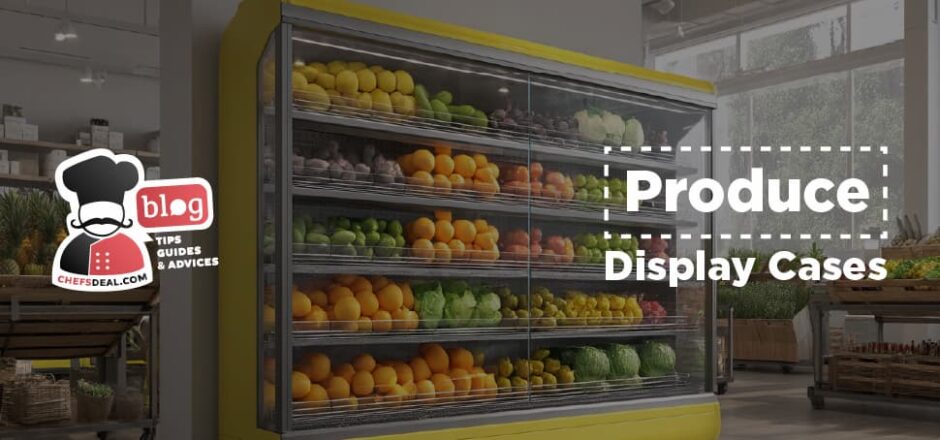
A produce display case is a refrigerated or non-refrigerated unit designed to keep fresh fruits and vegetables organized, visible, and easily accessible in grocery stores, supermarkets, or farmers’ markets. It helps maintain the right temperature and humidity levels to extend the freshness of the produce while making it look appealing to customers.
Produce display cases enhance freshness and boost retail sales in commercial settings, as they directly impact freshness, shelf life, and customer perception of your products. There are 7 types of produce display cases:
- Open-air refrigerated cases
- Vertical/multi-deck display cases
- Island/end cap produce displays
- Specialized organic produce cases
- Mobile produce merchandisers
- Farmers market-style displays
- Misting systems and dry displays
8 key features of all produce display cases types for effective merchandising are listed below:
- Temperature zoning capabilities
- Humidity control systems
- Air flow management
- Misting options and technology
- Lighting solutions that enhance appearance
- Display angles and visibility enhancement
- Product separation and organization systems
- Energy efficiency and sustainability
You can customize your produce display cases with additional features depending on your unique needs due to the specification options that manufacturers provide.
You can assess a produce display case’s technical specifications and performance metrics through 6 points:
- Optimal temperature ranges for different produce types
- Energy efficiency ratings and considerations
- Refrigeration systems (self-contained vs. remote)
- Water usage for misting systems
- Capacity and display space calculations
- NSF and health department compliance factors
Material selection and construction quality have a direct impact on both performance and longevity, so it is essential to choose food-grade and durable materials. Additionally, optimize arrangement and presentation through visual merchandising strategies, such as color blocking and cross-merchandising, to ensure that your layout planning and equipment positioning account for accessibility, efficient placement of other units, and optimal traffic flow.
Enhancing customer experience through sensory marketing and educational displays adds value. Operational success depends on regular maintenance and proactive troubleshooting. With all these factors in mind, the produce display cases become more than storage units, directly contributing to branding and sales.

What are The Types of Produce Display Cases?
The types of produce display cases include open-air refrigerated cases, vertical/multi-deck display cases, island/end cap produce displays, specialized organic produce cases, mobile produce merchandisers, farmers’ market-style cases, misting systems, and dry displays.
Open-air Refrigerated Cases
Open-air refrigerated cases are designed to provide customers with easy access to produce, promoting impulse purchases and enhancing stock visibility. They are ideal for high-traffic areas and can enhance merchandising flexibility. However, they require more energy and careful temperature maintenance to keep items fresh.
Vertical/Multi-Deck Display Cases
Vertical/multi-deck display cases are tall, tiered units commonly used in supermarkets to maximize vertical space while efficiently organizing different produce categories. They are excellent for increasing product variety in limited square footage. With proper airflow and temperature management, they maintain freshness while improving visual merchandising.
Island/End Cap Produce Displays
Island/end cap produce displays are designed for high-impact merchandising of seasonal or promotional produce. Their central location and 360-degree access improve traffic flow and customer interaction with the products. These displays often come in both refrigerated and dry formats, offering flexibility.
Specialized Organic Produce Cases
Specialized organic produce cases are designed to keep organic items separate and properly labeled, ensuring compliance with organic standards and regulations. They include signage, partitions, and controlled environments to avoid cross-contamination. Such units cater to a growing market of health-conscious consumers.
Mobile Produce Merchandisers
Mobile produce merchandisers are wheeled units designed for flexible merchandising, events, or in-store layout changes. They can be moved easily to respond to traffic patterns, promotions, or cleaning routines. Mobile units may include built-in refrigeration or serve as attractive dry display solutions.
Farmers Market-Style Displays
Farmers’ market-style displays are wooden or rustic fixtures that mimic the ambiance of a local market, creating a warm and approachable shopping experience. They are typically dry, non-refrigerated units designed for hearty produce, such as potatoes, apples, or onions. This style appeals to customers seeking freshness, simplicity, and a more natural presentation.
Misting Systems and Dry Displays
Misting systems and dry displays include integrated misting systems to keep items like leafy greens hydrated and fresh. These systems reduce spoilage and enhance visual appeal. Alternatively, dry displays are used for less moisture-sensitive items, helping to reduce maintenance and water usage.
What are The 8 Key Features for Effective Produce Merchandising?
The key features for effective produce merchandising are temperature zoning capabilities, humidity control systems, air flow management, misting options and technology, lighting solutions that enhance appearance, display angles, and visibility enhancements, product separation and organization systems, energy efficiency and sustainability, and additional features you might need depending on your unique set of needs and circumstances.
1. Temperature zoning capabilities
Temperature zoning capabilities in produce cases enable the optimal storage of various items. For instance, leafy greens require cooler temperatures, while citrus fruits fare better in slightly warmer zones. Proper zoning lets you to store different ingredients in the same area, preventing premature spoilage and enhancing product longevity for both elements.
2. Humidity control systems
Humidity control systems are essential for minimizing product loss among fresh goods, as low humidity can cause wilting, while excess moisture can lead to mold growth. Many modern cases feature built-in regulators to manage this delicate balance, and they also allow you to adjust humidity levels according to the items you are storing.
3. Airflow management
Airflow management distributes cold air evenly to prevent hot spots. Built-in vents, air curtains, and perforated walls maintain steady temperatures, ensuring each item receives equal cooling. This contributes to a longer shelf life and a cleaner appearance.
4. Misting options and technology
Misting options and technology are designed to apply a gentle mist to the produce at set intervals, keeping it fresh without overhydrating it. The features of misting options can vary by unit, but they are often programmable to achieve desired outcomes. Ensure the filters and drip controls are sufficient to achieve clean and even coverage.
5. Lighting solutions that enhance appearance
Lighting solutions that enhance the appearance of produce in display cases often utilize LED lights, available in color-tuned options, to highlight natural colors without heating the case. Good lighting leads to stronger visual merchandising, which can drive purchases and please your customers.
6. Display Angles and Visibility Enhancement
Display angles and visibility enhancement in produce displays are created with slanted shelves and curved fronts that help showcase more items. A clear view increases product engagement and supports rotation strategies for your staff. Enhanced visibility can also boost impulse buys, which makes it a double win.
7. Product separation and organization systems
Product separation and organization systems reduce ethylene-related spoilage and make browsing easier. Clear bin divisions, category signage, and adjustable inserts enable staff to restock more efficiently, while helping shoppers find what they need.
8. Energy Efficiency and Sustainability
Energy efficiency and sustainability matter for long-term cost control. Features such as variable-speed compressors, LED lighting, and low-GWP refrigerants help reduce energy consumption and utility bills. Some cases include water-saving misting systems and night curtains for energy conservation during off-hours. You should invest in Energy Star-certified units and consider additional features that can reduce your carbon footprint while also helping with your bills.
Additional Features of Produce Display Cases
Additional features of produce display cases can help you streamline operations and reduce costs. For example, remote monitoring capabilities enable managers to check temperature and performance from mobile devices, allowing them to stay informed even when away for extended periods. This means you can monitor your inventory remotely and identify potential issues before they become costly.
Automated temperature control systems ensure consistency and reduce human error. Innovative humidity management dynamically adjusts moisture levels to maintain optimal conditions. Inventory tracking integration and predictive maintenance features optimize operations and minimize downtime. Energy management systems help monitor usage in real-time and set targets for achieving sustainability goals. While these are not top essentials, they are bound to make a difference in terms of your spending and efficiency.

What are The Technical Specifications and Performance Metrics of Produce Display Cases?
The technical specifications and performance metrics of produce display cases encompass optimal temperature ranges for various produce types, energy efficiency ratings and considerations, refrigeration systems, water usage for misting systems, capacity and display space calculations, as well as NSF and health department compliance factors. You need to ensure the unit you are considering meets industry standards to get the most out of your investment.
Optimal Temperature Ranges for Different Produce Types
Knowing the optimal temperature ranges for different types of produce is essential, as a single range cannot accommodate the diverse needs of all fresh produce. For example, leafy greens typically require temperatures between 32°F and 36°F (0°C and 2°C), while items like tomatoes and avocados are best kept at 50°F–55°F (10°C–13°C). Choosing cases that allow for adjustable settings ensures you can accommodate multiple product types without compromising freshness.
Energy Efficiency Ratings and Considerations
Energy efficiency rating and considerations for produce display cases should start with research into Energy Star-rated produce display cases, which are more efficient and environmentally friendly. These ratings are based on energy consumption under standard operating conditions. Investing in high-efficiency units helps you cut utility costs and supports corporate sustainability targets.
Refrigeration Systems (self-contained vs. remote)
Refrigeration system choices for produce display cases include self-contained or remote systems. Self-contained units are easier to install and relocate, but they generate more in-store heat and noise, which can prove too much of a nuisance for your staff to perform effectively. Remote systems offer better performance in large setups and reduce ambient store heat. Your choice depends on store layout, budget, and long-term goals.
Water Usage for Misting Systems
Efficient misting systems utilize water-saving nozzles and pumps to deliver hydration with minimal waste. Some models include sensors or timers that regulate output based on environmental needs. Monitoring water use helps reduce costs and aligns with eco-conscious operations.
Capacity and Display Space Calculations
Capacity and display space calculations for produce display cases should factor in product load, traffic flow, and restocking frequency to ensure optimal efficiency. Case specifications typically list cubic feet and shelf area; if any details are unclear, you should request additional clarification from your distributor. When choosing capacity, ensure that you account for the space required between items, as overloaded cases reduce visibility and ventilation, leading to faster spoilage.
NSF and Health Department Compliance Factors
Cases must meet National Sanitation Foundation (NSF) standards and local health codes. Smooth, easy-to-clean surfaces, proper drainage, and regulated temperatures are key elements of compliance. Certifications ensure your produce is stored safely and that your facility passes inspections. You won’t have trouble with new units, but if you are buying second-hand, make sure to double-check the unit’s certifications.
Key 6 NSF Requirements for Produce Display Cases
- Food-Safe Materials
- Cases must be constructed from non-toxic, corrosion-resistant, and smooth materials that do not absorb moisture or harbor bacteria.
- Smooth, Cleanable Surfaces
- All food-contact and splash zones must be easy to clean, with no sharp corners, cracks, or seams that trap dirt.
- Proper Drainage
- Any water from condensation or cleaning must drain completely to prevent the accumulation of standing water, mold, or microbial growth.
- Temperature Control
- Refrigerated produce display cases must maintain safe holding temperatures. NSF Standard 7 requires equipment to maintain a temperature of 41°F (5°C) or lower during everyday use.
- Air Circulation
- Cases must be designed to maintain consistently cool temperatures without warm spots, ensuring that airflow continues to produce and maintain cool temperatures.
- Labeling and Certification
- NSF-certified units carry an NSF mark, indicating that they have been tested and meet the sanitation/performance criteria required by health departments.
Produce Display Case Material Selection and Construction Quality
The selection and construction quality of produce display case material are crucial decisions, as they directly define a unit’s longevity and efficiency.
- Food-grade Surfaces and Components: Materials that come into contact with food must be food-safe and non-toxic. Stainless steel and food-grade plastics are standard for shelves and trays. These surfaces are resistant to bacterial growth and easy to sanitize.
- Corrosion Resistance Requirements: Units in moist environments must be resistant to corrosion, especially if they have misting systems or refrigerated cases. Powder-coated metals and stainless steel are ideal for long-term durability. Corrosion resistance helps maintain hygiene and extends the case’s lifespan.
- Glass Options and Display Visibility: Glass options and display visibility directly impact sales and you should opt for anti-fog, low-E glass to improve visibility and reduce condensation in refrigerated cases. Clear tempered glass adds safety while enhancing the look of your produce.
- Base Materials and Durability Factors: The base materials and durability factors must be carefully selected to provide a strong, reinforced base that can support heavy loads without warping or damage. Non-slip and impact-resistant materials ensure the unit withstands daily use. Materials like aluminum or stainless-steel bases with reinforced corners are preferred. While stainless steel is more durable and long-lasting, aluminum is more affordable and lighter.
- Cleaning Considerations and Materials: When it comes to cleaning produce display cases, key considerations include smooth corners, removable trays, and accessible drainage, all of which facilitate faster and more thorough cleaning. Choose designs that minimize crevices and allow easy disassembly. Use materials resistant to cleaning agents and regular moisture exposure.
How to Optimize Produce Arrangement and Presentation in Produce
Optimizing produce arrangement and presentation in a produce display starts with color blocking techniques, where grouping items by color creates visual appeal and communicates freshness and abundance, making it easier for customers to navigate and engage.
Vertical and horizontal merchandising strategies offer different strengths. Vertical stacks highlight variety in limited space, while horizontal layouts promote easy browsing of similar items. Cross-merchandising opportunities, such as placing limes near avocados or basil near tomatoes, encourage recipe inspiration and impulse buying.
Product rotation best practices, such as using FIFO (first-in, first-out), ensure that older stock is sold first and minimize waste, especially when paired with clear date labeling and proper restocking habits. Signage and price card integration, when consistent and well-designed, enhances product recognition, supports branding, and provides essential details such as origin or promotions.
Organic and conventional separation guidelines should be strictly followed using dividers or designated sections to maintain certification integrity and customer trust.
How to Plan the Space and Store Layout Integration
To plan the space and store layout integration, consider the strategic placement within the store, traffic flow, complementary department adjacencies, space utilization efficiency, and customer accessibility factors.
Strategic placement within store layout starts with positioning display cases near the entrance to showcase freshness and draw attention early. This sets a positive tone and encourages immediate engagement, especially when aligned with seasonal themes or promotions.
Traffic flow considerations are crucial for ensuring customers move comfortably. Displays should follow common walking paths without obstructing movement and leave enough room for wheelchairs and carts. This avoids congestion and improves overall access. Complementary department adjacencies can drive higher basket sizes.
Placing produce cases near bakery, deli, or ready-to-eat areas encourages customers to think in terms of meals, not just ingredients. Smart proximity helps link items together in the shopper’s mind. Space utilization efficiency plays a role in layout success. Multi-deck units, stackable bins, and clear signage all help maximize the use of available floor space.
Well-planned spacing enhances visibility, air circulation, and ease of navigation. Customer accessibility factors should never be overlooked. Displays must be reachable without strain and designed to prevent tipping or overstacking. Prioritizing comfort and ADA compliance enhances safety, fosters customer satisfaction, and promotes loyalty.
How to Enhance Customer Experience
To enhance customer experience through produce display cases, retailers should consider accessibility, sampling integration, educational components, and sensory marketing elements to maximize both shopper engagement and sales impact.
Plan the space and store layout integration carefully to ensure your produce displays contribute to a smooth, enjoyable shopping experience, both for your staff who will need to restock frequently and for your customers. The most strategic and no-brainer placement within store layout starts with positioning display cases near the entrance to showcase freshness and draw attention early.
This sets a positive tone and encourages immediate engagement, especially when aligned with seasonal themes or promotions, as most supermarkets typically place their fresh produce aisles near the entrance or exits. From there, traffic flow considerations help guide shoppers naturally through the space. Displays should follow common walking paths without obstructing movement and leave enough room for wheelchairs and carts. A thoughtful layout avoids congestion while improving overall accessibility.
Complementary department adjacencies can further enhance the shopping experience. Placing produce cases near the bakery, deli, or ready-to-eat areas encourages customers to think in terms of full meals rather than single ingredients, creating natural cross-merchandising opportunities.
Space utilization efficiency must not be overlooked. Tools such as multi-deck units, stackable bins, and clear signage help maximize floor space while maintaining order and airflow.
Customer accessibility factors are crucial in creating an inclusive and user-friendly environment. Displays should be at a comfortable reach, avoid overstacking, and meet ADA compliance standards to ensure safety and satisfaction for all shoppers.

Maintenance and Operational Considerations of Produce Display Cases
Maintenance and operational considerations of produce display cases play a crucial role in sustaining product quality and store hygiene, regardless of unit type and model. Daily cleaning procedures should include wiping down surfaces, removing wilted produce, and sanitizing trays to maintain a presentable display. Quick spot-cleaning of spills can help avoid sticky buildup and prevent pest issues. This consistent upkeep supports freshness and food safety.
Temperature monitoring protocols must be part of the routine. You need to check internal case temperatures at least twice a day to ensure consistent cooling. Smart monitors or data loggers can add an extra layer of accuracy and convenience, and keeping logs is helpful for audits or inspections.
Drainage system maintenance is equally essential. Clogged drains can create leaks and slippery floors, posing safety hazards. Regular cleaning of drainage channels prevents blockages and reduces the need for emergency maintenance.
Misting system upkeep involves descaling and sanitizing to eliminate bacteria and mineral deposits. Using filtered water can prolong the system’s life and maintain consistent misting performance. Check for leaks or malfunctions during daily walk-throughs.
Establish weekly or biweekly deep cleans, just to be extra safe. Weekly deep cleaning recommendations include a thorough wipe-down of internal fans, removal of bins, and disinfection of hidden areas.
Seasonal maintenance adjustments are necessary to account for changes in humidity, temperature, and turnover rates. Fine-tuning misting schedules, refrigeration settings, and display layouts can help you stay ahead of seasonal demands while keeping everything running efficiently.
Troubleshooting Common Issues of Produce Display Cases
Troubleshooting common issues of produce display cases can save you a lot of money, energy, and time in the long run.
- Temperature Fluctuation Management: Ensure proper sealing of doors and consistent compressor performance. Use backup thermometers to verify internal temperatures. If fluctuations persist, call a certified technician.
- Condensation Control Methods: Check airflow and humidity settings to ensure optimal control. Condensation can damage produce and cause customer concern. Install anti-condensation strips and provide adequate ventilation to prevent condensation.
- Drainage Problems Prevention: Flush drains regularly and inspect gaskets. Ensure the slope is adequate for water to flow. Invest in removable catch trays for easier access and cleaning.
- Product Display Challenges: Train staff on effective product rotation, spacing, and stacking. Use dividers and angled shelves to hold irregularly shaped items. Consider modular solutions for changing inventory needs.
- Seasonal adjustment strategies: Switch layouts, lighting, and temperature settings for seasonal produce. Promote freshness with seasonal displays and recipe suggestions. Be flexible and proactive with merchandising strategies.
FAQs About Produce Display Cases
What temperature should different types of produce be displayed at?
Different types of produce should be displayed at their ideal temperatures, such as leafy greens between 32°F–36°F (0°C–2°C), root vegetables around 40°F–45°F (4°C–7°C), and items like tomatoes and avocados at 50°F–55°F (10°C–13°C). Choosing a case with adjustable zones allows for better preservation across various types.
How often should misting systems be cleaned?
Misting systems should be cleaned once a week and descaled at least once a month. Using filtered water helps prevent mineral buildup, keeping the misting system safe and effective.
Can organic and conventional produce be displayed in the same case?
Organic and conventional produce can be displayed in the same case, but only when they are clearly divided and correctly labeled to prevent cross-contamination and ensure compliance with organic certification requirements.
What lighting best enhances the appearance of produce without causing heat damage?
The best lighting for enhancing the appearance of produce without causing heat damage is cool white or full-spectrum LED lighting. LEDs enhance visibility, emit minimal heat, and are highly energy-efficient.
How do I calculate the right-sized produce case for my store?
To calculate the correct size produce case for your store, consider your daily traffic volume, product turnover rates, and available floor space. Ensure adequate spacing between items and ventilation, while allowing for future inventory growth.
What compliance factors do produce display cases need to meet?
Display cases for produce must comply with NSF/ANSI Standard 7 and local health codes. Key requirements include food-safe, non-toxic materials, smooth and easy-to-clean surfaces, proper drainage, and reliable temperature control at 41°F (5°C) or lower. Units must also support consistent airflow to prevent warm spots and carry NSF certification labels to ensure they meet sanitation and inspection standards.
Conclusion
Choosing the proper refrigerated display case is essential for maintaining food-safe temperatures, reducing spoilage, and ensuring your produce stays fresh while appealing to customers in high-traffic retail environments.
Your produce display section selection should align with both your operational needs and your store’s identity and merchandising goals, offering a variety of types that range from open-air refrigerated cases to mobile and market-style displays.
By prioritizing features such as temperature zoning, airflow, humidity control, and smart lighting, you can extend shelf life, reduce shrinkage, and make produce visually irresistible.
Paying attention to materials, layout, and accessibility choices ensures your setup supports staff workflow and meets customer expectations. And when paired with consistent maintenance and seasonal adjustments, your display case will remain reliable and effective for years to come.


2 comments On Produce Display Cases: Enhance The Freshness and Boost Your Retail Sales
I am working with a Mexican grocer that is looking for display case for vegetable, prepackaged produce. what important for him is to ensure that the case is wide and tall to fit through a normal door 36″ wide and 80 inches tall
Dear Mr Bernal,
Thank you for reaching us. I forwarded your email and message to our sales department. They will contact you as soon as possible.
Kind regards.