
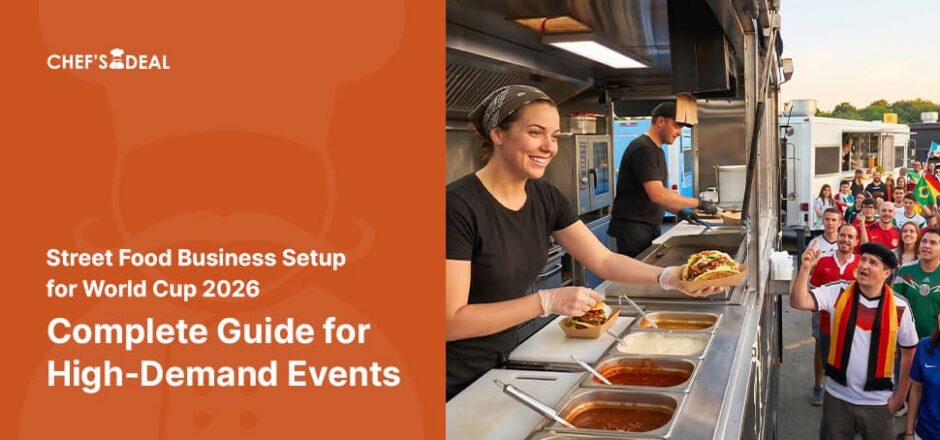
The FIFA World Cup 2026 is heading to North America. It is not just a ‘football’ tournament but the biggest ‘foodball’ event in a generation for the street food industry. Sixteen host cities across the United States, Canada, and Mexico will welcome millions of international fans, turning stadium perimeters, fan zones, and downtown corridors into concentrated, high-spending, hungry crowds.
New York/New Jersey, Los Angeles, Dallas, Miami, Atlanta, Seattle, Kansas City, Houston, Philadelphia, Boston, and San Francisco have already confirmed matches. Venues like MetLife Stadium, SoFi Stadium, AT&T Stadium, and Hard Rock Stadium are anchor sites that promise unmatched opportunities for street food vendors.
Fans are already gearing up, and the heat is building. Dallas and Atlanta will become loud, flavor-packed battlegrounds for the semifinals. The real explosion hits at MetLife Stadium, where the final whistle will echo across the biggest stage. Teams are training, fans are traveling, and the streets are about to get hungry.
Street food vendors across America! This is the moment to fire up the grills and turn football fever into full-blown ‘foodball’ action. Preparation is what separates vendors who capitalize on this opportunity from those who struggle under pressure.
Are you ready to take the pitch and turn this global surge into a championship-level season?
World Cup 2026: Street Food Strategy Overview
| Category | Key Insight |
| The Opportunity | 16 host cities with stadiums seating 65,000–94,000 fans, plus hundreds of thousands in fan zones. |
| High-Volume Strategy | Focus on 3–5 ‘hero’ items (e.g., burgers, tacos) that cook in under 3 minutes to maintain speed during intense surges. |
| Equipment Priority | Use commercial-grade griddles and dual fryers to ensure oil temperature recovery and continuous output during peak demand. |
| Operational Bottlenecks | Size your equipment according to the soccer crowds that move in massive, synchronized ‘vertical walls’ governed by the match clock. |
| Startup Cost Tiers | From $3,000–$15,000 (Low-budget stall) to $50,000–$150,000+ (Full food truck setup). |
| Profit Maximization | Focus on high-margin upsells: beverage and fried snack combos |
| Hidden Costs | Budget for extra expenses, including city-specific permits, event vendor fees, and high-output generators. |
| Compliance | Meet municipal health codes, official FIFA vendor credentials, and compostable packaging requirements. |
Why the FIFA World Cup 2026 Is a Unique Opportunity for Street Food Vendors
The FIFA World Cup 2026 presents a street food opportunity unlike any other recurring event, as it promises huge crowds, short-term high-revenue windows, and relatively low setup costs. It creates a last-minute scoring chance for mobile and temporary food operators.
Massive Crowd Volume Around Stadiums & Fan Zones
FIFA World Cup 2026 stadiums seat between 65,000 and 94,000 spectators per match. Fan zones in host cities are expected to draw hundreds of thousands of additional attendees per event day. The AT&T Stadium corridor and adjacent fan zones in Dallas regularly experience heavy foot traffic on Cowboys game days; World Cup crowds are projected to significantly exceed those levels.
The Rose Bowl and SoFi Stadium environments in Los Angeles draw visitors from a metro area of over 13 million, with international fan bases arriving weeks in advance. New York/New Jersey hosts multiple group-stage matches and the final at MetLife Stadium.
The surrounding area already supports some of the highest-density street food ecosystems in the country. Queens, Manhattan, and Jersey City, in particular, offer diverse food cultures that align with the international visitor profile of the World Cup audience.
Short-Term, High-Demand Selling Environment
The World Cup match schedule creates predictable, intense-demand windows. Individual matches generate 4 to 6 hours of concentrated foot traffic before and after kickoff. This compressed timeline rewards vendors who set up, serve, and restock fast. A restaurant depends on repeat daily traffic, street food operators during the World Cup serve one-time, high-spend customers who prioritize speed and memorable flavors.
Host cities like Miami are renowned for their Latin American food culture, and Houston is one of the most ethnically diverse cities in the U.S. They offer match-day environments where themed menus, including tacos, arepas, empanadas, jerk chicken, or fusion items, vibe with the international crowd demographics. Seattle’s waterfront corridor and Boston’s Fenway area provide similar culturally layered opportunities.
Low Entry vs High Revenue Potential
Street food setups require significantly less capital than brick-and-mortar restaurants. A functional street stall equipped for high-volume service costs around $3,000 to $15,000, while a fully outfitted food truck ranges from $50,000 to $150,000+. Event-day revenue for well-positioned vendors regularly ranges from $2,000 to $10,000 range per match day, depending on product, pricing, and location.
The math favors preparation. Vendors who invest in proper equipment, permits, and workflow design ahead of the tournament start date recoup setup costs within the first several days of the event. They can carry this low-entry infrastructure into recurring events, festivals, and permanent locations afterward.
What You Need to Start a Street Food Business
You need to decide on your food concept, physical setup format, and regulatory compliance framework to start a street food business. These 3 factors determine menu flexibility, startup costs, scalability, and the locations where the operation qualifies to trade.
Choosing the Right Food Concept
The right street food concept for a major event depends on fast preparation, simple execution, and scalable output. Menu items that cook in under 3 minutes per order, require minimal custom assembly, and hold well in food warmers sustain consistent throughput during demand peaks. Burgers, hot dogs, tacos, flatbread wraps, rice bowls, and fried chicken sandwiches consistently meet these criteria.
A focused concept, with 3 to 5 core items, outperforms wide menus in high-volume environments. Fewer SKUs reduce prep complexity, lower food waste, and keep the ordering process fast enough to serve peak queues without bottlenecks. Operators in cities with strong food identities can also leverage synergy with local cuisine.
- Dallas vendors thrive with Texas BBQ-style items.
- Miami operators benefit from Latin-inspired menus that resonate with the large South American fan contingent expected at the tournament.
- Los Angeles supports a wide range of concepts, from Korean-Mexican fusion to vegan street food.
Selecting Your Setup Type
Street food setups fall into 3 primary categories: street stalls, food carts, and food trucks, each with different cost profiles, equipment capacities, and mobility advantages.
- Street stalls are the lowest-cost entry point, requiring a tent or canopy structure, folding tables, and basic equipment. They are best suited for permitted event zones adjacent to stadiums.
- Food carts offer a compact, self-contained middle ground. They are easier to reposition than a truck, more structured than a stall, and capable of supporting a griddle, fryer, or small grill.
- Food trucks deliver the highest capacity and the most complete equipment configurations. They require a larger upfront investment and more rigorous licensing.
Operators planning to follow the tournament circuit across host cities should consider the food truck setup. Food trucks positioned in fan zone perimeters or designated vendor corridors carry the longest operating range and support multi-day or multi-city event schedules.

Basic Permits & Compliance
Permit requirements vary by city and venue jurisdiction. Street food operators at World Cup 2026 events must check requirements at 3 levels: municipal health department permits, event organizer vendor credentials, and state business licensing.
- Operators in cities like New York and Los Angeles often need to apply for separate permits for street food operations. The standard business licenses for their existing setups are not sufficient.
- Operators working directly inside official FIFA fan zones or stadium-adjacent areas must apply through the official event vendor program. It sets additional requirements for branding, food safety certification, and equipment compliance.
- Operators in Philadelphia, Kansas City, and Atlanta must comply with distinct local health codes. They must confirm these directly with city health departments and not rely on general assumptions.
Best Food Types for High-Volume Street Food Selling
The best-performing food categories at major events include fast-cooking menus, fried snacks, grab-and-go meals, along with high-margin beverages & add-ons. Selecting the right type directly influences profitability.
Fast-Cooking Items
Fast-cooking items, such as burgers, hot dogs, and tacos, form the backbone of high-volume street food programs because their cook times fit within 2 to 3 minutes per order.
- Smash burgers on a flat-top griddle can be cooked in under 2 minutes per side.
- Hot dogs on a roller grill are ready to serve continuously.
- Tacos assembled on a plancha deliver consistent output with minimal skill requirements.
These items enjoy strong brand recognition among international audiences, a critical advantage at such global events. Concept alignment with the host city’s food culture also drives higher average transaction values because customers pay a premium for items that feel relevant.
- A taco or arepa concept aligns directly with the cultural preferences of South American fans attending tournament matches in Miami.
- A smash burger or Texas-style hot link sandwich positions well against Dallas’s local BBQ identity.
Pro-Tip from Chef’s Deal: Strategic Menu Limiting – Fans are often overwhelmed by choice at global events. Limit your fast-cooking menu to 3 ‘hero’ items to eliminate choice paralysis at the window.
Fried Foods
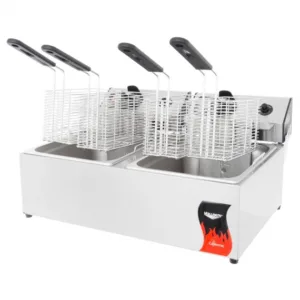
Fried foods, including French fries, fried chicken pieces, and snack-size fried items, are well-suited to street food service: they hold their temperature well in heat lamps, pre-batch easily, and can keep food costs below 25%.
- A commercial countertop fryer producing continuous 2 lb (0.907 kg) to 5 lb (2.268 kg) batches supports sustained output across a full match-day window.
- Fries in particular serve double duty as standalone items and as add-on upsells to burger and hot dog orders.
- Fried snacks, such as loaded fries, mini corn dogs, fried cheese curds, and churros, allow vendors to build high-margin impulse items that do not require trained assembly.
- All these fried foods appeal to the grab-and-walk consumption pattern that is dominant in stadium corridors and fan zones.
- The salty taste of fried snacks also encourages beverage sales.
Pro-Tip from Chef’s Deal: Temperature Recovery Management – The biggest bottleneck in high-volume frying is the oil temperature. Use two fryers in rotation to allow oil to recover between batches. This ensures every order stays crispy and prevents the food from becoming oil-soaked during the pre-match rush.
Grab-and-Go Items
Grab-and-go meals, such as wraps, pizza slices, handheld sandwiches, and burritos, minimize queue time because customers can pick up and walk without waiting for full assembly. Advance preparation and careful packaging enable a frictionless handoff, letting fans get back to the action in seconds.
- Items prepared in batches ahead of peak service and held in warmers or display cases allow vendors to serve 20 to 30 customers per minute in optimized setups. This consumption pattern drives higher purchases and reduces queue dwell time.
- Items wrapped or boxed for single-hand eating allow customers to continue moving through fan zones without stopping. Operators can thus remove the friction of a sit-down meal and capture the impulse-buy market from fans rushing between matches and fan-zone activations.
Pro-Tip: Sustainable Compliance: Host cities for the World Cup often mandate strict environmental standards for fan zones. Ensure all wraps, boxes, and cutlery are certified compostable to comply with ‘Green Initiative’ requirements. This prevents potential fines and appeals to sustainability-conscious international travelers.
Beverages & Add-Ons
Beverages and add-ons are the highest-margin category in any street food operation. Vendors who train staff to suggest an add-on with every transaction consistently outperform those who rely on customers to self-select upgrades.
- Bottled water, canned sodas, and packaged juice carry low costs and high selling margins.
- Agua frescas, lemonade, horchata, branded event beverages, and similar specialty drinks promise even stronger premiums.
- Adding a $3 drink to every food order raises average transaction value by 30% to 60%, depending on the food price point.
- Dipping sauces, toppings, extra portions, and other add-ons serve the same function.
Pro-Tip from Chef’s Deal: Visual Bundle Communication – Language barriers are common at international tournaments. Rely on high-contrast ‘combo’ signage rather than verbal upselling alone. Fans are more likely to point to a ‘Meal Deal’ photo than to navigate a complex menu during a loud, fast-paced event.
Essential Equipment for a Street Food Setup
The 4 equipment categories for a street food setup include high-performance cooking appliances, efficient prep & storage units, holding & serving tools, and utility systems for power and sanitation. These are essential for maintaining high-velocity service during global events.
Core Cooking Equipment
The backbone of any street food operation is its ability to produce consistent results under extreme pressure. Griddles, fryers, and grills are the core cooking equipment.
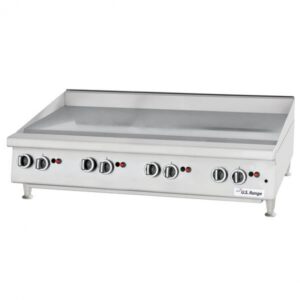
- Commercial Griddle/Flat-Top: The 24-in (60.96 cm) to 48-in (121.92 cm) widths handle everything from burgers to quesadillas, allowing multiple staff to cook simultaneously.
- Countertop or Floor Fryers: Portable 15 lb (6.803 kg) to 40 lb (18.143 kg) countertop fryers support continuous snack production for a street stall or food cart; floor units with dual baskets are better for food trucks.
- Gas or Charcoal Grills: Adding a char flavor to proteins enables vendors to charge a premium for an authentic street-fire experience; it differentiates the menu from standard fast-food operations.
Pro-Tip from Chef’s Deal: Prioritize multi-functional appliances. A flat-top griddle that can toast buns, sear steaks, and sauté vegetables simultaneously is more valuable than 3 specialized machines that crowd your workspace.
Prep & Storage Equipment
An organized mise en place workflow is what separates professional operations from chaotic, slow-moving stalls. Prep tables, refrigerators, and insulated coolers are the key products.
- Stainless Steel Prep Tables: Portable prep tables measuring 24 in (60.96 cm) to 72 in (182.88 cm) wide work within the constrained footprints of street stalls and food carts.
- Undercounter & Reach-in Refrigeration: Refrigerators are mandatory for HACCP compliance: June-July heats in host cities Miami, Dallas, and Houston exceed 90°F (32.2°C).
- Insulated Overflow Coolers: Insulated coolers with ice supplement mechanical refrigeration during long, 12-hour match-day windows.
Pro-Tip from Chef’s Deal: Utilize overshelves and magnetic tool rails above your prep tables to keep your primary workstations clear for high-speed assembly during the pre-match rush.

Holding & Serving
Staging equipment bridges the gap between the kitchen and the customer, ensuring food is ready the moment a fan reaches the window. Food warmers, heat lamps, and insulated display units maintain batch-cooked items at safe serving temperatures
- Food Warmers & Heat Lamps: Fried meals remain hot and crispy in food warmers, maintaining batch-cooked items at safe temperatures during the pre-kickoff rush.
- Insulated Display Units: Display cabinets keep ready-to-eat food items at peak quality while acting as a visual menu to speed up customer decision-making.
- Merchandising Warmers: Glass-fronted units attract fans, drive impulse sales, and reduce the need for verbal explanations, directly shortening queue lengths.
Pro-Tip from Chef’s Deal: Position your glass-fronted display warmers at eye level for approaching fans, as visible, ready-to-eat items can reduce the average ordering time.

Water, Power & Sanitation Setup
Utility systems are the legal and operational foundation of any compliant mobile business. Handwashing stations, 3-compartment sinks, generators, and power hookups are necessary for the whole setup.
- Portable Handwashing Stations: Most U.S. cities mandate that mobile food vendors use portable handwashing units with dedicated fresh- and wastewater tanks.
- 3-Compartment Sinks: Food stalls and carts do not have space and setup for a dishwasher; they can handle the manual wash-sanitize-rinse cycle with 3-compartment sinks.
- Commercial Dishwashers: High-volume food trucks need compact, undercounter dishwashers to maintain pace with stadium-level crowds.
- Commercial Generators: Generators rated 5,000 W to 10,000 W support a standard street stall with a griddle, fryer, and refrigeration running simultaneously.
Pro-Tip from Chef’s Deal: Coordinate with event organizers to ensure electrical loads do not exceed the site-provided capacity to avoid mid-service blackouts.

Estimated Startup Costs & Budget Planning
Startup costs for a street food operation range from under $5,000 for a basic stall to over $150,000 for a fully equipped food truck with multiple cooking stations. The 3 budget tiers below represent realistic setup scenarios for the World Cup 2026 market.
Note: These figures cover only your physical setup and cooking line. Consider administrative and operational hidden costs, such as premium World Cup vendor fees, permits, and POS systems, separately.
| Budget Tier | Estimated Cost | Setup Type | Key Equipment |
| Low Budget | $3,000–$15,000 | Street Stall | Portable griddle, propane burner, folding tables, basic cooler |
| Mid-Range | $15,000–$35,000 | Food Cart / Trailer | Commercial griddle, countertop fryer, undercounter fridge, warming unit |
| Full Setup | $50,000–$150,000+ | Food Truck | Full cooking line, multi-zone refrigeration, generator, POS system |
Low-Budget Setup
A low-budget street stall for a single World Cup event location requires roughly $3,000 to $15,000. This budget covers a commercial-grade portable griddle or propane burner setup, folding stainless prep tables, insulated cold storage, and basic serving supplies. These setups prioritize mobility and simplicity over volume and menu diversity.
- Limitation: Output is limited. A single-operator setup serves approximately 40 to 60 customers per hour, depending on menu complexity and prep strategy. Higher volumes are possible in short bursts, but consistency is difficult without additional staff or equipment.
- Key Efficiency Strategy: Keep the menu extremely focused on 1 or 2 items. Pre-portioned proteins, pre-sliced vegetables, and pre-made sauces reduce on-site labor and eliminate bottlenecks caused by in-service prep work.
Mid-Range Setup
A mid-range food cart or trailer setup costs around $15,000 to $35,000 to start. It supports a 2- to 3-person team with a commercial griddle, a countertop fryer, an under-counter refrigerator, and a food warmer. This configuration serves 80 to 150 customers per hour, depending on menu simplicity.
- Limitation: Space and equipment capacity still limit menu complexity and simultaneous order handling. Inefficient workflows can quickly create bottlenecks during high-volume periods.
- Key Efficiency Strategy: Design a streamlined production line with clear staff roles. Balance menu variety with speed by using shared ingredients and partially pre-prepared components to reduce on-site cooking time.
Full Food Truck Setup
A fully equipped food truck typically requires $50,000 to $150,000 or more in base setup costs. Typical equipment includes complete cooking lines, multi-zone refrigeration, onboard power systems, and integrated service infrastructure designed for high-volume, continuous operation. This setup can push 180+ transactions per hour with a 3-5-person team under peak conditions.
- Limitation: Higher capacity introduces operational complexity, including coordination between staff, equipment management, and space constraints inside the truck during peak service.
- Key Efficiency Strategy: Implement an assembly-line workflow with clearly defined stations and responsibilities. Optimize the menu for speed and consistency to fully leverage the truck’s production capacity during peak periods, such as post-game crowds.
This tier is the most expensive. Chef’s Deal financing options with up to 84 months make it accessible without requiring full upfront capital, which is particularly relevant for operators building capacity specifically for the World Cup season.
Pro-Tip from Chef’s Deal: A higher investment increases production potential, but menu design and operational efficiency ultimately determine actual performance. Even fully equipped setups can underperform if workflows are slow or menus are overly complex. Vendors who streamline menus and optimize prep achieve higher throughput at large-scale events such as the FIFA World Cup 2026.
Hidden Costs
Hidden costs typically add 20% to 50% or more to the base setup budget, particularly for first-time street food operators. They can exceed initial equipment costs if not planned carefully for large-scale events like the FIFA World Cup 2026.
- Permits and Licensing: Individual permits may range from $150 to $1,500; total licensing costs often reach $500 to $2,000+, depending on city requirements, inspections, and compliance standards.
- Event Vendor Fees: Official FIFA fan zone or stadium-adjacent vendor positions charge $1,000 to $10,000+ per event, depending on placement, demand, and exclusivity agreements.
- Power Supply: Generator purchase or rental adds $500 to $3,000+, and propane or gas supply adds ongoing operating costs per event day.
- Food Safety Certification: Many cities require a certified food handler or manager on-site, with certification costs ranging from $50 to $250 per person.
- POS and Payment Processing: Mobile POS hardware ranges from $100 to $1,200, with per-transaction processing fees.
- Packaging and Disposables: Containers, cutlery, and service materials typically cost $0.25 to $0.80+ per order, depending on material quality and local environmental regulations.
Preparing for High-Volume Service during Major Events
High-volume service during major events exposes preparation gaps that normal conditions rarely reveal. Vendors must plan for sudden demand spikes, service bottlenecks, and equipment strain.
Why Most Vendors Struggle with Sudden Demand Spikes
Most street food vendors struggle with demand spikes because their operations are calibrated for average conditions. A setup that runs smoothly at 30 orders per hour can quickly become overwhelmed when demand surges toward 80 or 100 orders per hour without matching capacity in cooking, prep, and payment systems.
Event-day demand rarely builds gradually. It often increases sharply in the 60 to 90 minutes before kickoff, then remains compressed within a short service window. Vendors entering their first major event without preparation encounter the same failure pattern:
- Queue growth outpaces service speed.
- Cooking equipment operates at maximum capacity with no buffer.
- Staff coordination breaks down under pressure and in noisy environments.
- Ingredient prep and restocking fall behind real-time demand.
This sequence results in queues growing and perceived wait times extending beyond a few minutes. Casual customers begin to drop off, resulting in lost sales that cannot be recovered.
Common Bottlenecks (Cooking, Prep, Payment)
The 3 most common bottlenecks during high-volume service are cooking throughput, prep station capacity, and payment speed.
- Cooking limitations occur when the equipment capacity cannot meet demand. A 24-in (60.96 cm) griddle that holds 6 burgers per batch produces 12 to 24 burgers per 10-minute window, depending on the cook time. Queues expand when demand exceeds the output.
- Prep bottlenecks arise when ingredient staging falls behind service. Running out of pre-portioned toppings or partially assembled components forces pauses, disrupting the entire workflow.
- Payment delays also compound quickly. Cash transactions can add 10 to 60 seconds per order, while contactless payments are typically completed in seconds; payment speed is a critical factor in maintaining flow during peak periods.
Why Equipment & Workflow Matter More Than Menu Size
Equipment capacity and workflow design matter more than menu size because World Cup crowds move in sudden, massive waves driven by game clocks, not hunger. Even a great menu won’t save you if your equipment and workflow setup can’t keep up.
- Compressed Surge Windows: Soccer has 45 minutes of continuous play. This means thousands of fans move toward food stalls simultaneously, the moment the whistle blows. You lose the window if your equipment cannot recover in seconds.
- Mass-Scale Synchronization: You will be serving a ‘stadium-out’ flow. Imagine around 80,000 people exiting the final host MetLife Stadium in New Jersey. The demand is not a curve, but a vertical wall.
- The Global Clock: World Cup fans are on a strict timeline governed by kickoff. They will abandon a line if the workflow looks slow, prioritizing the match over the meal.
How to Maximize Profit During Major Events
Maximizing profit during a major event depends on 3 operational tactics: prioritizing high-margin items, structuring every transaction around upsells, and managing inventory tightly enough to avoid both waste and stockouts.
Focus on High-Margin Items First
High-margin items, typically those with food costs below 30%, generate more profit per transaction without increasing volume. Beverages, specialty sauces, desserts, and limited-ingredient handheld foods can often achieve food costs in the 15% to 25% range, especially when prep is streamlined and ingredient lists are controlled.
Operators who lead their menu with these items can increase average ticket size without adding pressure to throughput. They only need to place them on signage and train staff to recommend them first. High-margin items are also easier to scale during peak demand, particularly when supported by efficient prep stations and reliable cold storage.
The math in practical terms is simple. A vendor at the World Cup who completes 300 transactions during a match-day session at an $8 average generates $2,400 in revenue. Raising the average ticket to $12 through menu design and consistent upselling increases revenue to $3,600. That $1,200 gain comes without adding staff, equipment, or customers.
Use Combos & Upselling (Fries + Drinks)
Combo pricing is one of the most effective upsell structures in street food because it frames add-ons as a better-value choice rather than an extra cost. A burger-and-fries combo priced at $10, when the individual items total $12, can push attachment rates above 50% in high-traffic environments, depending on execution and menu clarity.
Consistent, simple upselling, especially on beverages, is one of the highest-return behaviors a vendor can train. Adding a $3 drink to a $7 order increases ticket value by over 40%. Training staff to ask “Would you like a drink with that?” on every transaction turns a routine interaction into a reliable revenue driver.
Execution matters here: fast beverage service, adequate cold storage, and clearly visible combo options all support higher attachment rates during peak periods. Efficient service lines, pre-portioned ingredients, and clear menu boards minimize hesitation and friction, helping staff maintain speed and reinforce upsell prompts.
Reduce Waste & Control Inventory
Waste and inventory mismanagement are among the most common profit leaks in short-duration event selling. A vendor who prepares 200 portions of a perishable item and sells 140 absorbs the cost of the remaining 60 portions as waste.
Effective event-day inventory planning starts with realistic demand estimates, adjusted by item popularity and time-of-day sales patterns. Many operators use a 2-phase approach, rather than preparing all inventory upfront: an initial prep batch before service and a mid-service replenishment batch. This reduces end-of-day waste while maintaining availability during peak windows.
Evaluating unsold items at the end of each session for safe reuse, donation, or disposal based on food safety guidelines. Vendors equipped with reliable refrigeration, prep tables, and holding systems gain a competitive edge by maintaining ingredient quality across multi-day events, eliminating duplicative prep, and minimizing food waste.
Street Food Stall vs Food Truck: Setup, Cost & Flexibility
The choice between a street food stall and a food truck depends on cost comparison, equipment capacity, mobility, and setup complexity. The best option for World Cup 2026 is the one that best supports multi-city logistics and venue-specific rules.
A Quick Comparison: Street Food Stall vs. Food Truck
| Factor | Street Food Stall | Food Truck |
| Setup Complexity | Quick setup and breakdown; minimal infrastructure | Fully built-in setup; minimal daily assembly but higher initial complexity |
| Equipment Capacity | Limited to portable/countertop equipment | Full commercial kitchen with integrated systems |
| Menu Range | Best for focused, high-speed menus | Supports broader, more complex menus |
| Mobility | Fixed per setup; can deploy multiple units | Fully mobile between cities and venues |
| Deployment Strategy | Multi-point coverage within one area | Single-unit mobility across locations |
| Permitting Flexibility | Often easier for temporary event spaces | May face stricter location and access rules |
| Scalability | Scales by adding more stalls | Scales by adding more vehicles |
| Weather Exposure | Directly affected by outdoor conditions | Protected, controlled environment |
| Best Use Case | High-density, single-location events | Multi-city operations and long-term business |
Startup Cost Comparison
Street stalls are the more practical choice for operators who prioritize quick entry and minimal upfront commitment. Food trucks are better suited for those planning a longer-term operation who can absorb a higher initial investment in exchange for a self-contained setup.
- Street food stalls and carts are easier to launch and adapt, requiring less infrastructure and fewer dependencies. They enable operators to enter event environments quickly, test menus, and scale incrementally.
- Food trucks involve a more complex setup process, including build-out, equipment integration, and compliance. The pay-off is a ready-to-operate mobile kitchen that reduces daily setup effort and supports more stable service conditions.
Equipment Requirements
Food trucks offer a clear advantage in equipment requirements when menu complexity and production capacity are priorities. Street stalls provide sufficient capability with greater simplicity for specialized menus focused on speed and efficiency.
- Stalls operate with portable or countertop equipment, making them ideal for focused menus with limited offerings. Their flexibility supports quick adjustments, but performance can vary depending on weather exposure and space constraints.
- Food trucks integrate a full commercial kitchen line within a controlled environment. This allows for broader menus, better workflow organization, and more consistent output during high-volume service periods.
Mobility & Location Flexibility
Food trucks are better for operators planning to move between cities or follow event traffic across multiple locations. Street stalls are more effective for covering multiple points within a single area through parallel deployment.
- Stalls can be deployed simultaneously in multiple locations, increasing visibility across fan zones and high-traffic areas. This approach works well when demand is concentrated within a single city.
- Food trucks offer true mobility, enabling operators to relocate between venues, cities, or event phases. This makes them a strong fit for multi-city strategies tied to large-scale tournaments.
Best Option for Event-Based Selling
Street stalls are better for maximizing short-term presence within a fixed location; food trucks are better for operators seeking mobility, independence, and long-term operational continuity.
- Stalls excel in dense event environments where speed, flexibility, and multi-point coverage matter most. They allow operators to respond quickly to localized demand without the complexity of managing a fully mobile unit.
- Food trucks function as independent business units capable of operating across locations and beyond a single event. They are well-suited for vendors aiming to build a sustainable mobile food operation that can continue to operate after the tournament.
FAQs About Starting a Street Food Business for Major Events
What is the most profitable street food to sell?
The most profitable street food items at major events are beverages, fried snacks, and simple handheld foods because they combine low ingredient costs, fast preparation, and high demand. Items like loaded fries, tacos, and smash burgers often perform well due to their strong margin potential and quick service speed.
What equipment do I need to start quickly?
You need compact, portable, high-efficiency equipment to start a street food business quickly: a portable griddle or burner, a countertop fryer, a prep table, cold storage (cooler or refrigerator), a handwashing station, and a basic POS system. This setup supports a small team running a focused menu.
How much can you earn during a major sports event?
Earnings at major sports events vary widely based on location, foot traffic, menu pricing, and operational efficiency. Vendors in high-traffic fan zones can serve several hundred customers per match day, generating several thousand dollars in gross revenue. Profitability depends on controlling food costs, labor, and event fees. Well-run operations typically achieve healthy margins during peak events.
Can I start with a small budget?
Yes, it’s possible to start a street food stall on a relatively small budget by focusing on a simple menu and essential equipment. Successful low-cost setups usually center on 1 or 2 items that are easy to prep and serve quickly. Many operators begin lean, then reinvest early revenue into better equipment and expanded menus as they grow.
Final Thoughts: Turning Event Demand Into a Profitable Street Food Setup
The FIFA World Cup 2026 creates a rare, high-intensity demand environment for street food vendors. Dense crowds, diverse spending habits, and multi-city hosting amplify revenue potential beyond typical events. Vendors who pair a scalable menu with the right equipment and disciplined operations can convert this short window into championship-level returns.
- Build your concept around speed and scalability: Choose a focused, high-demand menu that performs equally well in a compact stall or a fully equipped food truck.
- Equip for event-level volume, not daily averages: Use commercial-grade cooking, prep, and holding equipment sized for peak demand; food trucks benefit from integrated capacity, while stalls must optimize portable setups for efficiency.
- Design workflows that prioritize throughput: Structure prep lines, service flow, and staff roles to minimize delays, whether operating in the tighter footprint of a stall or the enclosed workspace of a truck.
- Control inventory with precision: Plan batch production, maintain buffer stock for core ingredients, and reduce waste through disciplined forecasting and mid-service adjustments.
- Prepare for disruption, not ideal conditions: Anticipate demand spikes, supply gaps, weather shifts, and equipment strain by building redundancy into both stall and truck operations.
- Start early and execute with intent: Treat preparation as a competitive advantage so that you arrive ready to serve at full capacity from the first match day.


2 comments On Street Food Business Setup for World Cup 2026: Complete Guide for High-Demand Events
This breakdown of the ‘foodball’ potential across the 16 host cities really highlights how crucial location strategy is for vendors targeting the stadium perimeters and fan zones. It’s particularly interesting how the article contrasts the high-volume strategy needed for the massive crowds at the final in MetLife Stadium versus the more niche opportunities in the semifinals. Focusing on quick-prep, high-margin items for these specific zones will definitely separate the top-performing vendors from the rest.
Thanks for your contribution.