
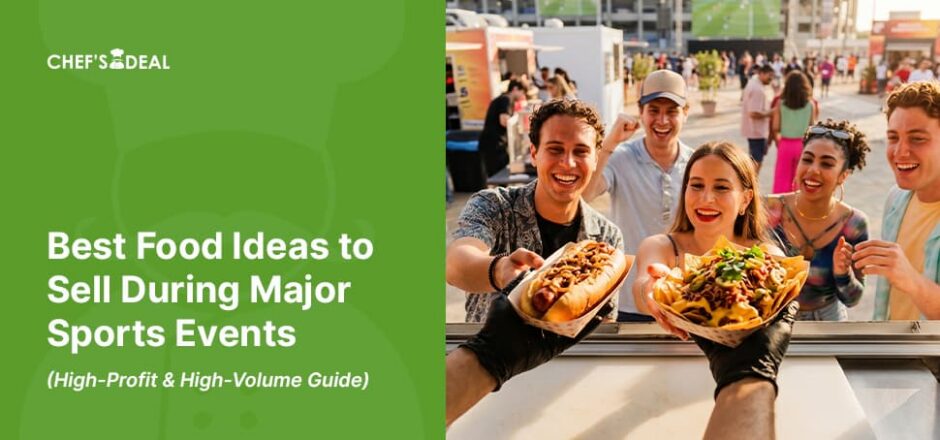
National and global sporting events such as the FIFA World Cup 2026, the LA 2028 Summer Olympics, the Super Bowl, the World Series, and the IndyCar Series create major revenue opportunities for restaurants, sports bars, food trucks, concession stands, and street food vendors. These events generate sharp increases in local demand, especially in stadium districts, fan zones, and surrounding neighborhoods.
The FIFA World Cup 2026 will amplify this demand across host cities, including Atlanta, Boston, Houston, Los Angeles, Miami, and New York, by attracting millions of local and international visitors throughout the tournament period.
However, large crowds alone do not guarantee profitability. Successful event vendors depend on fast preparation, familiar menu items, portable foods, efficient equipment, and tight operational control to maximize throughput during peak service hours.
The best food ideas for major sports events are burgers, hot dogs, fries, chicken wings, tacos, pizza slices, BBQ sandwiches, street snacks, desserts, and cold beverages.
These 10 items perform consistently because they are fast to serve, easy to eat while walking or standing, and highly recognizable to large crowds. Among them, cold beverages deliver some of the highest profit margins, while combo meals and loaded items help increase average ticket value without slowing service.
What Makes a Food Idea Successful During Major Sports Events?
Speed of preparation, high demand, familiarity, portability, easy consumption, ingredient simplicity, and cost control make a food idea successful during major sports events.
Speed of Preparation
Preparation speed is the most critical filter that determines food success. If a food takes 4 minutes per order, it will be the wrong choice for an event with 200 customers arriving within 30 minutes. The best event foods are the items that batch well. For instance, fries held in a warming station, hot dogs pre-cooked on a roller grill, and pizza slices held under a heat lamp outperform items requiring individual cooking attention.
High Demand and Familiarity
Familiarity brings the high demand that will drive your sales up. Because sports-event crowds skew toward comfort food rather than novelty. They are not looking for new flavor experiences; they are hungry, often moving between standing and walking, and want something they recognize immediately. Burgers, dogs, and fries require zero menu explanation and no decision fatigue.
Portability and Easy Consumption
Portability and ease of consumption are significant factors that affect the buyer’s decision at sports events. Spectators prefer handheld foods like tacos, sliders, corn dogs, and wrapped sandwiches, which you can eat while walking or standing. Foods that require plates, forks, and a flat surface to eat are not suitable for these occasions.
Ingredient Simplicity and Cost Control
The simpler menu items increase your control over the waste and operational costs. For example, a menu built on five core ingredients enables you to keep waste low, better organize your storage and shopping list, and reduce food costs. Every additional ingredient means another SKU to track, another prep step to spend time on, another potential stockout during peak time, and another item at risk of waste.
Why the FIFA World Cup 2026 Creates a Unique Opportunity?
The FIFA World Cup 2026 represents a unique opportunity for foodservice businesses, bringing large crowds, locally focused demand, and high revenue potential.
Projected crowd volume and demand surges
The US State Department expects more than 10 million visitors, while the New York Times projects more than 1.2 million international visitors for New York, Los Angeles, Dallas, Miami, San Francisco, Seattle, Boston, Kansas City, and Philadelphia across 78 matches.
Each match day generates concentrated foot traffic around the stadium, in fan zones, and in surrounding neighborhoods for six to eight hours. This creates a remarkable spike in demand for well-prepared vendors, enabling them to generate significant revenue.
Street Food, Food Trucks, and Pop-up Vendors Around Stadiums
Street food, food trucks, and pop-up vendors around stadiums benefit from this demand, especially before the matches when fans gather outside the stadium. Streets around the stadium, fan zones, public viewing areas, and vendor areas create secondary selling environments with lower costs, less documentation, and more pricing flexibility than stadium-contracted operators.
Short-term High Revenue Potential
Short-term high revenue potential is the outstanding characteristic of event-based selling. A single World Cup match day in a host city can generate revenue that rivals a week of standard foodservice operation.
Top 10 Food Ideas to Sell During Major Sports Events
The ten categories below represent the highest-performing food items across stadium environments, fan zones, and event perimeters. Each is evaluated on speed, margin, familiarity, and portability.
- Burgers & Sliders
- Hot Dogs & Sausages
- Fries & Loaded Fries
- Chicken Wings & Tenders
- Tacos & Wra
- Pizza Slices
- BBQ Plates & Sandwiches
- Street Snacks
- Desserts & Sweet Items
- Cold Beverages
1. Burgers & Sliders
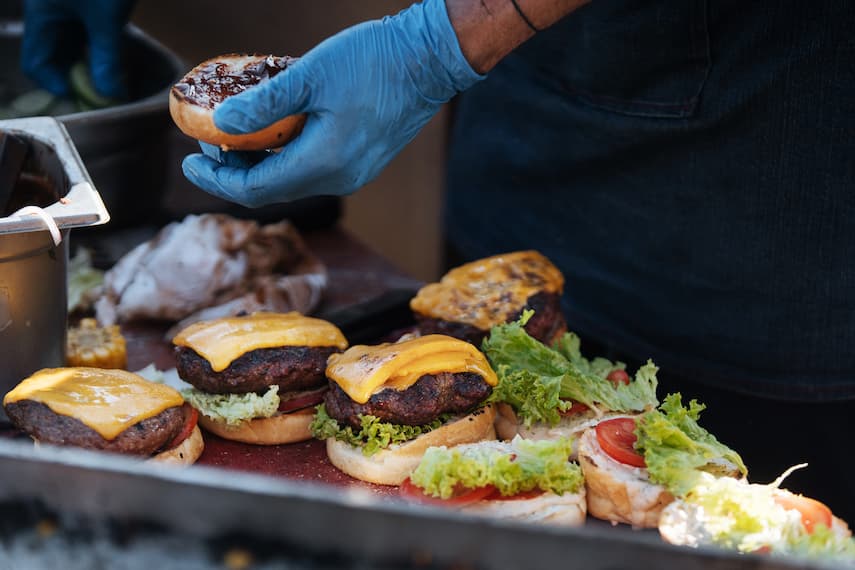
Burgers and Sliders are the anchor items for most event menus. Full-size burgers and slider packs both perform well, but sliders offer shorter cooking times and encourage purchases at lower price points. A flat-top griddle handles dozens of burger and slider patties simultaneously, simplifying operations. Food cost typically runs between 20% and 30%, leaving a healthy margin at retail prices of $8 to $14 if costs can be kept under $ 3 per service.
2. Hot Dogs and Sausages
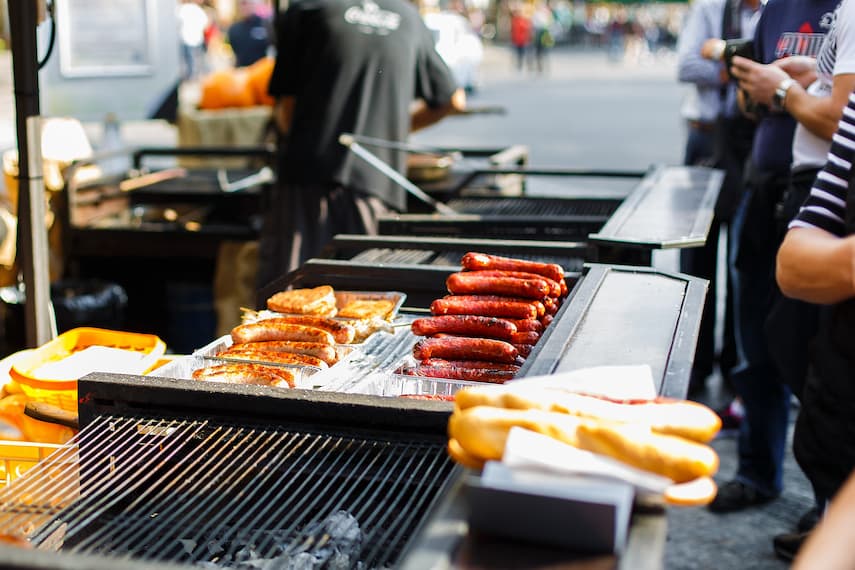
Hot Dogs and Sausages are the event classics for every major event. They can be precooked and left in roller grills and steam tables to hold product at serving temperature indefinitely. Prep complexity is near zero, and the item is universally recognized. Premium sausage versions, bratwurst, kielbasa, and chorizo can make profits at $5 to $9 price points with $1 to $3 cost per serving.
3. Fries and Loaded Fries
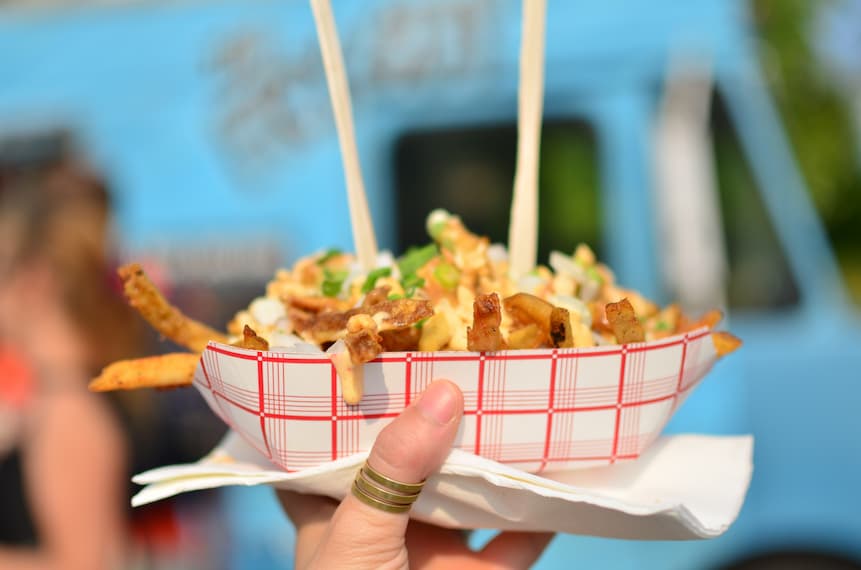
Fries and Loaded Fries are ideal for group orders and upsell opportunities. Basic fries are a high-volume, low-cost staple, but loaded versions with cheese, bacon, jalapeños, and pulled pork promise a good profit margin. A $4 basket of fries becomes a $12-$16 loaded item with toppings costing $1-$2.
4. Chicken Wings and Tenders
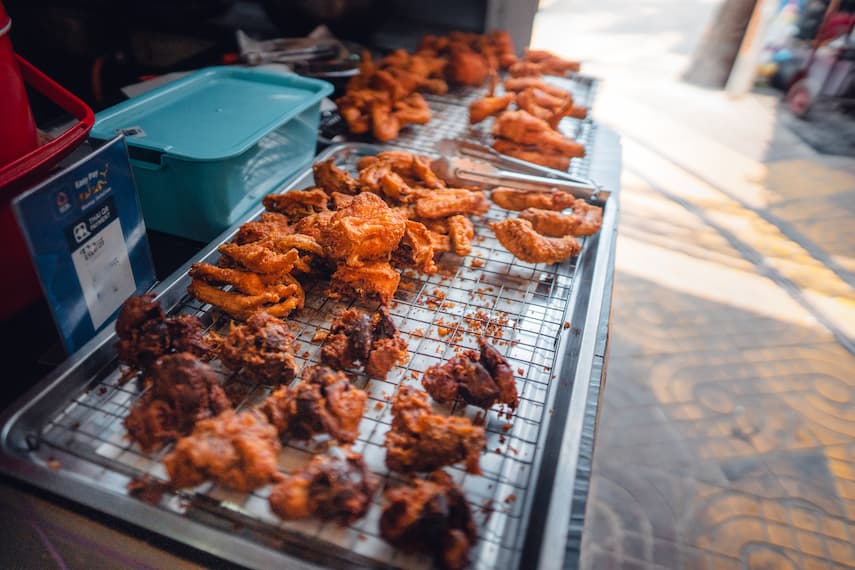
Chicken Wings and Tenders are practical, easy to prepare, and hold well, making them among the best food options to sell during major sports events. Pre-cooked wings sauced to order, and pre-breaded tenders fried in batches, streamline service when production is running. Wings in particular benefit from portion pricing when sold by the piece or in counts of 6 and 10, simplifying transactions and increasing average ticket size.
5. Tacos and Wraps
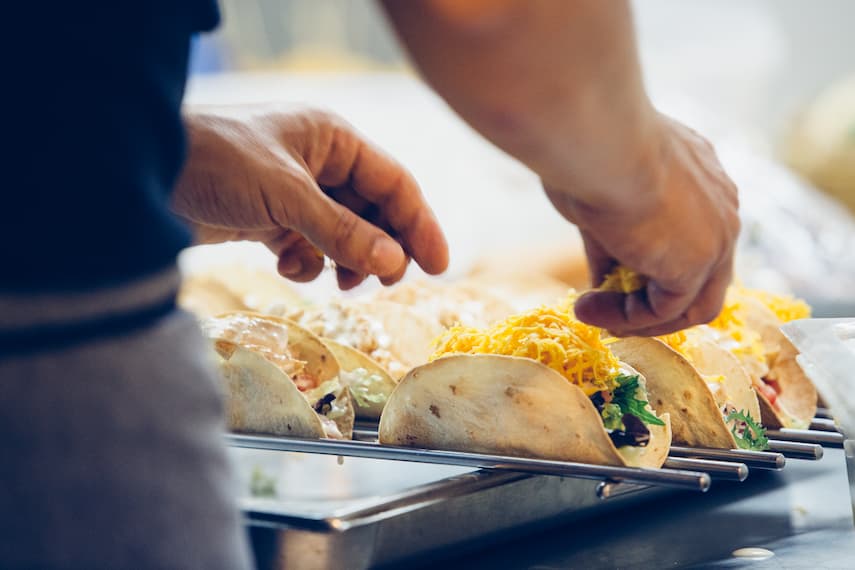
Tacos and Wraps are among the fastest-assembly items on this list. With pre-cooked ingredients stored in food warmers, a taco or wrap is assembled in under 30 seconds. The handheld format is ideal for standing consumption, offering beef, chicken, and vegetarian options that cater to the full customer base without complicating operations.
6. Pizza Slices
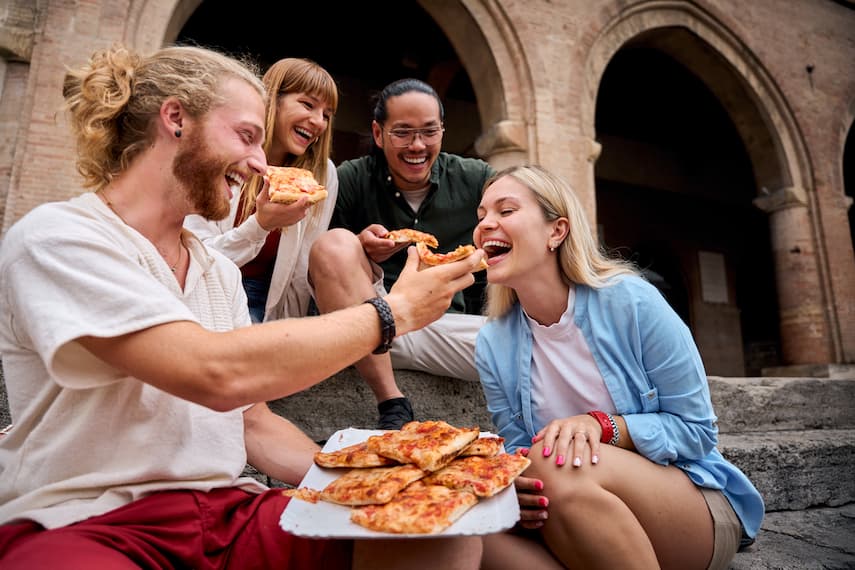
Pizza Slices are perfectly suited to high-volume production and service. You can bake whole pizzas in advance, keep them at the optimal temperature in a pizza display case, and sell them by the slice during peak times. Display warmers keep multiple pizza varieties available simultaneously.
7. BBQ Plates and Sandwiches
BBQ Plates and Sandwiches offer the strongest premium pricing potential on this list. Pulled pork, brisket, and smoked sausage justify $12-$18 price points, particularly in U.S. markets where BBQ is a recognized premium category. The primary advantage is the prep time, since BBQ foods do not require immediate cooking and only need to be warmed for service.
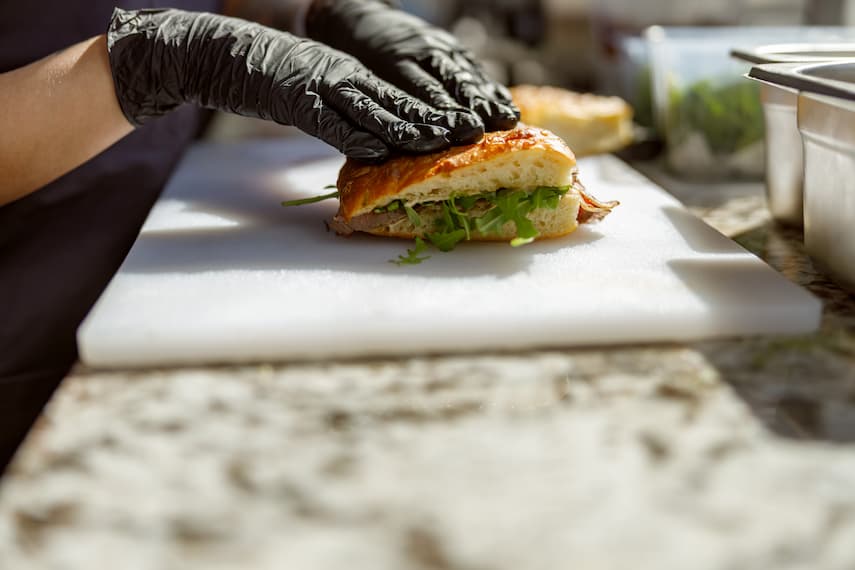
8. Street Snacks
Street Snacks, such as Pretzels, Nachos, and Corn Dogs, have a different function on the menu. They are extra items that customers add to their primary order or purchase between meals. Pretzels and corn dogs can stay well in warming equipment. Nachos are assembled within 60 seconds. All these foods cost under 20%, making them among the most profitable items by margin percentage.
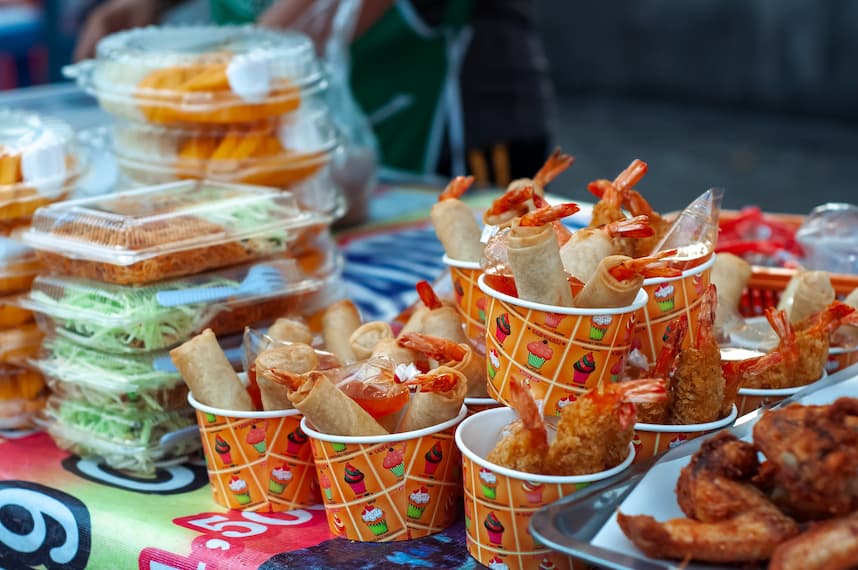
9. Desserts & Sweet Items
Desserts and Sweet Items like churros, funnel cake, cookies, and ice cream bars all perform well at events. Pre-packaged options eliminate production demands entirely. Funnel cakes and churros boost customer demand by creating a visual focal point that serves as organic marketing for the stall.
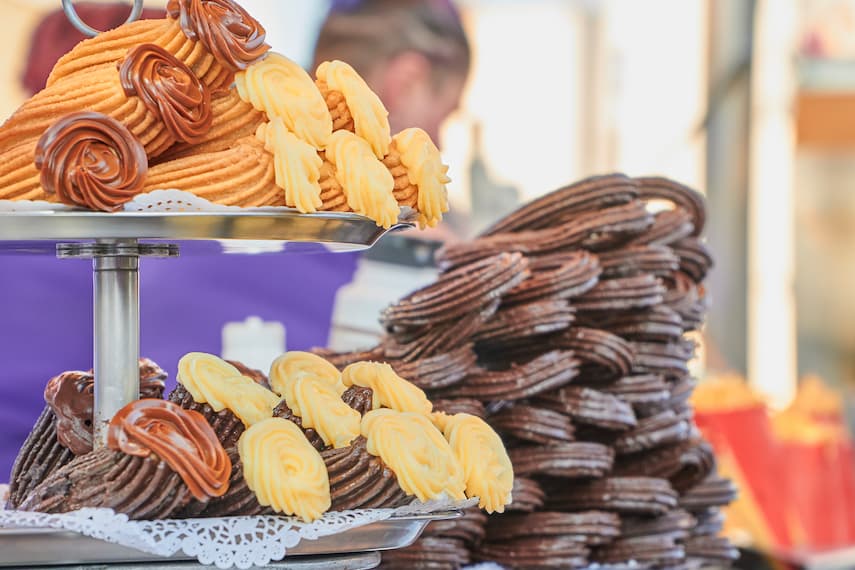
10. Cold Beverages
Cold Beverages are among the best items to sell at major sports events, offering high profit margins, minimal preparation costs, and quick service. Water, sodas, Coke, sports drinks, and canned or bottled beer (where permitted) can reach up to 90% profit ratio.
Street Food Stall vs. Food Truck: Which Menu Works Better?
Street food stalls and food trucks operate under different conditions during major sports events. Street food stalls usually work best with smaller, highly focused menus that support fast service and lower setup costs. Food trucks, on the other hand, can handle broader menus thanks to onboard cooking equipment and refrigeration. During high-traffic events, menu size directly affects service speed, customer wait times, and overall throughput capacity.
Best Foods for Street Food Stalls
Street food stalls feature limited space and equipment and therefore, perform best with hyper-focused menus of two to four items. A stall running a single fryer, a roller grill, and a prep surface can efficiently manage hot dogs, fries, and street snacks without service bottlenecks. Hence, street food stalls cost less when furnishing and offer faster turnover.
Best Foods for Food Trucks
Food trucks have onboard cooking equipment and refrigeration, which support broader menus of five to eight items. The enclosed cooking environment, commercial refrigeration, and multiple cooking surfaces allow for concurrent production of multiple item categories.
Menu Size vs Service Speed Trade-Off
Each additional menu item beyond operational capacity increases wait time per customer. There are a number of customers during major sports events, but they have limited time, and there is visible competition nearby. A two-minute wait is acceptable, but a six-minute wait may prompt them to move on to the next vendor.
| Factor | Street Food Stall | Food truck |
| Recommended Menu Size | 2–4 items | 5–8 items |
| Best Items | Hot dogs, fries, snacks, beverages | Burgers, tacos, wings, fries, wraps, beverages |
| Setup Cost | Lower | Higher |
| Mobility | High | High |
| Throughput Capacity | Moderate | Higher |
What Equipment Do You Need for These Food Ideas?
The equipment you have determines what you can cook and how fast you can serve the food. Hence, your success depends on the variety, quality, and speed of service, all of which are determined by the equipment you operate. Underpowering your setup is one of the most common and costly mistakes event vendors make.
Cooking Equipment
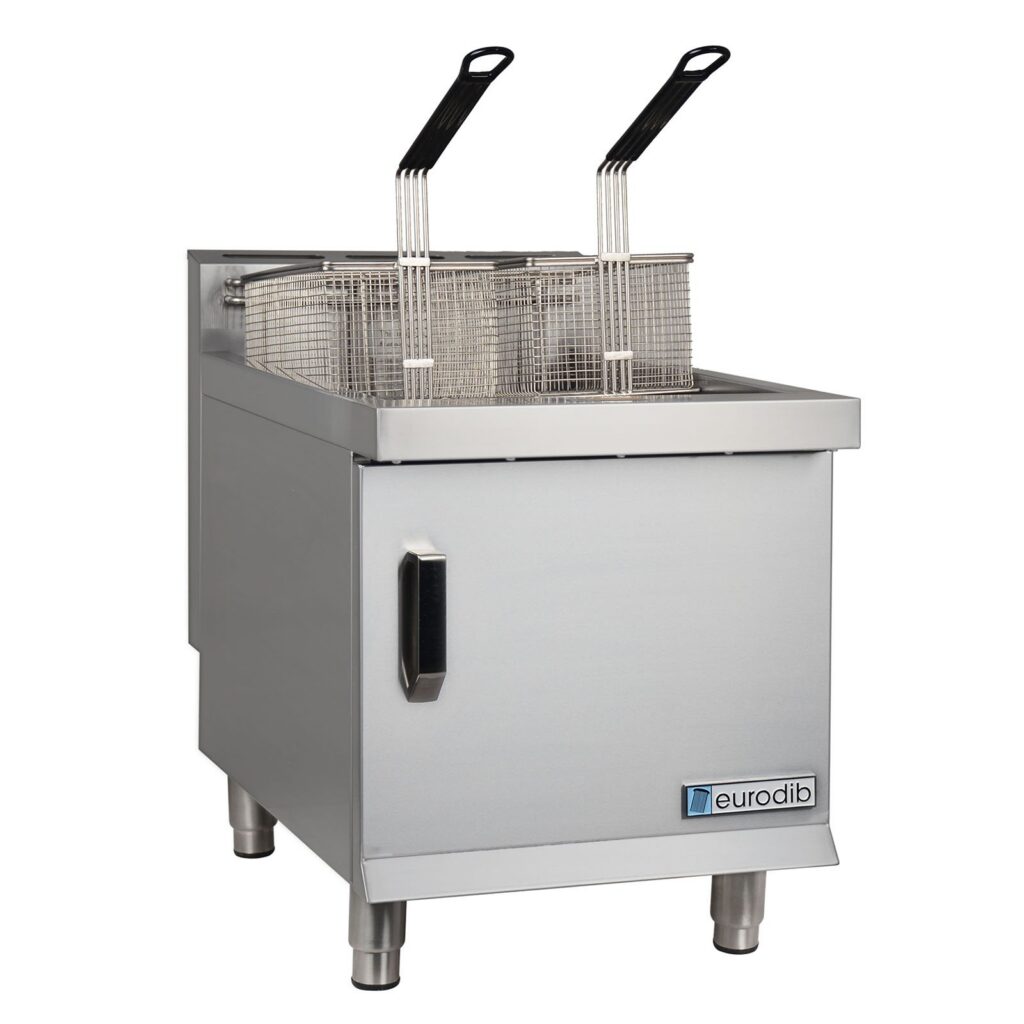
A commercial flat-top griddle can handle burgers, sausages, and taco fillings simultaneously. A double-basket commercial fryer manages fries, wings, tenders, and corn dogs in concurrent batches. A charbroiler or grill adds visual appeal and flavor profile to proteins if space allows. For pizza slice operations, a countertop conveyor or deck oven enables batch production during prep periods.
Prep and Refrigeration
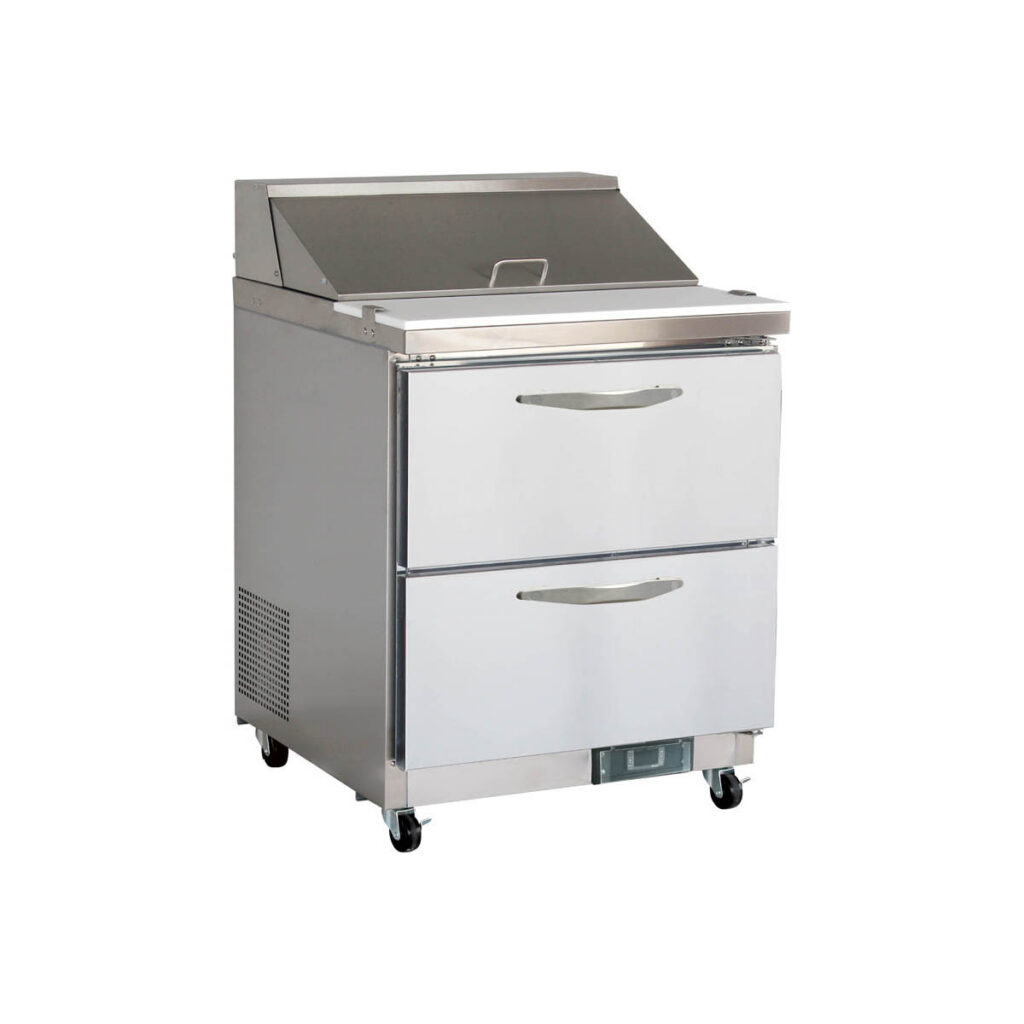
A commercial prep table with refrigerated drawers keeps proteins, toppings, and condiments at safe holding temperatures. Undercounter refrigerators maintain ingredient temperature through peak service. For food trucks, reach-in refrigerators handle bulk ingredient storage for the full event day.
Holding and Serving Equipment
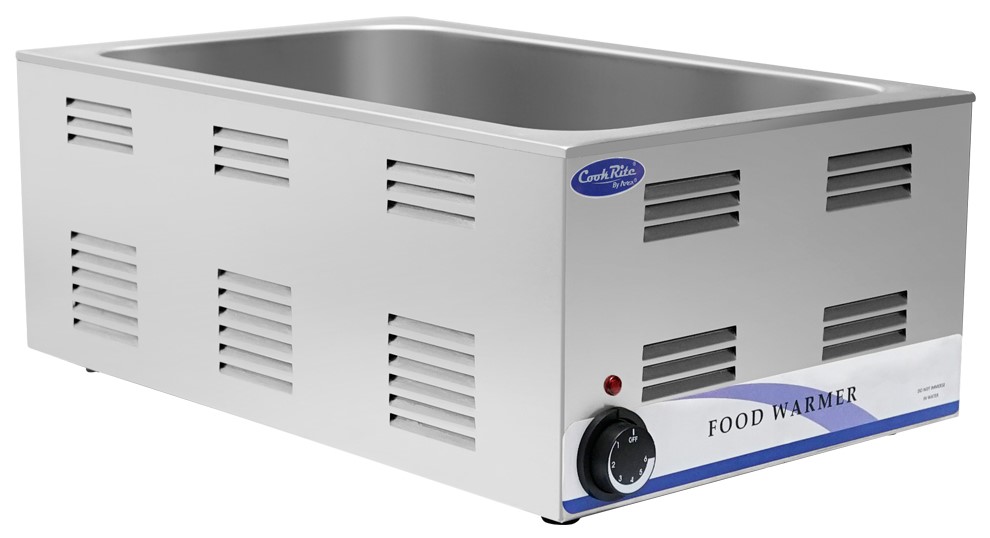
Holding and serving equipment preserve the safety and freshness of foods between production and service during volume surges. Heated display cases hold pizza slices, hot dogs, and sausages at serving temperature without active cooking. Food warmers and steam tables hold pre-cooked pulled pork, chicken, and bratwurst throughout service.
Ice and Beverage Equipment
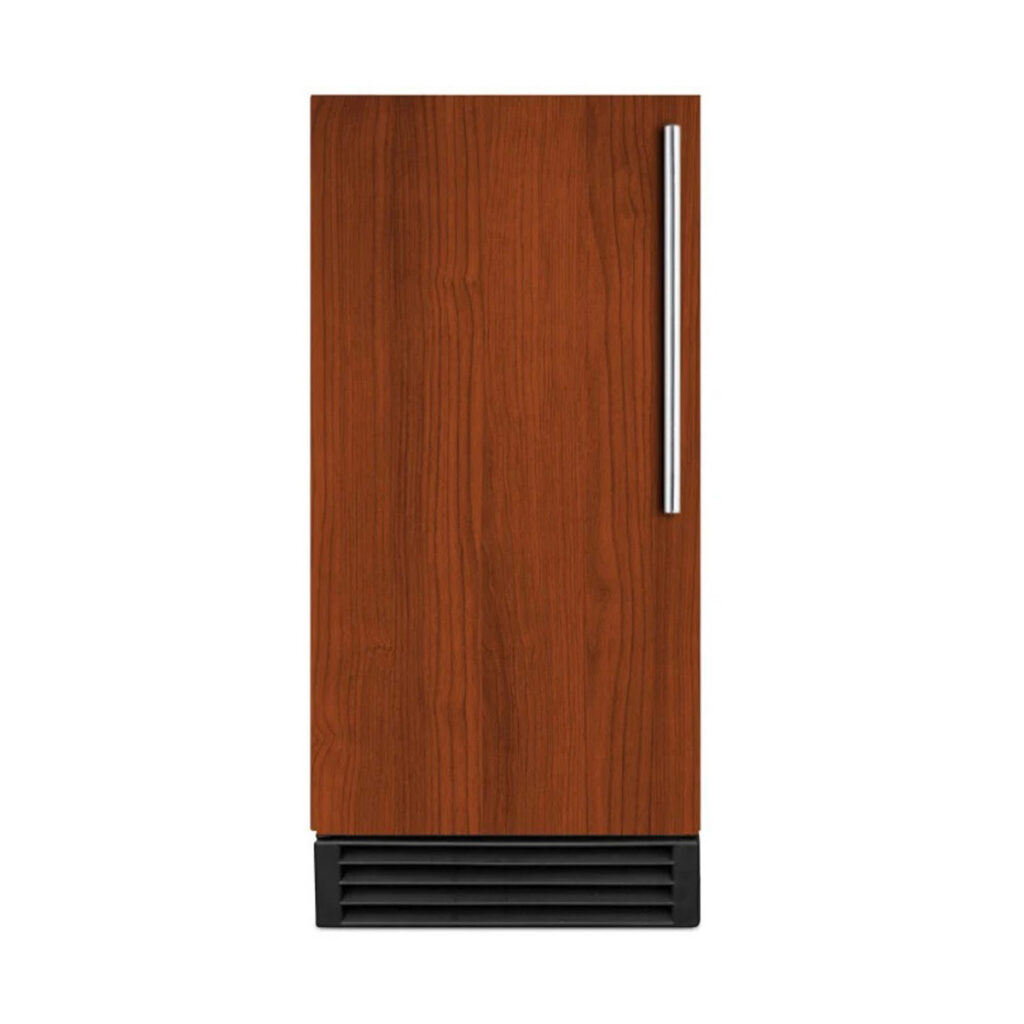
Ice and beverage equipment are one of the most profitable and bestselling items. A beverage merchandiser can increase your sales, while a chest cooler stocked with pre-chilled product speeds transaction time and prevents bottlenecks.
A commercial ice machine producing 150 lbs (68.04 kg) to 300 lbs (136.08 kg) of ice per day can enhance beverage service quality by providing accessible ice, which will be in high demand during the hot match days in June and July.
How to Choose the Right Menu for Maximum Profit?
To choose the right menu for maximum profit, focus on high-margin items such as beverages, snacks, and pizza slices; limit menu variety to speed up service; and use upselling strategies such as burger-and-fries combos and sausage-and-beverage menus.
Focus on High-Margin Items First
Cold beverages, street snacks, and pizza slices consistently deliver the highest margin percentages. Include these items in every event menu as the baseline. Then you can add one or two high-demand anchor items, like burgers, hot dogs, or wings, to drive customer traffic. The anchor item brings in customers, and beverages or snacks increase profit.
Limit the Menu to Increase Speed and Throughput
A three-item menu executed at 200 transactions per hour outperforms a ten-item menu executed at 60 transactions per hour. Calculate your realistic prep time per item based on your equipment and staffing. Then, cap the menu at the number of items your operation can sustain at peak volume without extending wait times.
Bundle Deals and Upselling Strategies
Bundle deals and upselling increase average ticket value without slowing service. A burger-and-fries combo priced at $14 versus individual items totaling $16 moves customers to a higher-spend transaction faster. Adding a beverage can convert a $14 order to an $18 ticket. Beverages require no additional cooking time and deliver a near-pure profit margin.
FAQs About Selling Food at Major Events
What is the most profitable food to sell at events?
Cold beverages are among the most profitable food ideas to sell during major sports events, with margins ranging from 70% to 90% at event pricing. Additionally, food items such as pizza slices, pretzels, nachos, and loaded fries offer the strongest combination of low food cost and high profit margin.
How many menu items should I offer?
Street food stalls should offer two to four items, and food trucks can support five to eight without extended service times. The practical rule is to never offer more items than your equipment and staff can produce simultaneously at rush time.
What food sells fastest during sports events?
Hot dogs, pre-made pizza slices, and cold beverages are the fastest-selling items at events because they require no assembly or cooking at the point of sale. Pre-cooked wings held in a warmer and fries from a high-capacity fryer also sell very quickly.
Do I need different equipment for food trucks vs. stalls?
Yes, you need different equipment for food trucks and stalls. Food trucks feature onboard cooking equipment, refrigeration, and utility connections that enable concurrent production of multiple items.
Street stalls typically rely on a limited set of standalone equipment, a fryer, a griddle or roller grill, a cooler, and a warmer, which constrains the menu accordingly.
Final Thoughts: Turning Event Demand Into a Profitable Setup
Major sports events like the 2026 FIFA World Cup offer a lucrative but demanding window of opportunity for food vendors who prioritize speed and simplicity over culinary complexity.
The primary takeaway from this guide is that success in high-volume environments is defined by how quickly an operator can serve familiar, portable comfort food to a moving crowd. By focusing on preparation speed and ingredient simplicity, vendors can effectively manage massive surges in foot traffic, ensuring they capitalize on every potential sale during the narrow peak windows of a match day.
Profitability is further maximized by strategically balancing high-demand “anchor” items, such as burgers and hot dogs, with high-margin additions like cold beverages and street snacks. Because items like bottled water and soda require zero prep and offer profit margins as high as 90%, they are essential for driving overall revenue.
Implementing bundle deals and utilizing holding equipment, such as warming stations and pizza displays, allows vendors to increase their average transaction value while maintaining the rapid throughput necessary to prevent customers from leaving for faster competitors.
The success of a food stall or food truck depends on the alignment of its menu with its physical equipment and staffing capacity. A lean menu of two to four items for a stall or five to eight for a truck ensures that operations remain manageable and service times stay short. By investing in the right infrastructure and adhering to a “speed-first” strategy, foodservice operators can transform the intense demand of global sporting events into a highly organized and profitable business venture.
Chef’s Deal carries the full range of commercial cooking equipment, refrigeration, holding units, and beverage solutions you need to build a high-performance event food setup, for food booths, tents, and food trucks, with competitive pricing, free shipping, and financing options available across the catalog.

