

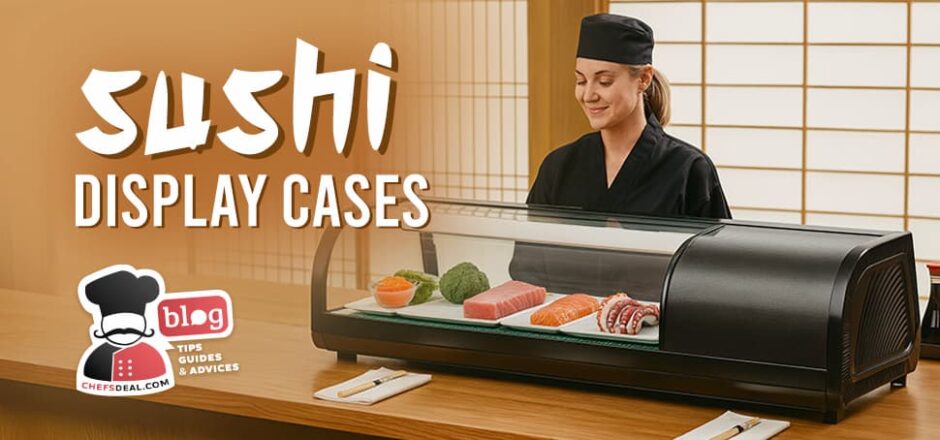
Sushi display cases boost sales with perfect presentation and preservation of sushi offerings. What makes sushi display cases unique from other refrigerated displays is their precise temperature control, low-humidity environment, and sleek, often minimalist designs that highlight the craftsmanship of each sushi piece.
There are 5 main types of sushi display cases, including countertop sushi cases, floor-standing sushi display cases, conveyor belt sushi cases, refrigerated sushi boats/trains, and custom-built sushi showcases.
When purchasing a sushi display case, consider six key features: temperature control capabilities, humidity management systems, lighting options, glass quality and configuration, base material and construction, and size and capacity considerations.
Be equipped with the necessary information regarding technical specifications and compliance to assess whether a particular unit is fit for your operations. Such information includes health department requirements for sushi display cases, NSF certification, energy efficiency ratings and considerations, refrigeration systems such as self-contained vs. remote, and drainage and condensation management.
Once you purchase a unit with the necessary qualifications, consider how to optimize the sushi display case’s performance, placement of the case within your establishment in relation to other pieces of equipment, ROI, and business benefits you can acquire from your purchase, and cost and budget considerations.

What are The Types of Sushi Display Cases?
The types of sushi display cases include countertop sushi cases, floor-standing sushi display cases, conveyor belt sushi cases, refrigerated sushi boats/trains, and custom-built sushi showcases. Each case has unique properties and serves different purposes.
1. Countertop Sushi Cases
Countertop sushi cases are compact units designed to fit on counters or sushi bars. These units offer clear visibility at eye level, allowing chefs to quickly restock items. You can use a countertop sushi case in a smaller establishment or to preserve and display smaller batches of sushi. Consider opting for curved glass options to maximize visual appeal.
2. Floor-Standing Sushi Display Cases
Floor-standing sushi display cases are larger units designed to store large batches of sushi in one place. They have their own refrigeration systems and plumbing integration, allowing them to be placed anywhere in a sushi bar, which makes layout design easier for business owners. You can use these units to store pre-made sushi for rush hours or open buffets.
3. Conveyor Belt Sushi Cases
Conveyor belt sushi cases feature rotating belts that carry small plates of sushi around. They are designed to add flair and fun to sushi dining experiences and are very popular among modern sushi bars. Such a setup also reduces labor costs since customers choose from sushi options rotating on the belts and pick up a plate without needing a waiter’s help.
4. Refrigerated Sushi Boats/Trains
Refrigerated sushi boats or trains are decorative, moving platforms often shaped like boats or trains on a track. They float or glide along a water or rail system to create a playful and engaging way to serve sushi. Such innovative display cases make the presentation of sushi an integral part of the dining experience, allowing business owners to mark up their prices and attract more customers.
5. Custom-Built Sushi Showcases
Custom-built sushi showcases are specifically designed to meet a restaurant’s unique needs and branding. They can be available in specific sizes, feature advanced lighting, be crafted from rarer materials, and utilize special refrigeration types to match the décor and workflow as perfectly as possible.
These displays are ideal for upscale establishments with a high-end client base, a premium menu, and a tailored presentation. Even if it may be more expensive, it is worth it for the flexibility in aesthetics, function, and customer experience.

6 Key Features to Consider When Buying a Sushi Display Case
When purchasing a sushi display case, consider six key features: temperature control capabilities, humidity management systems, lighting options, glass quality and configuration, base material and construction, and size and capacity considerations. These considerations will ensure you end up with the right unit for your unique needs.
1. Temperature control capabilities (optimal range for sushi: 32-38°F)
Temperature control capabilities of the sushi display case should be capable of maintaining an internal temperature between 32°F and 38°F (0-3.3°C), which is the essential and optimal range for preserving sushi’s freshness and ensuring food safety.
Sushi is highly sensitive to temperature fluctuations, and even minor variations can impact its texture, flavor, and shelf life. A high-quality sushi display case should feature a reliable and accurate thermostat, along with uniform cooling, to maintain consistent temperatures throughout the entire unit.
2. Humidity management systems
Humidity management systems are used to maintain the optimal humidity level within the unit, which is crucial for preserving the texture and flavor of fish and preventing rice and fish from drying out. A well-designed sushi display case should incorporate features that regulate airflow and maintain optimal moisture levels.
The recommended humidity level is usually no more than 55%. Balanced humidity also reduces condensation inside the unit, resulting in a cleaner display and better visual presentation for customers.
3. Lighting options (LED vs. traditional)
Lighting options for sushi display cases include traditional lighting and LED lighting. Lighting is a crucial decision, as it enhances product visibility, which can significantly impact customer perception and purchasing decisions.
Consider opting for LED lighting, if possible, due to its brightness, low heat output, and energy efficiency. Unlike traditional lighting, LEDs preserve the integrity of sushi by minimizing temperature increases and maintaining a calm display environment, which highlights the natural colors and freshness of each piece.
4. Glass Quality and Configuration (Straight vs. Curved Glass)
Glass quality and configuration have a direct impact on presentation quality and the customer experience. By making the right choices, you can drive impulse purchases and improve profits.
The glass used in sushi display cases should be clear, durable, and resistant to fogging. In terms of configuration, you have two options: straight and curved glass. Straight glass offers a clean, contemporary look and is typically easier to maintain, while curved glass provides better angles for customer viewing, which is excellent at open buffets.
5. Base Material and Construction (Stainless Steel vs. Alternatives)
Base material and construction of a sushi display case should be durable and resistant to corrosion. Your best bet is stainless steel for base construction thanks to its strength, resistance to corrosion, and ease of cleaning.
It provides long-term durability and is well-suited for environments where hygiene is critical. While alternative materials, such as aluminum or coated plastics, may be cheaper, they often fall short in terms of durability and thermal efficiency.
6. Size and Capacity Considerations
Size and capacity considerations for sushi display cases involve balancing your available space with your serving volume. A case that is too large can consume unnecessary energy and dominate a limited workspace, especially since sushi must be consumed soon after it is prepped.
A case that’s too small may restrict your menu variety and lead to overcrowding. Consider both the footprint and internal layout of the unit to ensure your choice supports your operational flow and enhances the display without sacrificing accessibility.

Technical Specifications and Compliance
Technical specifications and compliance in sushi display cases encompass health department requirements, NSF certification, energy efficiency ratings and considerations, refrigeration systems (including self-contained vs. remote), and drainage and condensation management.
Being informed about these features can make the purchasing journey easier and ensure you end up with a unit that can efficiently and safely meet your demands.
Health Department Requirements for Sushi Display
Health department requirements for sushi display cases are stringent, ensuring the safety of both the public and staff when handling raw fish and other sushi components. These guidelines often specify temperature ranges, sanitation protocols, and material standards to ensure safe handling of ingredients.
Non-compliance can result in fines, operational shutdowns, or damage to your business reputation due to food poisoning incidents. Ensure you consult your dealer about local regulations before purchasing or installing a display unit, to ensure your unit and setup are legally compliant in your region.
NSF Certification Importance
NSF certification certifies whether a sushi display unit meets public health and safety standards for foodservice equipment. Health inspectors often require this certification to ensure that the materials used are non-toxic, easy to clean, and designed to minimize contamination risks. Choosing an NSF-certified case can help you pass inspections with flying colors and provide peace of mind for both you and your customers.
Energy Efficiency Ratings and Considerations
Energy efficiency ratings and considerations directly impact the cost of your utility bills and the long-term cost-effectiveness of your business. Look for units that have ENERGY STAR ratings or other efficiency certifications to reduce your electricity use and carbon footprint without compromising performance. In addition to certifications, look for features such as LED lighting, eco-friendly refrigerants, and insulated glass to further enhance energy savings.
Refrigeration Systems (Self-Contained vs. Remote)
Refrigeration systems of sushi display cases typically come with either self-contained or remote refrigeration systems. Self-contained units house all components of refrigeration within the display case, making installation easier and more portable. However, they can generate more heat and noise, which can be tiresome for staff members.
Remote systems separate the condenser from the unit, which is excellent for quieter operation and less heat emission around the sushi. However, such units often require professional installation since the connection between the condenser and the unit should be seamless. You should make this decision based on your layout, ventilation, and maintenance preferences.
Drainage and Condensation Management
Drainage and condensation management are crucial for maintaining cleanliness and preventing water buildup inside the case. Look for models with built-in drip pans, drainage hoses, or automatic evaporation systems to manage excess moisture. Inadequate condensation management can lead to puddling, bacterial growth, and visibility issues.
How to Optimize Sushi Display Case Performance
To optimize sushi display case performance, perform daily and weekly cleaning runs, as well as monthly deep cleans. Monitor the unit’s temperature regularly, load the unit in a way that allows for airflow, rotate products, and practice correct overnight storage strategies. Doing these will help you operate your unit at peak performance while maintaining hygiene and product freshness.
- Perform Daily and Weekly Cleaning Procedures: Wipe down all surfaces with food-grade sanitizer, remove any spills immediately, and inspect seals and gaskets for buildup and rust regularly.
- Conduct Monthly Deep Cleaning: A monthly deep cleaning of a sushi case should include emptying the case, cleaning behind removable components, and thoroughly sanitizing hard-to-reach areas. Additionally, schedule professional maintenance every quarter and book professional help immediately if you encounter malfunctions that you cannot identify or fix.
- Monitor Temperature Consistently: Temperature management can deteriorate over time, so use a calibrated thermometer to track and log daily readings to ensure the case remains within the safe range of 34–38°F (1.111-3.333°C). An external thermometer is necessary because the internal thermometer may malfunction, too, and it is essential to cross-check.
- Load Sushi with Proper Spacing: Loading the sushi case with proper spacing between sushi options is essential to promote airflow, which is crucial for achieving and maintaining efficient cooling. Ensure that you avoid overfilling trays and prevent warm spots that could compromise food safety.
- Rotate Products Using The FIFO (First In, First Out) method: The first-in, first-out mechanism ensures that the food prepared first is also consumed first, thereby preventing food waste. Rotate products within the unit according to this mentality to maintain freshness and minimize waste, especially with high-turnover items like nigiri and sashimi.
- Store Products Correctly Overnight: Transfer any unsold sushi to a designated cold storage area for later consumption. Remember, not all sushi can be left for the next day, and you should adjust the temperature of your storage unit to 32-38°F (0-3.333°C), which is the recommended temperature for storing sushi.
Sushi Display Case Placement
Sushi display case placement is a crucial aspect of operational efficiency and customer experience. The ideal location for a sushi display case is typically at the sushi bar or near the service counter, where it’s easily visible to customers and accessible to sushi chefs. This positioning enables real-time preparation and presentation, allowing customers to appreciate the finer details of sushi preparation and fostering trust in the brand.
Do not place a sushi display case unit near heat-generating equipment, such as ovens or fryers, or in direct sunlight, as external heat can make it harder for the unit to achieve and maintain cooling, compromising food safety.
Environmental factors, such as air conditioning vents or high-traffic doorways, should also be considered to maintain stable operating conditions, as both can frequently disturb the external temperature and impact the unit’s performance.
Consider customer experience when positioning your case. Ensure the display case is positioned at an angle and at a height that offers clear visibility for customers, allowing you to drive impulse purchases. Light is a crucial factor in this process, as it can effectively highlight the freshness and colors of sushi when designed well. Poor lighting can cause glare or shadows, which can decrease visibility.
ROI and Business Benefits
The ROI and business benefits of a sushi display case can include visual appeal, which can directly influence purchasing behavior and boost sushi sales by drawing attention to freshness, variety, and craftsmanship.
Additionally, it can provide convenience for staff, reduce energy expenses, and create a clean, well-lit environment for sushi presentation. It has been proven time and again that customers are more likely to trust and enjoy products that are displayed visibly and attractively. Such a good impression increases sales and has ROI in terms of reinforcing your brand’s reputation for quality, hygiene, and attention to detail.
Choosing energy-efficient models also helps lower operational costs and maximize ROI. Units equipped with modern refrigeration systems, LED lighting, and insulated glass consume less electricity, resulting in long-term savings on utility bills without compromising performance. In addition to cutting energy expenses, advanced display cases contribute to better food waste management.
Consistent temperature and humidity control help preserve sushi longer, reducing spoilage and minimizing the need to discard unsold items. This also extends product shelf life thanks to better inventory planning and fewer rushed restocks.
Cost Considerations and Budgeting
Cost considerations and budgeting for a sushi display case should include an evaluation of both upfront and long-term costs, as well as financial factors. Initial investment ranges for sushi display cases can vary widely depending on size, features, and brand. On average, it ranges between $700 and $10,000.
Your operational needs and budget constraints help you select a case that strikes a balance between cost and performance. You shouldn’t opt for the cheapest price tag, but consider the long-term implications of your purchase, such as energy costs and potential maintenance expenses over time.
For instance, energy-efficient models may have a higher initial cost. Still, they can offer significant savings on utility bills over time, which makes them more cost-effective in the long run. Similarly, a newer unit with a good warranty will last longer and require fewer maintenance runs.
To alleviate the financial burden of a high-quality unit from a reputable brand, you can consider financing options offered by distributors and leasing companies. Leasing may be suitable for newer establishments or those wanting to preserve cash flow. However, buying typically results in greater value over time and may qualify for tax benefits.
The tax code Section 179 allows qualifying buyers to write off the full cost of the equipment in the year they finance it, rather than depreciating it over several years. This means you can claim tax deductions all at once, rather than waiting for years and making smaller deductions.
For instance, if you purchased a unit for $10,000, you can benefit from Section 179 and deduct the entire $10,000 from your net income in the first year you use it. If you are in a 21% tax bracket, you will have a tax savings of $2,100, which means your equipment costs you only $7,900.
To make an informed decision, consider conducting a total cost of ownership (TCO) analysis, which takes into account the purchase price, energy usage, maintenance costs, expected lifespan, and potential revenue gains. Ask your distributor to assist you with the calculations, as you will need the energy consumption information for the unit you are considering.

FAQs About Sushi Display Cases
What temperature should a sushi display case be maintained at?
A sushi display case should maintain a temperature between 32°F and 41°F (0°C to 5°C). This range keeps raw fish and other sushi ingredients safe and fresh for serving. Staying within this temperature helps prevent bacterial growth and maintains food quality.
How often should sushi display cases be cleaned?
Sushi display cases should be cleaned daily to ensure hygiene and food safety. Interior shelves, trays, and surfaces that come into contact with food must be sanitized after each use. A deep cleaning should be performed weekly, including the removal and washing of removable parts.
Can regular refrigerated cases be used for sushi?
Regular refrigerated cases are not ideal for sushi due to temperature and humidity differences. Sushi cases are designed to keep raw fish at safe temperatures without drying it out. Using a case specifically designed for sushi helps preserve freshness and maintain appearance.
What’s the average lifespan of a commercial sushi display case?
The average lifespan of a commercial sushi display case is about 5 to 10 years. With proper cleaning and routine maintenance, some models can last even longer. Factors such as usage frequency and build quality play a crucial role in determining longevity.
How do I prevent condensation in my sushi case?
To prevent condensation, maintain proper temperature, and avoid frequent door openings. Ensure the case is not overloaded and has good airflow around displayed items. Regularly check seals and gaskets to keep humidity from entering the case.
Conclusion
Sushi display cases are strategic commercial restaurant equipment that directly impact your sales, customer satisfaction, and operational efficiency when serving sushi. By investing in high-quality sushi display case features such as precise temperature and humidity control, energy-efficient components, and thoughtful layout and placement, you will successfully preserve the integrity of your sushi and also elevate the overall dining experience.
Proper maintenance and optimized usage further extend the life of your investment, helping your establishment maintain peak performance. With the adequate sushi display case, you can turn fresh presentation into fresh profits.

