

Serving temperatures for wine differentiate according to the wine types and their characteristics, such as light-boded, medium-bodied, or full-bodied. Ideal serving temperatures for red wine are between 55°F and 68°F (12.78°C and 20°C); for white wine, between 38°F and 55°F (3.33°C and 12.78°C); for rosé wine, between 45°F and 53°F (7.22°C and 11.67°C); and for sparkling wine, between 40°F and 54°F (4.44°C and 12.22°C).
Ideal wine serving temperatures enhance the wine’s flavor, aroma, and the overall pleasure it gives to wine gourmets at each sip. Too cold or too warm temperatures dull the taste or overpower the delicate notes of the wine. For example, white wines get more vibrant when served at cooler temperatures, while red wines release their full-bodied flavors when slightly warmer.
Optimizing wine serving temperatures enables restaurants and bars to improve guest satisfaction. Bar refrigeration systems with adjustable temperature zones, such as dual-zone wine coolers, provide a practical solution for maintaining these perfect conditions.
Understanding how wine serving temperatures differ by type and what factors influence buying proper bar refrigeration equipment is insufficient to transform the tasting experience. High-traffic bars must prepare their wine selections in advance, educate their staff, and adjust their workflow for the most sophisticated wine enjoyment. Debunking common wine service myths, such as serving whites too cold and reds too warm, contributes to the process, too. Therefore, bar operators who fully comprehend all the intricacies of wine serving temperatures gain a competitive edge.
Red Wine Temperature
Red wine serving temperatures vary by body type. Light-bodied reds, such as Pinot Noir, unlock their full potential at 55°F – 60°F (12.78°C – 15.56°C). Medium-bodied reds, like Merlot, are optimal at 60°F – 65°F (15.56°C – 18.33°C), while full-bodied reds, including Cabernet Sauvignon, thrive between 60°F – 68°F (15.56°C – 20°C). These ideal temperatures for red wines help balance their tannins and acidity. Installing bar refrigeration systems with dual-zone cooling helps ensure the best storage and serving temperatures for preserving the aromatic intricacies of red wines.
White Wine Temperature
White wine requires cooler temperatures to preserve its crisp, refreshing qualities and improve the individual serving wine experience. Light-bodied whites, such as Sauvignon Blanc, show off their deeper, richer flavors between 38°F – 45°F (3.33°C – 7.22°C). Medium-bodied whites, including Chenin Blanc and Pinot Gris, perform best at 45°F – 50°F (7.22°C – 10°C), which boosts their balanced acidity and richness to shine. Full-bodied whites, like Chardonnay, need only a light chilling within 50°F – 55°F (10°C – 12.78°C) range. Wine fridges provide precise cooling for white wines, keeping all varieties at their fresh and bright characteristics.
Rosé Wine Temperature
Rosé wine reveals its complex fruity character and mild tannin when served at slightly warmer temperatures than light and medium whites. Light-bodied rosés are best between 45°F – 50°F (7.22°C – 10°C) to emphasize their crispness. A similar temperature range highlights the depth of medium-bodied rosés, like those from Grenache or Syrah. Some rosés benefit from slightly warmer temperatures of 48°F – 53°F (8.89°C – 11.67°C) to showcase their complexity. Dual-zone wine chillers with adjustable temperature settings ensure precise temperature control and maintain rosés’ cool mouthfeel, especially when the demand peaks during warmer months.
Sparkling Wine Temperature
Sparkling wines, including Champagne and Prosecco, require colder temperatures to retain their effervescence and refreshing qualities. Light-bodied sparkling wines are ideal at 40°F – 45°F (4.44°C – 7.22°C), preserving their vibrant bubbles. Medium-bodied sparkling wines bring out more of their complex citrus notes when served at 46°F – 50°F (7.78°C – 10°C) and full-bodied ones at 50°F – 54°F (10°C – 12.22°C). Bar refrigeration systems like rapid-chill wine coolers have advanced features to preserve sparkling wines’ crispness and ideal wine serving temperatures.
Why Wine Serving Temperatures Matter?
Wine serving temperatures specify how much guests delight in every glass. Serving wine too cold mutes its aromas, hiding the subtle characteristics that define its flavor profile. On the other hand, serving wine too warm makes it taste flat, overpowering its delicate qualities with the heat of alcohol. Individual serving wine temperatures based on types and bodies expose the wine’s full flavor, aroma, and texture. This profoundly impacts the overall customer experience and is crucial for bar and restaurant success.
Impact on Flavor and Aroma
The wine serving temperature influences how customers perceive the flavor and aroma of wine. Wines served too cold lose their expressive qualities as cold temperatures suppress flavor and scent. For example, too-cold temperatures overshadow red wine’s richness and reduce white wine’s crispness. Conversely, overly warm temperatures cause the wine to taste too alcoholic, drowning out its more refined notes. Optimizing the wine serving temperature lets its true essence shine.
Customer Experience
Customer experience maximizes when you serve wine at its best. Temperature is not just a physical measure of the wine’s warmth; it is the core factor that creates a warm atmosphere. It shapes the sensory journey of every wine experience. The right wine temperature creates a deeper emotional connection with each glass by evoking feelings of warmth, comfort, and refreshment. A warm red wine soothes guests, while a chilled white refreshes and revitalizes them. Therefore, understanding the ideal red, white, or sparkling wine temperature is key to elevating customer satisfaction.
Bar refrigeration systems provide precise cooling to maintain the optimal beverage storage environment. Space-saving, functional, and durable solutions like the bottle and back bar coolers are useful. However, wine needs more specialized refrigeration as it is sensitive to ambient conditions. Commercial wine coolers have dual-temperature zones and a wide temperature range necessary to accommodate all types of wines, whether light, medium, or full-bodied. They are flexible enough to preserve the flavor, aroma, and structure of wines at optimal wine serving temperatures.
What is The Role of Bar Refrigeration in Maintaining Wine Quality?
Bar refrigeration’s role is to store each wine bottle at a consistent temperature. A wine cooler is designed to maintain precise humidity and temperature levels for preserving wines. Features such as consistent temperature control, energy efficiency, and customizable temperature zones make wine fridges perfect for maintaining wine quality. Even slight fluctuations in temperature can damage an entire collection of fine wine.
Consistent Temperature Control
Commercial wine coolers ensure consistent temperature control for preserving wine in ideal conditions. Different wines thrive at different temperatures—white wines typically between 38°F and 55°F (3.33°C—12.78°C), while reds prefer a range of 55°F to 68°F (12.78°C—20°C). When customers order a glass of wine, they expect perfection, and having precise temperature control helps meet those expectations. Advanced features like full electronic control with digital displays allow bars to optimize the wine temperatures so that every sip provides the best possible sensory experience.
Energy Efficiency
Energy efficiency is a key feature of most bar refrigeration. Energy-saving wine coolers reduce operational costs over time. Modern models incorporate energy-efficient compressors, insulated walls, and LED lighting designed to reduce electricity usage. This not only saves on utility bills but also provides long-term environmental benefits. The savings from using an energy-efficient chiller can accumulate over the years, potentially funding upgrades in other business areas.
Customizable Temperature Zones
Customizable temperature zones help wine coolers accommodate different types of wines. Wine coolers come in single-zone and dual-zone configurations. Single-zone coolers are ideal for maintaining a consistent temperature for one type of wine, such as whites or reds, ensuring uniform cooling throughout. However, bars serving multiple varieties need the dual-zone wine coolers’ ability to store different types of wine at optimal temperatures. The separate temperature controls for each compartment mean an efficient solution for maintaining reds and whites at the ideal wine serving temperature.
What Are Common Mistakes In Wine Temperature Management?
Serving wine too cold or too warm and over-reliance on ice buckets are the main mistakes in wine temperature management. These common mistakes in wine temperature management can ruin customers’ wine-tasting experience. Avoiding these common errors for an individual serving wine experience is crucial. Buying bar refrigeration units keeps these mistakes away.
Serving Wine Too Cold or Too Warm
Serving wine too cold or too hot impacts its flavor and aroma. Wine served too cold, especially reds, suppresses its rich aromas and flavors, leaving it flat. On the other hand, too-warm wine intensifies the alcohol content, masking its subtle notes and balance. Proper wine serving temperatures vary by the type and body. For instance, light-bodied whites require near ice-cold serving, but the full-bodied ones taste better at higher temperatures of around 50°F – 55°F (10°C—12.78°C). These mistake-free wine serving temperatures reveal each wine’s true character and complexity.
Over-Reliance on Ice Buckets
Over-reliance on ice buckets leads to improper temperature management, especially with delicate wines. Ice buckets rapidly chill wines and bring them below their optimal temperature range. This practice works for short-term cooling but risks over-chilling wines like reds, which lose their essence when served too cold. Ice buckets are useful for immediate cooling needs. Still, they cannot replace proper storage solutions like bar refrigeration units for long-term consistency.
Bar refrigeration units offer precise temperature settings for managing wine serving temperatures tailored to each type. Bottle coolers typically maintain a range of 32°F-38°F (0°C—3.33°C), suitable for light-bodied whites. Commercial wine coolers provide a broader range from 36°F to 68°F (2.22°C—20°C). This flexibility accommodates the needs of various wine types, with the upper range reaching 70°F (21.11°C) in some models to suit more sophisticated red wines. Purchasing bar refrigeration units ensures wines remain at their perfect temperature to elevate the overall wine experience.
How to Serve Wine at the Correct Temperature in a High-Traffic Bar
Serving wine at the correct temperature in a high-traffic bar requires strategic planning and efficient tools. Preparing wine in advance, monitoring temperatures, using multi-zone refrigeration, adjusting the service workflow, and educating staff are critical for maintaining the ideal wine serving temperatures. These measures help you optimize your wine service even during busy hours.
Prepare Wine in Advance
Preparing wine in advance is key to maintaining optimal wine serving temperatures in a fast-paced environment. Wine coolers should be stocked with sufficient quantities of red, white, and sparkling wines before the rush begins. This allows wines to settle at their ideal temperature, whether it is chilling whites to 40°F (4.44°C) or keeping reds around 60°F (15.56°C). Preparation ahead of time prevents issues like service delays and reliance on rushed chilling with ice buckets.
Monitor Temperatures Regularly
Monitoring temperatures regularly is necessary for achieving consistency in wine temperatures. Remind your bar staff to carefully track temperature settings to avoid fluctuations affecting wine quality. Most modern bar refrigeration units come with digital displays, making maintaining exact wine serving temperatures easy. Remember that serving wines too cold or warm is a common mistake, resulting in customer dissatisfaction and wasted wine stock. Consistent monitoring helps avoid this problem.
Use Multi-Zone Refrigeration
Using multi-zone refrigeration is an effective solution for serving different types of wine at their specific ideal temperatures. Multi-zone units allow bars to store red, white, rosé, and sparkling wines in separate compartments with independent temperature settings. For example, one zone can maintain reds between 55°F and 68°F (12.78°C—20°C), while another chills whites at 38°F – 55°F (3.33°C-12.78°C), depending on their bodies. This flexibility is especially important in high-traffic bars where various wines must be ready to serve immediately.
Adjust Service Workflow
Adjusting the service workflow streamlines operations to maintain correct wine serving temperatures. Efficient retrieval of wine bottles is the first critical step in reducing bottles’ time outside temperature-controlled environments. Organizing wine coolers based on popularity or order frequency helps optimize these retrieval times. Additionally, serving wines directly from refrigeration units whenever possible minimizes exposure to ambient temperatures. These workflow adjustments maintain wine quality and speed up service during busy periods.
Educate Your Staff
Educating staff on the importance of wine serving temperatures upgrades your wine service. Schedule training programs focusing on proper temperature control, correct storage practices, and handling techniques for different wine types. Encourage staff to understand how to use refrigeration units efficiently, including adjusting temperatures when necessary. Knowledgeable employees contribute to consistent service quality and ensure customers receive wine at its optimal temperature.
How To Choose The Right Bar Refrigeration For Wine Storage
Choosing the right bar refrigeration for wine storage includes a few key considerations. Manufacturers offer specialized refrigeration solutions for wines, as regular fridges do not provide the right conditions for fine wines. A dedicated wine cooler gradually cools wine, maintains humidity, and reduces harmful vibrations. These unique features necessitate evaluating different points when purchasing or upgrading bar refrigeration for wine storage. The primary factors are your wine inventory, space constraints, energy efficiency, and budget.
Evaluate Your Wine Inventory Need
Your wine inventory needs to influence which wine fridge to purchase. Evaluate how much wine and what type you are storing. Wine refrigerators have different capacities, holding anywhere from 12 to nearly 400 bottles. It is essential to think about current needs and future growth, too. Additionally, consider the shelving options to find the optimum storage conditions for the wines in your stock. Horizontal shelves are best for wines with natural corks, as they keep corks moist during long storage periods.
Assess Your Wine Inventory
Assess your wine inventory based on the wine types you are storing because different types have distinct temperature requirements. Bars serving primarily red wines can use single-zone fridges, which maintain a consistent temperature ideal for one type. However, businesses that store multiple types benefit from dual-zone wine coolers with separate compartments with independent temperature controls. Single-zone units work best for more focused wine selections, while dual-zone coolers offer flexibility. Some brands even manufacture triple-zone wine coolers, each at its ideal temperature, accommodating diverse wine types, from sparkling to full-bodied reds.
Select Between Dual-Zone and Single-Zone Cooler
A single-zone cooler offers uniform temperature control throughout the unit, making it a great choice for bars focusing on one type of wine, such as reds or whites. It is also a cost-effective solution for small wine selections. On the other hand, a dual-zone cooler provides 2 temperature zones for storing 2 wine types at their optimal temperature. This versatility is ideal for bars with a diverse wine inventory, enabling each bottle to maintain its best flavor and aroma profile.
Consider Space Constraints
Consider space constraints in your setting to specify the type and size of bar refrigeration you need. Freestanding wine coolers are affordable standalone units but require extra clearance for proper ventilation. In contrast, built-in wine coolers fit seamlessly under countertops or between cabinetry, making them ideal for bars with limited space. Built-in units feature front-facing vents, providing flexibility in placement and a sleek, integrated look. Undercounter wine refrigerators keep wine bottles easily accessible under countertops.
Prioritize Energy Efficiency
Prioritizing energy efficiency helps cut electricity costs and reduce environmental impact. Look for fridges with features like LED lighting, energy-efficient compressors, and eco-friendly insulation materials. Energy Star-qualified units are designed to operate with lower power consumption without compromising wine storage quality. Those models also come with financial incentives like instant discounts. Therefore, investing in an energy-efficient wine cooler is a smart long-term investment for bars focused on sustainability and lowering operational costs.
Match Your Budget With Long-Term Benefits
Matching your budget with long-term benefits means thoroughly evaluating the wine cooler’s price tag and cost of ownership. Lower-cost models are tempting but lack proper insulation or advanced features, leading to temperature fluctuations that damage wine. On the other hand, high-end models are expensive upfront but often provide better temperature control, durability, and energy efficiency, offering greater value over time. Assess the costs of replacement and energy consumption when purchasing, and consider how a more expensive but higher-quality fridge saves money on energy bills and lasts longer.
Wine Cooling Equipment
Wine cooling equipment is a must-have to mesmerize your guests with elegant red, white, rose, or sparkling wines. Different wine serving temperatures evoke different sensory experiences. Achieving this perfection requires keeping wines in specialized coolers. Commercial wine coolers, back bar coolers, and bottle coolers are furnished with distinctive features that preserve each wine type’s complex layers of taste and aroma.
Commercial Wine Coolers
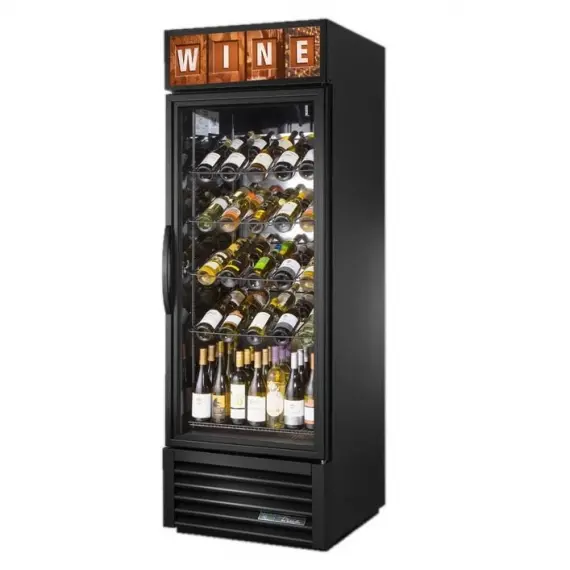
Commercial wine coolers are specialized bar refrigeration units that provide a controlled environment with consistent temperature, humidity, vibration, and light levels essential for keeping wines at their best. Wine is a delicate beverage that requires precise storage conditions to preserve its flavor, aroma, and aging potential.
Wine coolers reduce harmful vibrations, use humidity controls to prevent corks from drying out, and feature optimized storage layouts. They have a larger temperature range and anti-vibration cooling systems, gradually bringing wines to ideal serving temperatures. Commercial wine coolers are available in different types and features.
- Size: Commercial wine coolers range from compact units as thin as 6-in (15.24 cm) wide to larger models spanning up to 118 in (299.72 cm). Smaller units are suitable for bars with limited space, while larger models are perfect for high-volume establishments.
- Capacity: Wine cooler capacities vary, from countertop models holding as few as 6 bottles to large, freestanding units storing up to 399 bottles. Selecting the right capacity depends on your bar’s current inventory and potential growth.
- Compartments: Commercial wine coolers have single, dual, or triple-zone compartments. Single-zone coolers maintain one consistent temperature, ideal for bars serving only one type of wine. Dual-zone models have independent temperature settings to keep reds and whites at optimum wine serving temperatures. Brands like Summit even offer triple-zone coolers, which store 3 wine types in separate compartments.
- Refrigeration Location: The placement of the refrigeration system influences how efficiently the cooler operates and how it fits into your space. Refrigeration units can be bottom, rear, top, or side-mounted. Remote refrigeration units are also available, providing flexibility in how and where to place the cooler.
- Doors: Commercial wine coolers come with 1 to 4 glass or solid doors. Solid doors offer better insulation, improve energy efficiency, and are ideal for back-of-house storage. Glass doors allow customers and staff to easily view wine selections while maintaining internal temperatures by minimizing door-opening time. These coolers add a sleek design element and enhance your wine selection’s visual appeal.
- Energy Efficiency: Energy-efficient models are necessary for bars looking to reduce operational costs. Features like LED lighting, low-energy compressors, and eco-friendly insulation help minimize power consumption. Energy Star-certified wine coolers meet strict energy efficiency standards, making them a sustainable alternative that reduces environmental impact.
- Types: Wine coolers come in various types to suit different bar setups. Built-in units integrate seamlessly with cabinetry, offering a sleek look. Freestanding units are more flexible and can be placed anywhere with proper ventilation. Undercounter and countertop models are compact, offering quick access to wines in busy bars. Draft wine dispensers, designed like beer dispensers, allow quick, efficient wine service at large events while maintaining ideal temperatures. Finally, wine cabinets and wine cellars are more specialized in the long-term aging of wines.
- Popular Brands: Leading brands such as Beverage-Air, Eurodib USA, True, and Summit offer high-quality commercial wine coolers. These brands provide a range of features at affordable prices for businesses to find the right model for their wine storage and serving needs.
Commercial wine coolers can be more functional with some additional features. The purpose is to refine the storage conditions that upgrade the wine serving temperatures.
- UV Protection and Insulation: UV-resistant glass and strong insulation are essential for preserving the flavor and integrity of wine. These features protect against harmful light exposure and help maintain a consistent internal temperature.
- Vibration Reduction: Excessive vibration can disturb the sediment in wine bottles and impact the aging process. Wine fridges with vibration reduction technology ensure the wine rests undisturbed, allowing it to age gracefully and retain its character.
- Adjustable Racks: Wine fridges have adjustable racks to accommodate bottles of various sizes and shapes. Horizontal storage racks keep corks moist and prevent oxidation, while X-shaped racks offer a stylish and functional option for larger collections.
- LED Interior Lighting: LED lighting enhances the visibility of your wine selection and adds a sleek, sophisticated design element.
- Reversible Doors: Some wine coolers feature reversible doors, allowing installation flexibility. These doors provide convenient access in tight spaces or when customizing the bar’s layout.
- Finishes: Diverse finish options elevate the aesthetics of your bar. Stainless steel is popular for a modern, professional look, while wood finishes offer a more traditional and elegant appearance.
- Locking Cabinet: A locking cabinet feature helps secure valuable wine collections.
- Sabbath Mode: Some wine coolers come with a Sabbath mode that deactivates the lights and display while keeping the temperature settings intact, ensuring compliance with kosher laws.
Back Bar Coolers
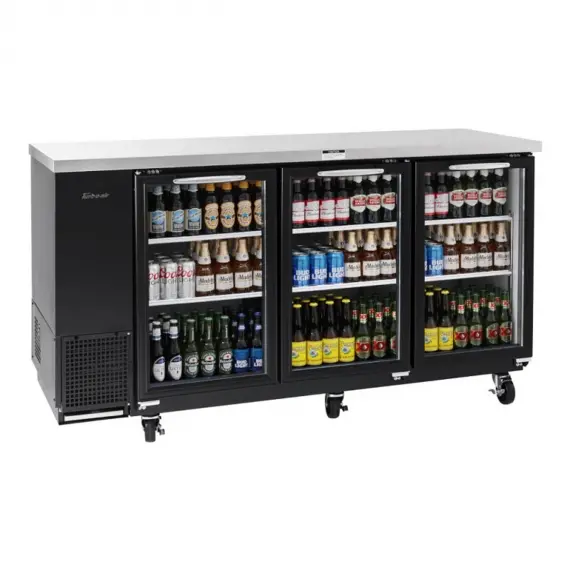
Back bar coolers are compact and versatile bar refrigeration equipment that maintain wine, beer, and other bottled and canned beverages typically within 30°F to 40°F (-1.11°C to 4.44°C) range. They fit perfectly under serving counters with their 32-in (81.82 cm) to 36-in (91.44 cm) heights. Their stainless or galvanized steel construction enhances durability and reliability in high-traffic facilities while maintaining consistent wine serving temperatures. Back bar coolers are functional and decorative with diverse sizes, capacities, and design options.
- Size: Back bar coolers generally cover a 12-in (30.48 cm) to 108-in (274.32 cm) horizontal footprint.
- Capacity: The largest models accommodate around 300 wine bottles or more than one thousand 12-ounce (354.882 ml) beer bottles.
- Sections and Doors: Back bar coolers are available in 1 to 4-section units with sliding or swing doors. Solid doors provide better insulation and durability, while glass doors allow visibility.
- Refrigeration Location: Back bar coolers feature rear, bottom, or side-mounted refrigeration, with some models offering remote compressors. Side-mounted compressors allow for efficient airflow through front vents, while rear-mounted units need extra space for cooling. Remote compressors reduce noise but are more labor-intensive to install.
- Energy Efficiency: High-density polyurethane, hydrocarbon refrigerants, and forced air cooling combine to optimize energy efficiency and sustainability.
- Types: Back bar coolers come in reach-in or pass-thru models. Pass-thru coolers are perfect for island-style bars, allowing bartenders to access the refrigeration unit on both sides.
- Popular Brands: Leading brands include Atosa, Beverage-Air, Continental Refrigerator, Everest, Glastender, Hoshizaki, True, and Turbo Air.
- Additional Features: Adjustable shelving facilitates storing long bottles or different drink sizes. LED lighting creates a stylish, eye-catching display. Available finishes include stainless steel for a modern look or black exteriors to match specific bar aesthetics. Some other extras are 2-zone models for beverage-specific storage, casters for mobility, and self-closing doors for retaining internal temperatures.
Bottle Coolers
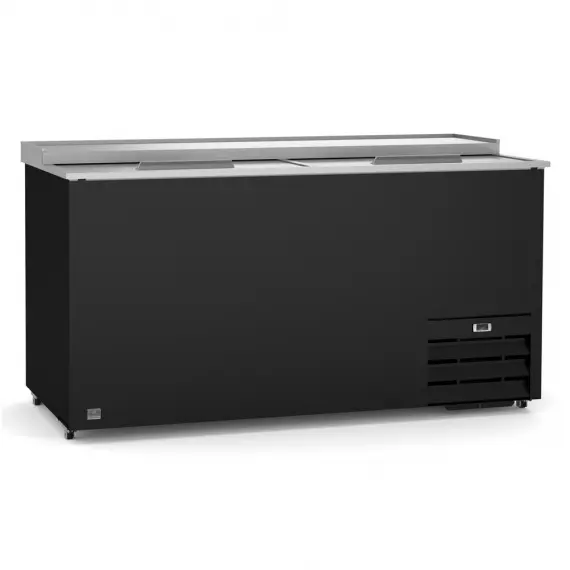
Bottle coolers are horizontal bar refrigeration units that keep bottled and canned drinks chilled, usually at 32°F to 38°F (0°C-3.33°C) temperatures. This range is not good for reds, which require a warmer wine serving temperature, but it works well with whites and other beverages. Bottle coolers have top lids to facilitate loading and serving. Their stainless steel construction and powerful cooling systems make them a smart choice for busy bars and catering services. Bottle cooler models are available in various sizes, capacities, and styles.
- Size: Bottle coolers range to fit any bar setup, from compact 24-in (60.96 cm) models to large 96-in (243.84 cm) units.
- Capacity: Capacities are often specified in cubic feet. A 3-cu ft (84.950 L) unit holds up to 96 bottles, and larger models accommodate more than 700 bottles.
- Sections and Doors: These coolers come in 1 to 3 sections, with adjustable chrome-plated divider racks to help organize bottles for quick access. Most feature sliding or hinged glass doors for easy visibility.
- Refrigeration Location: Bottle coolers are available with bottom, rear, or side-mounted refrigeration systems, each suited for different space and airflow requirements.
- Energy Efficiency: Many bottle coolers use eco-friendly refrigerants and high-efficiency refrigeration systems. Ultra-quiet models are available, reducing noise while maintaining energy-saving performance.
- Types: Coolers vary by compressor style, with front-breathing and side or rear-breathing options available to suit diverse bar layouts and installation preferences.
- Popular Brands: Leading manufacturers such as True, Fogel, Beverage-Air, Continental Refrigerator, and Turbo Air offer reliable commercial bottle coolers tailored for professional use.
- Additional Features: Durable stainless steel or stylish black vinyl exteriors withstand commercial use. Some models include optional LED lighting, bottle openers, and cap receivers for convenience. Casters on certain units make these coolers ideal for mobile or outdoor events.
FAQs About Wine Temperatures
Serving wine at the correct temperature enhances its taste, aroma, and overall drinking experience. Different wines have unique ideal serving temperatures, from reds that benefit from mild chilling to sparkling wines that require extra cooling to retain their bubbles. Here are some frequently asked questions about wine serving temperatures to help optimize storage and serving conditions for various wine types.
Should Red Wine Be Chilled?
Yes, red wine should be chilled, but only slightly to bring out its balanced flavors and aromas. The ideal range is 55°F – 68°F (12.78°C – 20°C), depending on the wine’s body type.
What Wines Should Be Chilled?
White rosé and sparkling wines should be chilled to enhance their refreshing qualities. Light-bodied whites are best at 38°F – 45°F (3.33°C – 7.22°C), while medium to full-bodied whites and rosés do well between 45°F – 55°F (7.22°C – 12.78°C). Sparkling wines retain their effervescence ideally between 40°F – 50°F (4.44°C – 10°C).
What Is The Perfect Temperature for Red Wine?
The perfect temperature for red wine is 55°F – 60°F (12.78°C – 15.56°C) for light-bodied, 60°F – 65°F (15.56°C – 18.33°C) for medium-bodied, and 60°F – 68°F (15.56°C – 20°C) for full-bodied reds.
At What Temperature Should Wine Be Served?
Wine should be served roughly between 38°F and 68°F (3.33°C – 20°C), depending on the type, with whites in the lowest and reds in the highest range.
What do Light-Bodied, Medium-Bodied, and Full-Bodied Terms Mean for a Wine?
These terms describe the weight or mouthfeel of a wine, which is the perception of its richness, viscosity, and overall intensity on the palate. The body of a wine is influenced by factors like alcohol content, grape variety, tannins, sugar, and acidity.
- Light-Bodied: These wines feel lighter on the palate and are often more refreshing, with lower alcohol content and subtle flavors. Examples include Pinot Noir (red) and Sauvignon Blanc (white).
- Medium-Bodied: These wines have a more noticeable weight than light-bodied wines but are not as intense as full-bodied ones. They offer a balance of acidity and richness, such as Merlot (red) and Pinot Gris (white).
- Full-Bodied: These wines feel heavier and more robust, often with higher alcohol content, more tannins, and rich, complex flavors. Examples include Cabernet Sauvignon (red) and Chardonnay (white).
The body of a wine helps guide serving temperatures and food pairings, enhancing the overall drinking experience.
Conclusion
Maintaining the correct wine serving temperatures is essential for preserving each wine’s quality, flavor, and aroma. Revealing the intricate taste layers ensures customers enjoy a premium experience. Each wine requires distinct serving temperatures and storage conditions. Bar refrigeration equipment, like wine coolers, back bar coolers, and bottle coolers, is vital in maintaining wine quality. Outfitting your bar with these coolers is only the first step. You need to familiarize yourself with common misconceptions and facts about wine service. Overall, creating ideal wine experiences depends on equipment selection, staff education, and workflow adjustment accordingly.

