

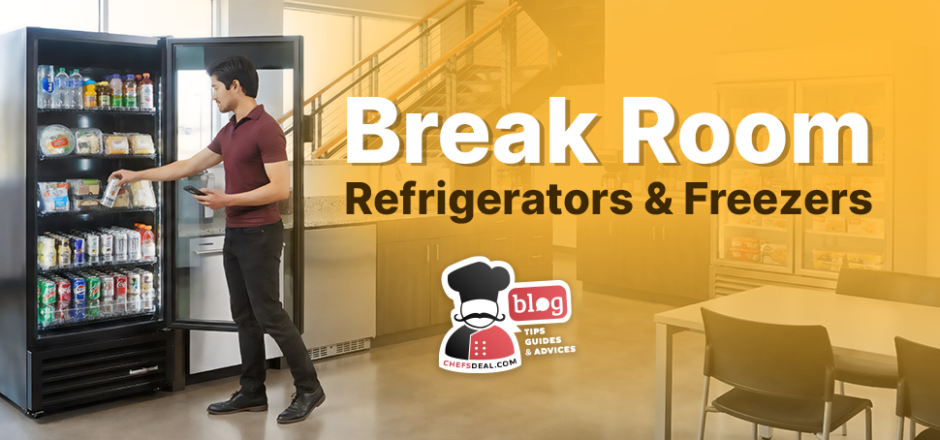
Break room refrigerators and freezers are commercial appliances designed to handle frequent use, high door openings, and shared storage demands that household refrigerators cannot support.
Offices experience significantly higher usage rates, requiring equipment with stronger compressors, reinforced doors, stable temperature recovery, and warranties that remain valid in non-residential environments.
Selecting the right break room refrigeration involves evaluating employee headcount, space constraints, noise levels, energy efficiency, accessibility requirements, and long-term operating costs.
Commercial-grade refrigeration improves food safety, reduces breakdowns, lowers energy waste, and supports a healthier, more functional workplace. Proper sizing, placement, maintenance, and appliance pairing ensure break rooms remain reliable, hygienic, and appreciated by employees over many years of use.
Key Takeaways
- Break room refrigerators are built for 200–300 daily door openings, unlike household units.
- Commercial units maintain stable food-safe temperatures under heavy use.
- Capacity should be planned at 0.5–0.7 cubic feet per employee.
- Multiple smaller units often outperform one oversized refrigerator in large offices.
- Refrigerators should provide 3–4× more space than freezers in most workplaces.
- Noise levels below 40 dB are essential for office comfort.
- Locks and ADA compliance protect shared access and workplace inclusivity.
- ENERGY STAR models reduce long-term operating costs and energy waste.
- Proper ventilation, placement, and routine maintenance extend equipment lifespan.
- Choosing commercial-grade refrigeration improves employee satisfaction and operational reliability.
Break Room Refrigerators vs. Household Refrigerators
The refrigerator in your home and a commercial break room unit may look similar, but they’re designed for different purposes. Household refrigerators are designed for light use by a single family, with door openings perhaps 10-15 times per day. However, break rooms serve many more people than a residential cooler can handle for long. Because break room refrigerators in a 50-person office may experience 200-300 door openings per day, causing frequent temperature fluctuations and mechanical stress, especially on the compressor and door hinges.
Thus, break-room refrigerators and freezers feature heavy-duty compressors that recover quickly after the door closes, maintaining food-safe temperatures even with frequent access. Additionally, their refrigeration systems use forced-air cooling that circulates cold air more effectively than the passive systems in home refrigerators, eliminating hot spots. Door hinges and gaskets are reinforced to withstand thousands of additional cycles without warping or losing their seal.
Household fridges are optimized to store standard family groceries, rather than 20-30 individual lunch bags and beverage containers. Therefore, a household cooler in a break room cannot accommodate these loads, and its cooling system struggles to maintain consistent temperatures, resulting in warm spots where food spoils.
In addition, most residential manufacturers state that the warranties are void if the residential coolers or freezers are used in commercial or industrial settings. You will experience major breakdowns much earlier than expected and will not be covered by the manufacturer’s warranty, wasting your budget and time. Commercial refrigeration units designed for break room use are built to operate 24/7 for 15-20 years or more.
Types of Break Room Refrigerators and Freezers
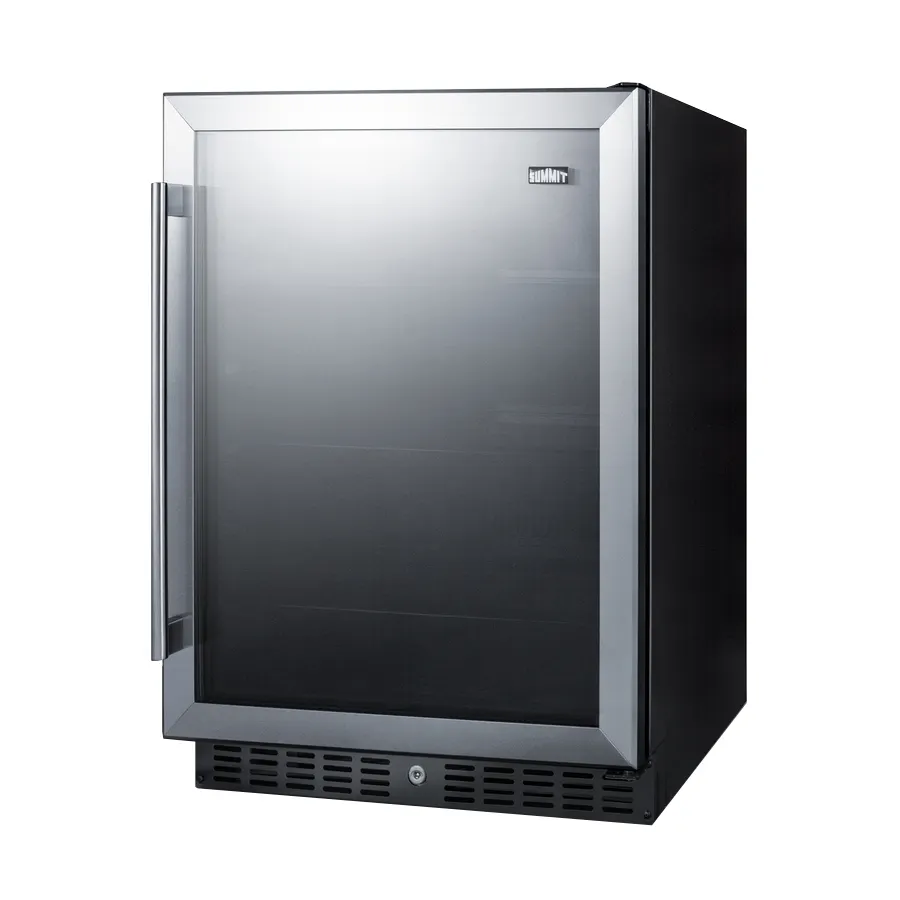
Break room refrigerators and freezers are available in full-size, compact, under-counter, and glass-door to match different office sizes, layouts, and usage patterns.
Full-size commercial refrigerators serve mid-size to large offices by providing ample storage for shared meals and beverages throughout the day. Compact and undercounter refrigerators fit smaller offices or satellite break areas where space is limited and targeted storage is sufficient. Break room freezers support frozen meals, ice packs, and bulk ice needs, either as standalone units or combined with refrigerators to save space. Glass-door refrigerators add visibility and convenience in corporate environments, reducing door openings while enhancing the break room’s appearance.
Together, these options allow offices to build a break room refrigeration setup that balances capacity, accessibility, efficiency, and employee comfort.
Full-Size Break Room Refrigerators
Full-size commercial refrigerators are available in taller, wider models (heights between 60 and 84 inches (152.40 to 213.36 cm) and widths between 23 and 46 inches (58.42 to 116.84 cm)) that offer 20-30 cubic feet (0.57-0.85 m³) of storage capacity. These commercial refrigerators serve as the primary refrigeration system for mid-size to large offices, providing sufficient capacity to store daily meals for 30-60 employees.

Compact & Under-Counter Refrigerators
As the most common break room refrigeration equipment, compact refrigerators measure 20-24 inches (50.80 to 60.96 cm) wide and offer 3-6 cubic feet (0.08-0.17 m³) of storage, making them ideal for offices with 5-15 employees. Additionally, they fit perfectly in small offices, satellite break areas, or as supplemental storage in larger facilities, serving specific purposes such as beverage-only storage or dedicated spaces for employees with dietary restrictions. There are also under-counter models that integrate seamlessly into the room layout to maximize floor space in tight break rooms.

Break Room Freezers
Break room freezers provide space for frozen meals, ice packs for lunch containers, and bulk ice storage. Upright freezers offer 2-20 cubic feet (0.06-0.57 m³) of storage, available in undercounter and full-size options. They are also available in combo units that combine freezer and refrigeration in a single unit, reducing costs and freeing up more seating space.

Glass Door Refrigerators for Corporate Break Rooms
Glass-door refrigerators let employees see the contents without opening the door, reducing energy waste and temperature fluctuations, and creating a café-style atmosphere that enhances the workplace environment. However, glass door models cost 20-30% more than solid door equivalents and use slightly more energy due to reduced insulation values. They work best in corporate environments focused on amenities and employee experience rather than in small offices.
Best Refrigerators for Office Break Rooms in 2025
To find the best refrigerator for your office break room, you must first define the parameters by which “the best” is measured, as it varies widely based on the break room’s conditions and requirements. Therefore, you first need to identify your needs and specific factors, such as employee headcount, available space, and usage patterns. Break room refrigerators maintain a temperature between 35-42°F (1.67-5.56°C) and provide safe storage for chilled foods, lunch boxes, and beverages. The break from freezers operates at temperatures between -10°F (-23.33°C) and 10°F (-12.22°C).
Break room refrigeration systems are engineered to operate continuously at high performance, safely storing employees’ food, snacks, and beverages. Hence, energy consumption is also a decisive factor when selecting the best refrigerator for your break room. Choosing ENERGY STAR-certified models reduces energy use by 10-15%, saving $40-60 annually, while a variable-speed compressor design further improves efficiency.
Another essential factor to consider when buying your refrigerator or freezer is the capacity requirements. Thus, you need to scale your selection with your workforce. A 20-person office typically requires a 10-15 cubic-foot refrigerator (0.28-0.42 m³), while a 50-person office typically requires 25-30 cubic feet (0.70-0.84 m³).
In addition, break rooms are intended to provide a suitable environment for staff to relax and converse with colleagues. Therefore, break room refrigeration systems offer lower operational noise below 40 decibels (as low as 32 decibels). However, most household refrigerators operate at 45-50 decibels, creating noticeable background noise that disrupts conversations and phone calls.
Key Features to Look For in Break Room Refrigerators and Freezers
The key features that you should look for while buying a break room refrigerator or freezer are:
- Temperature stability: Models with digital controls and automatic defrost cycles provide better temperature consistency, helping prevent food spoilage and ensure food safety.
- Adjustable shelving: Flexible interior configurations accommodate lunch containers of varying sizes, from small yogurt cups to large meal-prep containers.
- Quiet operation: Prioritize models rated at 40 dB or lower to ensure the compressor won’t disrupt meetings or concentration.
- Durable doors and hinges: Heavy-duty hinges rated for 100,000+ cycles and reinforced door handles prevent the common failure points.
- Easy-clean interiors: Stainless steel or smooth plastic interiors with removable shelving make cleaning easier.
Locking Refrigerators & Freezers for Shared Offices
Theft and food safety concerns make locks essential in many workplace environments. Locking refrigerators prevents unauthorized access to food, snacks, and medications. Locks provide the necessary security for healthcare offices, break rooms, and shared workspaces, protecting sensitive materials even outside business hours. Therefore, commercial refrigerators offer several locking mechanisms. Keyed cylinder locks provide traditional security, while digital keypad locks eliminate physical keys while recording access times.
ADA-Compliant Break Room Appliances
ADA compliance refers to applications designed to maximize appliance accessibility in workplace common areas for disabled employees. Failure to comply with ADA regulations can lead to discrimination complaints and legal action against employers and cause difficulties in the workplace.
For refrigerators and freezers, ADA compliance focuses on three main factors:
- At least 50% of freezer space must be within reach, no higher than 54 inches (137.16 cm) from the floor for side-approach access, or 48 inches (121.92 cm) for front-approach access.
- Operable with one hand that requires less than 5 pounds (2.27 kg) of force
- Floor space of at least 30 x 48 inches (76.20 x 121.92 cm) in front
ADA-compliant break room refrigerators and freezers can be used in any space to facilitate employee movement and ensure regulatory compliance.
Energy Efficiency & Sustainability in Office Refrigeration
ENERGY STAR-certified break room refrigerations use less energy than standard models, resulting in real cost savings over the appliance’s lifespan. A typical commercial break room refrigerator operating continuously uses approximately 600-900 kWh annually. An ENERGY STAR model reduces annual energy consumption by 300-810 kWh, saving $12-30 annually.
Capacity Guide: Choosing the Right Size for Your Office
Buying the right break room refrigerator and freezer size for an office depends on employee count, usage patterns, and how the break room is distributed across the workspace.
Small offices need compact or undercounter units for daily lunches, while mid-size offices benefit from full-size commercial refrigerators or multiple units to reduce congestion.
Large offices and industrial facilities should plan refrigeration capacity across multiple locations rather than relying on a single large unit. In most workplaces, refrigerator space should exceed freezer space by a ratio of three to four, ensuring sufficient room for fresh meals, beverages, and shared items during peak usage.
Small Offices (5–15 employees)
Small offices typically require 3-12 cu. ft. (0.08-0.34 m³) of refrigerator space, typically provided by one full-size compact refrigerator or a larger under-counter unit. This capacity assumes most employees bring lunch 3-4 days per week and need space for meal containers plus a few beverages. You can also choose refrigerator-freezer combinations to provide a versatile unit within the same floor space.
Mid-size Offices (15–50 employees)
Mid-size offices typically require 18-25 cubic feet (0.50-0.70 m³) of refrigeration capacity, usually achieved with one large commercial refrigerator or two mid-size units placed in different break areas. With 30 employees, expect to accommodate 20-25 lunch bags per day, plus shared items, requiring approximately 0.6 cubic feet (0.1 m³) per employee.
Large Offices & Industrial Facilities
Large facilities with 50+ employees require careful planning of refrigeration zones rather than a single massive unit. Plan for 0.6 cubic feet per employee (0.1 m³) across multiple refrigerators strategically placed throughout the facility. A 100-person office might use four 15-cubic-foot (0.42 m³) refrigerators rather than two 30-cubic-foot units, reducing walking distances and wait times during lunch rushes.
Refrigerator vs Freezer Balance
Most offices require approximately 3-4 times as much refrigerator space as freezer space. If you’re providing 20 cu. ft. (0.57 m³) of refrigeration, you should plan for 55-7 cu. ft. (0.14-0.20 m³) of freezer capacity.
Commercial Refrigerators for Employee Break Rooms
Although offices and break rooms are not professional food-service facilities, they still require commercial refrigerators for reliable operation in non-residential settings, carry warranties that remain valid in office environments, and meet safety standards that insurers expect in workplace common areas.
Top Break Room Refrigeration Brands
- Accucold Refrigerators & Freezers for Break Rooms: Accucold specializes in compact commercial refrigerators ideal for medical offices and small workplace break rooms. The brand offers ADA-compliant models, locking options, and medical-grade temperature consistency at competitive price points ranging from $400 to $ 4000.
- Hoshizaki: Known primarily for commercial ice machines, Hoshizaki also produces high-reliability refrigerators and freezers, priced from $2,500 to $6,000.
- Liebherr: This German manufacturer offers premium refrigeration systems with advanced temperature control and efficient, quiet operation, making them ideal for office environments. Prices range from $800 to $2,700.
- Arctic Air: The company offers reasonably priced commercial refrigerators for high-volume break rooms in warehouses and offices, priced from $1,200 to $ 3,000.
- Summit: Offering one of the industry’s widest selections of specialized refrigeration, including ADA-compliant and Energy Star-certified units, Summit serves diverse office needs, with most models priced between $430 and $3,900.
- GE, Whirlpool, KitchenAid, and Maytag: These consumer brands produce commercial-grade refrigerators for break rooms, generally priced at $1,500-4,000.
- Sub-Zero: Ideal for high-end corporate offices, Sub-Zero delivers unmatched temperature precision and durability, priced from $8,000 to $15,000.
Installation & Placement Tips
Break room refrigeration systems create noise, air stream, and heat during cooling. Therefore, they should be carefully placed and installed to minimize the adverse effects. First, commercial refrigerators require 3-5 inches (7.62-12.70 cm) of clearance on both sides and at least 4 inches (10.16 cm) of clearance behind the unit to ensure proper air circulation around the condenser coils. Refrigerator doors require 90-degree clearance to avoid blocking walkways or hitting neighboring cabinets.
Furthermore, the break room coolers and freezers should be positioned away from walls shared with conference rooms or quiet work areas, where compressor cycling can disrupt meetings or phone calls. Compressor noise becomes distracting, especially when transmitted through thin walls.
Cleaning Etiquette & Office Rules for Break Room Refrigerators
Break room refrigerators should be kept clean for hygienic use and a longer service life. It is essential to create a shared cleaning plan and post visible signage outlining basic break room rules:
- Label all items with names and dates,
- Remove items before their expiration dates,
- Clean up spills immediately,
- Deep clean the interior, gaskets, and vacuum condenser coils monthly.
In addition, the employee’s responsibilities should be formally and clearly defined. Employers typically handle appliance maintenance, deep cleaning, and replacement of worn equipment. Employees should manage their own food items, clean up spills they cause, and respect shared space.
Maintenance & Long-Term Care
To ensure maximum service life and prevent unexpected breakdowns, break room refrigerators and freezers should be regularly maintained. Coil cleaning represents the most critical maintenance task for extending refrigerator life. Moreover, you should do temperature checks to confirm your refrigerator maintains food-safe conditions. Additionally, check door gaskets monthly for cracks, tears, or areas where the seal doesn’t sit flush against the refrigerator body.
Cost Overview: Break Room Refrigerators and Freezers for Sale
As with break room equipment types and sizes, pricing varies based on size, configuration, and quality. Compact commercial refrigerators suitable for small offices (3-6 cu. ft. / 0.08-0.17 m³) range from $600 to $1,500, while full-size break room refrigerators (18-30 cu. ft. / 0.51-0.85 m³) cost $1,500 to $4,500, depending on features and brands. Commercial freezers for break rooms range from $900 to $ 3,500, depending on size and configuration.
In addition to the upfront cost, you should consider the warranty and service availability when estimating long-term value. Standard warranties typically cover 1-3 years of parts and labor, with sealed-system components (compressor, condenser, evaporator) often warranted for 5 years.
Common Mistakes Offices Make When Buying Break Room Refrigeration
- Choosing residential models: Selecting a unit with a lower upfront cost will result in higher expenses if it breaks down and is not covered by the warranty.
- Under-sizing capacity: Calculating space requirements based on current employee count without accounting for growth can lead to overcrowded refrigerators within months, forcing expensive replacements.
- Ignoring noise ratings: Focusing solely on capacity and price while overlooking decibel specifications can lead to disruptive compressor noise that disturbs employees.
- Skipping locks and ADA compliance: Assuming your office doesn’t need security features or accessible design to save money upfront creates a significant risk of higher future spending and compliance issues.
- Overlooking energy costs: Choosing the cheapest refrigerator without checking ENERGY STAR ratings or estimated annual operating costs can add $50-100 in annual electricity costs.
Break Room Microwave & Appliance Pairing
Refrigerators, freezers, and microwaves form the essential trio of break room appliances, and how you arrange them significantly affects employee efficiency and satisfaction. The ideal layout places the microwave near the refrigerator so employees can move smoothly from retrieving their meal to heating it.
However, these electrical appliances, along with coffee makers, toasters, and other devices, increase electrical demand. Thus, it is essential to make an electrical load plan to prevent tripped breakers and electrical failures. You should survey your break room’s electrical capacity before purchasing equipment and plan for dedicated circuits if you’re outfitting a new space.

FAQs About Break Room Refrigerators and Freezers
What is the best refrigerator for an office break room?
The best office refrigerator depends on your specific needs, but generally look for commercial-grade units with 18-25 cu. ft. (0.51-0.71 m³) capacity for mid-size offices, ENERGY STAR certification, noise levels below 40 decibels, and adjustable shelving.
Are commercial refrigerators better for employee break rooms?
Yes, commercial refrigerators significantly outperform residential models in office settings. They feature heavy-duty compressors designed for frequent door openings, reinforced hinges and gaskets that withstand higher usage, and commercial warranties that remain valid in workplace environments.
Do office break room refrigerators need locks?
Actually, yes. Locks are essential for shared offices, healthcare facilities, coworking spaces, and any environment where food theft occurs or where refrigerators store sensitive materials like medications or research samples.
What size refrigerator does a staff break room need?
Calculate approximately 0.5-0.7 cu. ft. (0.014-0.020 m³) cubic feet per employee for daily storage. For instance, a 20-person office needs 10-14 cubic feet (0.28-0.39 m³) of refrigerator space, while a 50-person office requires 25-35 cubic feet (0.70-0.99 m³).
Are glass door refrigerators suitable for offices?
Yes, glass-door refrigerators work beautifully in corporate break rooms, where visibility reduces energy waste from prolonged door openings and creates a café-style atmosphere with a stylish look.
What is an ADA-compliant break room refrigerator?
ADA-compliant refrigerators meet Americans with Disabilities Act requirements for accessibility, including at least 50% of storage space within 48-54 inches (121.92-137.16 cm) from the floor, door handles and controls requiring less than 5 lbs (2.27 kg) of force, and clear floor space of 30 x 48 inches (76.20 x 121.92 cm) inches in front for wheelchair access.
How often should office refrigerators be cleaned?
Office refrigerators require weekly removal of unlabeled or expired items (typically Friday afternoon) and monthly deep cleaning, during which all items are removed, and surfaces are sanitized.
Are Accucold freezers good for workplace break rooms?
Yes, Accucold manufactures reliable commercial freezers designed for office environments, medical facilities, and small commercial applications, featuring temperature consistency, compact design, and competitive pricing.
What is the most energy-efficient refrigerator for an office?
Look for ENERGY STAR certified commercial refrigerators, which use 9-10% less energy than standard models.
Can industrial freezers be used in office break rooms?
Yes, industrial freezers work well in large office break rooms, manufacturing facilities, or locations with a high number of employees who need significant frozen storage for meal prep or ice.
Conclusion: Choosing the Right Break Room Refrigerators & Freezers
Selecting proper break room refrigeration comes down to understanding that your office has unique needs that household appliances can’t meet. The refrigerator that works perfectly in your home will struggle and fail when faced with dozens of employees opening doors throughout the day, varied storage needs, and the continuous operational demands of office environments.
Start by accurately calculating your capacity needs based on employee count and usage patterns. 0.5-0.7 cubic feet per employee provides a practical baseline. Choose commercial-grade equipment from reputable brands that specialize in workplace refrigeration, even if it means spending more upfront. The investment pays off through a longer lifespan, lower maintenance costs, lower energy consumption, and fewer employee complaints about spoiled food.
Don’t overlook essential features such as locks for shared environments, ADA compliance for accessible workplaces, quiet operation for offices with adjacent work areas, and ENERGY STAR certification for cost-effective operation. These features might seem optional at first, but they become essential as your office grows and evolves.
Remember that your break room refrigerator affects employee satisfaction, workplace culture, and even productivity in ways that extend beyond its primary function of keeping food cold. Employees who trust that their lunch will be stored appropriately and safely accessible can focus on their work rather than worry about their next meal. A well-equipped break room signals that you value your staff’s comfort and well-being.
Take the time to research options, measure your space accurately, verify electrical capacity, and select equipment that will reliably serve your office for the next 15-20 years. The difference between a commercial refrigerator and a makeshift residential alternative is the difference between a functional break room that employees appreciate and a source of ongoing frustration that undermines morale. Make the choice that supports your team and your operations for the long term.

