


Refrigeration plays a central role in hotel and hospitality operations because it directly affects guest comfort, food safety, service speed, and operating costs. Hotels function as complex ecosystems with distinct refrigeration needs across guest rooms, bars, restaurants, banquet kitchens, wine service, ice production, and back-of-house storage.
Each area requires purpose-built equipment that delivers stable temperatures, quiet operation, durability under constant use, and compliance with food safety standards. From minibars and undercounter units to walk-in coolers, ice machines, and smart refrigeration systems, selecting the right mix of equipment ensures uninterrupted service, protects product quality, and supports long-term efficiency in a 24/7 hospitality environment.
Key Takeaways
- Hotels require multiple refrigeration systems, not a single solution, due to varied service zones.
- Guest room refrigeration prioritizes quiet operation, compact size, and energy efficiency.
- Bars and lounges depend on undercounter and back-bar refrigeration for speed and workflow efficiency.
- Hotel kitchens rely on walk-in coolers, reach-in coolers, and prep refrigerators to maintain food safety.
- Ice machines and dispensers are critical for guest satisfaction and banquet operations.
- Wine refrigeration requires precise control of temperature, humidity, and vibration in luxury settings.
- Energy-efficient and sustainable systems reduce long-term costs and support ESG goals.
- Smart refrigeration technology improves monitoring, compliance, and preventive maintenance.
- Proper sizing, placement, ventilation, and maintenance prevent breakdowns and energy waste.
- Investing in commercial-grade equipment lowers the total cost of ownership over the lifecycle.
Why Refrigeration is Critical in Hotels & Hospitality
Refrigeration is critical in hotels and hospitality because it supports guest comfort, food safety, and continuous service across diverse operational areas. Hotel and hospitality refrigeration includes specialized systems used for guest rooms, restaurants, bars, banquet facilities, and back-of-house storage. Each system must maintain stable temperatures and operate quietly, efficiently, and reliably in a 24/7 service environment.
Hotels require multiple types of refrigeration systems because they function as layered ecosystems rather than single-use facilities. Guest accommodations, dining venues, lounges, bars, ice stations, and service corridors each have unique cooling demands. Hotels rely on purpose-built refrigeration units, from compact guest room coolers to high-capacity restaurant refrigerators, to meet different temperature ranges, capacity needs, and access patterns.
Types of Refrigeration Used in Hotels
Types of refrigeration used in hotels include guest room refrigerators, bar and lounge cooling systems, commercial kitchen refrigeration, ice production equipment, and wine storage units. Each category serves a specific function, ensuring temperature control, service efficiency, and regulatory compliance across hospitality environments.
1. Guest Room Refrigeration
Guest room refrigeration typically consists of minibars and compact in-room refrigerators for beverages, snacks, and personal food items. These compact appliances are mini-bar fridges, tailored for hotel rooms. The capacities often range from 1 cu ft (28.316 L) to 4.5 cu ft (127.425 L), with 1.7 cu ft (48.138 L) among the most popular. Their main goal is to cool items to around 32°F (0°C) and 50°F (10°C).
2. Bar and Lounge Refrigeration
Bar and lounge refrigeration includes back bar coolers, bottle refrigerators, and undercounter units behind service counters. These systems usually operate at 32°F (0°C) to 40°F (4.4°C) and often feature glass doors and rapid-recovery compressors. They typically have a low-profile design with heights under 35 in (88.9 cm) to fit seamlessly beneath bar surfaces.
3. Restaurant and Banquet Kitchen Refrigeration
Restaurant and banquet kitchen refrigeration relies on walk-in coolers, reach-in refrigerators, and undercounter units to support high-volume food storage and preparation. Walk-ins handle bulk ingredients, while reach-ins provide fast access during service. Undercounters maximize efficiency in tight spaces. These systems maintain safe holding temperatures despite frequent door openings and continuous kitchen activity.
4. Ice Production and Dispensing Systems
Ice production and dispensing systems supply consistent ice for guest floors, bars, banquets, and foodservice operations. Hotels use modular ice machine heads, undercounter ice makers, and floor-standing dispensers. Many are ADA-compliant and designed for high-volume output, touchless dispensing, and sanitary operation in high-traffic areas.
5. Wine and Beverage Storage
Wine and beverage storage systems protect product quality through precise temperature and humidity control. Commercial wine refrigerators typically operate between 40°F (4.4°C) and 60°F (15.556°C), with dual-zone models that store red and white wines in a single unit. Humidity levels around 70% help preserve cork integrity and prevent oxidation in hospitality settings.
Hotel Room Refrigeration: Minibars & In-Room Refrigerators
Hotel room refrigeration centers on minibars and compact refrigerators that enhance guest convenience while operating discreetly within sleeping environments. These units integrate with furniture, minimize noise, and maintain safe storage temperatures for beverages, snacks, and personal items.
Hotels use several minibar technologies, including compressor-based, absorption-based, and thermoelectric models. Compressor minibars deliver faster pull-down and stronger cooling, while absorption and thermoelectric units offer silent or near-silent performance. Noise level is critical in guest rooms. Units operating below 40 dB prevent sleep disruption and improve guest satisfaction. Absorption and thermoelectric minibars operate at 0 dB.
Energy efficiency requirements influence minibar selection across hotel portfolios. Many hotels target units that draw 70 W or less, supported by eco modes, auto-shutoff features, and improved insulation. Newer high-efficiency models use up to 30% less energy than older absorption systems, reducing long-term operating costs.
Proper placement helps optimize the performance and longevity of hotel room refrigeration. In-room refrigerators are typically installed as undercounter or built-in units within cabinetry. Allowing around 2 in (5.08 cm) to 4 in (10.16 cm) of clearance for ventilation prevents heat buildup, maintains efficiency, and avoids premature component wear.
Energy-Efficient & Sustainable Refrigeration Solutions for Hotels
Energy-efficient and sustainable refrigeration solutions for hotels reduce operating costs, support environmental goals, and meet rising guest expectations for responsible hospitality. Modern systems prioritize certified efficiency, low-impact refrigerants, smart controls, and long-term value over upfront cost alone.
- ENERGY STAR®-rated units meet strict efficiency benchmarks and operate approximately 9% more efficiently than standard models (US Department of Energy). These refrigerators help hotels lower utility usage across guest rooms, kitchens, and bars while supporting sustainability reporting and brand reputation.
- Low-GWP refrigerants minimize environmental impact. Refrigerants, such as R-290 and R-600a, have a Global Warming Potential of 3 and an Ozone Depletion Potential of 0. These refrigerants support regulatory compliance and long-term system viability.
- Smart energy management systems use sensors and building management integration to optimize cooling cycles. Smart fridge models reduce energy use by up to 50% through a control panel that lets guests use the fridge as needed and shut it down when not in use. Linking energy management systems to room occupancy data cuts total energy costs by 35–45% in unoccupied rooms.
- Long-term operating cost savings depend on the total cost of ownership. High-efficiency units cost 15% more upfront but deliver substantial savings through lower energy consumption, reduced maintenance, and longer service life.
Hotel Ice Machines & Dispensers
Hotel ice machines and dispensers maintain food safety, beverage service quality, and guest satisfaction. Hotels rely on dedicated ice production systems to provide clean, consistent ice across guest floors, bars, banquet areas, and back-of-house operations. Hotels typically use modular ice machines, undercounter ice makers, self-contained units, and floor-standing dispensers, depending on location and volume requirements.
- Modular ice machines produce large quantities of ice and are mounted on separate storage bins or dispensers, making them ideal for high-traffic guest areas.
- Undercounter units fit beneath counters in bars and lounges.
- Self-contained machines combine production, storage, and dispensing in one compact footprint.
- Ice dispensers differ from standalone ice makers in that they are primarily for controlled dispensing rather than bulk access.
- Available ice types include full cubes, half cubes, crescent ice, cubelet (nugget) ice, and flake ice, each suited to specific beverage and food presentation needs.
Hotel ice machines serve two purposes: guest access and back-of-house. Guest-access ice dispensers often include integrated water valves and chutes to quickly and hygienically fill ice buckets. These units are commonly ADA-compliant and positioned on guest floors. Back-of-house ice machines are designed for kitchens, bars, and catering teams that require high-volume ice production for food preparation and service.
Sanitation and hygiene are essential considerations for hotel ice systems. High-traffic guest units increasingly use touchless lever activation to reduce cross-contamination. Professional cleaning and sanitization are required at least every 6 months, or quarterly in high-volume environments, to eliminate biofilm buildup. Proper use and storage of clean ice scoops further protect guests and staff from foodborne contamination.
Commercial Walk-In Coolers & Freezers for Hotel Kitchens
Commercial walk-in coolers and freezers serve as the backbone of hotel kitchen refrigeration, supporting bulk food storage, menu consistency, and regulatory compliance. These room-sized units allow hotels to store large quantities of fresh and frozen ingredients. Walk-in cooler sizing for hotels depends on menu complexity, storage volume, and anticipated growth.
- Standard configurations for hotel kitchens range from 10 ft × 10 ft (3.048 × 3.048 m) to 12 ft × 12 ft (3.658 × 3.658 m) or larger.
- Custom-width boxes, such as 7 ft (2.134 m) units with narrower shelving, help prevent cooling of unused space.
- Planning slightly above current needs allows hotels to accommodate seasonal demand and future expansion.
Walk-in cooler temperatures typically range from 35°F to 38°F (1.667°C to 3.3°C), with organized shelving that separates produce and prepared foods from dairy and raw proteins. Storing raw meats on lower shelves avoids drips from contaminating other items. Walk-in freezers maintain temperatures at 0°F to −10°F (−17.778°C to −23.3°C) or lower.
Regulatory compliance is non-negotiable in hotel kitchens. The FDA requires refrigerated foods to be held at or below 40°F (4.4°C). Walk-in placement also affects workflow efficiency, with optimal locations near receiving areas and prep zones to reduce delivery exposure time. Durable floors and reinforced panels ensure these units withstand continuous staff traffic.
Undercounter Refrigeration for Hotel Bars & Service Areas
Undercounter refrigeration streamlines operations in hotel bars and service areas where space is limited and speed is critical. These compact units fit beneath counters, keeping frequently used items within arm’s reach and reducing unnecessary movement during service. Their design supports efficient workflows without sacrificing cooling performance.
- Bar refrigerators (back bar coolers) provide rapid access to beverages and consistent temperature control. Most models are under 35 in (88.9 cm) tall to fit standard bar counters. They store bottled drinks, mixers, and garnishes directly behind the bar, allowing bartenders to serve guests quickly during peak hours.
- Undercounter freezers provide similar convenience for frozen ingredients, desserts, and ice cream used in bars, room service stations, and prep areas. Placing frozen storage closer to points of use reduces reliance on large walk-in freezers and improves service speed. These units are especially valuable in banquet operations and satellite service stations.
- Space-saving design features make undercounter refrigeration ideal for hospitality environments. ADA-compliant models measure 34 in (86.36 cm) or less in height; low-profile units can be as short as 32 in (81.28 cm). Drawer-style configurations eliminate door clearance issues, and front-breathing designs allow installation in tight spaces.

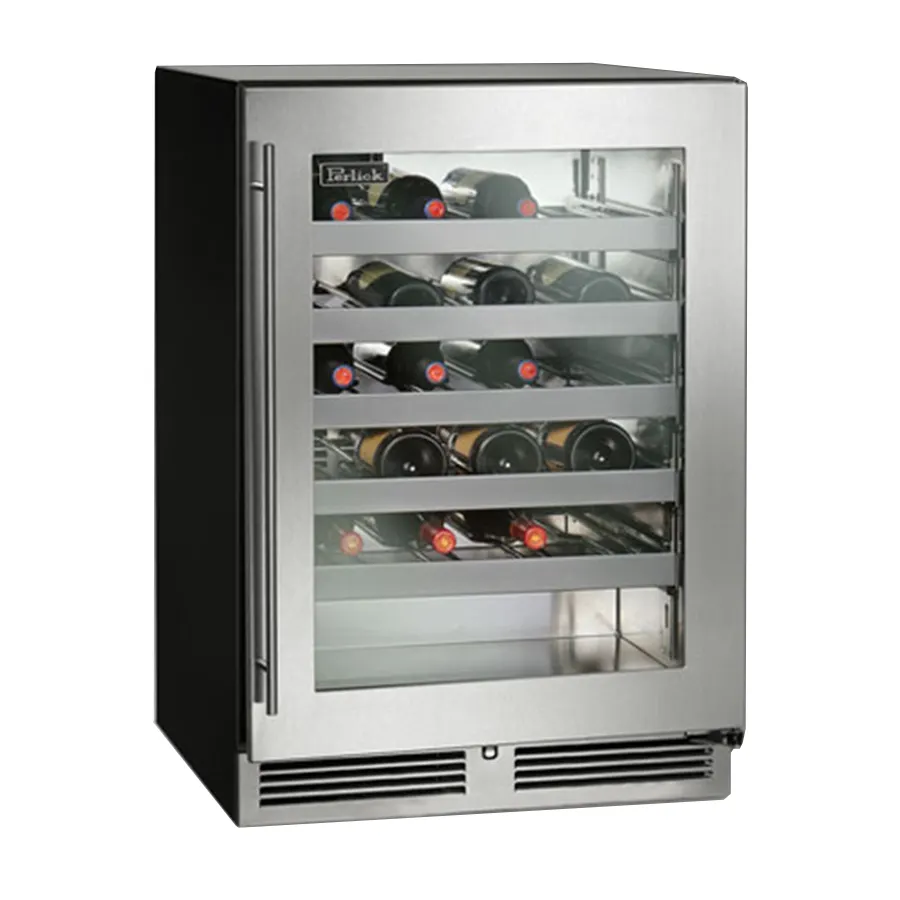
Commercial Wine Coolers for Luxury Hospitality
Commercial wine coolers are specialized refrigeration systems designed to preserve wine quality and enhance presentation in luxury hospitality settings. Hotels, fine-dining restaurants, and upscale bars rely on precise temperature, humidity, and vibration control to protect premium wine inventories and deliver optimal guest experiences. Single-zone and dual-zone wine refrigerators serve different operational needs.
- Single-zone units maintain one consistent temperature for focused collections or cellar-style storage.
- Dual-zone wine coolers feature independent compartments, typically allowing red and white wines to be stored between 45°F and 65°F (7.2°C and 18.3°C) in separate zones.
- Multi-zone systems further support diverse wine lists in high-turnover venues.
Humidity and vibration control are critical to long-term wine preservation. Proper storage requires a relative humidity of 70% or between 50% and 70% to prevent corks from drying out. Excessive vibration can disturb sediment and degrade aging, so premium commercial units often use vibration-free or low-vibration cooling technology to protect wine integrity.
Upscale hospitality venues use wine coolers as visual merchandising tools. Display models feature large, UV-protective glass doors and LED lighting. Banquet and fine-dining operations pair wine coolers with preservation systems that use argon or nitrogen, or Coravin technology, allowing hotels to serve premium wines by the glass with minimal waste and at ideal serving temperatures.
Smart Refrigeration Technology in the Hospitality Industry
Smart refrigeration has become a core operational asset in the modern hospitality industry. Today’s commercial systems integrate digital intelligence to improve food safety, reduce waste, and minimize long-term operating costs. They enable operators to monitor refrigeration assets centrally while maintaining consistent performance across multiple departments and properties.
Remote temperature monitoring enables real-time visibility into refrigeration conditions through Building Management Systems (BMS) or cloud-based dashboards. Sensors continuously track internal temperatures, allowing kitchen managers and facility teams to verify compliance without physical inspections. This capability is especially valuable in large hotels where walk-ins, undercounter units, and minibars operate simultaneously across different zones.
IoT-enabled sensors and automated alerts further enhance protection by notifying staff instantly when temperatures exceed preset thresholds. Alerts delivered via SMS or email flag issues such as doors left ajar, compressor strain, or power interruptions before product loss occurs. These systems also generate digital logs that support HACCP documentation and regulatory audits without manual recordkeeping.
Energy analytics and predictive maintenance tools turn refrigeration into a proactive cost-control system. Smart units analyze compressor cycles, ambient conditions, and usage patterns to optimize energy consumption. AI-driven predictive maintenance detects early signs of performance degradation, enabling service teams to schedule repairs before breakdowns disrupt hotel operations.
Top Hospitality Refrigeration Brands in 2025
Top hospitality refrigeration brands offer models that perform reliably under constant use. Their units meet guest-facing expectations for quiet operation and consistent temperatures. Leading manufacturers support their equipment with extended compressor warranties and nationwide service networks. Access to replacement parts and trained technicians remains a decisive factor for hotels operating multiple locations. Here are some notable brands:
- Hoshizaki is renowned for the durability of its Steelheart® Series and an industry-leading 7-year compressor warranty.
- True Manufacturing promises temperature consistency and long-term reliability in high-volume hospitality kitchens.
- Turbo Air offers robust warranty coverage and energy-efficient designs suited to continuous operation.
- Traulsen specializes in premium, heavy-duty refrigeration for luxury hotels and institutional kitchens.
- Delfield is recognized for ergonomic designs that support fast-paced foodservice workflows.
- Beverage Air delivers dependable bar and back-of-house refrigeration with accessible service support.
- Perlick focuses on high-end bar refrigeration with superior airflow and temperature uniformity.
- Summit is famous for its specialty and compact refrigeration solutions for guest rooms.
- U-Line is known for quiet, precision cooling in upscale hospitality and built-in installations.

Considerations Before Buying Hotel Refrigeration Equipment
Considerations before buying hotel refrigeration equipment center on aligning performance, durability, and efficiency with the hotel’s operational demands.
- Assess hotel size and service level: Refrigeration needs vary widely based on room count, foodservice scope, and amenities such as banquet halls or spas. Full-service hotels require higher-capacity, multi-zone refrigeration; limited-service properties prioritize compact, energy-efficient units.
- Match refrigeration types to hotel zones: Each hotel area demands specialized equipment. Kitchens and banquets require walk-ins and reach-ins built for heavy use. Bars rely on undercounter and back-bar refrigeration for speed and accessibility. Guest rooms need quiet minibars.
- Evaluate capacity, efficiency, and durability: Focus on total cost of ownership rather than upfront price alone. Oversized units increase energy consumption, while undersized equipment restricts workflow. ENERGY STAR® certification, stainless steel construction, and high-efficiency compressors reduce operating costs and extend service life.
- Plan for future expansion: Anticipate growth by selecting slightly higher-capacity units and scalable configurations. Early planning minimizes costly replacements as occupancy, menus, or service offerings expand.
Hotel Room Refrigerator Suppliers & Procurement Tips
We offer a focused portfolio of commercial-grade units designed for continuous use, quiet operation, and energy efficiency. Expertise in hotel-specific requirements, such as cabinetry integration and noise standards, signals a supplier capable of supporting long-term performance.
Volume purchasing plays a strategic role for hotel groups and multi-property operators. Standardizing refrigerator models across locations enables bulk pricing, simplifies maintenance, and ensures a consistent guest experience. Long-term supplier relationships often provide priority service access, replacement availability, and favorable pricing for future upgrades or expansions.
Warranty coverage, logistics coordination, and installation support significantly affect ownership costs. Compressor warranties deserve scrutiny, as they protect the most critical component. Proper installation prevents overheating and warranty issues. Reputable suppliers also manage delivery logistics, old-unit disposal, and post-installation guidance to ensure reliable performance from day one.
Maintenance Checklist for Hotel Refrigeration Systems
Following a maintenance checklist for hotel refrigeration systems is a daily operational responsibility, not an occasional task. Consistent upkeep protects food safety, reduces energy waste, and prevents unplanned equipment failures that disrupt guest service. A structured maintenance checklist ensures every refrigeration asset, from minibars to walk-ins, operates reliably under continuous hospitality workloads.
- Daily operational checks focus on performance verification and early issue detection. Always confirm the internal temperatures for refrigerators and freezers, using calibrated digital thermometers. Ensure door gaskets seal tightly and vents remain unobstructed. Report any unusual noises, vibrations, or visible leaks immediately.
- Weekly routines emphasize cleanliness and maintaining airflow. Wipe down the exterior surfaces with mild cleaners. Keep the items on the interior shelves well-organized to prevent overloading that blocks circulation. Door hinges benefit from food-safe lubrication, and clean gaskets regularly to avoid grease buildup that compromises sealing efficiency.
- Monthly preventive maintenance addresses efficiency-critical components. Condenser coils require thorough cleaning with a soft brush or vacuum, as dirt accumulation can reduce efficiency by up to 30% (DOE). Keep the drain lines and pans clear to inhibit odors and mold growth. Inspect fan blades and motors to ensure consistent airflow and temperature stability.
Ice machines require strict sanitation schedules. Apply internal cleaning and sanitizing at least every 6 months, or every 3-4 months in high-volume hotels. NSF recommends semi-annual professional cleaning to prevent scale buildup. After sanitization, discard the first full bin of ice, check water filters, and document all procedures in maintenance logs to support HACCP compliance and health inspections.
Common Refrigeration Mistakes Hotels Should Avoid
One of the most costly mistakes hotels make is choosing residential refrigeration for commercial use. Residential units are not designed for frequent door openings, higher ambient temperatures, or continuous operation. They fail prematurely, consume more energy, and compromise temperature consistency when used in guest rooms, kitchens, or bars.
Ignoring energy consumption during purchasing decisions leads to inflated long-term costs. Low upfront pricing appears attractive, but inefficient refrigeration systems drive higher utility bills and inflate the total cost of ownership. ENERGY STAR®-rated commercial units consistently deliver better lifecycle value while supporting sustainability goals increasingly expected by guests.
Underestimating ice demand creates operational bottlenecks and guest dissatisfaction. Hotels must calculate ice needs across guest floors, bars, restaurants, and banquet operations. An undersized machine runs continuously, accelerating wear, producing inconsistent ice quality, and increasing service interruptions during peak demand periods.
Poor ventilation and incorrect placement frequently undermine refrigeration performance. Condenser units typically require certain clearance for proper airflow. Installing minibars inside sealed cabinetry without ventilation traps heat, reduces cooling capacity, voids warranties, and increases failure rates.
The most damaging mistake is neglecting preventive maintenance. Skipping coil cleanings, ignoring gasket wear, and delaying servicing can raise annual repair costs to more than 3 times normal levels and shorten equipment lifespan by 2–4 years (ENERGY STAR). Preventive maintenance is for cost control and operational stability.
Cost Overview: What Hotels Can Expect to Invest in Refrigeration
Hotel refrigeration budgets vary widely based on service level, property size, and equipment type. Guest room refrigeration represents a scalable investment. Kitchens, bars, and ice production require heavier upfront spending. Here are some realistic pricing ranges to help you plan accurately and avoid under-budgeting critical systems.
Minibar pricing depends on capacity, technology, and noise requirements.
- Entry-level portable or compact units sized below 1 cu ft (28.316 L) typically range from $50 to $80.
- Small countertop refrigerators begin at around $190.
- Silent thermoelectric or absorption minibars cost $180–$450, with luxury or custom-built models exceeding $500–$800+ per unit.
Bar and kitchen refrigeration requires significantly higher capital investment.
- Commercial undercounter refrigerators and freezers range from $400 light-duty units to over $15,000 multi-drawer, high-tech models.
- Back bar coolers typically cost $800–$2,500+.
- Reach-in refrigerators span from $1,000 to $44,000.
- Walk-in coolers or freezers range from $4,000 to $55,000, depending on size and configuration.
Ice machine costs scale with production capacity.
- Undercounter ice machines typically range from $600 to $7,000.
- Modular ice machine heads cost around $1,200–$18,300.
- Complete systems, including storage bins, often cost $2,500–$8,000+ before installation and filtration.
Consider the total cost of ownership over the equipment lifecycle. Energy use accounts for 60–80% of the total cost of ownership, while the purchase price represents only 10–20% (DOE). Therefore, it is wiser to purchase an ENERGY STAR-rated unit, although it costs 10-15% more upfront. It reduces energy costs enough to pay for itself within 2-3 years of operation.
FAQs About Hotel & Hospitality Refrigeration
What refrigeration equipment does a hotel need?
The refrigeration equipment a hotel needs depends on the guest comfort, food safety, and efficient service across multiple zones:
* Minibars or in-room refrigerators are ideal for guest rooms and suites.
* Back bar coolers, undercounter refrigerators and freezers, and commercial wine coolers are indispensable in bars and lounges.
* Walk-in coolers and freezers, reach-in refrigerators, prep tables, and chef bases are for restaurant and banquet kitchens.
* Ice dispensers on guest floors and high-capacity modular ice machines for kitchens and catering are required guest services across the hospitality venue.
What is the best ice machine for a hotel?
The best ice machine for a hotel is one sized to meet total daily ice demand across guest floors, bars, restaurants, and banquet operations.
* Guest-access areas benefit from high-capacity hands-free ice dispensers paired with modular ice machine heads.
* Separate modular ice machines are best suited for bulk ice production in bars and kitchens.
* Prefer gourmet cube or nugget ice machines for luxury bars and suites.
What size walk-in cooler does a hotel kitchen need?
Standard walk-in sizes for hotel kitchens range from approximately 10 ft × 10 ft (3.048 × 3.048 m) to 12 ft × 12 ft (3.658 × 3.658 m) or larger.
What maintenance is required for hotel refrigeration systems?
The maintenance required for hotel refrigeration systems includes daily temperature checks and gasket inspection, monthly condenser coil cleaning, and semi-annual to annual professional servicing.
How energy efficient are hotel minibars?
Hotel minibars are highly energy efficient, with varying rates based on the technology selected:
* Modern compressor-based minibars are efficiency leaders, consuming approximately 0.2-0.4 kWh/24h.
* Absorption models, the silence champions, are the least efficient, consuming approximately 0.6-0.9 kWh/24h.
*Thermoelectric minibars are the middle ground, consuming approximately 0.5-0.8 kWh/24h.
How often should hotel ice machines be cleaned?
Hotel ice machines should be cleaned and sanitized at least every 6 months.
How do hotels reduce refrigeration energy costs?
Hotels reduce refrigeration energy costs through ENERGY STAR-rated models, preventive maintenance, smart systems, and staff training.
Which refrigeration brands are best for hospitality in 2025?
* True Refrigeration is renowned for long-term reliability and commercial-grade construction.
* Hoshizaki is trusted for durable refrigeration and industry-leading ice machines.
* Traulsen and Delfield promise high-end performance for demanding hotel kitchens.
* Manitowoc and Scotsman are leaders in hotel ice production.
* Dometic, Danby, and Summit are popular choices for in-room refrigerators and minibars.
The best hospitality refrigeration brands prioritize durability, strong warranties, and nationwide service support.
Can hotels use undercounter refrigerators in bars?
Yes, hotels can use commercial-grade undercounter refrigerators in bars. These low-profile units, measuring under 35 in (88.9 cm), fit easily beneath bar counters.
Are smart refrigerators worth it for hotels?
Yes, smart refrigerators are worth the investment for hotels focused on efficiency, compliance, and labor savings. Smart minibars can reduce energy use by up to 50% through demand-based cooling.
Conclusion: Building Reliable & Efficient Refrigeration Systems for Hotels
Building reliable & efficient refrigeration for hotels underpins guest satisfaction, food safety, and profitable operations. The right mix of minibars, reach-ins, walk-ins, ice machines, wine coolers, and smart systems keeps service flowing and costs controlled. Chef’s Deal supports hoteliers with an expansive portfolio of hotel & hospitality refrigeration solutions and a knowledgeable, experienced consulting team.

