

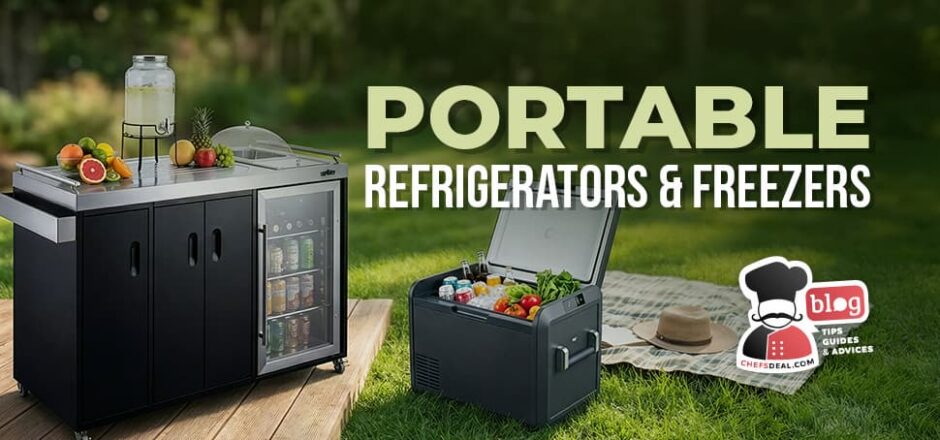
Portable refrigerators and freezers provide reliable, ice-free temperature control for food, beverages, and sensitive supplies across travel, outdoor recreation, and field operations. They support mobile kitchens, RVs, medical transport, and off-grid use through advanced cooling technologies, multi-power options, rugged construction, and flexible capacities. Their versatility, precision, and durability make them a perfect fit for modern mobility.
What are Portable Refrigerators and Freezers?
Portable refrigerators and freezers are compact, electrically powered units that maintain the temperature of food, beverages, and temperature-sensitive items at safe levels during travel.
Portable refrigerators and freezers deliver reliable cooling without ice for vehicles, boats, off-grid campsites, worksites, and mobile kitchens. They maintain precise temperature settings through rugged housings, heavy-duty components, and multi-power compatibility, making them suitable for both recreational and professional use.
Why Portable Refrigeration Matters in Foodservice & Beyond?
Portable refrigeration matters because it provides mobility in cold storage, enabling users to keep critical supplies chilled in areas where fixed refrigeration is unavailable. These units offer transport flexibility for caterers, mobile food vendors, and off-site kitchens that frequently move between events, venues, and customer locations. They address the messy limitations of ice chests while maintaining temperature accuracy.
RV travelers, campers, field technicians, truck drivers, road trippers, hunters, and fishermen need reliable outdoor refrigeration. Event caterers and mobile operators rely on mobile fridges to protect ingredients, prepped meals, and perishables during transit and service. The ability of portable refrigeration units to operate anywhere, inside vehicles, at remote sites, or in temporary kitchens, makes them a practical solution.
How Portable Refrigerators & Freezers Work?
Portable refrigerators work through one of 3 cooling technologies. Compressor systems deliver optimal temperature performance regardless of ambient conditions. Thermoelectric units use the Peltier effect, where an electric current creates hot and cold sides. Absorption models use propane or other heat sources, operate silently, require a level surface, and perform best in moderate outdoor temperatures.
Many high-end portable units offer dual-zone cooling, providing 2 independent compartments that function simultaneously as a fridge and freezer. Their multi-power flexibility allows operation via 12V/24V DC, 110/220V AC, integrated battery packs, or solar-charged power stations, expanding options for off-grid use. Temperature control systems, digital thermostats, and high-density or vacuum insulation help maintain stable internal temperatures.
What are the Key Features to Look For in a Portable Refrigerator or Freezer Before Buying?
The key features to look for in a portable refrigerator or freezer include temperature control, power compatibility, durability, capacity, energy efficiency, and mobility. Buyers transporting medical items need to evaluate more specialized medical refrigeration options for ultra-precise temperature control.
- Temperature Range and Adjustability: Look for digital thermostats that offer precise control and wide operating ranges, such as -4°F to 68°F (-20°C to 20°C). These flexible settings allow a single appliance to function as a refrigerator, freezer, or dual-zone unit, depending on trip needs.
- Power Compatibility: Models supporting 12V/24V DC and 110/220V AC offer the broadest flexibility. Choose units that accept detachable battery packs or integrate with solar-powered systems for remote travel, off-grid setups, or field transport of temperature-sensitive goods.
- Energy Efficiency and Low-Draw Compressors: Energy efficiency minimizes power consumption and extends runtime on vehicle batteries or portable power stations. Low-draw compressors often draw only 30–60 W, reducing energy demand to 1–2 kWh per day. Prioritize battery protection modes that prevent excessive discharge during extended operation.
- Durability: Shock- and weather-resistant construction is essential for portable fridges used in off-road or outdoor settings. Look for reinforced corners, secure latches, strong handles, and housings made from impact-resistant ABS or steel. Some models incorporate vibration-resistant compressors and can operate at tilt angles of up to 30–40 degrees for rough terrain.
- Capacity and Interior Layout: Capacities range from 0.35 cu ft (9.91 L) for quick trips and medication to over 30 cu ft (849.505 L) mobile kitchens, and extended off-grid operations. Removable baskets, dividers, and adjustable shelves help organize contents for quicker access and more efficient storage.
- Digital Controls, Bluetooth Apps, or Smart Monitoring: Many advanced portable refrigerators include Bluetooth® or app-based monitoring. Users can track temperatures, status alerts, and battery conditions via their smartphones. Integrated LED lighting further simplifies access at night or in low-light conditions.
- Mobility Features: Mobility features ensure easier transport. Larger fridges often include recessed or ergonomic handles, built-in wheels, and telescoping tow handles to move the unit over uneven ground. Look for tie-down points or compatibility with fridge slides for vehicle use to keep the unit secure during transit.
Types of Portable Refrigerators & Freezers
Types of portable refrigerators and freezers include single- and double-zone units, lightweight models, and commercial-grade options. This flexibility offers configurations for every purpose, from personal travel and mobile foodservice to healthcare transport and rugged field operations.
Single-Zone Portable Refrigerators
Single-zone portable refrigerators use a single temperature setting to keep all stored items evenly chilled. They are ideal for general use on road trips, camping, and mobile kitchens. They provide consistent cooling within the 32°F to 40°F (0°C to 4.4°C) range for beverages, fresh foods, and perishables.
Single-Zone Portable Freezers
Single-zone portable freezers maintain deep-freeze temperatures longer, making them suitable for extended trips, medical cold-chain applications, or the preservation of game in the field. Many models operate between –4°F and –20°F (–20°C and –28.889°C), with some medical-grade versions reaching even lower temperatures. These units are reliable refrigeration solutions in camping, lab transport, and vaccine logistics.
Dual-Zone Units
Dual-zone portable units feature 2 independently controlled compartments that operate as a refrigerator and freezer. This setup enables users to store frozen proteins and chilled produce in one system without cross-contamination. The typical total capacities of 1 cu ft (28.316 L) to 3.5 cu ft (99.108 L) suffice for families, caterers, RV travelers, and long expeditions requiring flexible temperature control.
Lightweight Compact Models
Lightweight, compact models prioritize portability, with a minimal footprint and easy handling. They are perfect for solo travelers, short weekend outings, or small vehicles, and can accommodate a few bottles of water and some food. Their reduced weight, often under 20 lb (9.072 kg), allows effortless carrying, quick repositioning, and convenient storage in packed trunks, boats, or RV van conversions.
Heavy-Duty Commercial/Field Models
Heavy-duty portable refrigerators feature reinforced housings, vibration- and weather-resistant components to withstand harsh field conditions. Capacities range widely, from mid-size units up to 32 cu ft (906.139 L) for large mobile transport containers. They are best suited for mining crews, medical response teams, caterers, and outdoor operators who require reliable performance in extreme conditions and under continuous transport demands.
Use Cases of Portable Refrigeration Across Industries
Use cases across industries highlight the versatility of portable refrigeration systems for commercial, recreational, emergency, and healthcare applications. Portable refrigerators & freezers support operations, from mobile foodservice to vaccine transport and disaster response, that require dependable cold storage away from fixed infrastructure.
- Foodservice & Catering: Portable refrigerators cater to off-site events and mobile cooking operations by keeping ingredients, prepared meals, and perishables cold during transit and service. They ensure temperature compliance across changing locations, making them essential for caterers, pop-up food vendors, and delivery-based kitchens.
- Hospitality & Tourism: Portable fridges provide safe, consistent cold storage for extended travel in RVs, boats, campsites, and glamping setups. They help travelers maintain fresh provisions, reduce reliance on ice, and improve convenience for multi-day outdoor adventures.
- Healthcare & Medical Transport: Portable cooling units safeguard vaccines, medications, and biological samples requiring strict temperature control. Medical-grade models provide controlled storage conditions for mobile clinics, ambulance fleets, and cold-chain deliveries in remote locations.
- Emergency Response & Field Work: Disaster relief teams, paramedics, and field technicians rely on portable units to store temperature-sensitive supplies in unpredictable environments. These fridges withstand transport shocks and fluctuating climate conditions.
- Trucking & Long-Haul Drivers: Long-haul drivers use portable refrigerators to keep meals fresh for extended periods on the road. This reduces food costs, promotes healthier eating, and enables drivers to store cooked meals, produce, and beverages safely during multi-day hauls.
Capacity Guide for Portable Refrigeration: Choosing the Right Size
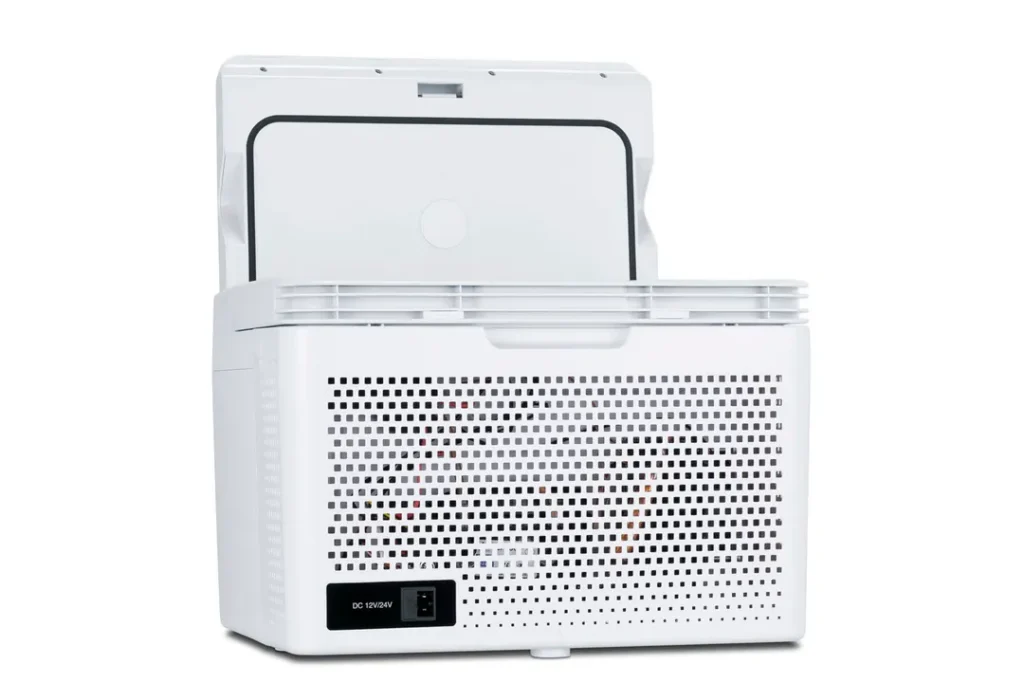
A capacity guide for portable refrigeration helps buyers match internal volume to travel duration, group size, and vehicle space. Capacity determines how efficiently a small, mid-size, or large commercial model supports daily consumption, food safety, and long-term storage.
- Small Units for Personal/Short Trips: Small units in the 0.1 cu ft (2.831 L) to 1.2 cu ft (33.98 L) range suit solo users, short road trips, medication storage, or day outings. These fridges fit compact spaces and hold essentials like beverages, snacks, small perishables, makeup, and beauty products.
- Mid-Size for RVs and Multi-Day Usage: Mid-size portable refrigerators and freezers typically have capacities between 1.5 cu ft (42.475 L) and 3 cu ft (84.95 L). They balance storage volume with manageable weight and energy consumption, making them ideal for RVs, camper vans, and multi-day boating excursions.
- Large Commercial-Grade for Catering and Healthcare Transport: Units with capacities of 30 cu ft (849.505 L) or more accommodate extended travel, off-site events, or cold-chain healthcare transport. Their expanded volume supports bulk ingredients, boxed meals, medical kits, and frozen goods for long-term use in mobile operations.
Tips for Calculating Needed Capacity Based on Duration + Number of People: A practical rule is to estimate 0.3 cu ft (8.495 L) to 0.5 cu ft (14.158 L) of space per person. Note that a mini car fridge of 0.32 cu ft (9.061 L) capacity holds up to 12 standard soda cans.
Power & Energy Usage Considerations for Portable Refrigeration
Power and energy usage considerations for portable refrigeration include understanding AC/DC inputs, battery operation, solar integration, compressor efficiency, and practical steps to extend runtime. These factors determine how reliably the unit performs during long trips, off-grid use, and mobile operations.
- AC vs. DC Power: AC power supports pre-cooling and stationary use. DC power is essential for travel and vehicle operation. Units that accept both 110/220V AC and 12V/24V DC provide the most flexibility, enabling seamless operation across home outlets, vehicles, boats, and portable power stations.
- Battery-Powered Units: Runtime Expectations: Battery-powered portable refrigerators & freezers use detachable lithium packs or external power stations for off-grid use. Runtime often ranges from 20 to 40 hours, depending on temperature settings and ambient heat. Higher-capacity batteries extend operation for multi-day trips without relying on vehicle power.
- Solar Panel Compatibility: Solar-compatible fridges pair with portable panels to charge onboard or external batteries. This setup is ideal for remote fieldwork and off-grid living, providing renewable energy support for extended stays in sunny environments. For instance, SunDazer vaccine refrigerators do not require batteries to operate because they are connected directly to solar panels.
- Energy Draw and Compressor Efficiency: Efficient compressors typically draw 30–60 watts, cycling on and off to maintain set temperatures while minimizing power consumption. High-density insulation reduces compressor frequency, improving battery life and reducing strain on vehicle or solar power systems during long trips.
- Tips for Maximizing Runtime During Travel: Maximize efficiency by pre-cooling contents, keeping the fridge shaded, avoiding frequent lid openings, and maintaining ventilation around the compressor. Regular defrosting and checking door seals also help preserve cooling performance and extend the runtime of battery- or solar-powered systems.
Temperature Control & Safety Issues for Portable Refrigeration
Temperature control & safety issues for portable refrigeration focus on keeping food, beverages, and medical supplies within safe temperature limits during travel or off-grid use. Proper settings, airflow, and loading practices prevent spoilage, protect vaccines and medications, and ensure reliable performance in challenging outdoor conditions.
Maintaining ideal temperatures is essential for food safety and unit efficiency. FDA mandates refrigeration temperatures between 35°F (1.667°C) and 40°F (4.4°C) to keep foods safely chilled. Freezing requires a temperature of 0°F (-17.778°C) or below. Medical units operate at lower temperatures, and ultra-low models reach –123°F (–86.1°C) for specialized biological products.
Temperature-sensitive food and medical items require an unbroken cold chain. Consistent internal temperatures help preserve the quality of perishable goods, medications, and vaccines. Portable medical units rely on validated sensors and digital data loggers to maintain continuous accuracy during transport, especially when exposed to vibration or ambient temperature fluctuations.
Loading practices influence temperature stability. Overfilling your portable refrigerators & freezers blocks airflow, creating warm spots and inconsistent cooling. Keeping the unit about 75% full maintains circulation while avoiding strain on the compressor. Outdoor conditions can increase energy use and refrigeration performance. Insulated covers help shield the fridge from direct sunlight, reduce compressor cycling, and provide added physical protection.
Installation & Setup Tips for Portable Units
Installation & setup tips for portable units help ensure safe, efficient operation. Proper ventilation, secure placement, thoughtful power setup, and pre-cooling practices extend the unit’s lifespan. Ventilation is critical because compressors and condenser coils must release heat. Leaving sufficient clearance facilitates airflow. Avoid placing the unit against walls, inside sealed compartments, or in direct sunlight.
Securing the unit prevents damage during vehicle movement. Use straps, tie-downs, bungee cords, or fridge slides to stabilize the refrigerator. Most portable fridges tolerate slight tilting but should ideally be used at modest angles for long-term use. Handles and wheels improve maneuverability when loading or repositioning.
Portable power banks extend runtime for off-grid operations. Backup systems, including solar-charged battery banks and backup batteries, prevent interruptions during medical transport or overnight camping. Built-in low-voltage cutoff systems protect vehicle batteries from complete drain. Pre-cooling improves efficiency and food safety. Chill the refrigerator to its target temperature before loading, and pre-chill the food whenever possible.
Maintenance & Cleaning Expectations
Maintenance & cleaning expectations involve routine hygiene practices, internal inspections, and proper battery care to preserve the fridge’s performance over long-term outdoor use. A consistent schedule avoids mold, odors, and mechanical wear, ensuring safe cooling during travel or field operations.
Implement cleaning routines regularly and after any spills. Wash interior and exterior surfaces with mild detergent, and disinfect medical units with an appropriate solution. Monthly tasks include inspecting gaskets, checking temperature accuracy, and vacuuming condenser coils. Quarterly and annual checks help identify worn parts before they cause failures.
Preventing mold and odors requires managing moisture. Always dry the interior thoroughly before storing the fridge. Long-term storage requires keeping the lid slightly ajar to maintain airflow. Vinegar-water solutions or odor-absorbing packs help eliminate lingering smells. Check seals, vents, and fans frequently. Clean condenser coils and vent openings to maintain cooling efficiency, and remove dust from the evaporator fan.
Battery care and compressor maintenance extend the unit’s life. Inspect cords for wear, store rechargeable batteries at a moderate state of charge, and avoid frequent power cycling, which strains the compressor. Stable continuous power reduces wear and preserves long-term reliability.
Common Mistakes to Avoid When Using Portable Refrigerators and Freezers
Common mistakes to avoid when using portable refrigerators & freezers include errors that compromise cooling performance, food safety, or power efficiency. Simple preventive steps help ensure reliable, safe operation during travel, camping, and fieldwork.
- Running the unit without ventilation: Poor airflow around vents causes overheating, reduced cooling performance, and potential compressor failure.
- Using the wrong power source: Mismatched power, especially with thermoelectric or absorption units, can drain batteries quickly or cause poor cooling.
- Overpacking: Filling the fridge too tightly restricts airflow, leading to warm spots and uneven temperatures.
- Not pre-cooling items: Adding warm items forces the compressor to work harder, consumes more energy, and raises internal temperatures.
- Storing food at unsafe temperatures: Keeping the fridge above 40°F (4.4°C) increases the risk of spoilage and foodborne illness, especially in hot weather or with non-compressor units.
Best Practices for Mobile Refrigeration Storage
Best practices for mobile refrigeration storage focus on organizing the interior, protecting temperature stability, and minimizing heat exposure during everyday travel or outdoor use. Minor layout and access adjustments significantly improve efficiency, reduce energy consumption, and maintain consistent cooling performance.
- Proper organization inside the unit helps maximize limited space and maintain stable temperatures. Arranging items neatly reduces the need to search through the fridge, keeps cold air from escaping, and improves airflow for more efficient cooling during long trips.
- Using baskets and dividers creates structure and prevents items from shifting during transport. Removable baskets, compartment dividers, and stackable containers help separate food types, maximize vertical space, and maintain order even when the unit is fully loaded.
- Keeping frequently used items readily accessible reduces the time the lid remains open. Placing snacks, drinks, or temperature-sensitive items near the top or front boosts temperature retention. It helps the unit recover temperature faster after each access.
- Regularly monitoring temperature helps ensure food safety and enables early detection of performance issues. A simple fridge thermometer works for daily use. Medical units benefit from calibrated digital data loggers for accurate temperature tracking during transport or storage.
Cost Overview: How Much do Portable Refrigeration Units Cost?
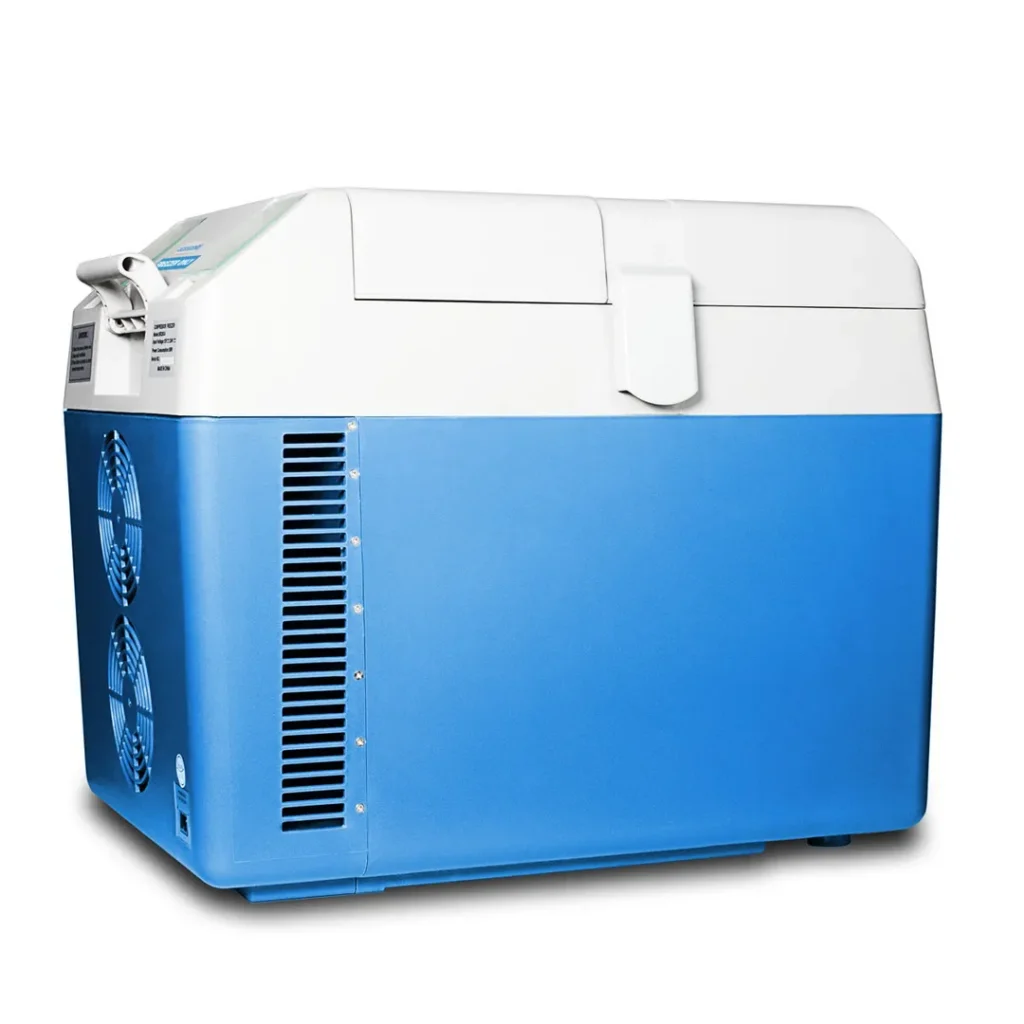
The cost of portable refrigerators and freezers varies widely depending on size, construction, compressor quality, and intended use. Consumer models come in a wide range and are suitable for camping, road trips, and RV use. Commercial and medical units command higher prices due to their precision temperature requirements.
Entry-level consumer units typically range from low-cost thermoelectric models to mid-size compressor fridges suited for weekend travel. Mini car fridges start from around $30. Larger consumer units with premium insulation, smart controls, or dual-zone operation can cost over $1,000 and provide more reliable cooling for extended off-grid trips.
Commercial-grade and medical units cost more due to specialized temperature controls and rugged construction. Vaccine-safe portable freezers, ultra-low-temperature units, and heavy-duty overlanding fridges often fall into higher price brackets. They may cost $7,000–$10,000 or more, depending on capacity and temperature range.
Consider upgrading to a dual-zone unit if you need both freezing and refrigeration simultaneously, without purchasing multiple units. Warranty terms also play a significant role; more extended compressor warranties indicate higher build quality and better long-term value for frequent travelers or professionals. Higher-quality portable refrigerators & freezers typically include a minimum 3-year warranty.
Alternatives to Portable Refrigerators & Freezers
Alternatives to portable refrigerators & freezers offer simpler or lower-cost ways to keep food and drinks cool for short trips or low-demand situations. They don’t match the precision of compressor units but remain practical for quick outings, backups, or low-budget travel.
- Traditional ice chests are hard-sided coolers that rely on ice rather than electricity. They are affordable, simple, and durable. However, they waste internal space on ice, create a meltwater mess, and cannot reliably maintain safe food temperatures in hot weather or over long periods.
- Insulated transport coolers for short trips work well for day outings, fishing trips, picnics, or scenarios without power access. Premium rotomolded coolers can hold ice for several days, making them useful as secondary storage for drinks or non-critical items alongside a portable fridge.
- Soft coolers and thermal bags are ideal for quick grocery runs, beach days, or short outdoor activities. They are lightweight and easy to store but offer limited insulation and cannot retain ice as long as hard-sided coolers, making them best suited for casual, short-duration use.
FAQs About Portable Refrigerators & Freezers
What is the difference between a portable refrigerator and a portable freezer?
The difference between a portable refrigerator and a portable freezer is their operating temperatures. Refrigerators keep items at 35°F (1.667°C) to 40°F (4.4°C), while freezers maintain temperatures at 0°F (-17.778°C) or lower.
How long can a portable fridge run on a battery?
A portable fridge can run on a battery for 20–100 hours, depending on battery size, ambient temperature, and energy efficiency.
How do I clean a portable refrigerator properly?
To clean a portable refrigerator properly, unplug it, remove all contents, wipe interior surfaces with a mild detergent, and fully dry before storage. Leave the lid slightly open during long-term storage to prevent odors and mold growth.
What size portable refrigerator is best for camping or RV travel?
The best size portable refrigerator for camping or RV travel depends on group size and trip length.
– Solo/Day trips: 0.3 cu ft (8.495 L) to 1 cu ft (28.316 L)
– Couples/Short weekends: 1.2 cu ft (33.98 L) to 1.5 cu ft (42.475 L)
– Families/Week trips: 1.7 cu ft (48.138 L) to 2.5 cu ft (70.792 L)
– Extended/RV living: 2.5 cu ft (70.792 L) and above
What temperature should a portable freezer be set to?
A portable freezer should be set to 0°F (-17.778°C) or colder to maintain food safety. Medical or specialty freezers require lower temperatures.
Are dual-zone portable refrigerators worth it?
Yes, dual-zone portable refrigerators are worth it when you need simultaneous refrigeration and freezing. They prevent temperature conflicts and add flexibility for long trips, large groups, and RV travelers.
Are portable refrigerators safe for storing medications or vaccines?
Yes, portable refrigerators are safe for medications and vaccines when used with medical-grade units that maintain a temperature range of 36°F to 46°F (2°C to 8°C).
Is a portable compressor fridge better than a thermoelectric one?
Yes, a portable compressor fridge is better than a thermoelectric one because it reaches actual freezing temperatures and maintains stable cooling regardless of the weather. Thermoelectric units are best for short-term, mild-climate cooling.
Do portable freezers drain car batteries?
Yes, portable freezers can drain car batteries if used with the engine off for extended periods. Most models include low-voltage protection to prevent accidental battery depletion.
Can portable refrigerators keep food safe for long trips?
Yes, portable refrigerators keep food safe for long trips by holding temperatures at 40°F (4.4°C) or below.
Conclusion: Why Portable Refrigerators & Freezers Are Essential for Modern Mobility
Portable refrigerators & freezers combine reliable temperature control, multi-power flexibility, and rugged design to ensure safe cooling on the go. Their ability to protect perishables, extend trip duration, and maintain food and medical safety makes them indispensable for travelers, mobile professionals, and field teams. Explore portable refrigeration solutions that meet your operational needs at Chef’s Deal, delivering dependable performance wherever you go.

