


Hoshizaki and Atosa USA represent two different strategies in the commercial ice machine market. Hoshizaki focuses on durability, engineering precision, and high-capacity ice production for demanding foodservice environments, including hotels, bars, and institutional kitchens. Atosa targets budget-conscious operators by offering reliable commercial ice machines with simpler construction and lower upfront costs.
TL;DR — Key Takeaways
- Best choice: Hoshizaki suits heavy-duty operations; Atosa works well for moderate ice demand and tighter budgets.
- Hoshizaki: Premium brand known for durability, stainless-steel construction, multiple ice types, and 10–15+ year lifespan.
- Atosa: Budget-friendly alternative focused on standard cube ice and accessible pricing.
- Performance: Hoshizaki performs better in high-volume or long-term operations.
- Cost: Atosa offers a lower upfront investment for small or mid-scale foodservice businesses.
Hoshizaki vs. Atosa USA: Which Commercial Ice Machine Brand Delivers Better Value?
Value in the commercial foodservice context refers to the operational efficiency and benefit of commercial equipment for kitchen tasks. The key factors to consider when selecting a commercial ice machine brand that delivers the best value for businesses are budget compliance, durability, serviceability, operating costs, and reliability.
Hoshizaki prioritizes long-term ROI and heavy-duty performance, while Atosa focuses on affordability and rapid deployment. Hence, neither is “better” in every situation; rather, one is a better fit for the specific conditions and financial requirements.
Brand Overview: Hoshizaki and Atosa at a Glance
Hoshizaki and Atosa represent two different approaches in the commercial ice machine market. Hoshizaki is a premium global manufacturer known for durability, advanced engineering, and high-capacity ice machines used in hotels, restaurants, and institutional kitchens. Atosa focuses on cost-effective commercial refrigeration and ice equipment, helping restaurants and foodservice businesses equip their kitchens with reliable machines at a more accessible price point.
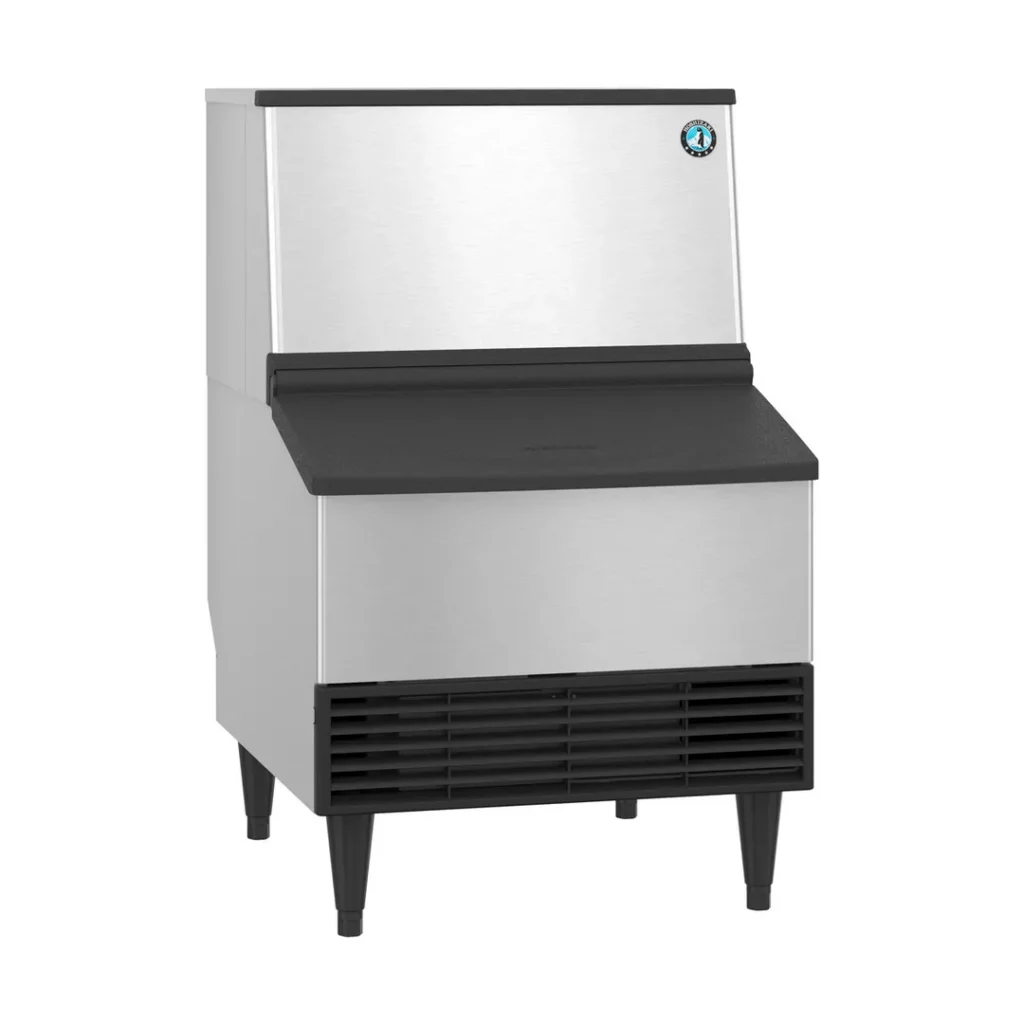
Hoshizaki Ice Machines
Hoshizaki is a global premium commercial refrigeration manufacturer that produces and sells ice makers, refrigerators, freezers, merchandisers, and display cabinets. Established in Japan in 1947 to produce vehicle horns, the company launched its first fully automatic ice machines in 1965, marking a milestone in its history.
Expanding its portfolio with refrigerators and beer dispensers, Hoshizaki entered the U.S. market in 1981 and built a production plant in the U.S. in 1986 to increase its reach in North America.
Hoshizaki has since become synonymous with reliability in high-traffic foodservice environments and has built a strong reputation for durability, long service life, and quick parts availability, all formed on decades of engineering refinement and quality control.
Hoshizaki maintains a broad portfolio of ice machines used in notable restaurants, hotel chains, and upscale restaurants, spanning a wide range of types and sizes, from compact undercounter units to industrial-scale modular systems that produce over 2,650 pounds (1,202 kg) of ice daily.
Atosa USA
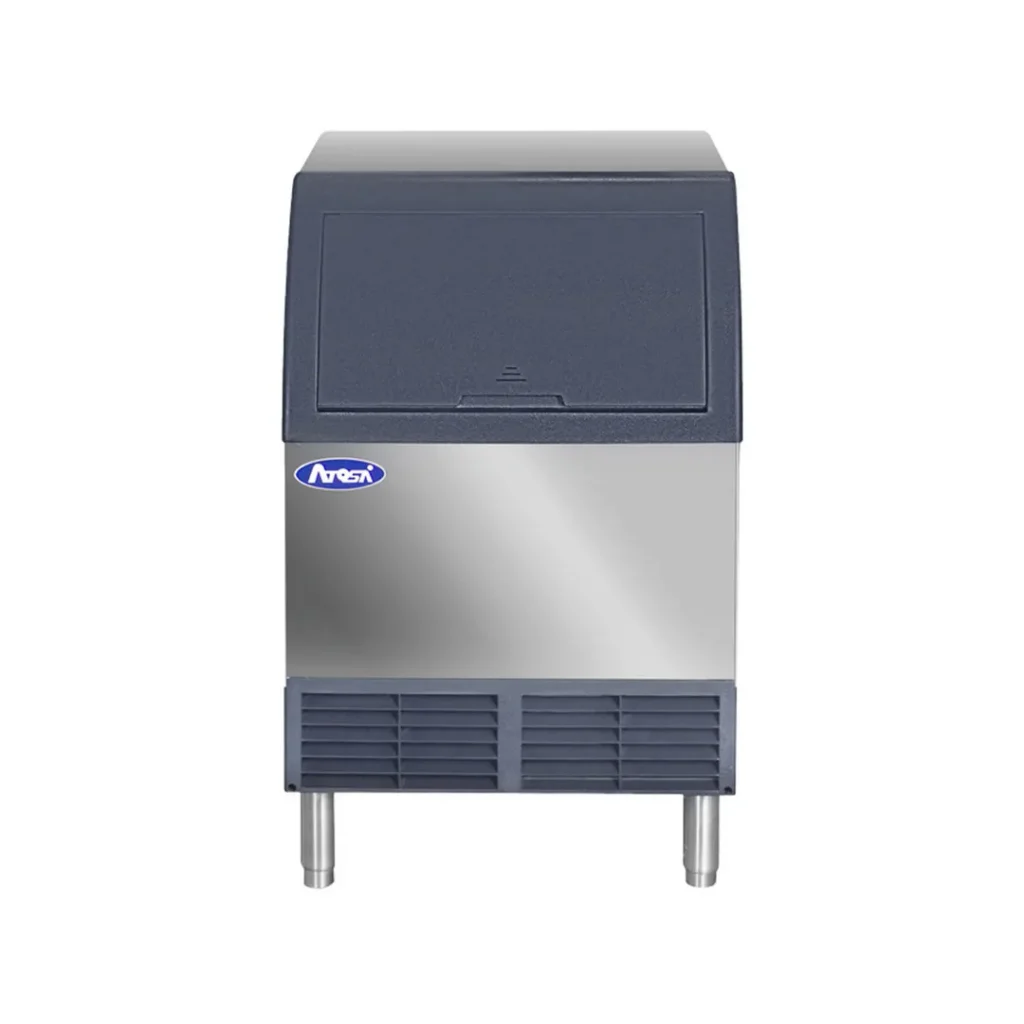
Atosa USA is a world-famous manufacturer of commercial kitchen equipment, including cooking equipment, combi ovens, walk-in coolers and freezers, and food warming and holding units. The company was established in 2003 and quickly developed an extensive collection of restaurant and catering equipment, serving the American market with strategically located warehouses in California, Colorado, Texas, Ohio, Florida, Georgia, Illinois, New Jersey, and Washington.
Atosa USA continues to invest in production and engineering to stay current with the latest trends and helps businesses with tighter capital budgets equip their facilities with the right tools and equipment.
Ice Types and Product Range Comparison
Ice type directly affects drink quality, presentation, melt rate, and even customer perception. Each brand supports different service styles, from high-end cocktails to everyday foodservice needs. You can find more information in our ‘Commercial Ice Machine Brands and The Types of Ice They Produce‘ article.
Ice Types Offered by Hoshizaki
Hoshizaki’s extensive commercial ice maker lineup brings 8 different ice formats, each suited to specific applications:
- Crescent ice is the cornerstone of the company’s product line. These individual crescent-shaped cubes melt slowly, resist clumping, and perform well in mixed drinks where ice integrity is critical.
- Cubelet ice (nugget-style ice) has developed a cult following in healthcare and quick-service restaurants. This chewable ice absorbs flavors, making it popular for fountain drinks and smoothies.
- Flake ice production serves specific needs in seafood displays, salad bars, and therapeutic applications.
- Gourmet ice options (crystal-clear hard ice cubes or spheres) melt extremely slowly, preventing overdilution and enhancing the appearance of premium cocktails, making them ideal for bars and restaurants.
Ice Types Offered by Atosa
Atosa has a humble line of commercial ice makers designed to offer the most common ice types for commercial kitchens:
- Full cube ice (0.875 inch / 2.22 cm on each side) works well for water and soft drinks in casual dining.
- Half cubes are ideal for high-volume operations where faster drink cooling matters more than melt rate.
Build Quality and Engineering Design
Build quality and engineering design are the real differences between Hoshizaki and Atosa. These two commercial kitchen equipment manufacturers have distinct styles, and this section examines how Hoshizaki and Atosa approach design and construction.
Hoshizaki Engineering and Materials
Hoshizaki prioritizes durability and ice perfection to enhance customer satisfaction in foodservice establishments. So, Hoshizaki ice makers feature:
- Stainless steel evaporators to prevent corrosion, scaling, and degradation for longevity.
- Heavy-duty internal components with thicker gauge stainless steel panels, commercial-grade compressors with higher starting torque, and reinforced mounting brackets for continuous, high-demand operation.
- Premium engineering that prioritizes reliability over cost-cutting.
- Dual-sided evaporators to double the production in the same footprint without increasing the occupied floor area.
- The CycleSaver function increases ice production per cycle, extending the service life of your ice maker.
Atosa Engineering and Materials
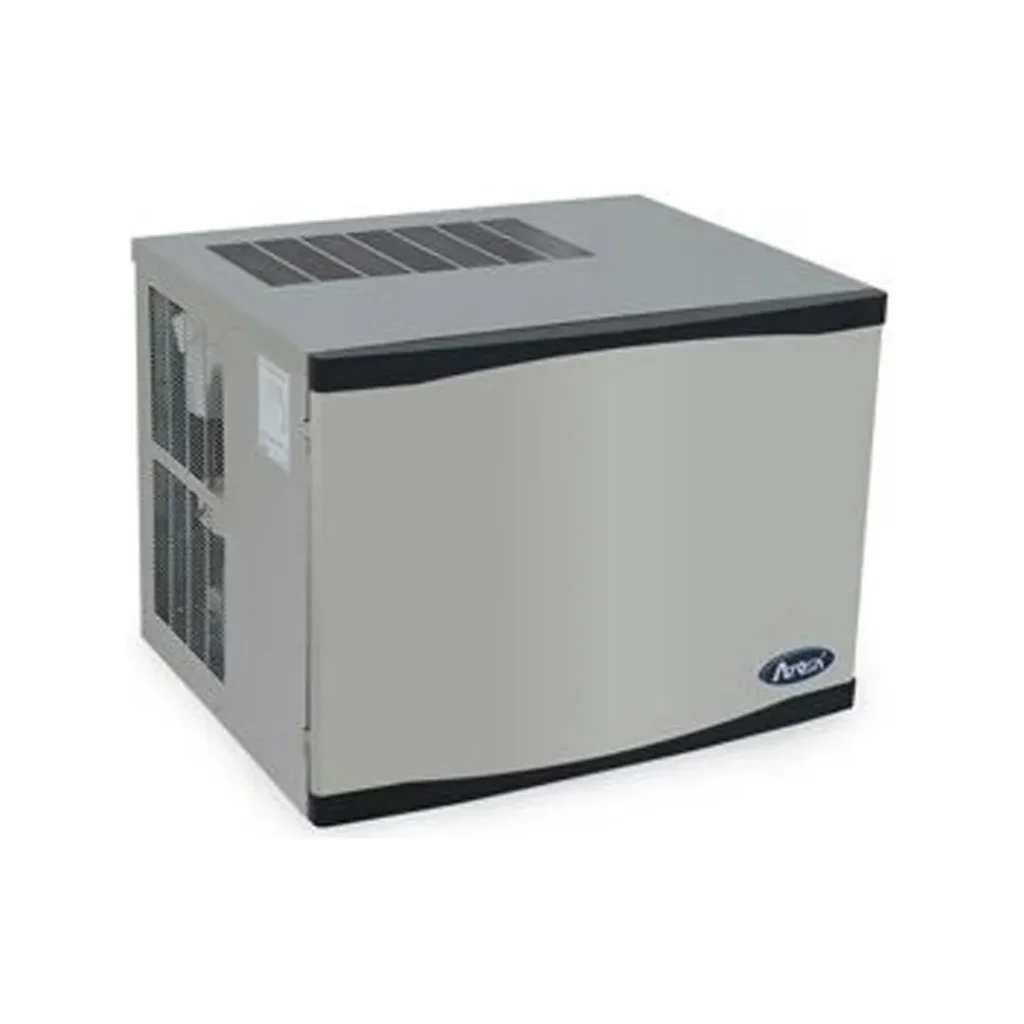
Atosa employs cost-efficient construction methods that meet commercial standards while keeping prices competitive. Hence, Atosa ice maker machines feature:
- Affordably priced parts and construction with copper with nickel plating rather than stainless steel, which may degrade, especially when they are exposed to hard water.
- Standard commercial-grade components, which are common in other budget-oriented brands.
- Simpler mechanical design and engineering that facilitates maintenance and brings.
- Fewer premium materials than Hoshizaki, resulting in cheaper repairs.
Reliability and Expected Lifespan
Hoshizaki ice machines typically last 10-15 years in commercial settings with proper maintenance.
Atosa ice machines feature simpler construction to minimize breakdowns and typically deliver a service life of 5-8 years in commercial applications, especially when you have a standard maintenance routine and defrost regularly. For moderate ice demand, Atosa ice makers provide sufficient ice production, but constant high-volume production accelerates wear on Atosa’s lighter-duty components.
Commercial ice makers are staples in bars, restaurants, hotels, and supermarkets, supporting beverage service, enhancing the guest experience, and preserving food. Reliability is the key consideration while deciding between the brands.
Maintenance, Cleaning, and Serviceability
Atosa and Hoshizaki have routine maintenance and cleaning procedures, as do other commercial ice machine suppliers. Maintenance and cleaning help maintain the performance of commercial ice makers and extend their service life by preventing dust buildup and mold growth on key components.
Hoshizaki Maintenance Requirements
Hoshizaki guidelines for cleaning and maintenance requirements and intervals include:
- Daily Maintenance: Cleaning and rinsing the ice scoop with a neutral cleaner
- Monthly Maintenance: Inspect external air filters and replace as needed. Wiping the icemaker exterior, bin door, snout, and top kits to clean stains and dirt buildup.
- Yearly Maintenance: Cleaning and sanitizing the interior of the unit and ice bin; cleaning the water supply inlet after draining the water, inspecting and cleaning the condenser, and inspecting the water hoses and replacing them if necessary.
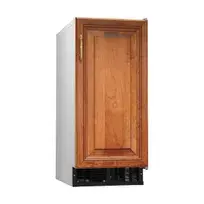
Hoshizaki ice machines are designed with a more complex structure and technologies. You need certified technicians with specialized training in Hoshizaki mechanics and ice production technologies. But a long warranty period (3 years on parts and labor, and 5 years on the compressor and air-cooled condenser) helps preserve your investment, while advanced sensors and a wide service network facilitate diagnosis and repair, preventing unexpected breakdowns and minimizing downtime.
Atosa Maintenance Approach
Atosa ice machines require regular cleaning and maintenance once every three months, as per the Atosa maintenance guideline:
- The ice machine and bin should be cleaned and sanitized.
- The cabinet interior and water flow path must be cleaned with delimer and sanitizer to remove scale and mould buildup.
- All exterior surfaces must be wiped with a wet cloth.
- The evaporator, condenser, and air filters must be cleaned.
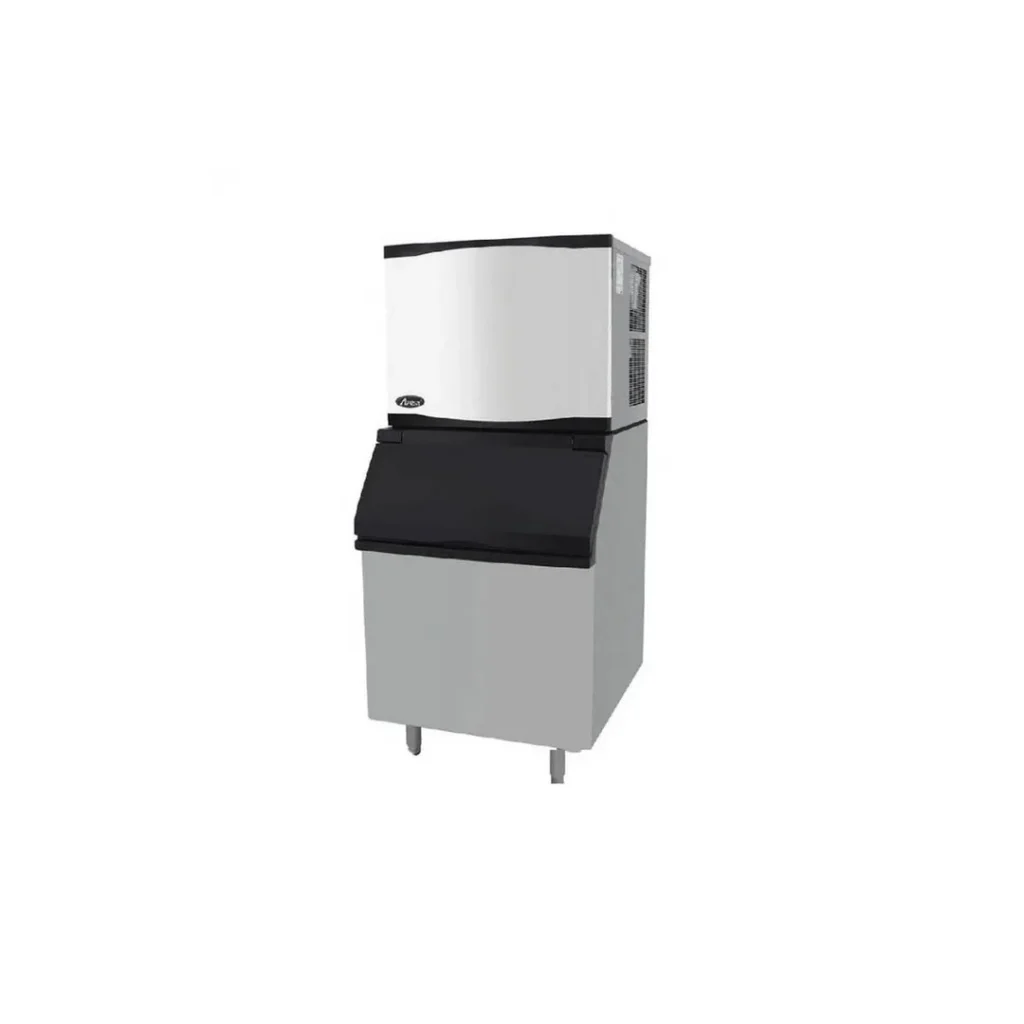
Atosa requires service and repair by certified technicians, and it has a wide network of authorized service providers you can work with to keep your ice machine protected and maintained. The availability of replacement parts has improved significantly as Atosa’s market presence has grown. Common wear-and-tear items such as water pumps, valves, and sensors ship quickly from regional distributors.
Energy Efficiency and Water Consumption
Energy efficiency and water consumption directly affect your bills, so choosing Energy Star-certified, water-efficient models helps reduce your operational costs. Energy Star-certified Hoshizaki ice machines reduce electricity consumption by 10% and water consumption by 20% during the ice-making cycle. Energy use per 100 pounds (45.36 kg) of ice can drop to 3.61 kWh, and water use is reduced to 12 gallons (45.42 liters), depending on the model.
Atosa offers Energy Star-certified models with significantly low consumption. The water consumption per 100 lbs (45.36 kg) of ice is 14.3 gallons (54.13 liters), and the energy consumption is approximately 4.9 kWh. Their certification coverage is less comprehensive than Hoshizaki’s, with some models meeting but not exceeding minimum efficiency standards.
For a restaurant producing 400 pounds (181.44 kg) of ice daily, the annual operating cost difference could be $200- $ 300, favoring Hoshizaki’s efficiency. Over a 10-year lifespan, that can make around $2,000 in savings.
Production Capacity and Model Availability
Hoshizaki and Atosa differ significantly in production capacity and scalability. Hoshizaki offers a wide range of ice machines, from compact undercounter units to large modular systems producing over 2,600 lb of ice per day, designed for high-volume environments like hotels, bars, and restaurants. Atosa focuses on small- to mid-capacity machines, typically producing 140–800 lb per day, making them a practical and affordable choice for independent restaurants, cafés, and other operations with standard ice demands.
Hoshizaki Capacity Range
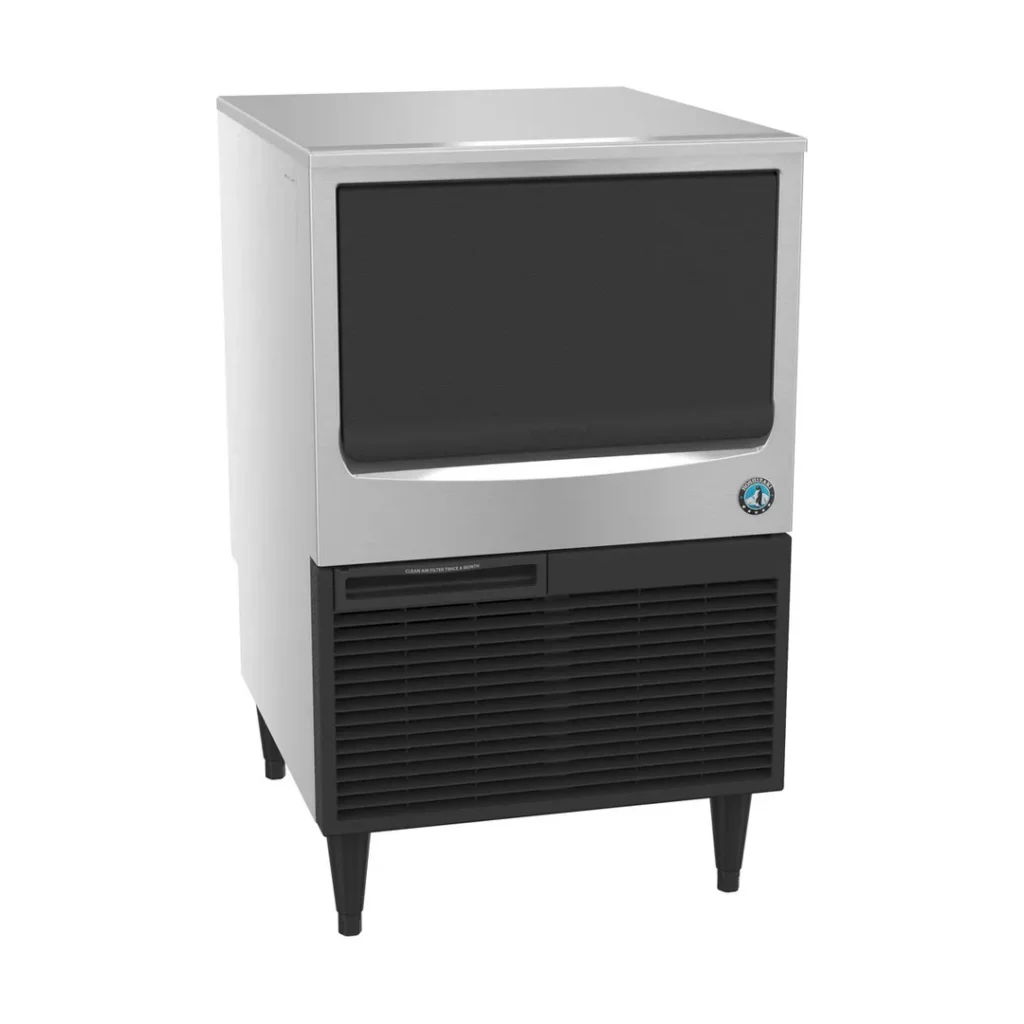
Hoshizaki offers both compact, low-capacity models and large commercial ice machines to serve high-traffic facilities. Hoshizaki undercounter ice machines range from compact 80-pound-per-day (36.29 kg) units to medium-sized units that can produce up to 536 pounds (243.13 kg) of ice per 24 hours.
Hoshizaki offers modular ice machines that let you precisely match production capacity up to 2098 pounds (951.64 kg) of ice per day. The stackable ice machines enable scalability to meet industrial needs, producing up to 2,617 lbs (1,187 kg) of ice per day.
Hoshizaki delivers the reliability you need for consistent high-volume production, especially in bars, restaurants, and hotels that can’t afford to run out of ice. Hoshizaki machines can maintain full-capacity production even in hot ambient temperatures (up to 100°F / 37.8°C in many models) and feature reliable construction and high-quality parts that rarely fail. The robust refrigeration system doesn’t struggle even when kitchen temperatures spike during dinner rush.
Atosa Capacity Range
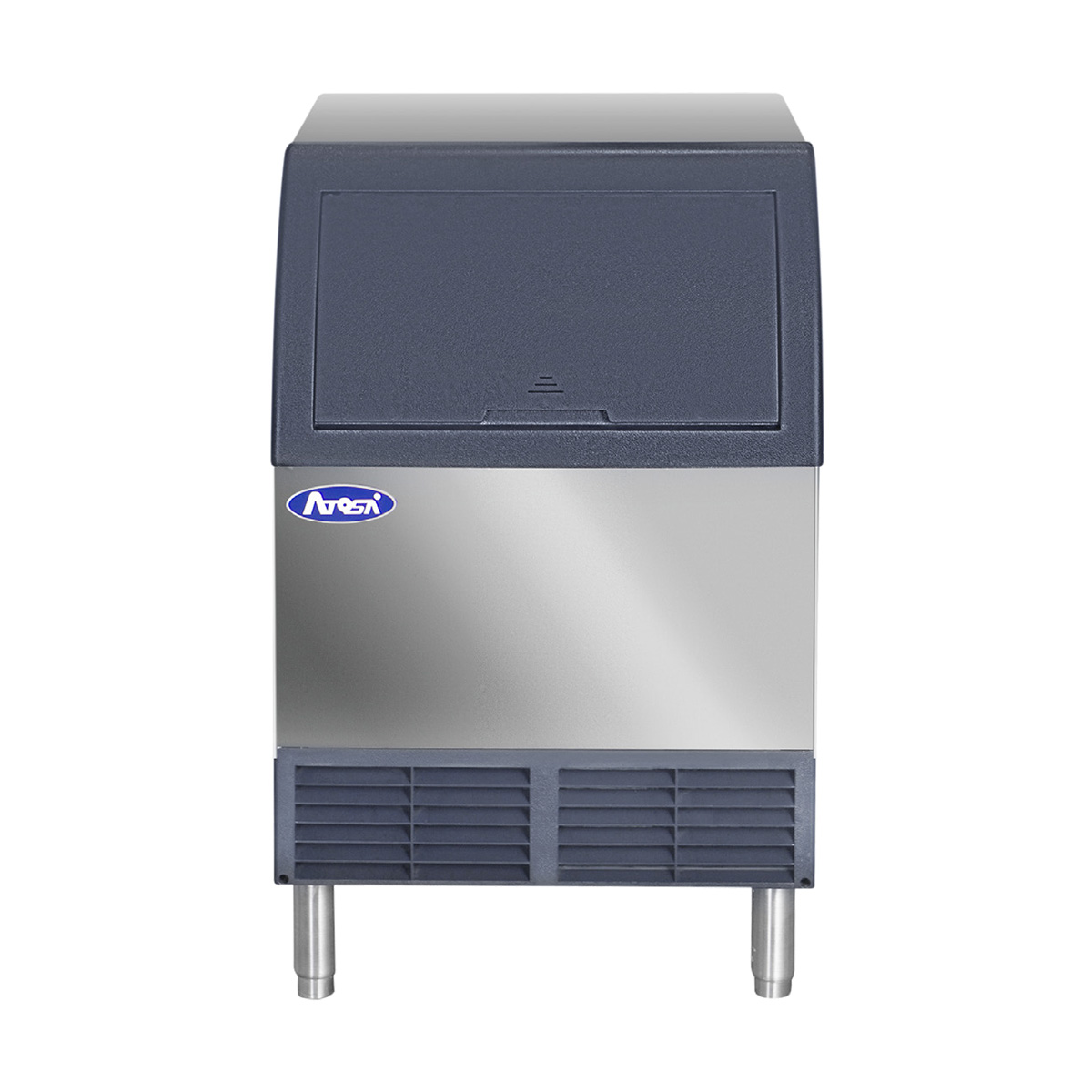
Atosa ice machines are available in small- to mid-capacity models for facilities of all sizes. Atosa’s undercounter ice machines typically deliver 142 to 283 pounds (64.41 to 128.37 kg) of ice per day. The modular ice makers produce 800 lbs (362.87 kg) of ice per day to meet the needs of independent restaurants, bars, cafeterias, and similar operations. Hence, Atosa’s primary focus is on common foodservice volume needs.
Plug-and-play model availability makes Atosa attractive for quick equipment replacement and affordable pricing. Their self-contained units with built-in storage bins simplify installation, provided water, drainage, and power are available.
Pricing and Total Cost of Ownership
Initial purchase price comparison reveals the most obvious difference between these brands:
| Capacity / Model Type | Hoshizaki Price Range (USD) | Atosa Equivalent Price Range (USD) |
| Undercounter (≈250 lb- 113.4 kg/day) | $2,680 – $4,200 | $1,800 – $2,300 |
| Modular Head (≈500 lb- 226.8 kg/day) | $4,000 – $5,200 | $2,900 – $3,300 |
| High-Capacity (≈1,000 lb- 453.6 kg/day) | $7,000 – $15,500 | – |
The price gap typically ranges from 50% to 70% for Hoshizaki equipment in comparable capacity ranges. Service and parts pricing still favor Atosa, with prices around 50% lower on the most-needed parts. However, long-term ROI considerations support Hoshizaki, with fewer breakdowns, lower operational costs, and a longer service life.
For instance, Hoshizaki’s durability advantage becomes more apparent over 10 years of use. The Atosa machine may need replacement in years 7-8, while Hoshizaki continues to operate reliably. The total cost equation shifts in Hoshizaki’s favor for continuous heavy-use operations.
But for standard ice usage and lower-capacity production, Atosa’s lower upfront cost offers a significant advantage, especially for small- to medium-scale operations.
Use-Case Comparison by Industry
Atosa and Hoshizaki ice machines serve similar industries but address different operational priorities. Hoshizaki is often preferred in upscale restaurants, bars, and institutions that value premium ice quality, durability, and long equipment lifecycles. Atosa is commonly chosen by casual dining restaurants, schools, and small foodservice operations that prioritize affordability, straightforward operation, and sufficient production capacity for everyday use.
Restaurants and Bars
Ice quality versus cost considerations dominate restaurant purchasing decisions. Upscale cocktail bars prioritize ice clarity and slow melt rates, making Hoshizaki ice makers an ideal selection. But casual dining restaurants and sports bars prioritize capacity and reliability over ice aesthetics. Atosa’s pricing enables these operators to purchase sufficient capacity without straining equipment budgets.
Volume needs and budget constraints create the core tension. A busy restaurant might need 600 pounds (272.16 kg) of ice daily, representing a $4,500+ investment from Hoshizaki versus $2,300 from Atosa.
Schools and Institutions
School districts and universities typically plan for 10-15-year equipment lifecycles in capital budgets, favoring the Hoshizaki ice machines. However, this needs to be balanced with budget considerations, which Atosa wins hand down.
Both brands offer straightforward operation, but Atosa’s simpler construction means less that can go wrong with daily use. Fewer sensors and controls translate to fewer nuisance faults that require technician calls.
Small Foodservice Operations
Small-scale foodservice operations, such as cafes, food trucks, and small quick-service, mostly use entry-level ice machines. When your total daily ice production is 150-250 pounds (68.04–113.4 kg), a $2,300 Atosa machine makes more financial sense than a $4,200 Hoshizaki unit.
Space and power considerations favor compact, self-contained units. Atosa’s all-in-one machines with built-in bins fit into tight spaces and plug into standard 115V circuits. You avoid the electrical upgrades and custom installation required by some larger Hoshizaki modular systems.
Hoshizaki and Atosa: Role Within a Commercial Refrigeration System
Ice machines don’t operate in isolation; they’re one component of commercial kitchen refrigeration planning. They are combined with ice bins and dispensers for streamlined operations. Atosa and Hoshizaki’s modular ice makers separate the ice-making head from storage bins, allowing you to independently match production capacity and storage volume. You might install a 600 lb/day ice maker over a 400 lb storage bin if your usage pattern includes peak-demand periods followed by recovery time.
The ice machines need to be properly located to support workflow efficiency. Atosa and Hoshizaki ice makers are available in undercounter or modular options to integrate with the kitchen layout, and their ice bins and dispensers make ice easy to reach.
FAQs: Hoshizaki vs. Atosa Ice Machines
Which brand lasts longer?
Hoshizaki substantially outlasts Atosa in commercial applications, with an expected service life of 10-15 years, while Atosa ice machines offer a 5-8 year service life under similar operating conditions.
Which is better for schools and cafeterias?
Both brands are ideal for school and cafeteria kitchens. Hoshizaki makes more sense when capital budgets allow long-term equipment purchases, while Atosa works better with tight capital budgets.
Is Atosa a good alternative to Hoshizaki?
Atosa is a solid alternative for budget-conscious operators with moderate capacity needs and standard ice requirements. However, for high-volume operations, institutional settings, and high-quality ice requirements, Hoshizaki’s reliability, precision, and advanced engineering deliver hard, slow-melting, clear ice.
Is Hoshizaki worth the higher price?
Yes, Hoshizaki is worth the higher price if you operate a high-volume establishment, serve craft cocktails where ice quality matters, run a 24/7 operation, or plan to own the equipment for 10+ years.
Does Atosa offer Energy Star models?
Yes, Atosa manufactures Energy Star-certified ice machines in select model lines, particularly its popular cube ice makers with daily production in the 400-600-pound range.
Pros and Cons of Hoshizaki and Atosa USA
Hoshizaki and Atosa USA commercial ice makers use different technical approaches and engineering features. Hence, they offer varying pros and cons:
Hoshizaki – Strengths and Limitations
- Exceptional durability with stainless steel evaporators, heavy-duty construction, and advanced engineering.
- A broad selection of ice types, including crescent, cubelet, flake, hard ice, sphere, and top hat ice.
- Consistent performance for longer-term use with regular maintenance and cleaning.
- The higher upfront cost is the most obvious disadvantage for small businesses with budget limitations.
Atosa – Strengths and Limitations
- Competitive pricing, providing accessible commercial ice production solutions for small-scale or newly established facilities.
- Easy availability through national restaurant supply dealers, such as Chef’s Deal, simplifies purchasing and replacement.
- Simple design and operation to facilitate use and the easier production of full-cube and half-cube ice types.
- A shorter expected lifespan and standard quality parts.
Conclusion: Which Brand Should You Choose?
Choose Hoshizaki if you prioritize:
- Long-term reliability matters most to your operation.
- Heavy-duty performance under continuous operation defines your needs.
- Institutional or high-volume use with reliable equipment that withstands years of intensive daily operation.
- Clear and hard ice for premium cocktail and drink service.
- The production of versatile ice types for food preparation, display, and beverage service.
Choose Atosa if you prioritize:
- Lower upfront cost to preserve capital for other business needs.
- Reliable production of standard cube ice for all your applications.
- Budget-conscious operations with moderate ice demands.
Below you can read comparisons of Hoshizaki with other leading ice machine brands:

