

Hoshizaki and Manitowoc are two of the most recognized commercial ice machine manufacturers in the foodservice industry. Both brands have decades of engineering experience and strong reputations for reliability, but they approach ice production differently. Hoshizaki focuses on mechanical durability and long equipment lifespan, while Manitowoc emphasizes production efficiency, advanced diagnostics, and service-friendly design. Understanding these differences helps operators choose equipment that aligns with their ice demand, maintenance resources, and long-term operational strategy.
TL;DR — Key Takeaways
- Best Fit: Hoshizaki suits long-term reliability and institutional environments; Manitowoc excels in high-volume operations where service speed and output matter.
- Hoshizaki: Known for stainless-steel evaporators, exceptional durability, and 15–20 year service life.
- Manitowoc: Designed for high production efficiency, fast serviceability, and advanced smart diagnostics.
- Ice Types: Both offer multiple ice formats, but Hoshizaki is known for crescent ice, and Manitowoc for rhomboid cube ice.
Why Compare Hoshizaki and Manitowoc?
Comparing Hoshizaki and Manitowoc is valuable because these two manufacturers represent different engineering philosophies within the commercial ice machine market. Both brands dominate professional kitchens, bars, and institutional foodservice environments, yet they prioritize different operational strengths.
Hoshizaki emphasizes mechanical durability and long-term reliability, while Manitowoc focuses on production efficiency, smart diagnostics, and service accessibility. Evaluating these differences helps operators determine which brand better aligns with their ice demand, maintenance capacity, and long-term equipment strategy.
Consistency and uptime matter as much as cooling performance in commercial ice machines. Hoshizaki and Manitowoc both promise consistent ice production, representing two engineering philosophies. Hoshizaki emphasizes a mechanically robust, longevity-driven design, while Manitowoc prioritizes intelligent controls and high output efficiency. Both brands dominate the U.S. foodservice market with their reliability.
- Both brands offer complete ice systems, including modular heads, bins, dispensers, and remote-cooled configurations.
- They deliver proven reliability at scale, supporting everything from small cafés to high-volume institutional operations.
- Nationwide dealer and service networks ensure parts availability, fast repairs, and minimized downtime.
- Decades of field use have established strong operator trust and brand loyalty across the U.S.
- Each brand supports multiple ice types and production ranges, enabling precise alignment with operational needs.
The Hoshizaki vs. Manitowoc comparison targets decision-makers seeking the best ice equipment that meets their unique, industry-specific needs.
- Restaurants and bars need clear, slow-melting ice for premium cocktails or high-turnover fountain drinks.
- Healthcare and senior living facilities need soft, chewable “nugget” ice for patient hydration and medication preparation.
- Schools and institutions need durable, large-volume solutions for high-traffic cafeterias.
- Convenience stores and stadiums need massive daily outputs for fountain sodas and large-scale events
This comparison helps operators align equipment choice with volume, maintenance strategy, and operational priorities, depending on brand overviews.
Brand Overview: Hoshizaki and Manitowoc
Both Hoshizaki and Manitowoc are industry leaders with decades of specialization in commercial ice machines. They share market dominance, yet differ in design philosophy, product focus, and operational strengths.
Hoshizaki Brand Overview
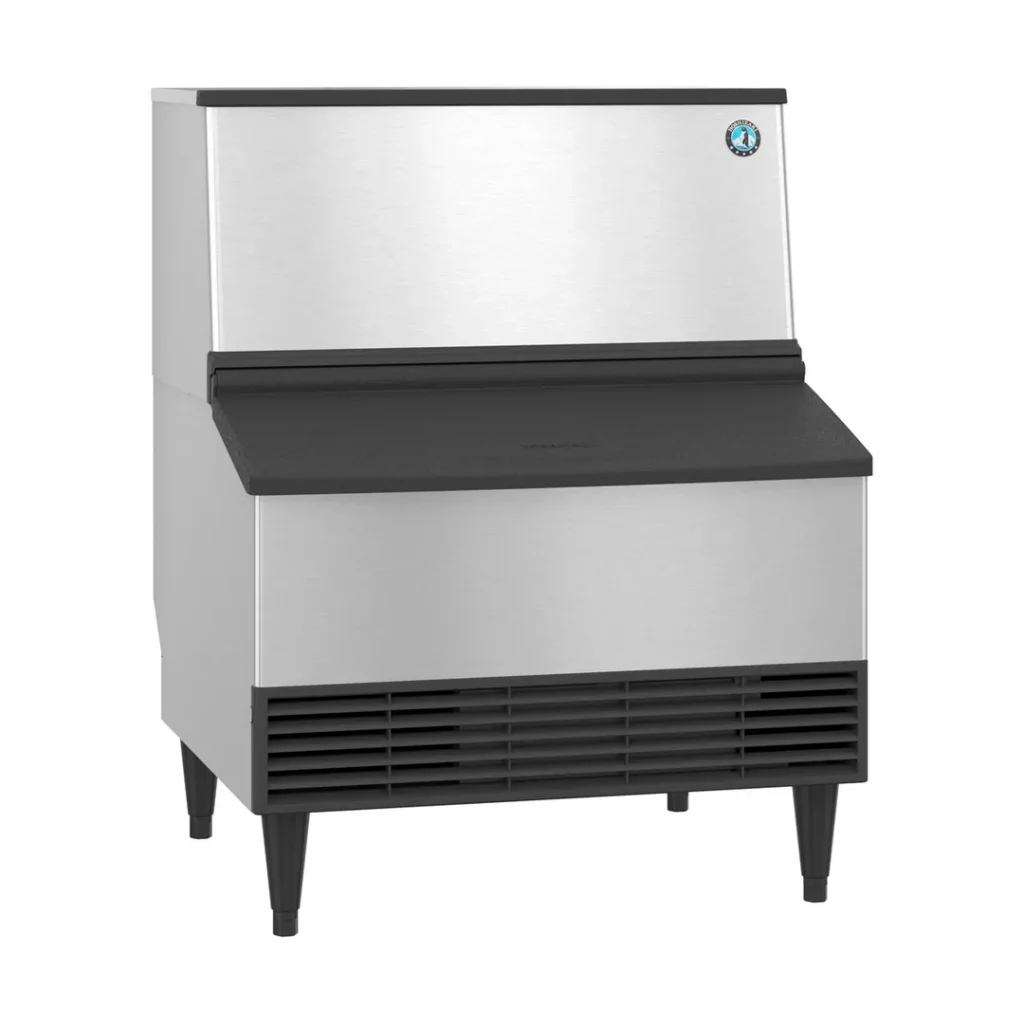
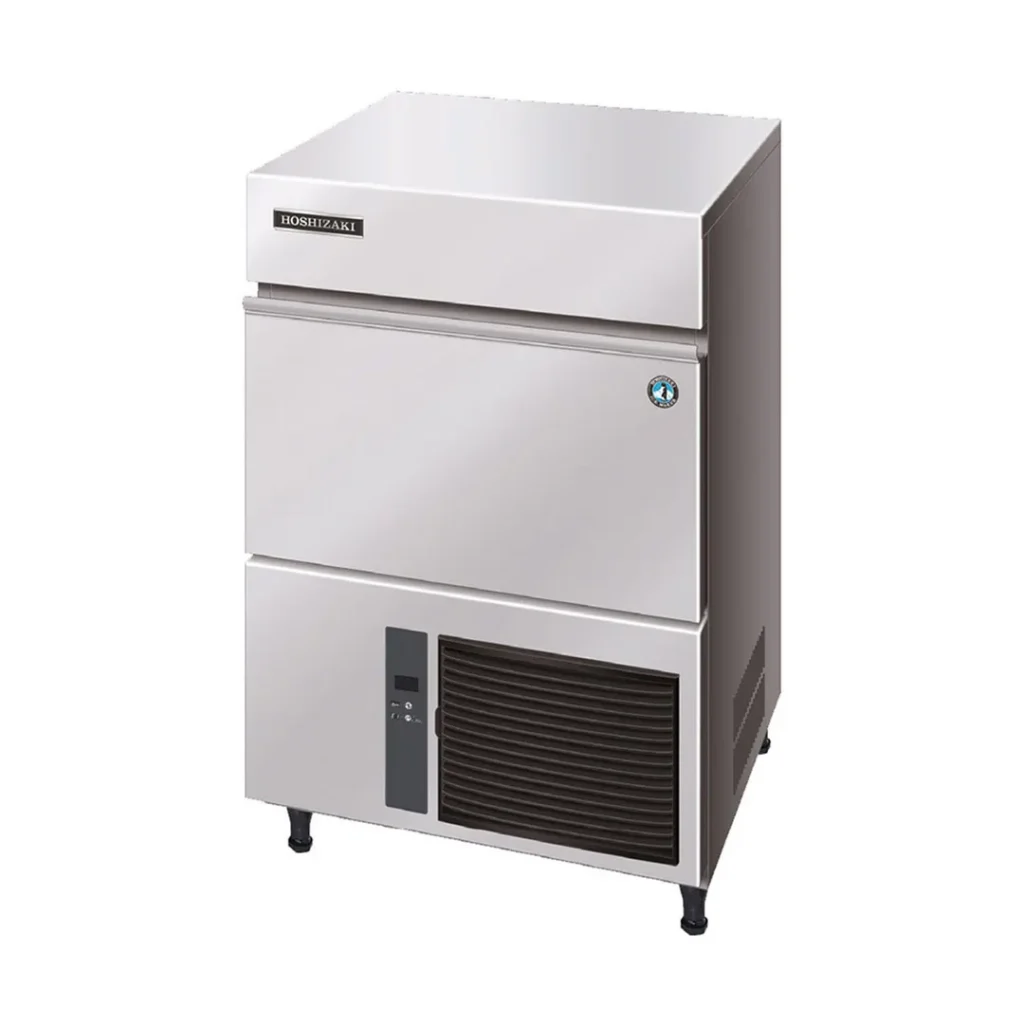
Hoshizaki is a global Japanese manufacturer with a substantial U.S. footprint, balancing international scale with localized production. The company operates Hoshizaki America in Georgia, assembling and certifying machines for the North American customers. This global-to-local structure allows Hoshizaki to maintain consistent quality standards while meeting U.S. regulatory, performance, and distribution requirements.
The brand’s reputation centers on durability and extended equipment lifespan. Hoshizaki ice machines are engineered with stainless steel evaporators that resist corrosion and scaling better than plated alternatives. This mechanical over-engineering reduces long-term failure points, enabling many units to operate reliably for 15 to 20 years in demanding, high-volume foodservice environments.
Hoshizaki offers a broad commercial refrigeration portfolio supporting full kitchen integration. Its lineup includes reach-in refrigerators, prep tables, chef bases, and specialty display cases. This diversified product range allows operators to standardize equipment across facilities by relying on a single manufacturer known for structural integrity and consistent thermal performance.
Manitowoc Brand Overview
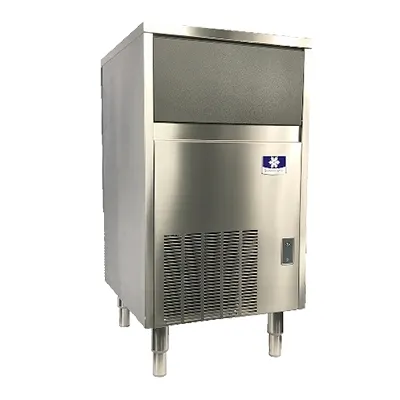
Manitowoc is a U.S.-based legacy brand with deep roots in commercial ice machine innovation, founded in Wisconsin. The company has long focused exclusively on ice production, shaping many industry benchmarks. Its history as North America’s first ISO-certified ice machine manufacturer underscores its commitment to controlled processes, repeatable performance, and continuous product refinement.
The brand is renowned for high output and service-focused engineering. Manitowoc designs machines to maximize daily ice production and simplify maintenance access. Advanced control systems optimize freeze cycles across changing conditions, supporting consistent output in busy kitchens. Large-capacity models further position the brand for operations that require extreme volume without sacrificing reliability.
Manitowoc’s extensive dealer and service network strengthens its market presence. The company serves international markets with over 200 models, factory-authorized technicians, and a wide inventory of parts. Front-facing evaporators and modular layouts reduce service time, making Manitowoc particularly attractive for locations where uptime, fast repairs, and technical support are operational priorities.
Ice Types and Product Range Comparison
Ice type plays a critical role in determining beverage quality, cooling performance, and end-use suitability across foodservice segments. Hoshizaki and Manitowoc both offer broad ice portfolios, but their product ranges reflect different priorities in presentation, melt rate, and operational efficiency.
Ice Types Offered by Hoshizaki
Hoshizaki offers crescent, cubelet (nugget-style), flake, and premium gourmet ice options, with crescent ice recognized as its signature and most widely used format.
- Crescent ice is a hard, clear, half-moon-shaped ice cube designed to pack tightly in cups and minimize beverage displacement. Its curved profile prevents clumping and bridging in bins.
- Cubelet (nugget-style) ice is soft, chewable, and composed of compacted ice flakes with trapped air. This structure absorbs beverage flavor well and melts gradually, making it ideal for healthcare, quick-service restaurants, and customer-facing self-serve stations.
- Flake ice is light, dry, and moldable, consisting of thin, irregular shards with lower density. It cools rapidly on contact and conforms to product shapes, making it especially effective for seafood displays, salad bars, and cold food presentation.
- Gourmet ice options include large-format square cubes, top-hat ice, and crystal-clear spheres. These slow-melting, high-density shapes are best suited for premium spirits and upscale cocktail programs.
Ice Types Offered by Manitowoc
Manitowoc produces full-cube, half-cube, dice, half-dice, nugget, flake, and gourmet ice, with rhomboid-style cubes as its signature commercial offering.
- Full-cube and half-cube ice feature Manitowoc’s distinctive rhomboid shape, producing dense, clear ice with nearly 100% ice-to-water ratio. These cubes provide excellent cooling efficiency and slow melt, making them ideal for fountain drinks and mixed beverages.
- Dice and half-dice ice balance surface area and density, offering rapid cooling with controlled dilution. Their uniform shape and consistent sizing make them a staple in restaurants, bars, and high-volume beverage applications.
- Nugget and flake ice options support institutional and food-holding use cases. Nugget ice delivers an 88% ice-to-water ratio for chewability and carbonation retention; flake ice maintains a 73% ratio, producing soft, pliable ice for food preservation and displays.
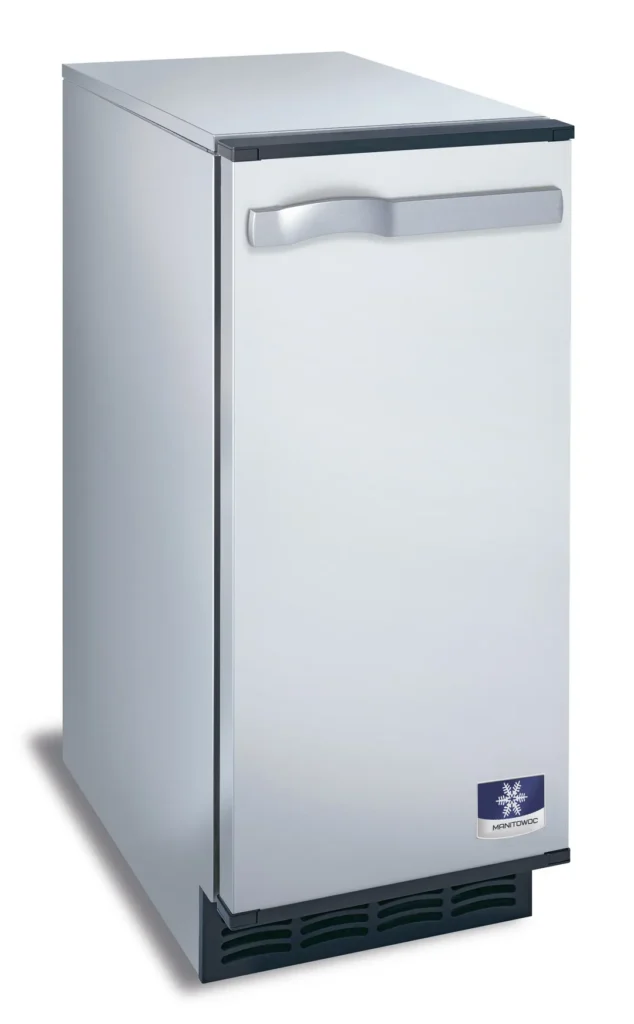
Ice Shape, Density, and Melt Rate Comparison
Ice shape, density, and melt rate influence beverage quality and customer experience. Hoshizaki’s crescent and gourmet cubes emphasize slow melt and controlled dilution. Bartenders trust them for their predictable melt rates. Manitowoc’s dice and rhomboid cubes prioritize fast, efficient cooling for high-volume beverage service. They keep cocktails and sodas cold without watering them down.
Hard, clear cubes are the gold standard for bars and full-service dining. Gourmet formats are best suited for bars, restaurants, and premium cocktail programs. Nugget and flake ice from both brands are preferred in healthcare, education, and institutional settings because they are easier to chew, safer for patients, and effective for clinical cold therapy.
Build Quality and Engineering Design
Build quality and engineering design define how each brand balances durability, efficiency, and serviceability. Hoshizaki emphasizes mechanical strength and longevity, while Manitowoc focuses on thermal efficiency, smart design, and ease of maintenance.
Hoshizaki Engineering Approach
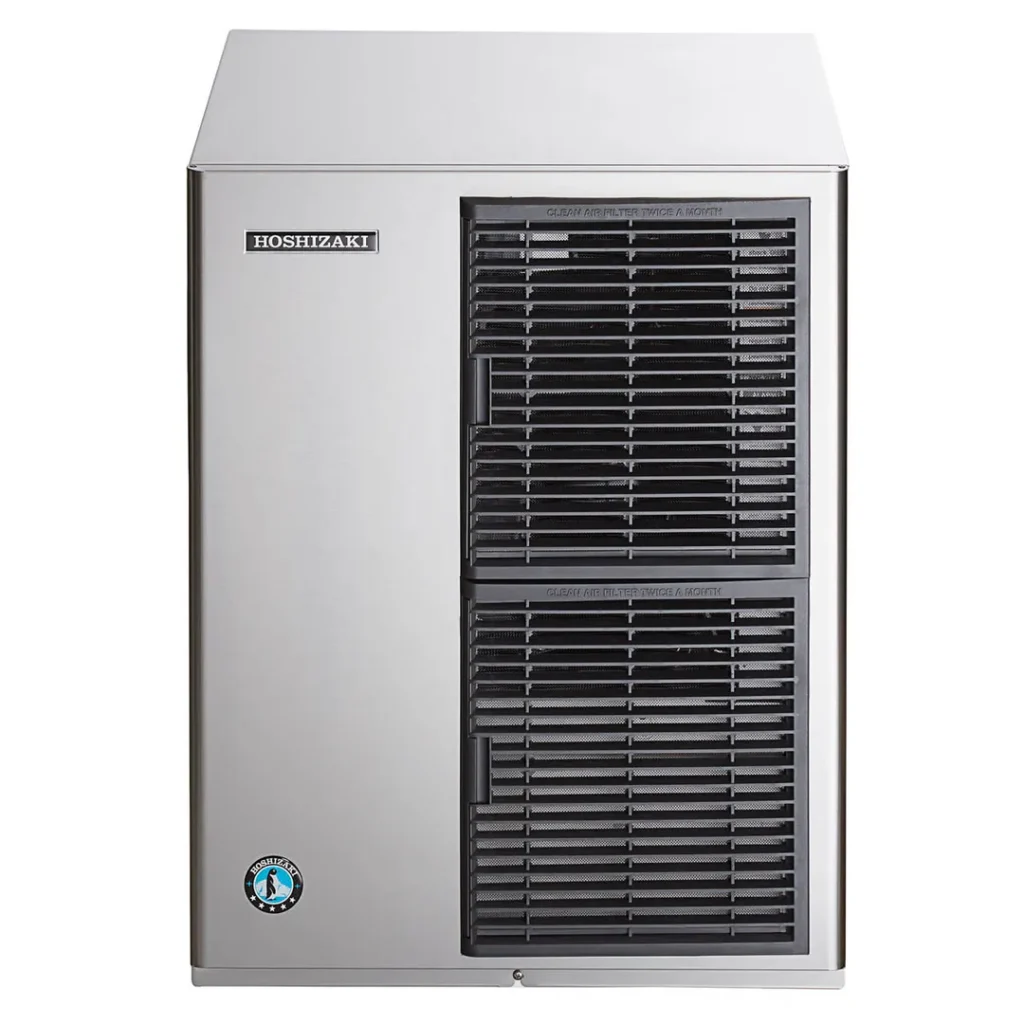
Hoshizaki’s engineering philosophy centers on long-term reliability through robust materials and simplified mechanical systems. Its use of all-stainless-steel evaporators eliminates corrosion risks associated with plated metals. This intentional engineering choice ensures resistance to pitting, flaking, and mineral damage, promising 15 to 20 years of reliable service.
Hoshizaki is famous for its double-sided ice production. Its KM Edge ice machines harvest ice from both sides of the evaporator, reducing the number of cycles to produce the same amount of ice. Heavy-duty internal components and conservative performance tuning allow Hoshizaki machines to operate consistently in harsh water conditions and hot kitchen environments.
Manitowoc Engineering Approach
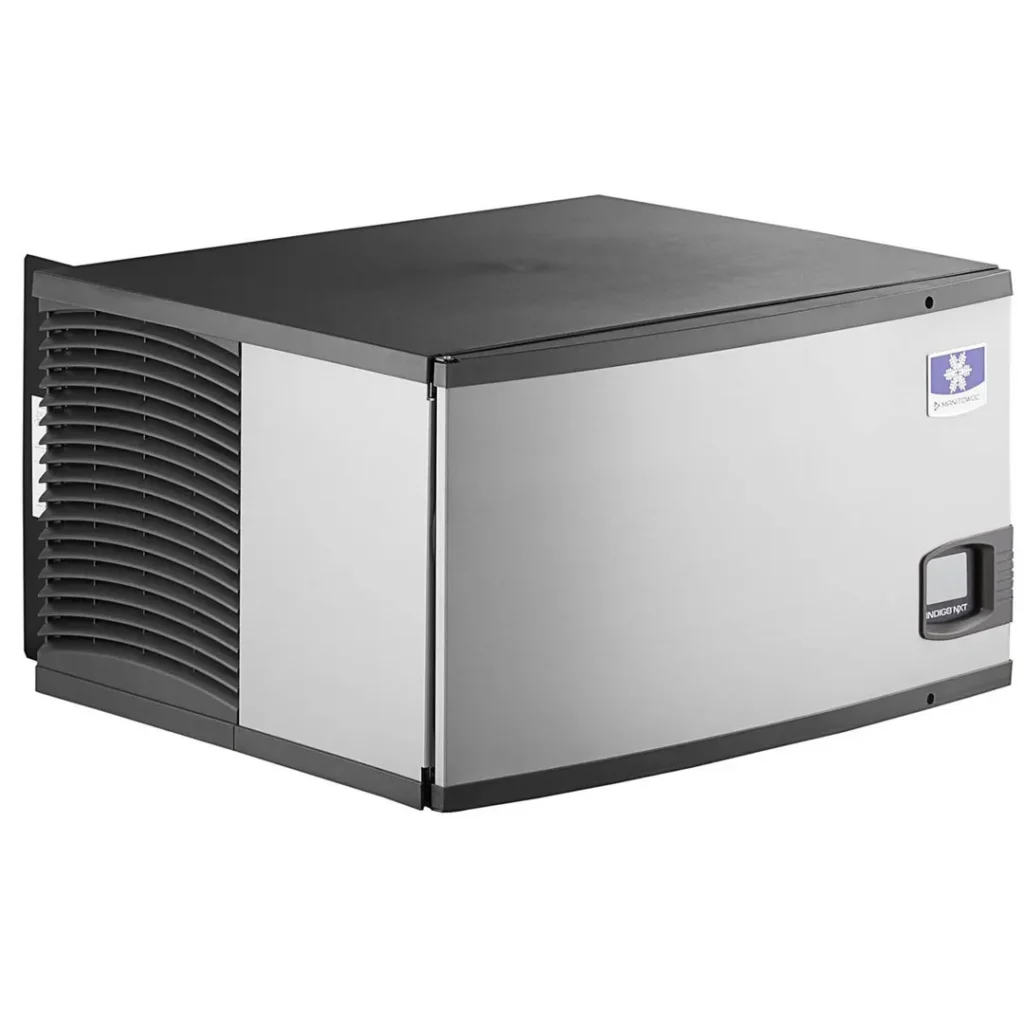
Manitowoc employs copper evaporators with protective nickel plating to maximize heat transfer efficiency. Copper’s superior thermal conductivity enables faster freeze cycles and lower energy consumption per pound of ice produced, particularly in high-output environments. The patented angled grid design allows ice to freeze from 5 sides, enhancing production efficiency.
The brand’s modular, service-friendly design philosophy places key components and evaporators at the front of the unit. This layout enables technicians to perform repairs quickly without relocating equipment. Fast servicing minimizes downtime, reduces labor costs, and keeps the kitchen from freezing up when things get hectic.
Reliability and Long-Term Performance
Reliability and long-term performance separate short-term cost savings from true lifetime value in commercial ice machines. Hoshizaki and Manitowoc take different approaches, prioritizing longevity versus output efficiency.
- Expected lifespan comparison: Hoshizaki clearly leads in lifespan, with stainless steel evaporators supporting service lives of 15–20 years. Manitowoc machines average 8–10 years, as nickel-plated copper evaporators can wear over time despite excellent short-term efficiency.
- Performance in high-demand environments: Hoshizaki excels in nonstop conditions through its CycleSaver™ designs, which reduce freeze cycles. Manitowoc leads in sheer volume capacity, with S3000 “Quadzilla” models producing over 3,000 lb (1,360.776 kg) per day, making it the top choice for stadiums and mega-operations.
- Failure patterns and durability considerations: Hoshizaki’s all-stainless-steel construction reduces long-term mechanical failure rates. Manitowoc machines may experience evaporator wear or sensor-related issues over time, but benefit from faster diagnostics and replacement. Hoshizaki leads in durability, and Manitowoc in service responsiveness.
Maintenance, Cleaning, and Serviceability
Maintenance design affects labor costs, sanitation compliance, and downtime. While both brands support commercial cleaning standards, Manitowoc emphasizes automation and technician efficiency, whereas Hoshizaki prioritizes mechanical simplicity.
- Cleaning requirements: Manitowoc leads in ease of cleaning with iAuCS® automatic cleaning cycles, programmable every 1–6 months, and bright-white interiors that highlight residue. Hoshizaki units require more manual cleaning time but resist mineral buildup thanks to their closed-cell systems and washable air filters.
- Service access considerations: Manitowoc dominates service accessibility, with nearly all components front-facing and removable without relocating the machine. Hoshizaki often requires more clearance and partial disassembly, increasing service time.
- Technician expertise needs: Hoshizaki machines are mechanically straightforward and often repairable by experienced in-house staff. Manitowoc relies more on digital diagnostics and proprietary controls, which require trained technicians but enable faster issue identification.
Energy Efficiency and Water Consumption
Energy and water usage drive long-term operating costs, especially for high-output installations. Hoshizaki and Manitowoc achieve efficiency through different engineering paths—mechanical harvest optimization versus thermal conductivity and smart sensing.
- Energy Star certification comparison: Manitowoc leads in Energy Star coverage, holding one of the industry’s largest certified portfolios. Its Indigo NXT models achieve up to 43% efficiency gains. Hoshizaki also offers Energy Star units, but it focuses more on cycle reduction than on maximum electrical efficiency.
- Water usage per pound of ice: Hoshizaki ice machines consume 12 gal (45.424 L) to 22 gal (83.279 L) per 100 lb (45.359 kg) of ice, depending on model and ice type. Manitowoc has a slight edge, with its consumption range of 12 gal (45.424 L) to 20 gal (75.708 L).
- Impact on utility costs: Manitowoc generally delivers lower monthly utility bills, with some models consuming as little as 3.55 kWh per 100 lb (45.359 kg) of ice. Hoshizaki units consume more power per pound, but offset this with longer service life and lower replacement costs.
- Sustainability considerations: Both brands take sustainability seriously. Manitowoc has been the ENERGY STAR Partner of the Year for 14 consecutive years, with 11 years of “Sustained Excellence” status. It emphasizes corporate water stewardship through Pentair, its parent company. Hoshizaki also offers ENERGY STAR-rated models. It was the first ice machine manufacturer to obtain ISO 14001 certification for environmental management.
Production Capacity and Scalability
Production capacity and scalability determine how an ice machine can meet present demand and support future growth. Hoshizaki and Manitowoc both offer broad output ranges, but they scale differently: Hoshizaki through continuous-duty, stackable systems and Manitowoc through ultra-high-capacity models and flexible bin pairing.
- Hoshizaki Production Capacity: Hoshizaki’s compact undercounter units produce 50 lb (22.679 kg) to 100 lb (45.359 kg) of ice per day, while ice machines with built-in bins produce around 300 lb (136.077 kg) daily. Modular heads range from approximately 300 lb (136.077 kg) to over 2,600 lb (1,179.339 kg) per day. Stackability allows vertical growth without increasing floor space.
- Manitowoc Production Capacity: Manitowoc offers one of the widest capacity ranges in the industry, available in undercounter and modular options. Daily production capacities range from 60 lb (27.215 kg) to 3,300 lb (1496.853 kg). Modular heads pair with large LB-series bins up to 60 in (152.4 cm) wide, enabling flexible expansion. They feature a first-in, first-out (FIFO) ice management system.
Pricing and Total Cost of Ownership
Pricing and total cost of ownership balance upfront investment against long-term operating and maintenance expenses. Manitowoc often wins on initial affordability and utility savings, but Hoshizaki delivers stronger returns over the long term.
- Initial Purchase Price Comparison: Manitowoc maintains a competitive edge in upfront affordability. Its entry-level undercounter units start at around $2,300, while comparable Hoshizaki models begin at nearly $2,700. Hoshizaki’s signature stainless steel evaporator and “CycleSaver” engineering command a premium of 5% to 15% over Manitowoc’s modular heads.
- Maintenance and Service Costs: Manitowoc leads in serviceability, with front-access components and iAuCS® automatic cleaning, and intuitive EasyRead® touchscreens that enable rapid diagnostics without removing side panels. Hoshizaki units require more time to clean but experience fewer critical failures, reducing long-term repair frequency.
- Energy and Water Expenses: Utility efficiency has reached parity, though not in the same way. Both use environmentally friendly refrigerants. Manitowoc’s nickel-plated copper evaporators and Acoustical Ice Sensing technology maximize heat transfer and minimize waste. Hoshizaki’s stainless-steel evaporators and CycleSaver™ technology reduce cycle time, water use, and power consumption.
- Long-Term ROI Analysis: Hoshizaki leads in long-term ROI, with typical lifespans of 15–20 years, compared with 8–10 years for Manitowoc. Stainless steel evaporators avoid costly midlife replacements common with plated-copper systems, making Hoshizaki more economical for long-term and institutional ownership.
Use-Case Comparison by Industry
Use-case comparisons highlight how ice type, volume needs, and maintenance resources influence the best brand choice. Hoshizaki and Manitowoc each excel in different environments depending on operational priorities.
- Restaurants and Bars: Hoshizaki’s high-turnover beverage service with crescent ice maximizes liquid displacement and reduces waste. Its gourmet cubes are ideal for craft cocktails. Manitowoc’s Indigo series benefits operators who value programmable production, helping keep bins full during peak weekend shifts.
- Schools and Institutions: Institutions prioritize durability, ease of use, and budget control. Hoshizaki is better suited to heavy, inconsistent use due to its rugged construction and long lifespan. Manitowoc is better for facilities with limited maintenance staffing, offering simpler cleaning workflows, touchscreen guidance, and lower upfront and energy costs.
- Healthcare and Large Facilities: Both brands deliver sanitary chewable ice on a massive scale. Hoshizaki features H-GUARD Plus®, CleanCycle24™, and touch-free OptiServe™. Its KM-2600 series produces 2,617 lb (1,187.05 kg) of ice per day. Manitowoc integrates LuminIce® II UV, AlphaSan®, iAuCS®. Its S-3300 line produces up to 3,380 lb (1533.14 kg) for large facilities.
How Hoshizaki and Manitowoc Fit Into a Commercial Refrigeration System in Food Service Businesses
Ice machines are a core component of the broader commercial refrigeration system in foodservice operations. Ice is a food product, so its production directly impacts sanitation, temperature control, and workflow efficiency. Operators can plan Hoshizaki and Manitowoc units alongside reach-ins, prep tables, and blast chilling processes to balance heat load and cold recovery.
Ice also supports operational refrigeration tasks beyond beverages. Many commercial kitchens use ice for rapid cooling, ingredient holding, and contamination control, thereby reducing strain on primary refrigeration assets. Hoshizaki and Manitowoc design ice machines with remote refrigeration options that increase output without increasing heat.
Both manufacturers’ ice makers integrate with storage bins and dispensers. Hoshizaki modular heads pair with a wide range of storage bins and stackable configurations, maximizing capacity without expanding floor space. Manitowoc offers D-Style and LB-Style bins featuring FiFo ice management, corrosion-resistant construction, and QuietQube® systems that direct heat and noise away from the kitchen.
Ice machines play a key role in storage and display refrigeration. Flake and nugget ice from both brands help seafood cases, salad bars, and produce displays preserve freshness while enhancing visual appeal. Bulk ice production in high-volume venues feeds mobile carts and dispensers, supporting distributed service points throughout the facility.
FAQs: Hoshizaki vs. Manitowoc Ice Machines
Which brand lasts longer?
Hoshizaki lasts longer, with many units operating for 15–20 years when properly maintained, compared to Manitowoc’s average lifespan of 8–10 years.
Which is easier to clean?
Manitowoc is easier to clean, thanks to front-facing components, tool-free access, touchscreen guidance, and optional automated cleaning systems.
Which brand is more energy efficient?
Both brands are largely on parity for utility costs: Manitowoc’s efficiency depends on sensing and evaporator design, while Hoshizaki’s on CycleSaver™ technology.
Is Manitowoc better for high-volume operations?
Yes. Manitowoc excels in ultra-high-volume settings, with models exceeding 3,000 lb (1,360.776 kg) per day and advanced sensing to maintain consistent peak output.
Is Hoshizaki worth the investment?
Yes, especially for operators focused on long-term durability, lower failure rates, and consistent ice quality over decades of use.
Pros and Cons Summary
The Hoshizaki vs. Manitowoc comparison clearly shows two engineering philosophies. Both brands have solid reasons to be preferred by different businesses.
Hoshizaki – Strengths and Limitations
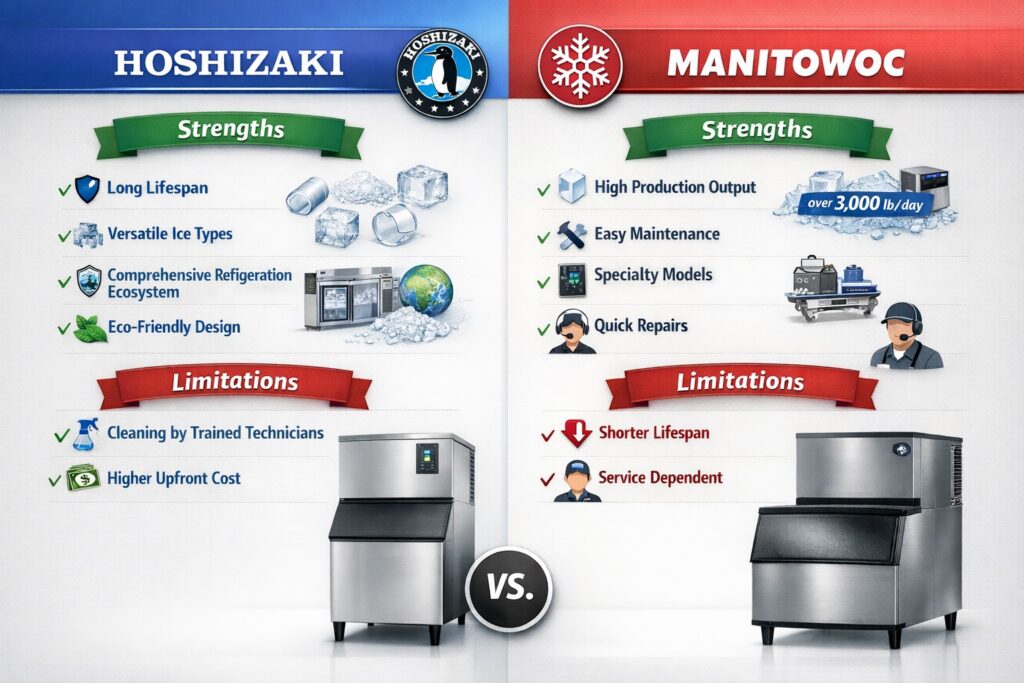
✅ All-stainless-steel evaporators ensure exceptional durability and lifespan.
✅ Hoshizaki offers a broader ice type selection, including specialty options for foodservice, healthcare, and display applications.
✅ Hospitals, schools, and government facilities prefer Hoshizaki for its strong institutional reliability.
✅ Comprehensive refrigeration ecosystem enables operators to standardize ice machines, reach-ins, prep tables, and display cases under one brand.
✅ Hoshizaki commercial refrigeration has strong environmental credentials, including ISO-9001 and ISO-14001 certifications and widespread R290 adoption.
❌ More involved maintenance and cleaning processes require trained technicians rather than quick staff-led servicing.
❌ All-stainless-steel evaporator design and 2-sided freezing surfaces result in slightly larger physical footprint on many models.
❌ Hoshizaki requires a higher upfront cost and occasional electrical upgrade requirements for high-capacity modular units.
Manitowoc – Strengths and Limitations
✅ Manitowoc delivers industry-leading output models with high production efficiency by a single machine.
✅ Front-facing components, tool-free access, touchscreen guidance, and automated cleaning systems streamline maintenance and serviceability.
✅ Features like Active Sense and Acoustical Ice Sensing ensure advanced production intelligence.
✅ Machines seamlessly integrate with large-capacity bins and QuietQube® remote condensers.
✅ Manitowoc offers niche models for marine or correctional use.
❌ Skipped maintenance cycles can significantly shorten lifespan, leading to slightly higher service dependency.
❌ Manitowoc machines have a shorter average lifespan than Hoshizaki.
❌ Electronic or ice-form inconsistencies may occasionally happen in high-capacity models if not closely monitored.
Conclusion: Which Brand Should You Choose?
Both Hoshizaki and Manitowoc are industry leaders, but they serve different operational priorities. The right choice depends on whether your operation values long-term durability and consistency or production efficiency and ease of service.
Choose Hoshizaki if you prioritize:
- Long lifespan, thanks to stainless steel evaporators, conservative cycle design, and lower long-term failure rates.
- Multi-application flexibility, delivering wide ice type offerings compatible with healthcare, food display, beverage, and institutional use cases.
- Institutional reliability for hospitals, schools, and government facilities, where downtime is not an option.
Choose Manitowoc if you prioritize:
- High production efficiency through copper evaporators, angled grid freezing, and ultra-high-capacity models for peak-demand environments.
- Ease of maintenance, thanks to tool-free access, touchscreen diagnostics, and automated cleaning.
- Fast service turnaround, enabling quicker repairs and operational recovery through widely available parts, technician familiarity, and modular designs.

