

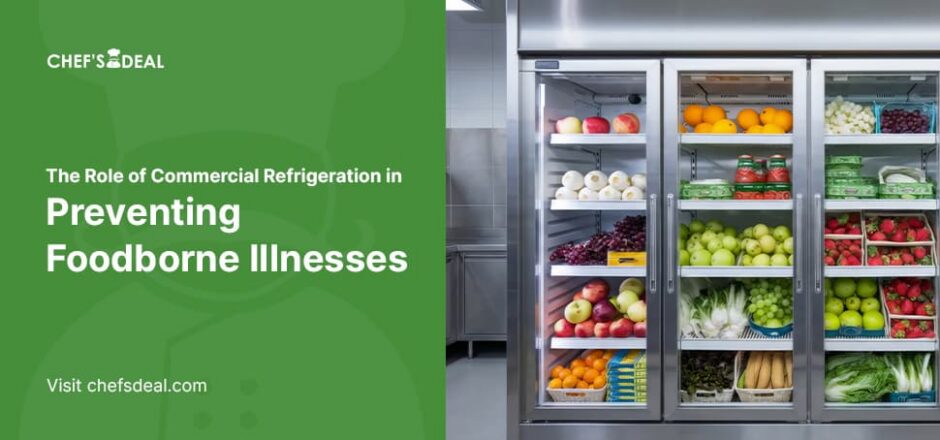
In the foodservice industry, commercial refrigeration is the primary barrier to the rapid transmission of foodborne illness. Because large volumes of food are handled and served daily, a single temperature failure can initiate a chain reaction of contamination affecting hundreds of people.
Proper refrigeration disrupts this cycle by keeping harmful pathogens such as Salmonella, Listeria, and E. coli inactive, thereby preventing bacteria from reaching levels sufficient to cause severe disease or death.
The critical battleground for food safety is the “Temperature Danger Zone, the range between 41°F and 135°F (5°C and 57.22°C), where bacterial populations can double in as little as 20 minutes. Commercial-grade units are specifically engineered to combat this risk through precision temperature control and high-speed recovery systems that account for frequent door openings and high ambient kitchen heat.
Unlike residential units, these systems provide a consistently sub-41°F environment necessary to prevent “invisible spoilage,” in which food may look and smell fresh but harbors toxic levels of microorganisms.
Beyond mere cooling, a robust food safety strategy integrates specialized equipment, such as blast chillers, for rapid cooling and organized storage practices to prevent cross-contamination. Maintaining separate zones for raw proteins and ready-to-eat items, coupled with strict adherence to HACCP (Hazard Analysis and Critical Control Points) regulations, ensures a comprehensive safety web.
Preventing foodborne illness is not a matter of sensory inspection but of rigorous temperature management; once pathogens have multiplied in the danger zone, the food can never be made truly safe again.
Why Temperature Control is a Public Health Issue?
Because the foodservice industry serves large numbers of people daily using the same ingredients, foods, and tools, it creates a continuous flow of deliberate and unconscious contact that facilitates the transmission of viruses and bacteria. When a restaurant serves contaminated food, it starts a chain of transmission that can affect dozens, sometimes hundreds, of people. This may result in serious consequences, including disease and even death, as explained in the article titled “Foodborne Illness Acquired in the United States—Major Pathogens, 2019”.
However, temperature control from the resource to the consumer, using appropriate commercial refrigeration solutions, prevents this chain reaction before it starts. Proper refrigeration keeps harmful bacteria inactive, preventing them from growing and reaching dangerous levels in the food you serve. It appears simple, but it has been shown to be effective in protecting public health.
What Causes Foodborne Illness in Commercial Food Operations?
The causes of foodborne illnesses in commercial food operations are bacteria, viruses, and parasites. These microorganisms are almost impossible to detect with taste, smell, or visual inspection. Food can look perfect, smell fine, and still make someone violently ill.
Bacteria, Viruses, and Pathogens Common in Foodservice
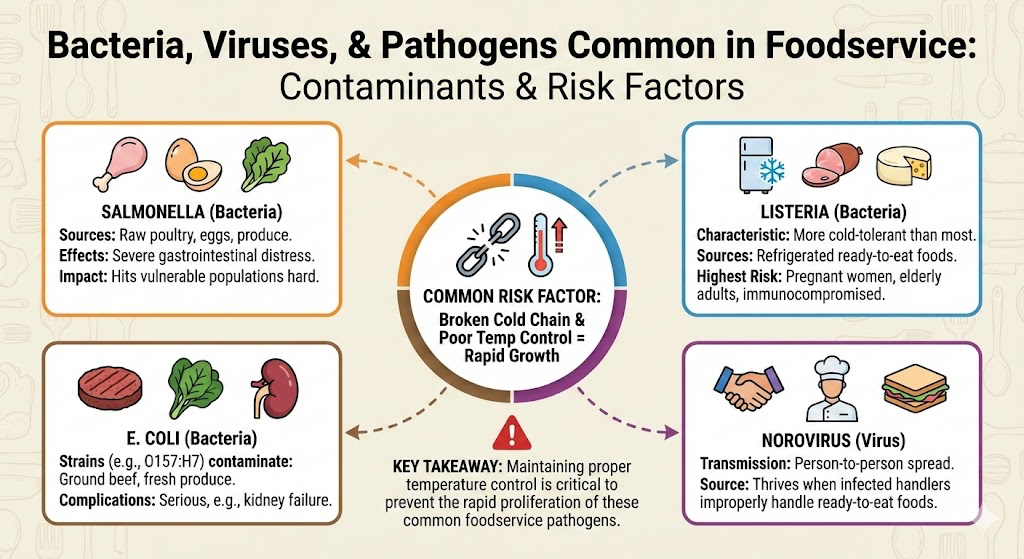
The most common contaminants in the foodservice industry are Salmonella, Listeria, E. coli, and Norovirus. Each has distinct characteristics, but they all share a common feature: they rapidly grow in environments where temperature control or cold chain breaks down.
Salmonella hides in raw poultry, eggs, and produce. It causes severe gastrointestinal distress and hits vulnerable populations hard. Listeria is more cold-tolerant than most bacteria, making it particularly dangerous in refrigerated ready-to-eat foods. Pregnant women, elderly adults, and immunocompromised individuals face the highest risk from Listeria infections.
E. coli strains, particularly O157:H7, contaminate ground beef and fresh produce. Outbreaks of E. coli infections often lead to serious complications, including kidney failure. Norovirus spreads person-to-person but thrives when infected food handlers improperly handle ready-to-eat foods.
Why do These Thrive in Improper Storage Conditions?
Bacteria need three things to multiply: food, moisture, and the right temperature. Commercial kitchens have the first two things in abundance. Therefore, you have only temperature control, which you can use as a preventive measure.
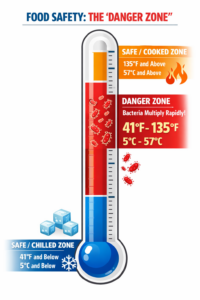
The Danger Zone refers to the temperature range between 41°F and 135°F (5°C and 57.22°C), where bacteria thrive and reproduce rapidly. Within this temperature zone, a single bacterial cell can become millions within hours. Refrigeration below 41°F (5°C) slows this process dramatically and prevents spoilage and illness.
Viruses such as norovirus don’t multiply in food the way bacteria do, but improper refrigeration provides a suitable environment for cross-contamination. When raw foods aren’t stored properly, these pathogens can spread to ready-to-eat items via contact, splashes, or contaminated surfaces.
The Role of Time and Temperature Abuse
Time and temperature abuse refers to contamination resulting from exposing foods to conditions that accelerate pathogen growth. It’s the primary factor in foodborne illness outbreaks associated with retail food establishments.
This can occur on various occasions, including food left out during preparation, deliveries sitting at loading docks, and refrigerators operating too warm. These incidents may seem minor and frequent, but their effects can be fatal, especially when temperatures rise into the danger zone.
What is The Temperature Danger Zone?
The temperature danger zone runs from 41°F to 135°F (5°C to 57.22°C). Within this temperature range, foodborne bacteria multiply at their fastest rates. The optimal temperature range for most pathogens is between 70°F and 125°F (21.11°C and 51.66°C), where populations can double every 20 minutes under ideal conditions.
The Temperature Danger Zone poses the highest risk for commercial kitchens, as they typically operate at room temperature, which falls within the danger zone. Therefore, any food left out during preparation, service, or storage rapidly enters this high-risk range.
How Fast Bacteria Multiply Without Proper Refrigeration?
Bacterial growth follows an exponential pattern, doubling every 20 minutes as long as conditions remain favorable (temperature within the danger zone, sufficient food, and adequate moisture). That is, 100 bacterial cells on a piece of chicken may increase to 6,400 cells after 2 hours, to more than 400,000 after 4 hours, and to more than 25 million after 6 hours.
Despite rapid bacterial growth, the food may still appear normal. However, this “looks fine” means nothing for food safety. You cannot detect bacterial spoilage, and your nose will not detect most pathogens. Therefore, safe food practices rely on temperature control and time limits rather than sensory evaluation.
Why Commercial Refrigeration is Essential for Food Safety?
Because commercial refrigeration maintains temperatures between 33°F and 40°F (0.555°C and 4.444°C) below the danger zone. Furthermore, they are engineered for the specific conditions of restaurants, hotels, and other commercial kitchens to ensure maximum food safety.
Precision Temperature Control
Commercial refrigerators provide greater temperature precision, with narrow temperature fluctuations typically within 1-4 degrees of the setpoint. This precision keeps food consistently below the danger zone threshold, even with frequent door openings, a high volume of stored foods, and high ambient temperature.
Additionally, commercial refrigerators and freezers feature digital thermostats to monitor internal temperatures, external displays to facilitate temperature monitoring, and advanced log systems to automatically record data for health inspections and HACCP compliance.
Fast Recovery After Door Openings
Commercial refrigerator doors open hundreds of times per shift, allowing warm air to rush in and raising internal temperatures. Thus, commercial refrigeration uses more powerful compressors and better insulation to minimize temperature rise and restore safe conditions within minutes.
Built for Compliance and Continuous Use
Commercial kitchens have harsher conditions, including higher ambient temperatures, larger stock levels, frequent door openings, and higher humidity. Commercial refrigeration systems are designed and manufactured to withstand these conditions and operate continuously, maintaining stable temperatures without interruption.
What are The Key Commercial Refrigeration Equipment That Prevents Foodborne Illness?
Key commercial refrigeration equipment that helps prevent foodborne illness includes commercial reach-in refrigerators and freezers, walk-in coolers and freezers, undercounter coolers, blast chillers, refrigerated worktables, and chef bases.
Reach-In Refrigerators and Freezers
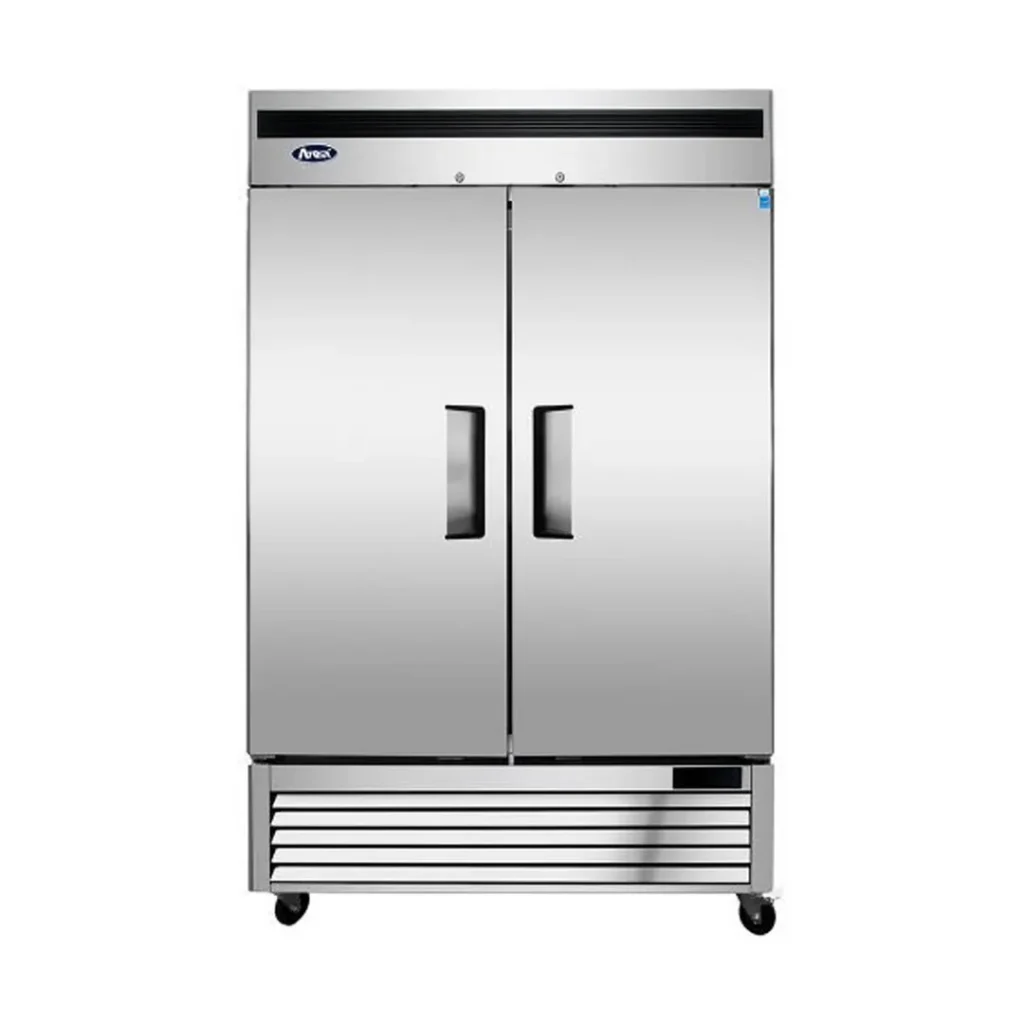
Reach-in refrigerators and freezers provide storage volumes ranging from small to large and are used as primary or secondary storage solutions in commercial kitchens. They provide easy access to frequently used ingredients while maintaining consistent temperatures. Commercial refrigerators and freezers are available in single-, double-, and triple-door configurations, with pass-through, roll-through, and combination unit options.
Walk-In Coolers and Freezers
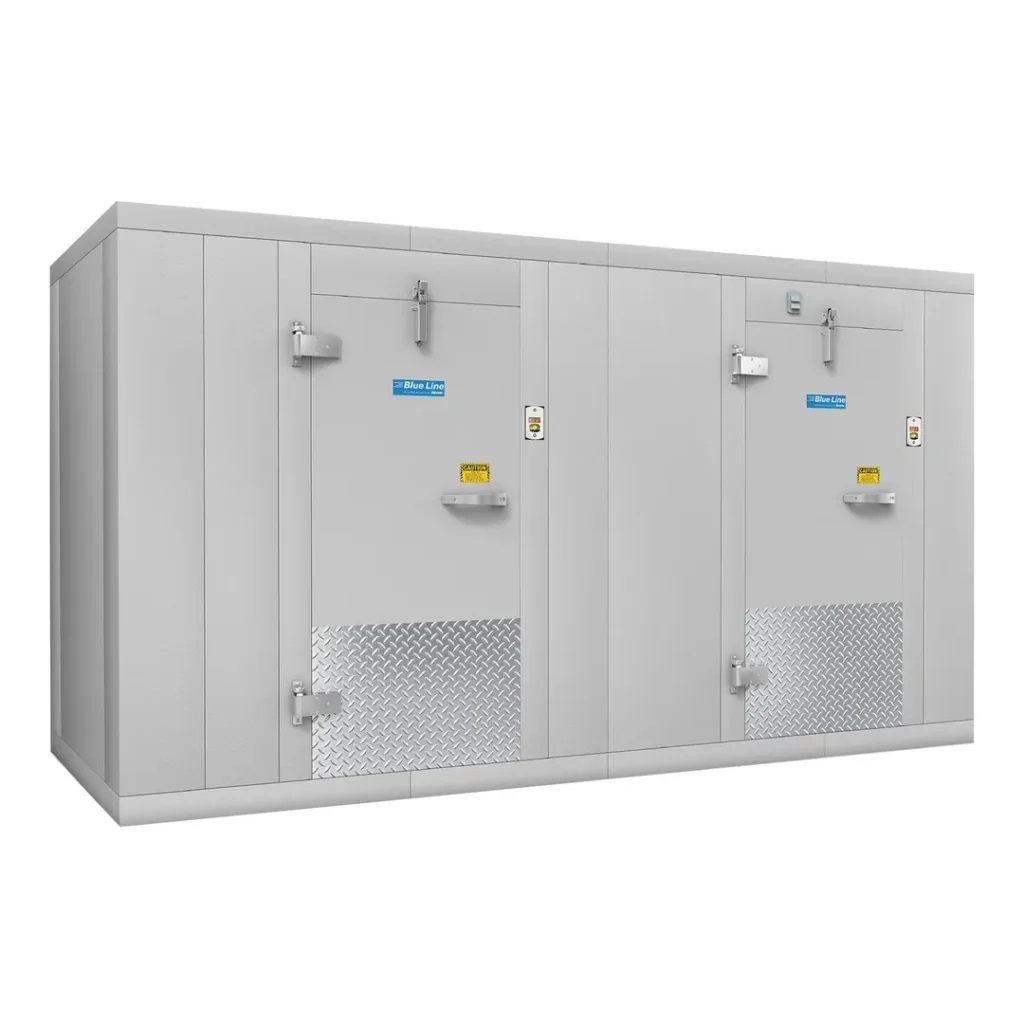
Walk-in coolers and freezers offer bulk storage for commercial foodservice establishments. These rooms provide space for organizing large quantities of food while maintaining separate zones for different products. Walk-in refrigeration facilitates proper stock rotation and helps prevent overcrowding, which compromises refrigeration effectiveness.
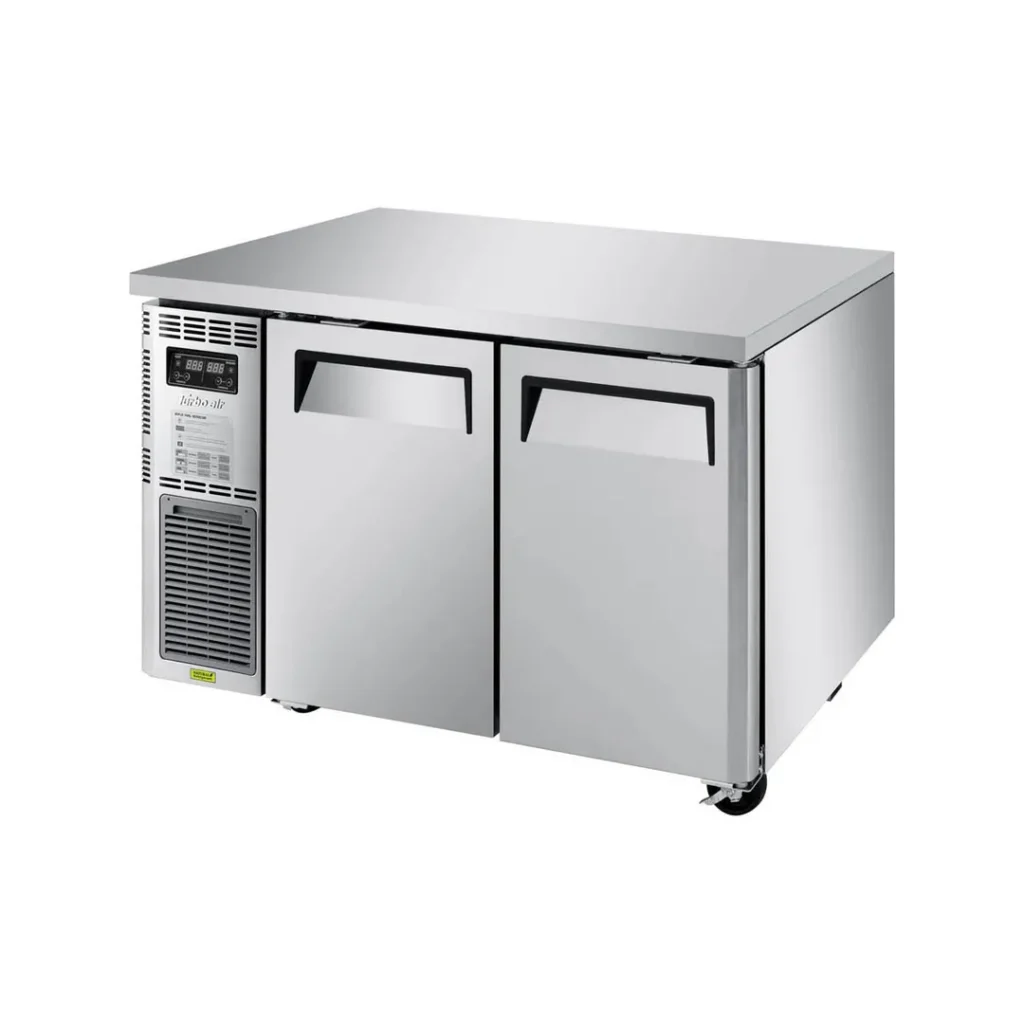
Undercounter Refrigeration at Prep Stations
Undercounter refrigeration at prep stations provides an easily accessible cold storage space for food preparation. These lowboy coolers and freezers reduce the distance staff travel to access ingredients, minimizing the time food spends outside refrigeration.
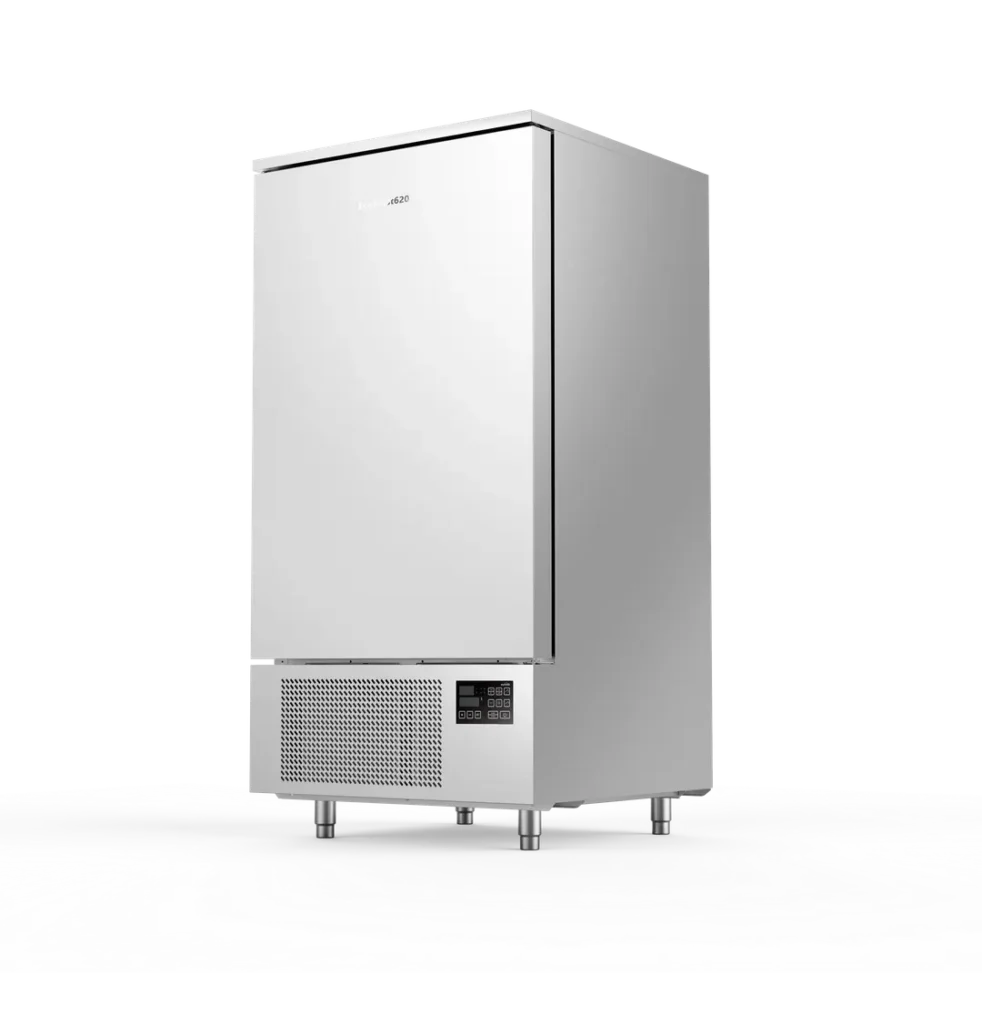
Blast Chillers and Rapid Cooling Systems
Blast Chillers and rapid cooling systems reduce the temperature of cooked food from 135°F to 41°F (57.22°C to 5°C ) or below within safe timeframes (approximately 4 hours). Standard refrigeration systems can’t cool large quantities of hot food quickly enough to prevent bacterial growth. But blast chillers have powerful cooling mechanisms to quickly cool the foods below the danger zone.
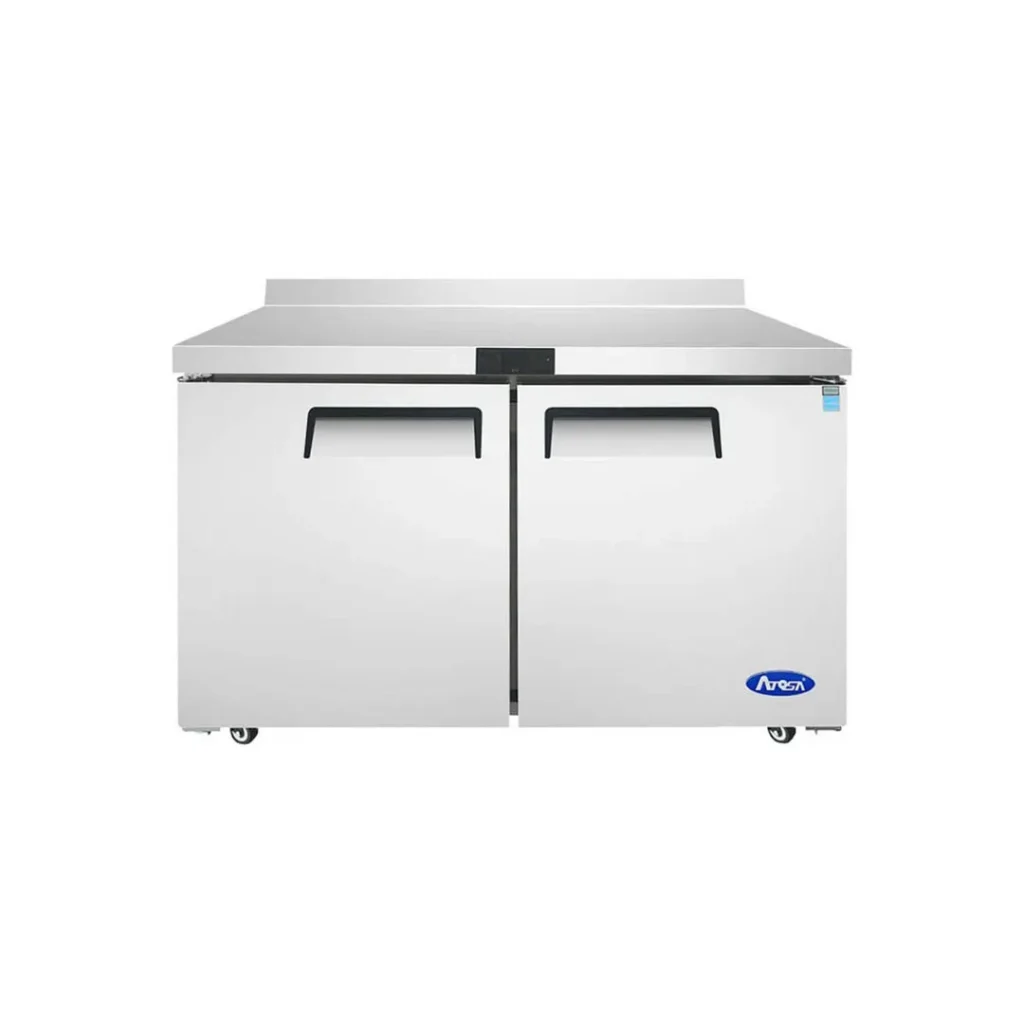
Refrigerated Work Tables
Refrigerated work tables combine a preparation counter with cold storage drawers or cabinets underneath, keeping ingredients at safe temperatures during extended prep sessions. These units may also include cold pans for cooling cold treats, even during preparation.
Chef Bases
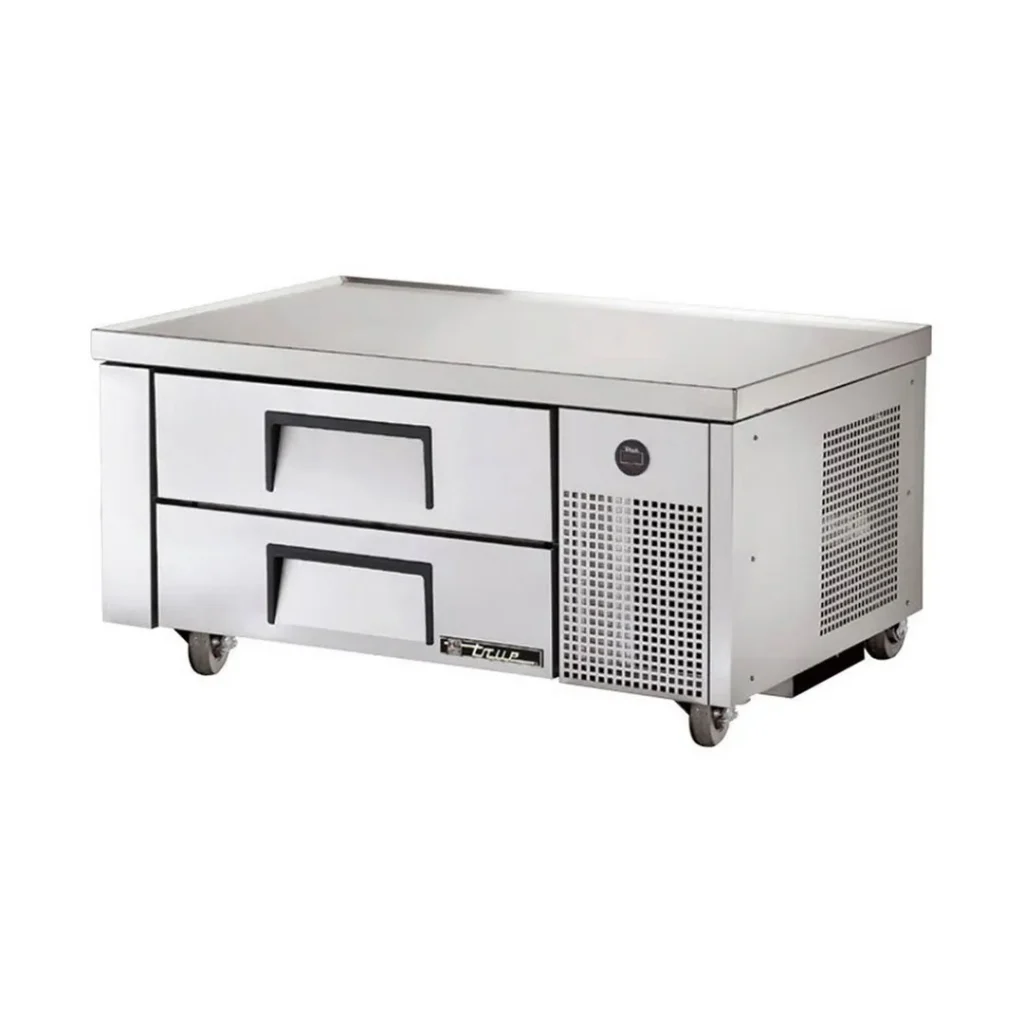
Chef Bases feature a robust top and refrigerated storage to provide a reliable platform for heavy cooking equipment such as ranges or griddles, while keeping frozen or chilled foods to be cooked or fried in front of the chef.
Temperature Consistency and Its Impact on Food Safety
Consistent temperature is more important than achieving a single target temperature, because fluctuations create repeated exposure to danger-zone temperatures.
Why Fluctuations Increase Illness Risk?
Food temperature fluctuations initially increase surface temperatures, creating warm pockets where bacteria can grow even while the food’s core remains cold. These periods may last only 10-15 minutes, but bacteria begin multiplying immediately on the surface.
When this fluctuation occurs repeatedly, invisible spoilage begins, and bacterial populations grow rapidly, even if the food returns to safe temperatures between events. Therefore, food may harbor dangerous levels of bacteria despite being stored mostly below 41°F (5°C).
Door Openings, Overloading, and Airflow Issues
Even though commercial refrigerators and freezers are engineered for temperature consistency, common kitchen behaviors, such as staff leaving doors open, overloading shelves so tightly, or blocking vents with containers or sheet pans, cause temperature fluctuations.
Door openings are inevitable, but duration matters. An open door for five seconds has minimal impact, and frequent such openings can be tolerated by the unit. However, an open door for two minutes lets significant warm air enter the unit. In addition, air circulation decreases cooling efficiency when shelves are overloaded. Thus, training staff to minimize door-opening time and to organize shelves helps maintain temperature.
Preventing Cross-Contamination Through Proper Refrigeration
Cold storage maintains a safe environment for temperature-sensitive food items. However, how you organize refrigerated space directly impacts whether pathogens spread from contaminated items to ready-to-eat foods.
Food Separation and Zoning
Raw and cooked foods must never be stored in the same area without barriers. Raw meats, poultry, and seafood contain high levels of bacteria that easily transfer to other foods through drips, splashes, or contact. Hence, raw proteins and foods must be stored on lower shelves, below ready-to-eat items, so gravity works in your favor.
You must create dedicated refrigeration zones for different food categories. Raw proteins in one section, prepared foods in another, dairy products separate from both. This organization reduces the chance of accidental contamination during busy service periods.
Foodservice establishments require strict allergen control with similar zoning strategies. Foods containing common allergens need clearly marked storage areas to prevent cross-contact with allergen-free menu items.
Shelving, Containers, and Storage Practices
Drops, leaks, and splashes are common sources of contamination in foodservice establishments. Therefore, you must store items in leak-proof containers with tight-fitting lids. Avoid storing foods in uncovered containers, especially raw proteins, above other items.
Commercial Refrigeration and Food Safety Regulations
Health departments and food safety agencies set strict requirements for food refrigeration because temperature control directly affects public health. Most health codes require that cold food be stored at 41°F (5°C) or below, although some jurisdictions set the maximum at 40°F (4.44°C).
Storage temperature is a key parameter for food safety; therefore, commercial establishments need to maintain temperature data logs. Inspectors focus on refrigeration during health inspections and check temperatures at multiple locations within each unit, looking for hot spots or inconsistent cooling. They review temperature logs to verify consistent compliance, not just adequate temperatures during the inspection.
Hazard Analysis and Critical Control Points (HACCP) is an FDA regulatory system for enhancing food safety in production, preparation, and service. This designation requires regular monitoring, documentation, and corrective actions when temperatures fall outside acceptable limits. Hence, HACCP requires temperature logs and alarms. Many commercial refrigeration systems include data logging that automatically records temperatures at set intervals. These logs and proper documentation prove consistent compliance and help identify patterns that might indicate developing equipment problems.
Common Refrigeration Failures That Lead to Foodborne Illness
Equipment malfunctions, poor performance, and human error are the primary causes of foodborne illness in foodservice businesses.
Equipment Malfunctions and Poor Maintenance
The most common equipment malfunctions are worn gaskets, compressor failures, and condenser failures. Gaskets may lose their elasticity over time, allowing cold air to escape and warm air to enter. Hence, you must inspect gaskets monthly for cracks, tears, or incomplete sealing and replace damaged gaskets immediately. Dirty condenser coils force the system to work harder and increase the energy consumption required to maintain temperature consistency. So, the condenser coil must be cleaned regularly.
The overloaded system may cause compressor failures, or the compressors may gradually lose cooling capacity after long-term service. Temperatures slowly rise over days or weeks, often going unnoticed until food shows signs of spoilage or health inspectors catch the problem. Hence, you must conduct regular performance checks to detect malfunctions before they escalate into major breakdowns.
Human Errors
Human errors such as improper loading, ignored alarms, and delayed repairs are among the most common problems in commercial refrigeration. Improper loading, such as overloading that obstructs airflow, creates warm spots where bacteria thrive. Or, loading hot food raises overall unit temperatures and forces the system to work harder to restore safe conditions.
Commercial refrigeration systems typically include temperature alarms that activate when the temperature deviates from the setpoint. However, the alarm may be ignored, allowing food to remain in hazardous conditions for hours.
Delayed repairs turn minor issues into food safety crises. A gasket that needs replacement costs $50 and 30 minutes of downtime. Ignoring it leads to a compressor failure that costs $2,000 and potentially thousands more in lost food and revenue during emergency repairs.
The Role of Preventive Maintenance in Illness Prevention
The preventive maintenance includes routine inspections, calibrations, and the installation of early-warning systems. Preventive maintenance keeps refrigeration systems running reliably, preventing failures that compromise food safety and lead to health code violations.
Routine Inspections and Calibration
Foodservice establishments and commercial kitchen operators must conduct routine inspections of refrigerant levels, inspect electrical connections, test safety systems, and identify developing problems before they cause failures. For instance, the thermostat controls the compressor, and its accuracy is critical to maintaining proper storage conditions. Thus, you must verify whether the displayed temperature matches the actual temperature inside the unit. Thermostats must be calibrated annually using certified reference thermometers to ensure accuracy. Additionally, sensors activate the compressor and the alarm systems. However, a malfunctioning sensor can cause the waste of an entire stock of food if not checked regularly.
Early Warning Signs Kitchens Should Never Ignore
Temperature alarms indicate actual problems rather than false alerts. Thus, you must investigate every alarm, even during busy service. If alarms sound frequently, the system has a problem that needs professional attention, not an alarm that needs silencing. In addition, ice buildup on evaporator coils signals airflow problems or refrigerant issues. Unusual noise or cycling patterns often precede complete failures. Strange noises such as grinding, squealing, or loud clicking indicate mechanical problems that require immediate attention.
How to Choose Commercial Refrigeration for Food Safety Protection
Choosing commercial refrigeration for food safety protection equipment requires balancing capacity, features, and budget while prioritizing food safety.
Capacity Planning for Safe Storage
You must assess your storage needs and calculate the necessary storage capacity based on peak inventory rather than average conditions. Equipment running at 70-80% capacity maintains better temperature control than overcrowded units.
In addition, you must match equipment size to menu volume and delivery schedules. Operations that receive deliveries twice weekly require more walk-in storage than those that receive daily deliveries. Kitchens with extensive prep work require more refrigeration near prep stations than operations that use mostly pre-portioned ingredients.
Features That Enhance Food Safety
Commercial refrigeration equipment offers advanced features to enhance food safety. For example, digital temperature displays provide at-a-glance verification of internal conditions without opening doors. Alarm systems alert staff to temperature excursions before food spoilage occurs. Data logging and remote monitoring create automated temperature records and enable off-site monitoring for health inspections and HACCP compliance.
FAQ: Commercial Refrigeration and Foodborne Illness Prevention
What happens when refrigeration temperatures fluctuate?
Temperature fluctuations above 41°F (5°C) create suitable conditions for bacterial growth. Even if the food returns to safe temperatures, the bacterial population remains elevated.
What temperature stops bacteria from growing on food?
Bacteria growth slows dramatically below 41°F (5°C) and stops almost completely at freezer temperatures below 0°F.
How does commercial refrigeration prevent foodborne illness?
Commercial refrigeration maintains consistent temperatures below 41°F (5°C), preventing bacteria from multiplying to dangerous levels.
How often should commercial refrigeration be checked for safety?
The commercial refrigeration temperatures must be checked at least twice daily during opening and closing procedures.
Can refrigeration alone prevent food poisoning?
Unfortunately, not. Refrigeration and temperature control are components of a comprehensive food safety system that prevent bacterial growth. However, preventing foodborne illness requires multiple controls: proper cooking temperatures, preventing cross-contamination, good personal hygiene, safe cooling practices, and proper refrigeration.
Refrigeration as a Foodborne Illness Prevention System
Commercial refrigeration functions as an active safety system, not just a storage appliance. Every component, from the compressor to the door gasket, contributes to preventing food from entering the temperature danger zone where bacteria thrive.
Proper equipment selection gives you the capacity and features needed for consistent temperature control. Correct usage practices ensure that equipment performs as designed. Regular maintenance keeps systems running reliably year after year.
This three-part approach reduces the risk of illness by preventing bacterial growth in stored food. It reduces legal exposure by demonstrating consistent compliance with health codes and safety regulations. It prevents brand damage by avoiding the publicity nightmares that follow foodborne illness outbreaks.
Food safety starts with cold control, not cleanup. Once bacteria multiply to dangerous levels, there’s no way to make the food safe again. Proper refrigeration prevents that multiplication from ever starting. In foodservice, prevention is everything. You can also read our article about ‘How Commercial Refrigeration Prevents Food Waste’ in foodservice businesses.

