

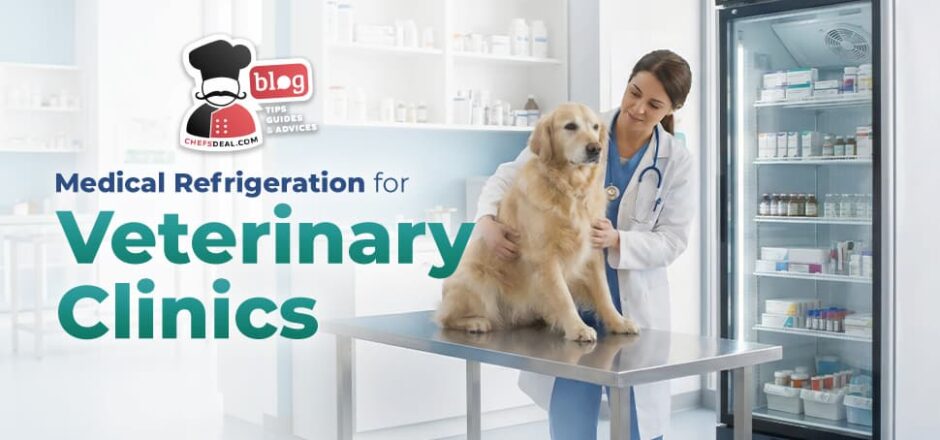
Medical refrigeration for veterinary clinics helps protect the health of our animal companions, from loyal dogs and cats to hardworking livestock and rescued wildlife. Purpose-built veterinary refrigerators feature microprocessor controls, data logging, and alarms to maintain the required temperature ranges. Compact and undercounter models serve small-animal clinics efficiently; portable, solar-powered units meet the needs of equine veterinarians and wildlife rehabilitation centers.
The role of medical refrigeration for veterinary clinics extends far beyond storage. It supports preventive care by maintaining vaccine potency, enables emergency response with temperature-stable medications, and safeguards the integrity of blood samples and biological specimens. Pharmacy-grade refrigeration minimizes thermal fluctuations and protects animal-specific drugs that cannot tolerate freeze-thaw cycles.
The importance of cold storage for vaccines, medications, blood samples, and biologicals in vet facilities lies in its ability to preserve efficacy and prevent costly losses:
- Vaccines: Most veterinary vaccines, such as rabies and canine parvovirus, require a temperature range of 36°F to 46°F (2°C to 8°C) for full potency.
- Medications: Many antibiotics and insulin formulations for diabetic pets are heat-sensitive, while equine toxoids and feline vaccines lose potency with repeated thawing.
- Biologicals and Blood Samples: Tissue, serum, and plasma samples demand controlled conditions and, in some cases, ultra-low temperature freezers (ULT) at –112°F (–80°C) or lower to prevent degradation.
The risks of temperature excursions for animal-specific drugs are severe. Even brief deviations from the proper range can trigger chemical breakdown or microbial contamination, rendering vaccines ineffective and treatments unsafe. These failures cause lost patient trust, spoiled inventory, and regulatory noncompliance, all of which are avoidable with precise, medical-grade refrigeration.
Why Veterinary Clinics Need Specialized Medical Refrigeration
Veterinary clinics need specialized medical refrigeration for consistency and control. Animal medications such as canine parvovirus vaccine, feline leukemia vaccine, and equine botulism toxoid require narrow thermal thresholds. They are susceptible to freeze–thaw cycles. A single temperature excursion can render an entire stock ineffective. Medical refrigeration for veterinary clinics delivers the precision, stability, sensitivity, and safety needed for animal care.
Animal Medications and Vaccines Have Varying Sensitivity
Vet facilities manage a diverse range of products for different species, including dogs, cats, reptiles, birds, and livestock, all with distinct temperature requirements. For instance, insulin for diabetic pets must be stored between 36°F and 46°F (2°C and 8°C) to maintain potency. Antibiotics for livestock require similar storage conditions. Storing each on separate labeled shelves minimizes dosage errors and contamination risks.
Diverse Species Require Diverse Drug Inventories
Diverse species require diverse drug inventories, and animal hospitals must store products across multiple temperature ranges. These include standard, cool, frozen, and ultra-low environments, each critical to protecting efficacy.
- Standard animal clinic refrigeration keeps most vaccines, antibiotics, and daily-use drugs within the required 36°F–46°F (2°C–8°C) range.
- Frozen storage between –40°F and –29°F (–40°C and –20°C) is necessary for viral vaccines, such as Newcastle disease, and for long-term biological storage.
- Ultra-low refrigeration operates at –62°F (–80°C) or lower to preserve frozen semen, embryos, and genetic material in breeding programs.
- Cool storage requires a range of –13°F to –9°F (8°C to 15°C) for particular hormones, growth promoters, and temperature-tolerant antibiotics.
This multi-range system ensures veterinary professionals meet the needs of multiple animal species while complying with health and safety standards.
VFD Rules Influence Refrigeration Practices
The Veterinary Feed Directive (VFD), issued by the FDA, governs the use and storage of medically necessary antimicrobials in animal feed. It superintends the responsible use of drugs under veterinary supervision. The VFD mandates secure, traceable, and contamination-free storage of veterinary feed medications. Retailers and clinics must track and preserve all inventory acquisition and disposition records for at least 3 years.
Veterinary refrigeration systems help facilities comply by maintaining temperature stability, separating medicated feeds, and documenting accurate storage for VFD drugs used in food-producing animals. These rules reinforce the need for purpose-built veterinary refrigeration to preserve antimicrobial potency, ensure biosecurity, and support responsible medication management in livestock care.
Zoned Cooling Helps Avoid Cross-Exposure
Medical refrigeration for veterinary clinics often features multi-compartment temperature zoning to accommodate varied species requirements. This allows simultaneous storage of canine vaccines, avian antibiotics, and equine biologics in different, controlled sections.
Species-specific zoning also prevents cross-contamination, enhances organization within mixed-use clinics, supports sanitary protocols, and preserves drug efficacy across multi-species medication storage areas.
Compliance and Record-Keeping are Still Mandatory
Compliance and record-keeping remain mandatory for all veterinary practices that handle biologicals or controlled substances. Regulatory bodies such as the USDA, state veterinary boards, and local public health departments require strict documentation of all cold chain activities.
Every refrigerator must feature Digital Data Loggers (DDLs) programmed to record temperatures at least every 30 minutes, with daily minimum/maximum checks logged for 3 years or more. Units storing VFD-related products or controlled drugs must also include locking mechanisms and tamper prevention systems to ensure compliance with USDA and USP <1079> standards.
Freezing and Potency Loss are Still High Risks
Many veterinary vaccines, insulin formulations, and biologics lose potency when frozen. Veterinary-grade models feature anti-freeze circuitry, uniform airflow, and independent refrigerator/freezer compartments that eliminate the risk of freezing. Some versions also include auto-defrost systems that maintain humidity balance, preventing ice accumulation and surface condensation on delicate packaging.
Specialized Medical Refrigeration Ensures Security and Access Control
Veterinary facilities frequently store controlled substances, sedatives, and expensive vaccines, which require restricted access. Purpose-built refrigeration units include keyed locks, digital keypad systems, and tamper-resistant doors that protect against unauthorized access. These access controls not only deter theft but also support compliance with DEA, FDA, and state veterinary board security mandates.
What are the Key Features to Look for in Veterinary Medical Refrigerators Before Buying?
The key features to look for in veterinary medical refrigerators depend on compliance, temperature precision, and operational needs. These specialized units safeguard vaccines, biologics, and pharmaceuticals under strict conditions. Compare available options to find the medical refrigeration that offers temperature stability, compartmentalized storage, access control, and space efficiency.
Temperature Accuracy and Stability
Veterinary refrigerators must deliver precise thermal consistency to maintain product potency. They include digital microprocessor controls, NIST-calibrated data logging, and buffered temperature probes that simulate actual vaccine temperature. This design ensures accuracy, minimizes false alarms during door openings, and allows real-time monitoring for inspection readiness.
Dual or Triple Compartments for Segregation
Dual or triple-compartment medical refrigeration for veterinary clinics helps separate vaccines, samples, and general medications. This segregation prevents cross-contamination between biologics and diagnostic specimens. Multi-compartment units enhance organization, streamline inventory management, and help clinics maintain species-specific and function-specific separation protocols.
Locking Mechanisms for Controlled Substances
Refrigeration for controlled veterinary substances must include DEA-compliant locking doors and tamper-resistant hardware. Many models now feature trackable access logs, with digital or keypad systems to record entry attempts. These mechanisms prevent unauthorized access to sensitive materials, protect against theft, and help clinics meet state and federal drug security requirements with auditable precision.
Compact or Undercounter Designs for Smaller Clinics
Animal care centers with limited space benefit from compact undercounter, countertop, or upright medical refrigerators. These designs optimize storage without compromising cooling performance. Forward-venting compressors allow built-in installation under counters, supporting efficient workspace layouts in small or shared facilities.
What are Cold Chain Challenges in Veterinary Clinics?
The cold chain challenges in veterinary clinics center on maintaining consistent temperature control despite frequent access, unstable power supply, or human error. Veterinary facilities face ongoing hurdles that threaten vaccine potency and regulatory compliance.
- Frequent Door Openings during Emergencies: Repeated access to veterinary refrigerators during patient care, often exceeding 30 openings per hour, causes internal temperature fluctuations that threaten vaccine stability. Using rapid-temperature-recovery systems, forced-air circulation, and microprocessor-controlled fans helps restore ideal conditions within seconds of door closure.
- Power Outages in Rural or Farm-Based Clinics: Rural veterinary facilities often experience power instability, endangering critical cold-chain items. Prolonged outages can destroy vaccines, blood products, and temperature-sensitive medications, resulting in substantial financial losses. Install emergency generators or partner with backup storage facilities to preserve product integrity and follow CDC-mandated procedures.
- Lack of Backup Power or Alarms: A lack of backup power or temperature alarms remains one of the most critical cold chain vulnerabilities. Veterinary refrigerators must include visual and audible alarm systems and connect to uninterruptible power supplies (UPS). These alerts enable early intervention to prevent spoilage, preserving temperature-sensitive materials even during brief power interruptions.
- Undertrained Staff Not Checking Daily Temperatures: Inadequate training leads to missed or incomplete temperature checks, leaving undetected excursions. The CDC requires veterinary staff to record minimum and maximum temperatures daily, using DDLs whenever possible. Properly trained personnel ensure continuous monitoring, prevent loss of vaccines, and maintain regulatory conformity through accurate documentation.
Ideal Use Cases in Veterinary Environments
Ideal use cases in veterinary environments illustrate how different clinical settings depend on specialized refrigeration to preserve the integrity of vaccines, medications, and biologics. The type of medical refrigeration required in each environment varies: compact refrigerators for small animal practices, portable field units for equine vets, and solar-ready systems for wildlife centers.
Small Animal Clinics
Small animal clinics rely on medical refrigeration to store daily-use vaccines such as rabies, distemper, parvovirus, and feline leukemia. Such products typically need a temperature range of 36°F to 46°F (2°C to 8°C). These clinics also refrigerate insulin, antibiotics, and chronic care injectables, which require stable temperatures and consistent humidity to remain effective.
Small animal clinics usually require quiet, compact, ENERGY STAR models that cut energy use by up to 40%. Space constraint motivates these facilities to resort to undercounter or countertop models, ranging from 1 cu ft (28.316 L) to 5 cu ft (141.584 L) in capacity. Noise levels must remain below 45 dB to maintain a calm atmosphere in examination areas.
Equine and Livestock Vets
Equine and livestock vets require refrigeration systems that are mobile, resilient, and energy independent. Large-animal practitioners frequently handle vaccines, antibiotics, chilled semen, and serum, all of which must remain within tight temperature ranges during travel. Therefore, battery-powered portable refrigerators are ideal for mobile, field-based veterinary operations.
Portable medical refrigerators that support 12V/24V DC and 110V AC inputs allow veterinarians to operate from vehicles or barns without a fixed power supply. Battery-powered models with 8–10 hours of runtime and optional power banks ensure uninterrupted performance during farm calls or vaccination drives.
Wildlife Rehab Centers
Wildlife rehabilitation centers manage diverse species with specialized biological and emergency-use inventories. They often store biologics, routine vaccines, plasma, and temperature-sensitive antidotes while operating in off-grid or rural areas with limited electrical reliability. Therefore, they need portable refrigerators for emergency vials and ULT freezers for tissue, serum, and DNA samples, in addition to the standard pharmaceutical-grade units.
Wildlife hospitals also require solar-compatible or generator-ready units to maintain uninterrupted cold chain operation in remote environments. Solar systems integrate directly with panels and maintain the temperature stability for over 72 hours without relying on a battery or even sunlight. Generator-ready systems ensure pharma chain protection during blackouts. Phase Change Material (PCM) models preserve temperatures for over 126 hours during outages.
Top Medical Refrigerator Brands and Models for Veterinary Clinics
Top medical refrigerator brands for veterinary clinics are renowned for their field-tested, customer-approved models. They provide peace of mind regarding temperature control, long-term reliability, and conformity to relevant standards. Shopping from trusted brands helps veterinary professionals protect their medical products from temperature excursions, improve energy efficiency, and operate their clinics safely.
- Accucold dominates the market with compact medical refrigerators that feature buffered temperature probes and visual/audible alarms, in accordance with CDC guidelines. The ARS1PV is a popular product of the Pharma-Vac Series, purpose-built for medical and veterinary use. Its antimicrobial handle and hydrocarbon refrigerant make it both hygienic and energy-efficient.
- Migali uses R290 refrigerant in its medical refrigeration for veterinary clinics for 40% greater energy efficiency. The G-1RG-HC upright refrigerator from the Genesis Series offers 21.4 cu ft (605.98 L) of reliable cold storage. Its capillary tube, forced-air refrigeration system, microprocessor controls, and 6 adjustable shelves promise uniform cooling and flexible organization.
- Arctiko leads in temperature-controlled storage solutions for healthcare institutions. The LRE 125-US is an undercounter fridge perfect for veterinary settings, with 3.85 cu ft (109.019 L) of capacity, a solid door, and a digital temperature display. Its built-in data logging and forced-air cooling make it ideal for clinics that store sensitive biologics and vaccines in small, dedicated spaces.
- Thermo Scientific delivers innovative instruments, equipment, software, and services that facilitate the production and storage of pharmaceuticals. The TSX2305SA is a 23 cu. ft. (651.287 L) upright high-performance lab refrigerator. Its V-drive technology continually adapts temperature regulation to user patterns, making it ideal for high-volume veterinary facilities.
- Cardinal Health manufactures refrigerators, freezers, and combo units for laboratory and research purposes. The Premier Plus Series refrigerators offer advanced temperature uniformity and security for biologics and vaccines. Its Variable Speed Compressor adjusts cooling to ambient conditions, and forced-air circulation promises fast temperature recovery.
- Koolmore produces a range of kitchen appliances and refrigeration for commercial, residential, and medical use. The KM-PHR-11C is an 11 cu ft (311.485 L) pharmacy refrigerator that offers superior precision with dual digital displays and a backup alarm battery system. Its anti-condensation door and efficient air circulation system help maintain optimal cooling and visibility in busy vet facilities.
- American Biotech Supply has earned a reputation for its precision-engineered medical refrigeration. The PH-ABT-HC-UCFS-0204G model offers 2.5 cu ft (70.792 L) of secure storage with tight temperature control for vaccines and pharmaceuticals. Its eco-friendly R600a refrigerant meets new EPA/SNAP standards, and visual/audible alarms with buffered probes comply with CDC guidelines.
- K2 Scientific supplies a variety of refrigeration solutions for healthcare facilities and science labs. The K210GDR is a 10 cu ft (283.168 L) upright glass-door refrigerator with superior air circulation and tight temperature control. Its magnetically sealed door with rapid cool-down mode, intelligent microprocessor controls, visual/audible alarms, and eco-friendly refrigerant make it compliant with CDC, VFC, EPA, and SNAP.
How to Maintain Medical Refrigerators in Vet Clinics
Maintaining medical refrigerators in animal hospitals safeguards temperature-sensitive drugs, vaccines, and biological samples. Routine upkeep ensures stable temperatures, prevents costly spoilage, and maintains compliance with relevant standards. Follow the structured primary and additional maintenance routines below:
1. Calibrate temperature logs monthly to NIST or ISO17025 standards. Regular calibration ensures accurate readings from thermometers, DDLs, and alarm systems. This process helps confirm the actual temperature stability of the storage unit. Here are a few quick routines to follow to prevent unnoticed fluctuations that could compromise vaccine potency.
- Review temperature logs weekly for deviations from trends.
- Get independent accuracy verification for the refrigerator’s built-in thermometer.
- Record minimum and maximum temperatures at the start of each workday.
2. Clean condenser coils quarterly according to manufacturer guidelines.
Dust and debris buildup on condenser coils can reduce cooling efficiency and increase energy use. Disinfect interior shelves and seals weekly to prevent microbial growth. Regular cleaning helps prevent compressor strain and ensures steady temperature performance.
3. Use backup power or a temperature buffer. Reliable power systems are critical for clinics located in rural or unstable grids. Even brief outages can cause significant inventory loss. Follow the routines below for uninterrupted veterinary service:
- Test backup generators quarterly and service them annually to ensure at least 72 hours of continuous operation.
- Use Uninterruptible Power Supplies (UPS) rated to handle the refrigerator’s maximum current load.
- Place water bottles on interior shelves to stabilize temperature in non-medical-grade units.
- Install “DO NOT UNPLUG” signage and label circuits powering refrigeration units.
- Consider ice-lined refrigerators or PCM units for clinics with frequent outages to maintain cooling for 10–126 hours without electricity.
4. Train staff on temperature monitoring Standard Operating Procedures (SOPs)
Well-trained veterinary staff are central to effective cold chain management. Training prevents errors, reinforces accountability, and prepares teams for emergencies. Educate all personnel involved in receiving, storing, or handling vaccines using up-to-date SOPs. Provide refresher courses annually or when new vaccines or regulations arrive.
Additional Maintenance Routines: Primary maintenance routines ensure basic functionality; additional measures are essential for long-term reliability and regulatory compliance. These routines help prevent operational inefficiencies, ensure airflow, and reduce wear on system components.
- Check seals and hinges: Inspect door gaskets monthly to prevent air leaks that lead to frost buildup or uneven temperatures. Replace worn seals immediately.
- Prevent overstocking: Keep the refrigerator between 30%–80% full to ensure proper airflow and avoid cold or hot spots.
- Maintain airflow: Keep stored products 2 in (5.08 cm) to 3 in (7.62 cm) away from walls, vents, and doors to promote even temperature distribution.
- Inspect stock and packaging: Check vials for discoloration or leaks weekly. Follow first-in, first-out (FIFO) inventory practices to minimize waste.
- Troubleshoot alarms promptly: Never silence alarms before identifying the cause. Transfer contents to a backup unit if needed, and contact a certified service technician.
- Log maintenance activities: Maintain a written maintenance log for coil cleaning, calibrations, and inspections to demonstrate compliance during audits.
- Monitor humidity levels: Use humidity sensors to prevent condensation on vials and packaging.
- Prevent ice buildup: Defrost manual-defrost units regularly. Never use sharp tools for frost removal to avoid coil damage and warranty voids.
FAQs about Veterinary Medical Refrigerators
What temperature should veterinary vaccines be stored at?
Veterinary vaccines should be stored at temperatures between 36°F and 46°F (2°C and 8°C) to preserve potency and ensure an effective immune response in animals. The CDC recommends 41 °F (5°C) as the ideal midpoint within the acceptable temperature range.
Are household fridges okay for veterinary use?
No, household fridges are not okay for veterinary use because they cannot maintain the precise, stable temperatures required for vaccines and medications. Only purpose-built, pharmaceutical-grade refrigerators offer microprocessor-based control, fan-forced air circulation, and digital alarms, mandated by the CDC.
Do vet fridges need backup power?
Yes, veterinary fridges require backup power systems to ensure constant operation and protect valuable vaccines from spoilage during power failures.
Can I store human and animal medications together?
No, you cannot store human and veterinary medications together. The FDA strongly recommends that clinics and pet owners keep animal and human drugs apart to eliminate the risk of accidental mix-ups and mistaken administration.
Final Thoughts: Protecting Animal Health Starts with Proper Storage
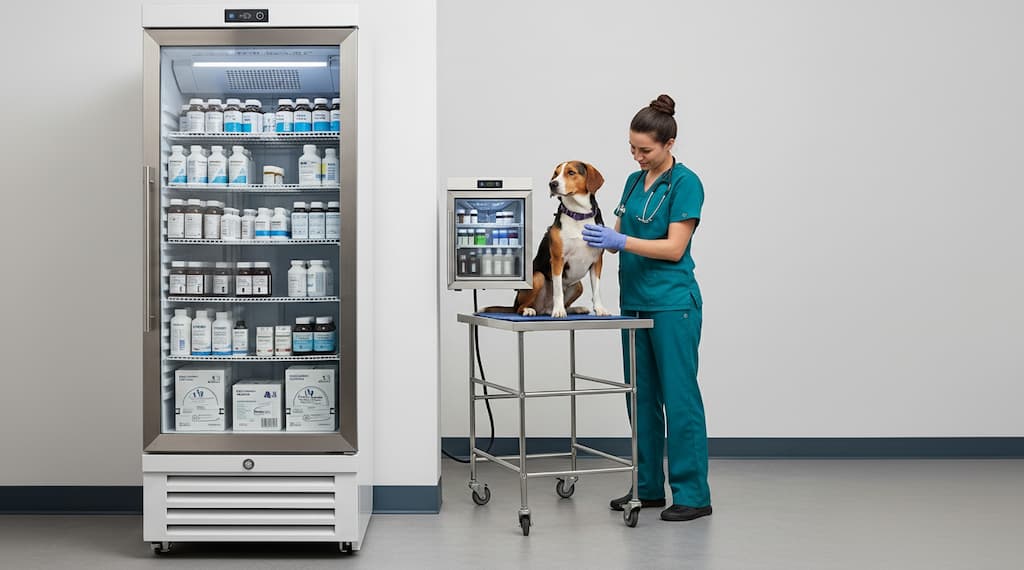
Protecting animal health starts with safe and precise storage. Medical-grade refrigeration allows veterinary professionals to preserve vaccine potency, medication stability, and biological integrity. Purpose-built, properly maintained units guarantee that every dose delivers the intended effect. Reliable cold storage also minimizes waste and supports continuous, high-quality animal care across clinics and field environments.
Key Takeaways:
- Temperature precision is critical: veterinary vaccines and medications must be maintained between 36°F and 46°F (2°C and 8°C) to maintain full potency.
- Purpose-built medical refrigeration outperforms household units by ensuring uniform cooling, rapid recovery, and precise temperature control.
- Backup power systems, such as generators, UPS, or PCM technology, safeguard vaccines during outages, preventing inventory loss.
- Staff training and regular maintenance, including calibration, cleaning, and daily temperature logging, uphold cold chain reliability.
- Regulatory compliance with CDC, USDA, FDA, and VFD standards requires documented monitoring, secure access, and accurate data logging.
- Specialized refrigeration ensures safety across species, from compact clinic fridges to solar-powered units for wildlife and mobile veterinarians.
Every dose and vial stored correctly helps protect the lives of animals who rely on veterinary care. Protect your practice and your patients with reliable cold storage. Explore Chef’s Deal’s medical refrigeration collection or speak to a specialist to find the ideal solution for your clinic’s needs.


2 comments On Medical Refrigeration for Veterinary Clinics
Dear Sir/Madam,
We are looking for a Medical Refrigerators for vaccine , could you send price , freight and detailed specification or your Medical Refrigerator (15-21L) as
Your soonest reply will be appreciated
Lewis Leung
Skysafe International Consultant Ltd.,
Company Tel: (852) 39703515
Mobile : (852) 91838221
Fax : (852) 30058281
Website: http://www.skysafe.com.hk
Dear Mr Leung,
Thank you for reaching us. I forwarded your email and message to our sales department. They will contact you as soon as possible.
Kind regards.