

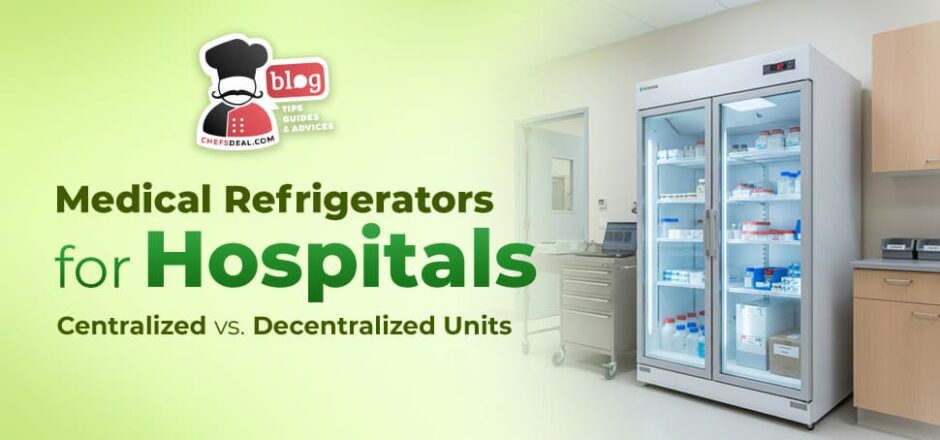
Medical refrigerators for hospitals safeguard life-saving materials that require precise, reliable temperature control. The medical fridges in hospitals, whether centralized or decentralized, preserve the integrity of vaccines, blood products, medications, insulin, lab reagents, and biologics while supporting compliance, safety, and accessibility.
Adequate hospital refrigeration integrates temperature uniformity, alarmed monitoring, and workflow efficiency to sustain uninterrupted patient care. Choosing between centralized and decentralized refrigeration systems determines how efficiently a facility maintains its cold chain, manages inventory, and responds to emergencies. A thoughtful selection begins by identifying a hospital’s refrigeration needs.
What are Hospital Refrigeration Needs?
Hospital refrigeration needs include maintaining strict, auditable temperature ranges for diverse medical materials, typically between 36°F and 46°F (2°C and 8°C) for vaccines, 34°F and 43°F (1°C and 6°C) for blood components, and down to –112°F (–80°C) for long-term biological samples. Each department’s refrigeration requirements vary based on storage purpose, workflow proximity, emergency readiness, and the stored materials.
- Vaccines and injectables require stable refrigeration to preserve potency and prevent waste.
- Blood products, such as whole blood and plasma, demand constant temperature monitoring and restricted access to prevent spoilage.
- Medications and insulin used in chronic and critical care degrade quickly when exposed to thermal fluctuations, requiring rapid recovery and precise control.
- Lab reagents and biologics, including tissue samples and genetic materials, often need ultra-low temperatures between –130°F and –76°F (–90°C and –60°C) for stability.
Specifications for hospital medical refrigerators vary by department. Refrigerated storage needs differ from one section of a hospital to another.
- Hospital pharmacies function as central hubs for medication storage, compounding, and dispensing. They depend on high-performance medical refrigerators that ensure temperature uniformity, data logging, and alarm systems. Pharmacy refrigeration systems often network with data management platforms to maintain audit trails and simplify regulatory inspections.
- ER/trauma units prioritize rapid access to blood, emergency drugs, and temperature-sensitive fluids, which can determine survival outcomes. These departments benefit from decentralized undercounter or countertop refrigerators that shorten retrieval time.
- ICU and med-surg units similarly require localized refrigeration to store infusions, injectables, and temperature-sensitive medications used in critical care. Placing compact medical-grade units within a few meters of patient beds improves workflow, reduces dosing errors, and enhances treatment efficiency.
- Blood banks operate under strict thermal control; whole blood and red cell components must remain between 34°F and 43°F (1°C and 6°C), while frozen plasma requires –22°F (–30°C) or lower. These facilities often integrate monitoring systems, alarms, and chart recorders to ensure uninterrupted compliance and traceability.
- Laboratories demand a specialized cold storage plan. They use precision-controlled refrigerators and ultra-low freezers to preserve specimens and reagents under validated conditions.
Maintaining cold chain integrity in clinical environments ensures that all temperature-sensitive products, from arrival to administration, remain within validated conditions. The cold chain depends on trained personnel, certified equipment, and real-time monitoring.
Hospitals typically use digital data loggers (DDLs) with buffered probes that record temperature every 30 minutes, allowing immediate corrective action when excursions occur.
Medical refrigerators for hospitals must meet the requirements of the following regulatory bodies:
- CDC (Centers for Disease Control and Prevention) sets the standards for the Vaccine Storage and Handling Toolkit.
- USP <1079> (U.S. Pharmacopeia) defines good storage and shipping practices of pharmaceutical products.
- AABB (Association for the Advancement of Blood & Biotherapies) requires alarms, continuous temperature logging, and records at least every 4 hours for blood components.
- FDA (Food and Drug Administration) mandates 2-year record retention for medical refrigeration logs and alignment with 21 CFR Parts 203 and 211 regarding pharmaceutical storage.
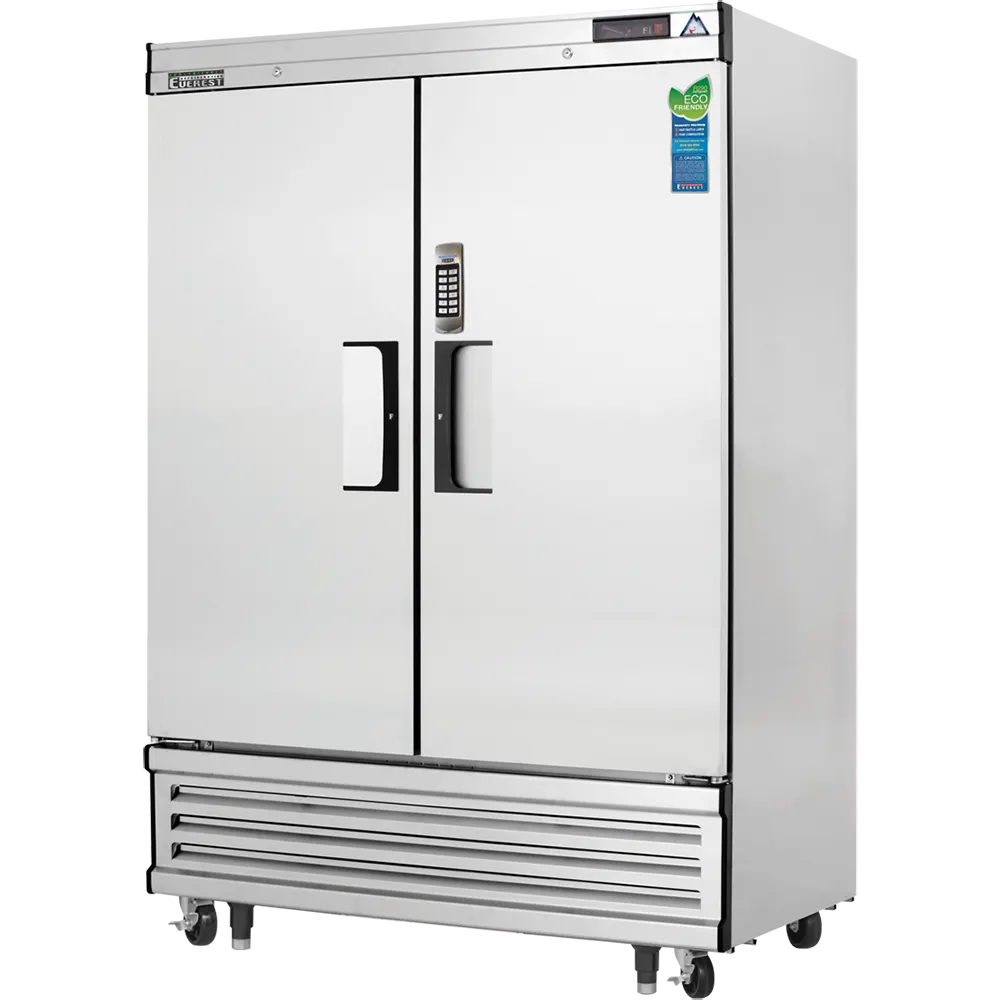
Reliable medical refrigerators for hospitals integrate these standards with workflow efficiency. Systems must include security features, such as locking mechanisms or keypads, to prevent tampering or unauthorized access. Backup generators or Uninterruptible Power Supplies (UPS) maintain cooling capacity during power failures. Therefore, hospitals need a holistic approach to preserve cold chain integrity across all clinical departments.
The decision on how to organize medical refrigerators for hospitals depends on how a facility balances audit readiness, accessibility, and operational efficiency. Some hospitals concentrate refrigeration in a central pharmacy or storage room to simplify management; others distribute smaller units across departments for immediate access. Both centralized and decentralized refrigeration systems offer hospitals advantages and limitations regarding cold chain integrity.
What is Centralized Medical Refrigeration?
Centralized medical refrigeration is a storage model in which hospitals consolidate temperature-sensitive medical products in a single controlled location, typically the central pharmacy or a dedicated cold room.
This system centralizes inventory, monitoring, and maintenance, enabling consistent oversight and streamlined procurement. Hospitals using this approach employ large-capacity reach-in or walk-in refrigerators that handle significant volumes for broad institutional use.
What are the Advantages of Centralized Medical Refrigeration?
Advantages of centralized medical refrigeration include unified compliance management, cost efficiency, and simplified inventory control. This architecture improves regulatory consistency while lowering maintenance and procurement complexity.
- Easier compliance oversight (temperature logs, alarms, inspections): Centralized refrigeration streamlines adherence to certification requirements by consolidating all temperature logs, alarms, and inspection points in a single location. This integration allows uniform monitoring across the facility, enabling faster audit responses and easier CDC and USP <1079> documentation through a single, validated system.
- Reduced equipment costs and maintenance burden: Centralized systems cut costs by reducing the total number of refrigeration units. A single location allows economies of scale for equipment procurement and energy efficiency. Maintenance resources concentrate in one area, lowering long-term costs.
- Streamlined inventory and procurement: Centralization enables bulk purchasing and unified stock control. Inventory managers can efficiently rotate stock, prevent over-ordering, and improve cold chain traceability. This setup supports better forecasting, standardized medication storage, and improved vendor negotiation.
What are the Limitations of Centralized Medical Refrigeration?
Limitations of centralized medical refrigeration include slower access, dependence on complex logistics, and vulnerability to systemic disruptions.
- Delays in access for clinical staff: Centralized storage can delay medication retrieval during emergencies. Staff must travel from patient areas to the central pharmacy, increasing the risk of treatment delays and temperature excursions during transport.
- Requires robust internal logistics: Hospitals need a well-coordinated transport system to move items efficiently from central storage to patient care areas. Any inefficiency in internal delivery networks can lead to workflow interruptions or medication shortages in critical units.
- Vulnerable to disruptions (power failures or lockdowns in the central area): A central refrigeration hub creates a single point of failure. Power loss, maintenance shutdowns, or restricted access during emergencies can jeopardize the hospital’s entire inventory. This requires investing in redundant power systems and portable backup units to mitigate these risks.
What is Decentralized Medical Refrigeration?
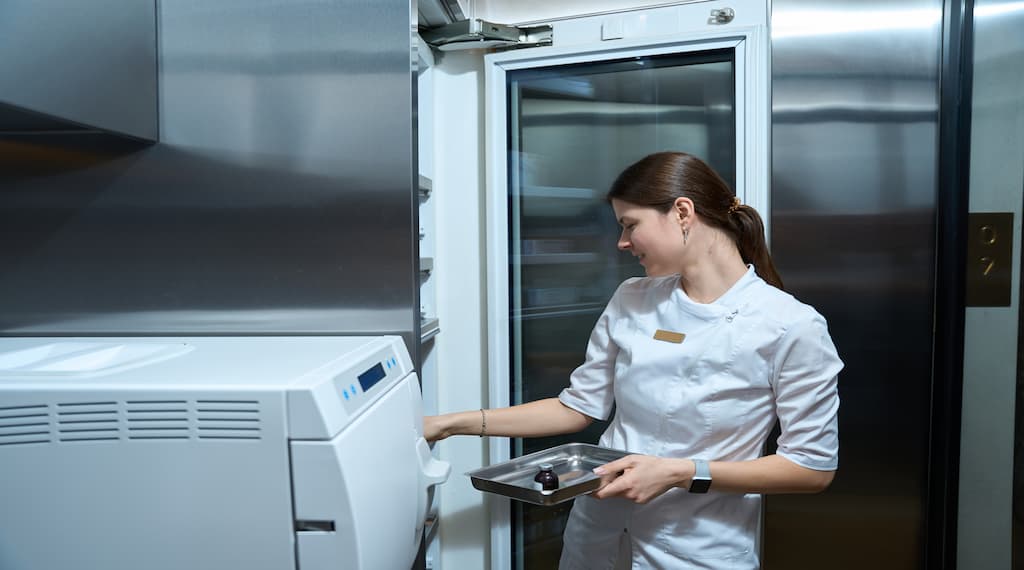
Decentralized medical refrigeration distributes smaller, point-of-care refrigerators and freezers throughout hospital departments. Hospitals strategically place refrigeration units in ICUs, ERs, operating rooms, and satellite pharmacies, allowing staff to access medications and biologics immediately without relying on central logistics. This configuration enhances responsiveness and supports departments that require constant, rapid access to temperature-sensitive products.
What are the Advantages of Decentralized Medical Refrigeration?
Advantages of decentralized medical refrigeration include faster access, improved patient safety, and added redundancy.
- Rapid access and workflow enhancement: Decentralized units reduce transport time and streamline medication retrieval, especially in emergency and critical care areas. This gives medical professionals access to refrigerated items within seconds, minimizing treatment delays and improving care delivery.
- Enhanced patient safety and clinical integration: Decentralized refrigeration supports clinical accuracy by ensuring medications are available at the point of use, reducing human error during preparation or transport. Dedicated departmental refrigerators also minimize contamination risk and uphold sterile protocols.
- Security and redundancy: Multiple localized units enhance system redundancy, limiting the impact of single-point failures. Separate refrigerators with individual locks, alarms, and audit trails maintain control of high-value or controlled substances.
What are the Limitations of Decentralized Medical Refrigeration?
Limitations of decentralized medical refrigeration include cost, compliance with standards, and workflow efficiency.
- Higher equipment and maintenance costs: Installing multiple refrigerators across departments increases capital and operational expenses. Each unit requires independent calibration, maintenance, and replacement parts, raising total lifecycle costs.
- Compliance complexity: Monitoring multiple units demands extensive data logging and alarm integration. Each device requires a certified DDL and consistent validation to maintain regulatory alignment, which increases the documentation workload.
- Workflow and system inefficiencies: Inconsistencies across departments are possible in decentralized setups if not carefully managed. Excess inventory, duplicate orders, and uneven access to medications are likely to emerge, reducing overall efficiency.
What are the Key Considerations for Choosing Centralized vs. Decentralized?
Key considerations for choosing between centralized and decentralized medical refrigerators for hospitals include facility design, operational scope, regulatory readiness, and emergency preparedness. Evaluating storage capacity, staff accessibility, and compliance infrastructure helps optimize refrigeration architecture.
- Hospital size and floor plan: Large hospitals with multiple wings often adopt hybrid strategies to balance efficiency and accessibility. Compact facilities rely on centralized systems, while multi-floor facilities benefit from localized refrigeration in high-demand areas.
- Number of departments with refrigeration needs: Hospitals with numerous clinical divisions require zoned refrigeration strategies. Each department’s volume, medication type, and frequency of use determine whether central or local storage is more effective.
- Staff access and medication retrieval frequency: Frequent retrievals favor decentralized refrigeration, while low-frequency access or bulk storage aligns better with central systems. Facilities must analyze staff workflows to minimize transport delays.
- Budget for equipment and maintenance: Centralized models reduce initial and recurring costs, while decentralized designs require more units and service resources. Consider installation, power consumption, and maintenance scheduling in your cost modelling.
- Compliance infrastructure (data logging, alarms, documentation): Hospitals must assess whether their monitoring systems can handle distributed logging and cloud-based aggregation. Each refrigerator must maintain precise temperature records in accordance with CDC, USP <1079>, and AABB standards.
- Power backup and emergency plans: Emergency protocols must include redundant power systems and portable coolers to safeguard pharmaceuticals during outages. Centralized facilities depend on robust generator capacity; decentralized units require localized UPS support.
- Infection control and access security requirements: Access control measures such as locks, keypad systems, and alarmed doors protect stored materials. Centralized refrigeration utilizes a single controlled access point of security. Regular cleaning and disinfection are crucial in decentralized systems to prevent contamination, especially for refrigerators near patient-care zones or IV preparation areas.
The choice between centralized and decentralized refrigeration is becoming increasingly unclear as hospitals grow in size and service complexity. Facilities often face diverse storage demands, from bulk pharmaceuticals to temperature-sensitive biologics in point-of-care settings.
Many institutions integrate elements of both systems into a hybrid, adaptive refrigeration model to ensure reliability and responsiveness.

Hybrid Refrigeration Models in Hospitals
A hybrid refrigeration model strategically combines the large-scale efficiency of centralized systems with the immediate accessibility of decentralized units. Uniting both models enables hospitals to meet varied departmental needs without compromising regulatory compliance or workflow speed. This approach balances operational efficiency with patient safety, keeping vital materials protected and readily available.
Hybrid models are increasingly common in modern healthcare facilities: centralized refrigeration handles bulk storage and procurement, while smaller satellite units serve high-demand clinical areas. This dual framework supports a dynamic, secure, and flexible cold chain. Hybrid medical refrigerators for hospitals adapt to different workloads, emergency conditions, and departmental requirements.
In practice, a hybrid model typically allocates resources based on function and urgency:
- Main pharmacy holds bulk meds: Large walk-in or reach-in refrigerators store vaccines, antibiotics, and temperature-sensitive medications. Centralized oversight simplifies inventory control, allowing pharmacists to focus on patient care and clinical support.
- ICU and ER have compact undercounter units: These point-of-care refrigerators, often 1 cu ft (28.316 L) to 5 cu ft (141.584 L) in capacity, provide rapid access to critical medications and biologics during emergencies. Their ergonomic design supports accessibility while maintaining temperature stability.
- The blood bank has an isolated ULT freezer near the transfusion unit: Laboratories or transfusion areas use ultra-low-temperature freezers for blood components and tissue samples. This proximity minimizes transport time, preserving product integrity during urgent transfusions.
Hybrid systems blend both the efficiency of centralized operations and the speed of localized access, creating a robust framework for clinical excellence. However, their effectiveness relies on synchronized management, in which all units, large or small, operate under a single monitoring and documentation protocol.
Best Practices for Refrigeration in Hospital Environments
Best practices for hospital refrigeration emphasize consistent regulatory alignment, real-time monitoring, well-trained staff, and scheduled performance audits. Implement these protocols together to ensure safe, efficient, and regulation-aligned cold storage across every department.
- Maintain unified compliance protocols: Enforce consistent standards across all refrigeration systems. Using standardized DDLs with buffered probes helps align all units with CDC, AABB, USP <1079>, and FDA standards.
- Use cloud-based monitoring for distributed units: Cloud-based systems provide central visibility for all refrigerators and freezers, consolidating data and reducing the risk of missed temperature excursions. Real-time alerts via SMS, email, or automated escalation tiers guarantee swift responses.
- Train Staff in All Departments: Ensure nurses, lab techs, support staff, and all other personnel know how to monitor, respond, and document refrigeration data accurately. Training covers temperature excursion protocols, placement techniques, and after-hours response procedures.
- Conduct Routine Audits: Schedule regular audits and equipment maintenance for both central and peripheral units. Check calibration of data loggers and alarms regularly, following NIST-traceable standards. Audits also verify data accuracy, unit placement, and signage such as “DO NOT UNPLUG” labels.
These best practices uphold a consistent standard of temperature control, operational efficiency, and patient safety across all medical refrigerators for hospitals. They help develop a cohesive hospital-wide refrigeration system.
Hospital Refrigeration Unit Types Suitable for Each Setup
Selecting the best hospital refrigeration unit for each setup depends on how the facility structures its storage systems. Centralized installations prioritize large-scale inventory control and streamlined oversight; decentralized units focus on accessibility at the point of care.
| Attribute | Centralized Units | Decentralized Units |
| Typical Unit Type | Generator-backed N+1 systems, UPS arrays, and generator compatibility | Undercounter, countertop, compact uprights, ADA-compliant models |
| Capacity | 30–500+ cu ft (849.505–14,158.423 L); up to 6,000+ vaccine doses | 1–12 cu ft (28.316–339.802 L); up to 4,000 doses |
| Power Backup | Generator-backed N+1 systems, UPS arrays, generator compatibility | Local UPS, battery-backed monitoring, portable backup units |
| Monitoring Systems | DDLs, BMS integration, centralized alarms, validated platforms with touchscreen display, interactive temperature graphing, connectivity (Ethernet/API, USB ports) | Individual DDLs with buffered probes, cloud aggregation, LED controller with alarms |
| Recommended Brands | Helmer Scientific, Migali, Everest Refrigeration, HABCO, Summit | Accucold by Summit, Everest Refrigeration, HABCO, Koolmore, Excellence |
FAQs: Centralized vs. Decentralized Hospital Refrigeration
What is the main benefit of centralized refrigeration in hospitals?
The main benefit of centralized refrigeration in hospitals lies in consolidation and systematic control.
– Centralized systems streamline temperature tracking, logging, and auditing by consolidating all data in a single location.
– Hospitals benefit from lower equipment and maintenance costs and can efficiently bulk-procure medications.
– Centralized setups support redundant power (N+1 generators, UPS arrays) for consistent cold-chain protection.
Can you store vaccines in decentralized units?
Yes, you can store vaccines in decentralized refrigeration units, provided they are purpose-built and compliant with healthcare standards. Common examples include undercounters, countertops, and compact uprights.
Do decentralized refrigerators need their own data loggers?
Yes, decentralized refrigerators need individual data loggers to ensure compliance and maintain continuous temperature records. The CDC mandates that each unit have a Temperature Monitoring Device (TMD), preferably a DDL for precise readings.
What is a hybrid hospital refrigeration model?
A hybrid hospital refrigeration model merges centralized bulk storage with decentralized access at clinical points. The central pharmacy holds bulk stock, while satellite units in ER or ICU areas store smaller, ready-to-use quantities.
How do I maintain compliance with multiple fridges across departments?
You can maintain compliance across multiple refrigerators by standardizing devices, unifying monitoring, and training staff. Follow the tips below:
– Use approved DDLs with consistent 30-minute logging intervals.
– Calibrate annually to NIST or international standards.
– Follow CDC, AABB, and USP <1079> requirements.
– Implement centralized cloud-based monitoring.
– Activate real-time alerts via SMS or email for temperature deviations.
– Conduct regular staff training on daily checks and emergency responses.
– Schedule routine internal audits for calibration, log accuracy, and maintenance documentation.
Conclusion
Selecting the correct configuration of medical refrigerators for hospitals requires a careful balance between operational efficiency, accessibility, and audit readiness. Centralized refrigeration systems consolidate storage, streamline monitoring, and reduce maintenance costs, making them ideal for large-scale inventory management. Decentralized refrigeration setups enhance responsiveness by placing compact refrigeration units near clinical areas, improving medication accessibility and reducing retrieval times.
Many hospitals now rely on hybrid models that integrate centralized bulk storage with point-of-care units in intensive care and emergency departments. These systems provide both operational control and rapid access. Running a reliable hospital refrigeration system aligned with regulatory standards is paramount for preserving product efficacy and patient safety in healthcare environments, regardless of the model.
Build a Reliable Hospital Refrigeration System with Chef’s Deal
Build a reliable hospital refrigeration system with Chef’s Deal and ensure dependable storage for critical medical materials across all departments. Chef’s Deal offers centralized and decentralized medical refrigeration solutions for hospitals of all sizes, with equipment engineered to meet the highest safety and performance standards. We help facilities design efficient layouts and select compliant refrigeration equipment.
Chef’s Deal supports hospitals with expert consultation for planning, budgeting, and installation while offering flexible financing options and custom space optimization. Every project benefits from trusted brands known for reliability, ensuring long-lasting, compliant operation. Fast shipping, comprehensive warranty coverage, and dedicated after-sales service are other benefits Chef’s Deal offers to simplify the procurement of hospital-grade cold storage units.

