

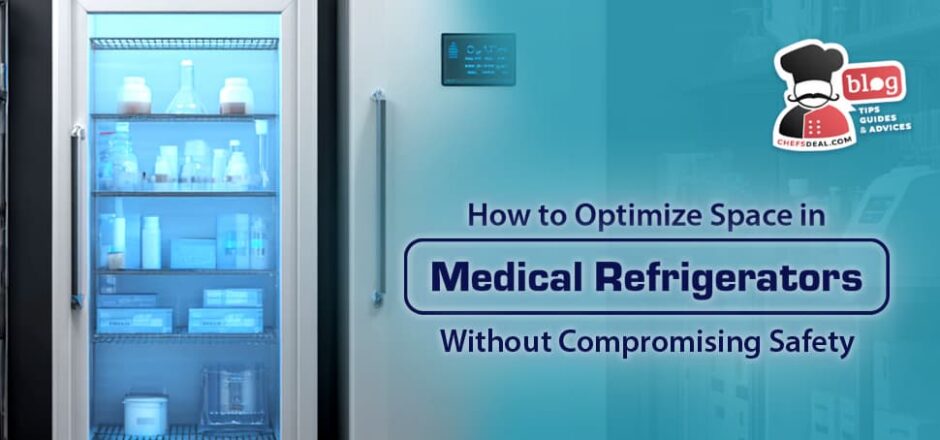
Optimizing space in medical refrigerators protects patient safety, regulatory compliance, and financial stability. These units store vaccines, pharmaceuticals, reagents, and laboratory samples where a single temperature excursion or misplaced vial can result in wasted inventory and compromised care. Regulatory authorities such as the CDC and FDA mandate strict standards, making proper storage practices a cornerstone of healthcare operations.
Proper space organization advances operational efficiency. Facilities achieve optimum space utilization through adjustable shelving, labeling systems, and zoning strategies that prevent overcrowding. Poor organization increases the risk of expired stock, delays during emergencies, and non-compliance with safety protocols.
Why Proper Space Management in Medical Refrigeration is Critical
Proper space management in medical refrigeration is critical because inefficient organization leads to blocked airflow, increased waste, compliance issues, and costly errors. Healthcare facilities require optimal space utilization to safeguard patient health and prevent financial losses from product damage or regulatory penalties.
- Risk of Temperature Fluctuations due to Blocked Airflow: An overcrowded interior and items placed directly against the back wall or vents can block the airflow. The Centers for Disease Control and Prevention (CDC) recommends leaving at least 2 in (5.08 cm) to 3 in (7.62 cm) of space between vaccine containers and the refrigerator walls for proper air circulation.
- Increased Risk of Vaccine Spoilage or Medication Expiration: Temperature deviations are a leading cause of product spoilage and expiration. Vaccines stored outside the required 36°F (2°C) to 46°F (8°C) range (CDC) are prone to losing their potency. Disorganization of the space also makes it difficult to follow the First In, First Out (FIFO) method, leading to significant financial waste and potential risks to patient health.
- Reduced Visibility and Inventory Errors: An unorganized medical refrigerator leads to significant inventory management issues. Items stacked or hidden behind other products have lower visibility. This results in unnecessary orders of products already in stock, or worse, the failure to identify and reorder critically needed supplies.
- Regulatory non-compliance risks (CDC, USP, FDA): Optimizing space in medical refrigerators helps prevent fines and other issues arising from regulatory non-compliance. The CDC provides guidance on vaccine storage and handling. U.S. Pharmacopeia (USP) <1079> sets standards for the storage of pharmaceuticals and medical devices. The FDA regulates manufacturing and storage practices for medical devices.
Effective space management has a direct impact on product integrity, financial health, and regulatory compliance. Addressing these issues depends on using practical tools and solutions to organize your refrigerator’s storage.
Refrigerator’s Storage Design
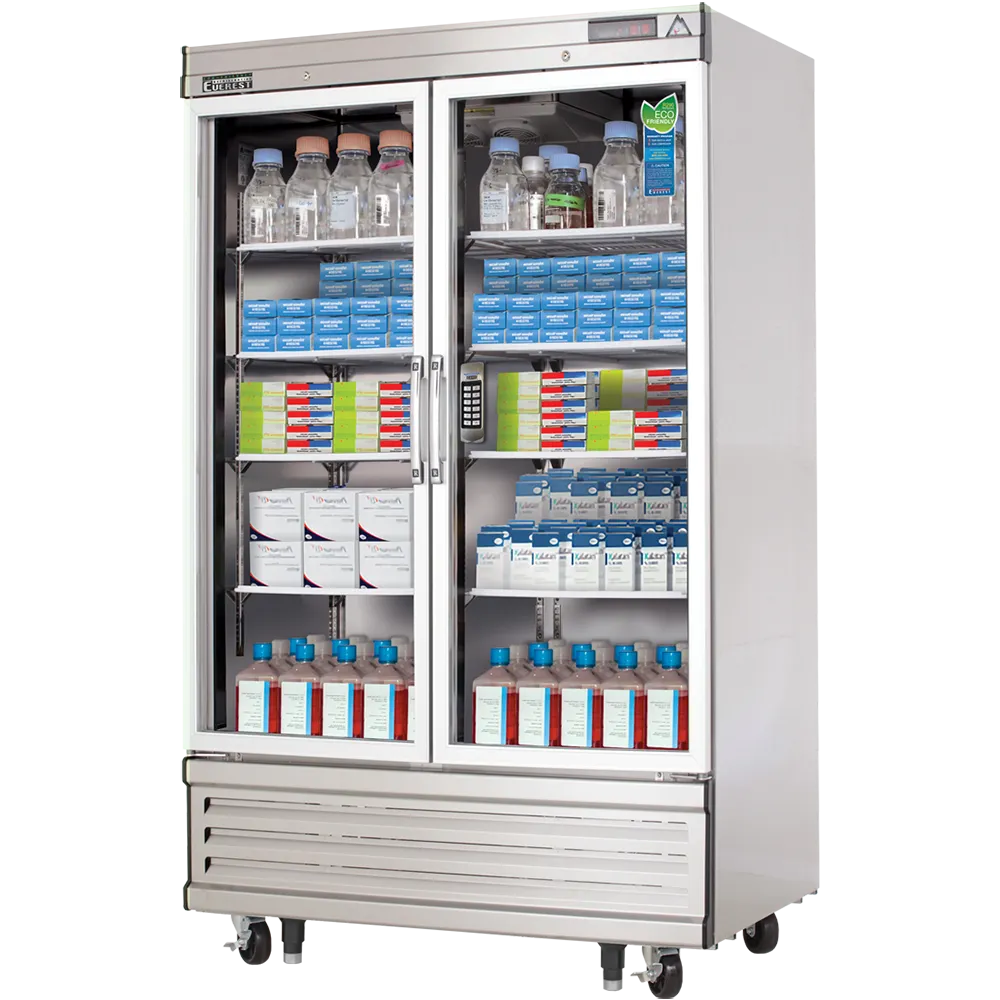
The refrigerator’s storage design plays a central role in optimizing space in medical refrigerators without compromising safety. Features such as shelving type, airflow patterns, door configuration, and probe placement determine the optimal use of space and temperature consistency within the required pharma cold chain.
- Adjustable Wire Shelving vs. Fixed Shelves: Adjustable wire shelving is the best choice when storage needs change frequently, such as in hospital pharmacies or research labs handling vials, IV bags, and reagent bottles. The open-wire design promotes airflow, reduces frost buildup, and maintains stable temperatures. Fixed shelves are better for small clinics or specialty practices with consistent inventory that rarely changes size or quantity.
- Internal Air Circulation Zones: These zones influence both temperature stability and storage efficiency. The center shelves usually offer the most consistent temperatures, making them ideal for vaccines or high-value pharmaceuticals. Top and bottom shelves may run warmer or colder. Spacing items at least 1 in (2.54 cm) apart prevents airflow obstruction, improving thermal stability and optimizing available space.
- Door Bins, Drawers, and Trays: Door bins pose a risk to sensitive products due to frequent exposure to ambient air. Use them only to store non-critical items, as the temperature fluctuates whenever the door opens. Transparent drawers and pull-out trays help minimize cold air loss and door-opening time.
- Solid vs. Glass Doors: Solid doors insulate better, reduce energy use, and protect light-sensitive products, but they require opening for inventory checks. Glass doors allow instant visibility, reducing door-opening time and preventing thermal instability, but insulation is weaker. Each option comes with a trade-off between accessibility and stability.
- Temperature Monitoring Placement: Probe location matters in optimizing space in medical refrigerators. The CDC recommends positioning probes at the center of middle shelves within a glycol-buffered container to reflect actual product temperatures and avoid false readings. Proper placement helps map thermal zones, prevent overcrowding in sensitive areas, and uphold compliance efficiency.
Space-Saving Best Practices for Clinics and Pharmacies
Clinics and pharmacies can benefit from some space-saving best practices to protect product integrity and comply with CDC and FDA standards. Tips such as grouping items by type, using CDC-compliant bins, and avoiding stacking help achieve optimum space utilization, reduce waste, and ensure that sensitive products remain accessible when needed.
- Group Items by Type (Vaccines, Medications, Diagnostics): Divide vaccines, medications, and diagnostics into separate zones. Label clearly and maintain consistency across shelves. Use designated compartments in blood bank or laboratory refrigerators for blood products, reagents, or cultures. Grouping similar items prevents cross-contamination, reduces retrieval time, and facilitates optimal space usage.
- Use CDC-Compliant Labeled Bins or Baskets: Use CDC-compliant bins or baskets in the center of the unit. Label them with expiration dates and lot numbers. Select transparent or color-coded containers to enhance visibility and minimize search time. Stable baskets or trays maximize storage and promote airflow, refining space utilization.
- Keep Items Away from Vents and Back Walls: Maintain airflow by keeping items at least 2 in (5.08 cm) from refrigerator walls and never block cooling vents. Store sensitive products on middle shelves, away from crisper drawers or the floor, which often run colder. Remove unused drawers and use water bottles as thermal mass to stabilize temperatures.
- Avoid Stacking: Do not stack containers. Use vertical dividers instead to organize shelves by category, maintain airflow, improve access, and optimize space without compromising temperature control. Additionally, remember that both underloading and overloading can lead to temperature instability. Use roughly 30% to 80% of the internal volume.
- Avoid Storing Items in Door Storage Unless Certified for It: Do not store vaccines or medications in door bins unless the refrigerator is explicitly certified for use in door storage. Use door compartments only for stabilizing water bottles, gel packs, or similar items. The CDC advises against storing sensitive materials on door shelves, as they are subject to frequent temperature fluctuations.
- Keep the “First In, First Out” (FIFO) Principle Accessible: Implement a FIFO system by labeling all products with their receipt and expiration dates. Place older stock in front and new stock behind to prevent waste. Organize frequently used materials in accessible trays or bins. Clear labeling and visible arrangement simplify inventory rotation and optimize space in medical refrigerators.

Inventory and Labeling Systems That Maximize Efficiency
Inventory and labeling systems maximize space efficiency in medical refrigerators. Use color-coded or barcoded bins to separate different vaccine types. Label shelves and bins clearly with product names, expiration dates, and lot numbers to prevent errors and ensure accurate storage. This systematic approach, paired with an inventory map and automated temperature tracking, forms a comprehensive solution for protecting sensitive inventory.
- Use Color-Coded or Bar-Coded Bins: Color-coded bins create an intuitive visual system that allows staff to quickly identify different medication categories, vaccine types, or storage zones without needing to read detailed labels. Color-coding reduces identification time, and barcode systems increase inventory accuracy. The CDC recommends using these containers to promote better organization and airflow.
- Create an Inventory Map or Schematic for Each Unit: Inventory maps or schematics serve as visual blueprints for each unit, providing a clear representation of its contents. They show exactly where each type of medication, vaccine, or medical supply is stored within the refrigerator. Visual maps reduce time spent locating items and help maintain consistent organization across different staff shifts. They minimize training time for new staff and support compliance audits.
- Label Shelves and Bins with Expiration Dates or Lot Numbers: Clear, prominent labeling of expiration dates and lot numbers on shelves and storage bins creates a fail-safe system. It prevents expired medications from being dispensed and enables rapid product recalls when necessary. Expiration date visibility reduces waste of medical supplies by 30% to 60% (Walden Dissertations and Doctoral Studies).
- Pair with Automated Alerts or Temp-Tracking Software: Automated temperature-monitoring and inventory-alert systems serve as your 24/7 digital guardian. They continuously watch over your valuable medical inventory. CDC strongly recommends using a digital data logger (DDL) with an alarm function for refrigerators used to store vaccines. It provides continuous monitoring and alerts staff to any temperatures that fall outside the range.
Advanced Storage Solutions for High-Volume Labs and Hospitals
High-volume labs and hospitals require more advanced solutions to optimize space in medical refrigerators. They can achieve optimum space utilization by using dual-compartment refrigerators, planning upright vs. undercounter placement, adding accessories, considering the size, and zoning refrigeration across departments.
- Dual-compartment or dual-temp refrigerators: CDC strongly discourages the use of dorm-style or bar-style dual-temp refrigerators, as they typically have single compressors, located in the freezer compartment. These units risk freezing vaccines. However, pharmaceutical-grade models, which feature separate compressors to maintain independent zones, are an efficient solution for settings with limited floor space.
- Upright vs. Undercounter Usage Planning: Choose upright refrigerators for high-volume labs, blood banks, and pharmacies where extensive inventories demand a capacity of 20 cu ft (566.336 L) to 60 cu ft (1,699.01 L). Opt for undercounter units for point-of-care stations or daily-use storage. Match unit design, whether built-in or freestanding, to airflow needs for optimal use of available space.
- Add-on Accessories: Sliding Bins, Drawer Kits, Stacking Racks: Install sliding bins to reduce cold air loss and improve visibility. Drawer kits aid in small-item organization. Maximize vertical space with stacking racks. Baskets are ideal for holding larger items, such as IV bags and large bottles. Use dividers and separators to organize storage by category. These modular accessories refine space optimization storage solutions.
- Consider Using Multiple Small Units for Dedicated Storage Over a Single Large Unit. A single large unit can cut capital costs and is ideal if you have a consistent inventory. Considering multiple small units is wiser if your inventory is not large enough for a high-capacity unit. An empty refrigerator experiences severe temperature fluctuations. Small chambers recover temperatures faster after door openings and facilitate product separation.
- Refrigeration Zoning Across Departments: Refrigeration zoning organizes storage areas by product type, temperature needs, or usage demand to optimize space in medical refrigerators. Separate vaccines, medicines, and biological samples to prevent cross-contamination and improve retrieval speed. Use dedicated compartments in blood bank units for plasma or platelets. Place high-demand items in accessible zones. Zoning also simplifies inventory management.
Compliance Tips to Avoid Overloading and Unsafe Storage
Compliance tips to avoid overloading and unsafe storage are based on guidance from agencies such as the CDC, WHO, USP, and OSHA. These regulatory bodies provide a framework for safe loading, airflow, and proper use of storage units, optimizing space in medical refrigerators.
- CDC: Do not Crowd Contents; Maintain Airflow: The CDC is the U.S. agency responsible for regulating vaccine and medication storage guidelines. Follow CDC recommendations by placing vaccine containers 2 in (5.08 cm) to 3 in (7.62 cm) away from refrigerator walls, vents, the ceiling, the floor, and the door. Avoid overcrowding and leave sufficient space between containers to allow for proper airflow.
- WHO: Store Only Pre-Approved Items in Medical Units: The World Health Organization (WHO) sets global standards for the safe storage and distribution of pharmaceuticals. Adhere to the guidelines in the WHO’s Cold Chain and Logistics Management document by storing only pre-approved vaccines or pharmaceuticals in medical refrigerators. Exclude non-medical or unregulated products and “do not keep food or drinking water” in these units.
- USP <1079>: Cold Chain Integrity Starts at the Unit Level: The U.S. Pharmacopeia (USP) is an independent authority that sets enforceable quality and safety standards for medicines, biologics, and dietary supplements. Chapter 1079 regulates the storage and distribution practices of pharmaceutical products. The unit level required temperature range is 36°F (2°C) to 46°F (8°C).
- OSHA: Ensure Safe Access and Avoid Biohazard Leaks: The Occupational Safety and Health Administration (OSHA) regulates workplace safety in healthcare and laboratory environments. Meet OSHA safety expectations by ensuring staff have clear access to products without excessive bending or lifting. OSHA mandates that employers use “closable, leak-proof” containers for the safe handling of potentially infectious materials.
- Set Minimum/Maximum Load Levels per Fridge: Operate refrigerators within 30%–80% load capacity for stable performance. Underfilling a refrigerator causes large temperature swings. The CDC suggests adding “water bottles to help improve temperature stability” in such cases. Overfilling blocks airflow and creates hot or cold spots; therefore, avoid overstocking the unit.
How to Plan Storage Based on Your Facility Type
Planning storage based on your facility type ensures optimum space utilization, stable temperature control, and regulatory adherence. Facility-specific models range from compact undercounter fridges for small clinics to high-capacity uprights designed for laboratories and research centers.
- Small Clinics or Dental Offices: Small clinics or dental offices can suffice with compact undercounter refrigerators, which have capacities ranging from 1 cu ft (28.316 L) to 6 cu ft (169.901 L). These models fit seamlessly into cabinetry and maintain the required temperatures. Compact units with bin systems and labeled trays enhance the organization of vaccines, reagents, and basic supplies.
- Independent Pharmacies: Independent pharmacies require medium-capacity upright refrigerators with capacities ranging from 8 cu ft (226.53 L) to 45 cu ft (1,274.26 L). Drawer inserts, adjustable shelving, and FIFO layouts maximize shelf space for medications and vaccines, ensuring optimal storage and organization. Look for models with built-in alarms and digital monitoring for improved compliance.
- Mobile Units or Field Hospitals: Mobile units or field hospitals rely on portable refrigerators that range from small 0.35 cu ft (9.91 L) models to larger 32 cu ft (906.139 L) options. Dual power options (110V AC, 12/24V DC), battery backup, and lightweight designs make them ideal transport solutions. Their tight compartmentalization prevents cross-contamination during emergencies.
- Large Labs or Research Facilities: Large labs or research facilities require high-capacity upright refrigerators with capacities ranging from 20 cu ft (566.336 L) to 80+ cu ft (2,265.347+ L). Inventory-specific zones separate plasma, reagents, and cell cultures. Modular accessories, such as racks and drawers, refine organization, enabling optimum space utilization for diverse samples in high-volume research environments.

Recommended Accessories for Better Space Utilization
Recommended accessories for better space utilization include removable shelf kits, transparent pull-out drawers, temperature probe bottle kits, labeled container systems, and smart monitoring tools. Each item provides a commercial product angle to increase AOV and support upsells, as these add-ons maximize long-term value when bundled with refrigeration purchases.
- Removable Shelf Kits transform limited space into customizable storage zones. Adjustable wire or plastic-coated shelves optimize vertical space and maintain airflow, unlike solid glass shelving, which restricts circulation. Shelf kits double storage levels, improve visibility, and reduce door-opening time by creating additional tiers.
- Transparent Pull-out Drawers maximize vertical space and enhance access. The slide-out design reduces cold-air loss during retrieval, maintaining temperature stability. Clear PET or acrylic material allows staff to instantly spot inventory. Modular drawers separate items by category, preventing cross-contamination and simplifying FIFO rotation.
- Temperature Probe Bottle Kits ensure that readings accurately reflect the actual product conditions, rather than fluctuating air temperatures. CDC-compliant buffered probes, typically immersed in glycol, identify stable zones in the fridge and confirm safe storage ranges.
- Labeled Container Systems improve both organization and space utilization. Uniform, stackable containers maximize vertical space. Clear labeling with expiration dates supports quick identification and compliance. Color-coded bins streamline workflows, reduce retrieval errors, and minimize door-opening time.
- Data Loggers and Smart Thermometers enable precise monitoring, directly supporting space optimization. They map internal zones and identify stable areas, helping facilities fully utilize available storage. The CDC recommends using a “digital data logger” set at least 30-minute intervals. These advanced systems provide compliance documentation and minimize the need for manual checks.

FAQs About Organizing Medical Refrigerators
FAQs about organizing medical refrigerators address common concerns about vaccine placement, container selection, spacing, and the use of door shelves. Following CDC and WHO recommendations ensures sensitive items are preserved within safe temperature ranges while maximizing available space.
How do you organize vaccines in a small refrigerator?
Organize vaccines in a small refrigerator by placing them on the center shelves, avoiding the doors and drawers, to maintain sufficient airflow.
* Keep vaccines in original packaging and store boxes inside plastic trays.
* Leave 2 in (5.08 cm) to 3 in (7.62 cm) from walls and vents.
* Use bins or baskets to improve organization and air circulation.
* Add water bottles in unused areas to stabilize internal temperatures.
What are the best containers for storing meds in a medical fridge?
The best containers for storing meds are plastic trays, baskets, and modular systems designed for airflow and organization.
* Plastic trays hold vaccine boxes securely.
* Wire or perforated plastic bins improve circulation compared to glass shelves.
* Dividers, pull-out drawers, and labeled transparent containers speed up retrieval and prevent cross-contamination.
How much space should I leave between items in a lab fridge?
Leave sufficient space between stored items to ensure proper air circulation. The regulatory bodies do not dictate a specific figure for adequate space. It is essential to avoid stacking containers to prevent airflow obstruction.
Can I use the door shelves in a pharmacy refrigerator?
Yes, but the CDC warns against storing temperature-sensitive items, such as vaccines, in the door shelves because they are subject to temperature fluctuations.
Is it okay to store vaccines in the refrigerator door?
No, it is not okay to store vaccines in the refrigerator door. Regulatory authorities, including the CDC, require storing vaccines in the most stable areas of the refrigerator, for instance, the center of the middle shelves. The refrigerator door is the least temperature-stable part, where temperature fluctuations risk vaccine potency.
Shop Smart: Get the Right Size and Layout with Chef’s Deal
Optimizing space in medical refrigerators relies on proper sizing, airflow, and organization. Maintaining a safe temperature range of 36°F (2°C) to 46°F (8°C), using labeled bins, and adhering to relevant guidelines promotes compliant storage for small clinics, independent pharmacies, mobile applications, and extensive research laboratories. Dual-compartment units, modular accessories, zoning strategies, and similar advanced solutions help facilities protect sensitive products and maximize space.
Chef’s Deal offers commercial-grade medical refrigeration units tailored to every facility size. Our team provides customized layout consultations tailored to your workflow. Benefit from the same-day shipping, financing options, and expert support to build a compliant, space-saving system. Looking to optimize your medical refrigeration setup? Shop our medical refrigerators now or connect with our experts today.

