

The ice cream industry remains one of the most profitable sectors, with an estimated revenue of approximately $80 billion in 2025. It is thriving year after year and is projected to reach an impressive US$132.32.8 billion by 2032, demonstrating a CAGR of 6.65% growth potential, according to Fortune Business Insights.
Ice cream shops consistently rank among the most beloved food establishments, with Americans consuming approximately 20 liters of ice cream per capita annually, as reported by Mordor Intelligence. This rising popularity, combined with high profitability (typically 20-30%), makes starting an ice cream shop an attractive business venture for entrepreneurs.
Starting an ice cream shop is a whole business journey. The process begins with selecting the right business model, whether it’s a brick-and-mortar shop, a seasonal stand, a mobile truck, a kiosk, or even an online delivery service. Success begins with thorough market research, a comprehensive business plan, and an accurate assessment of startup costs.
Key steps include securing funding, obtaining all required licenses and permits, and picking a high-traffic location to maximize visibility and foot traffic. The setup involves selecting commercial-grade equipment, designing an inviting interior space, and developing a well-balanced, profitable menu.
Marketing plays a significant role, combining digital outreach with local efforts to build a loyal customer base. Seasonal staffing, proper training, and a launch strategy that includes both soft and grand openings help set the tone for long-term growth. From planning to promotion, each step is designed to create a standout ice cream shop that thrives in a competitive market.
13 steps to opening an ice cream shop:
- Decide on Your Business Model
- Conduct Market Research and Analysis
- Create Your Business Plan
- Calculate Startup Costs
- Secure Funding
- Obtain Essential Licenses and Permits
- Choose The Location
- Choose Your Equipment and Supplies
- Design an Attractive Interior
- Create Your Menu
- Create Marketing and Promotion Strategies
- Hire and Train Your Employees
- Launch Your Ice Cream Shop
1. Decide on Your Ice Cream Business Model
Determine which business model is most suitable for your resources and market opportunities before investing in equipment and inventory.
What are The Types of Ice Cream Businesses?
The types of ice cream businesses are:
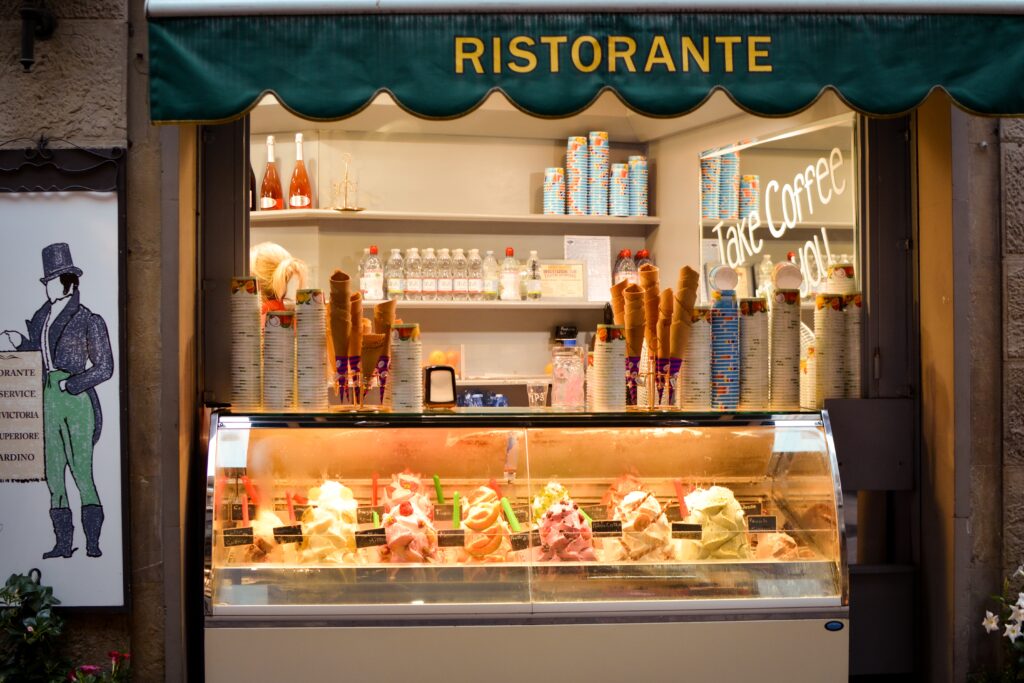
- Brick-and-mortar ice cream shops are permanently located in a specific location. Hence, it offers brand establishment, year-round operation, in-house ice production, and the broadest menu. However, it has pretty high startup costs and may be expensive for a humble starting ice cream shop.
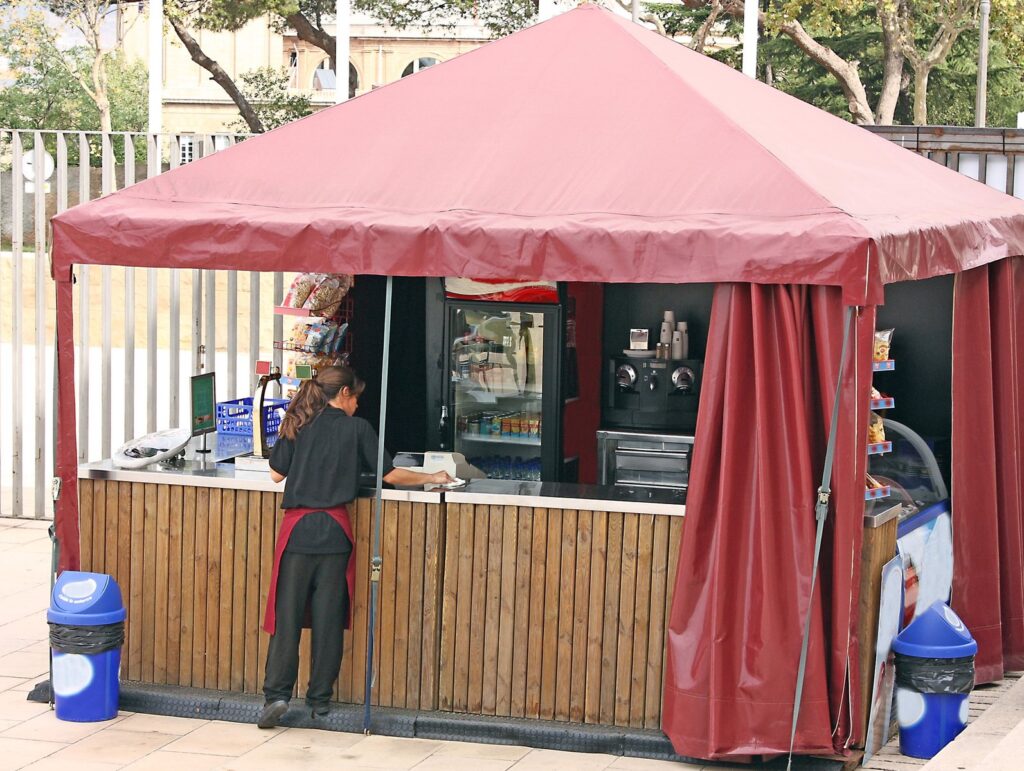
- Seasonal ice cream stands are ideal for operating during the high season, which mostly starts in May and ends in September. Starting an ice cream stand is more affordable, with low overhead expenses, and promises higher profits, mainly when located in tourist areas and high-traffic locations.
- Mobile ice cream trucks are mobile facilities that enable you to relocate your business to high-traffic areas, capitalizing on customer demand and events. They require moderate budgets with vehicle and equipment costs.
- Kiosks in malls and public areas enable you to serve in high-traffic areas with lower starting costs. They are primarily located in high-traffic facilities and can continue to operate throughout the year with stable revenue.
- The online delivery model is a relatively new concept that is gaining popularity due to its low startup costs and operational efficiency. They utilize commercial kitchens or ghost kitchens, which lower production costs but require a high digital presence and consistent digital marketing to achieve success.
2. Conduct Market Research and Analysis
Conducting comprehensive market research is crucial for any successful business enterprise. Understanding your market before starting your ice cream shop makes the difference between enjoying a thriving business and struggling through slow seasons.
Identify your target market, as it is decisive in creating your menu and marketing strategy. Kids are the most common customers of ice cream shops, and they like fun flavors, decorated ice creams, colorful candies, and chocolate. Adults prefer classic tastes, and adding vegan, gluten-free, or low-calorie options for health-conscious people can help you stand out among your rivals in the area.
Search the demographic reports of the region, in addition to the tourism statistics (if your area is a tourist attraction), to view the age groups and profiles of residents and visitors. Additionally, speaking with a local business owner to understand the profile of visitors is always a good opportunity.
Understanding competitors is another key aspect to ensure the success of your business, providing correct data and logical solutions or services that address a market gap. Analyze their menu offerings, pricing, specialties, operational hours, and service models to ensure the most promising start for your business, including new propositions, competitive prices, and improved service. Reading the reviews of your competitors helps you understand the pros and cons of these businesses, enabling you to follow the successful strategies and avoid the complaints.
When comparing local, independent shops to franchises, note that franchises typically have standardized operations and established brand recognition. In contrast, independent shops can often be more nimble in terms of introducing new flavors and engaging with the community.

3. Create Your Ice Cream Shop Business Plan
To start an ice cream shop that will succeed, you must create a well-structured business plan that will guide you through the process without skipping crucial issues. This will save you from hesitation or delays by showing you a road map that leads to a successful and well-built business.
What should an Ice cream Shop Business Plan Include?
An ice cream shop business plan should include:
Executive Summary:
- Business concept and vision
- Mission statement and core values
- Overview of your unique offering
- Key financial projections (profit margins of 20-30% are typical)
- Brief market opportunity statement
Company Description:
- Legal structure (LLC, S-Corp, etc.)
- Ownership details
- Location strategy
- Hours of operation
- Staffing overview (typically 2-10 employees, depending on model)
Products and Menu:
- Ice cream production method (house-made vs. wholesale)
- Core product offerings and signature flavors
- Secondary products (sundaes, milkshakes, etc.)
- Dietary options (vegan, low-sugar, etc.)
- Pricing structure (average markup of 200-300% on cost)
Market Analysis:
- Target customer profiles
- Market size and growth potential
- Competitive landscape
- Seasonal demand patterns
- Emerging trends in your market
Financial Projections and Funding:
- Startup cost breakdown
- Month-by-month cash flow projections for the first year
- Quarterly projections for years 2-3
- Break-even analysis (typically achieved in 18-24 months)
- Funding requirements and sources
Operations Plan:
- Production processes and capacity
- Supply chain management
- Quality control protocols
- Customer service standards
- Daily operational procedures

4. Calculate Startup Costs for Your Ice Cream Shop
Starting an ice cream shop requires a balanced use of financial resources to build an attractive and lucrative ice cream business. Hence, you must calculate your startup costs for your ice cream shop to ensure you use your budget efficiently.
How much does it cost to open an ice cream shop?
Opening an ice cream shop typically costs around $20,000 to $100,000. However, this amount can vary significantly and increase by several hundred thousand dollars, depending on your business model, location, and scale. The startup costs and the approximate amount of starting an ice cream shop are:
Equipment ($20,000-$150,000)
- Commercial batch freezers: $700-$25,000
- Commercial gelato machines: $1,000-$22,000
- Soft-serve machines: $3,500-$20,000
- Commercial chest freezers: $400-$16,000
- Ice cream display freezers: $500-$8,000
- Refrigeration units (Walk-in): $1,500-$7,000
- Ice Cream Dipping cabinets: $800-$42,000
- Small equipment (blenders, mixers, milkshake machines): $500-$5,000
- POS system: $1,500-$7,000
- Backup generator: $2,500-$15,000
Lease and Property Costs
- Security deposit: Typically 1-3 months’ rent
- First month’s rent: $500-$15,000, depending on location and the area
- Leasehold improvements: $10,000-$150,000
- Van or property purchases: Greatly varies depending on the van or property features
Initial Stocks and Inventory for the First 1-2 Months ($5,000-$20,000)
- Base ingredients (cream, milk, sugar): $2,000-$8,000
- Flavoring agents and mix-ins: $1,000-$5,000
- Packaging (cups, cones, containers): $1,000-$3,000
- Serving supplies (napkins, plasticware, bowls): $500-$2,000
- Cleaning supplies: $500-$2,000
Marketing Expenses ($2,000-$15,000)
- Website development: $500-$1,000
- Initial advertising campaign: $1,000-$7,000
- Grand opening event: $500-$3,000
- Signage: $500-$5,000
- Branding materials: $500-$2,000
Licensing and Permit Fees ($3,000-$10,000)
- Business licenses: $50-$500
- Food service permits: $250-$1,000 (may vary depending on gross sales)
- Legal fees: $1,000-$3,000
- Accounting setup: $500-$1,500

5. Secure Funding for Your Ice Cream Shop
After calculating the estimated costs of starting your ice cream shop, you must secure funding to cover the expenses of renting or buying the van or property, equipping your facility, promoting your business, and launching your ice cream sales. The primary ways to fund your business startup are:
- Personal investment by using your savings to finance the costs.
- Small business loans offered by the Small Business Administration (SBA.gov) with favorable terms (up to $5,000,000 financing with up to 60 months and 5.75-10.25% interest rates).
- Investors/venture capital companies looking to invest in the foodservice industry.
- Crowdfunding, a modern way of financing your business by a large number of people on online platforms like Kickstarter, Indiegogo, and PieShell
- Equipment funding by commercial ice cream equipment suppliers with long-term payments (up to 63 payments) and low interest rates (as low as 4.5%) (you can use the Chef’s Deal financing program )
| Funding Source | Pros | Cons |
| Personal Investment | Complete control, simplified decision-making | Limited by personal resources, potential financial risk |
| Small Business Loans | Structured and affordable repayment, potential tax benefits | Public failure risk if goals are not met, platform fees (5-10%), requires significant promotion |
| Investors/Venture Capital | Loss of some control, profit sharing, and potential pressure for rapid growth | Interest costs, collateral requirements, and a lengthy application process |
| Crowdfunding | Customer engagement, minimal repayment obligations | A credit score is required |
| Larger funding amounts, business expertise, and networking opportunities | Flexible payment terms, tax benefits and covers most ice cream equipment | Flexible payment terms, tax benefits, and covers most ice cream equipment |

6. Obtain Essential Licenses and Permits
Obtain several permits and licenses to ensure compliance with regulations and operational standards. Each license and permit process requires timely documentation and payment of fees, and may require annual renewal.
What Licenses are Required to Start an Ice Cream Shop?
The licenses and permits you need to start an ice cream shop are:
Business License
- Required by the city or county
- Cost: $15-$400 annually
- Processing time: 2-6 weeks
Employer Identification Number (EIN)
- Required for tax purposes and hiring employees
- Cost: Free from IRS
- Processing time: Immediate (online)
Health & Food Safety Permits
- Required by the local health department
- Cost: $100-$1,000 annually
- Processing time: 21-60 days
Seller’s Permit
- Needed to collect sales tax
- Cost: Usually free, but may require a deposit
- Processing time: 7-21 days
Additionally, license and fee requirements vary by location and business type. Obtaining licenses and permits can be a time-consuming process. Most authorities require inspections on-site before you can open. You must carefully plan your schedule to catch up with the documentation to be ready for selling before the season starts.

7. Choose The Location for Your Ice Cream Shop
The location is the primary factor affecting your sales volume. Hence, you must carefully assess the location options and choose the most suitable place to open up your store or park your mobile ice cream truck or stand. The ideal location for your business strikes a balance between visibility, foot traffic, accessibility, and reasonable costs.
Where is the best place to open an ice cream shop?
The best place to open an ice cream shop is a high-traffic area with beaches, coastal parks, entertainment venues, crowded streets, swimming pools, and open-air organizations, especially during the warmer months. Furthermore, schools, fairs, and amusement parks are ideal locations for ice cream businesses to retain a stable cash flow.
The best locations to start an ice cream shop or ice cream truck typically share these characteristics:
- High foot traffic areas: Locations with 300+ pedestrians per hour during peak times show 40% higher sales
- Proximity to tourist and visitor attractions: Near parks, beaches, schools, and tourist destinations
- High visibility from main roads: Shops visible from significant roads enjoy higher customer rates
- Large parking lot: Offering enough parking spaces
- Reasonable lease/rent terms: Rental costs should not exceed 12% of projected gross sales to maintain profitability
8. Choose Your Equipment and Supplies Needed for an Ice Cream Shop
Ice cream parlors, shops, trucks, and stands require a comprehensive inventory of ice cream equipment to streamline ice cream preparation, maintain stock levels, display menu items, and efficiently serve long customer lines. The primary equipment that you must have in your facility is:
- Commercial Ice Cream Makers: Commercial ice cream machines enable you to stand out in the competition with special recipes, delectable flavors, and new offerings. Emery Thompson, Spaceman, Carpigiani, Vevor, Pasmo, and Donper USA are leading manufacturers of ice cream machines and soft serve machines designed for commercial settings.
- Display Freezers and Storage Freezers: Expanding your ice cream business requires ongoing marketing efforts, and display freezers are the ideal solution to attract passersby and encourage impulse purchases. Dipping cabinets, display cases, and chest freezers by Oscartek, Summit, Excellence, Koolmore, Maxx Cold, and Beverage Air are available in various sizes and designs to cater to all types of volumes and services in gelato and ice cream operations.
- Refrigerators and Freezers: Walk-in freezers by AmeriKooler, Master-Bilt, American Panel, and U.S. Cooler are ideal for storing your inventory during the season, while chest freezers can keep ice cream tubs or packaged ice cream within easy access. Furthermore, merchandiser refrigerators from True, Beverage-Air, Traulsen, Everest, Hoshizaki, Master-Bilt, Summit, and Delfield offer a versatile option for storing and displaying beverages and chilled treats.
- POS Systems: Point of Sale systems are crucial in the ice cream business for processing payments quickly while managing inventory for refills. POS and receipt printers, barcode scanners, and cash drawers are needed to maintain a proper sales operation.
- Serving utensils (scoops, spoons, cones): The last, but certainly not the least, issue to consider is the ice cream shop supplies, such as cones, spoons, bowls, scoops, and tubs, used to display and serve ice cream.
Opt for quality equipment, which typically offers better energy efficiency, a longer service life, and more consistent product quality, when selecting supplies and equipment for an ice cream shop. When evaluating the initial cost, consider the operational costs, maintenance requirements, and expected lifespan to ensure maximum benefit.

9. Design an Attractive Ice Cream Shop Interior
An attractive design is crucial when starting an ice cream shop, as it influences the decisions of potential customers. Hence, to increase the visibility and encourage more visits and purchases, you must create an inviting atmosphere by:
- Using color options to appeal to their emotions as well as their senses. Cool blues and purples create a perception of cleanliness and freshness, while warm pinks and oranges stimulate appetite and impulse purchasing. Moreover, bright yellows increase visibility and create feelings of happiness and energy.
- Allocating 50% of your available space for the serving/display area and the rest for seating. Most of your customers will buy and leave so that you won’t need many seats and tables.
- Maximizing display areas with easy-to-see ice cream dipping cabinets and display freezers with your flavors and specialties. Lighting enhances visibility while creating an enticing view of your menu items.

10. Create Your Ice Cream Shop Menu (Examples Included)
After financing your business, finding your establishment, and supplying the necessary equipment and utilities, it’s time to create your ice cream shop’s menu. Your menu should be a balanced combination of classic ice cream flavors, which most customers expect, and unique or specialty flavors that will help you stand out in the area.
Add non-traditional items, such as frozen yogurts, dairy-free and vegan options, and milkshakes, to expand the market. Then comes the menu pricing, which should be competitive enough to attract customers while maintaining profitability over costs. The product cost should be around 20% of your sale price. If you buy scooped ice cream, you can calculate your costs by measuring how many cones you sell from an ice cream tub (1 scoop weighs 4 oz, and 4 scoops are 1 pint).
What items should an ice cream shop menu include?
An ice cream shop menu should include:
- Classic flavors like vanilla, chocolate, and strawberry, which typically account for 40-60% of sales
- Core Ice Cream Flavors (8-14 options)
- Seasonal rotations (4-6 flavors changing monthly) to encourage repeat visits
- Signature house specialties (2-3 unique recipes) for brand differentiation
- Toppings (15-20 options) with 70-80% profit margins
- Homemade sauces (4-6 varieties) that command premium pricing
- Specialty products such as waffle bowls, desserts, and pretzel cones
- Gluten-free, dairy-free alternatives for adult consumers
- Vegan or Sugar-free options for health-conscious consumers
- Fun snacks and candy decorations
Offer various serving options, including:
- Cups/bowls (3-4 sizes) with progressive pricing (small: $3.50, medium: $5.00, large: $6.50)
- Cones (4-5 varieties) with premium options increasing base price by 15-25%
11. Create Marketing and Promotion Strategies
Marketing determines the fate of your newly launched ice cream shop, whether it is a brick-and-mortar establishment or a mobile ice cream truck. Hence, you must conduct a consistent and extensive marketing strategy both before and after opening your ice cream shop to create excitement, increase awareness, and establish your brand. The methods you can use to attract more customers and promote your shop are:
Pre-Launch Marketing Strategies
- Start marketing 30-60 days before opening with social media teasers, outdoor advertisements, and banners on the windows.
- Offer and promote pre-opening discounts for the opening day
- Use the local media, like the local food writers, bloggers, and social media influencers
Digital Marketing Strategies
- Launch a website to promote your establishment and menu items
- Ensure SEO optimization and local SEO to increase local awareness
- Complete your Google profile and increase business reviews by encouraging customers
- Create a social media account to showcase your offerings and campaigns
Local Marketing Strategies
- Start partnerships with complementary businesses to offer sales or discounts (for example, a 10% discount with a movie theater stub)
- Enhance local awareness through community sponsorships of youth sports teams, school events, and regional festivals, which will also serve as a valuable sales point.
Customer Loyalty Program
- Launch a customer loyalty program that awards a predetermined number of points for every dollar spent.
- Birthday Club to offer a free scoop during the birthday month or ice cream on the birthday
- Frequency programs, such as buy 10, get 1 free campaign

12. Hire and Train Your Employees
Hiring and training employees require more effort from ice cream shops since ice cream is primarily a seasonal business that peaks during the warmer months. Hence, your personnel needs fluctuate considerably. Start hiring before the season begins to ensure you are not understaffed, which can lead to long customer lines and decreased sales.
Afterward, you must create essential training guidelines for customer service, food safety, and equipment handling to educate your personnel on the nature of your products while maintaining hygiene and providing streamlined service.
The training for your personnel while starting an ice cream shop must include:
Food Safety
- Proper handling of dairy products
- Temperature monitoring and documentation
- Cross-contamination prevention
- Allergen awareness and protocols
Customer Service
- Greeting standards and service timing
- Sampling protocols
- Upselling techniques
- Handling complaints and special requests
Equipment Operation
- Safe operation of commercial equipment
- Maintenance routines
- Troubleshooting common issues
- Cleaning procedures
Product Knowledge
- Flavor profiles and ingredients
- Nutritional information and allergens
- Pairing suggestions
- Production methods
13. Launch Your Ice Cream Shop
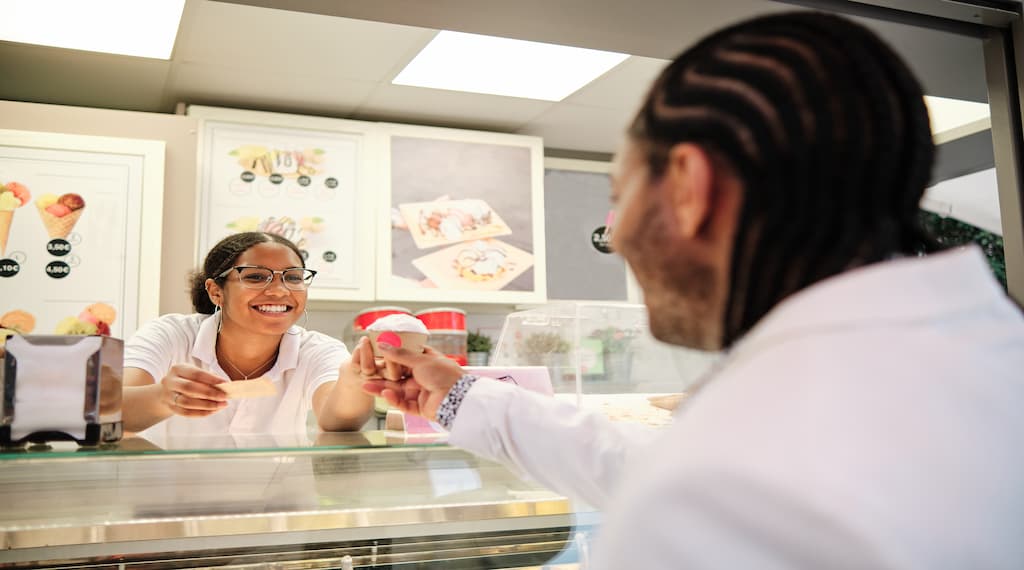
Now, everything is set, and you can launch your ice cream shop. Here, you have 2 primary options: Soft Opening and Grand Opening, each of which presents various advantages and disadvantages.
| Aspect | Soft Opening | Grand Opening |
| Timing | After operations are running smoothly | After operations are smoothly running |
| Publicity | Limited, targeted invitations | Widespread promotion |
| Duration | 2-4 days | 1-2 days |
| Purpose | Test operations, train staff | Maximum publicity and sales |
| Discounts | Often 20-30% off | Special one-time offers |
| Feedback | Actively solicited | Focused on experience |

Step-by-Step Launch Timeline
8-12 Weeks Before
- Finalize interior construction
- Order equipment and fixtures
- Begin the hiring process
- Secure final permits
4-8 Weeks Before
- Install equipment
- Train the initial staff
- Develop operating procedures
- Begin pre-opening marketing
2-4 Weeks Before
- Test recipes and finalize the menu
- Conduct service scenarios
- Increase social media presence
1-2 Weeks Before
- Conduct a soft opening
- Make operational adjustments
- Finalize grand opening details
- Complete staff training
Grand Opening Day
- Special promotions (lower prices, free upgrades, or toppings)
- Photo opportunities
- Consider local celebrity or influencer appearances
- Capture content for future marketing
Post-Opening (First 30 Days)
- Gather and respond to customer feedback
- Adjust staffing and employee schedules based on peak periods
- Refine inventory ordering
- Evaluate menu performance
Frequently Asked Questions
How profitable is an ice cream shop?
Ice cream shops is profitable with gross profit margins on 60-80% on house-made products and 40-60% on purchased wholesale. Net profit margins reach 18-20% of total revenue for well-managed operations.
What permits are required to open an ice cream shop in the United States?
The permits that you need to open an ice cream shop in the USA are:
– Business License
– Employer Identification Number
– Food Service Establishment Permit
– Health Department Certificate
– Food Handler Certificates for all employees
– Seller’s Permit for collecting sales tax
What are the common challenges when starting an ice cream business?
The common challenges when starting an ice cream business are:
– Seasonality
– Staffing
– Equipment failures
– Inventory management
– Competition
– Cost control
– Marketing consistency
– Changing trends
How can you effectively market an ice cream shop?
You can market your ice cream shop by:
– Using Instagram and TikTok for visual appeal, promoting business, and increasing customer base
– Partnering with complementary local businesses
– Creating signature menu items and promoting these on social media and food delivery systems
– Implementing seasonal flavors and treat calendars to encourage repeat visits
– Introducing desserts and treats to attract customers off-season
Is buying or leasing equipment for an ice cream shop a better option?
Buying ice cream shop equipment is more beneficial if you have sufficient financial resources. But when your budget is tight and you have to cut back on other necessities, leasing is a better option.
How much does it cost to open an ice cream shop?
Opening an ice cream shop typically costs between $50,000 and $250,000, depending on your location, shop size, and whether you produce your own ice cream on-site.
A small scoop shop with minimal seating and pre-made products can start closer to $50,000–$100,000, while a full-scale artisan shop with production equipment may require $150,000 or more.
Startup costs usually include:
* Lease deposit and first month’s rent
* Renovation and interior build-out
* Ice cream machines and display freezers
* Refrigeration and storage equipment
* POS system and smallwares
* Licenses, permits, and insurance
* Initial inventory and marketing
Ongoing expenses such as rent, utilities (especially electricity for freezers), labor, and ingredient costs should also be factored into your business plan.
Conclusion: Your Next Steps to Success
Starting an ice cream shop represents a promising business venture with substantial profit potential, as evidenced by the industry’s projected growth to $132.32 billion by 2032. Success in this competitive market requires careful planning across multiple dimensions. From selecting the right business model, whether a permanent brick-and-mortar shop, seasonal stand, mobile truck, mall kiosk, or online delivery service, to conducting thorough market research that identifies target demographics and analyzes competitors, each decision lays essential groundwork for a thriving operation.
Financial planning proves equally critical, with startup costs typically ranging from $20,000 to $100,000 depending on your chosen model and scale. Securing appropriate funding through personal investment, small business loans, investors, crowdfunding, or equipment financing must align with your business goals and financial situation. Combined with proper licensing, strategic location selection in high-traffic areas, and investment in quality equipment, these foundational elements create the infrastructure needed for operational success.
The final components for a successful launch include creating an appealing shop design, developing a balanced menu of classic and specialty offerings, implementing comprehensive marketing strategies, and hiring and training qualified staff.
By following this systematic approach, from initial concept through grand opening and beyond, entrepreneurs can position their ice cream businesses to capitalize on the industry’s strong growth trajectory while creating memorable experiences that keep customers returning throughout the year. The seasonal nature of the business presents challenges but also opportunities for creativity and adaptation that can lead to sustained profitability and community connection.


1 comments On How to Start an Ice Cream Shop
Thank you