

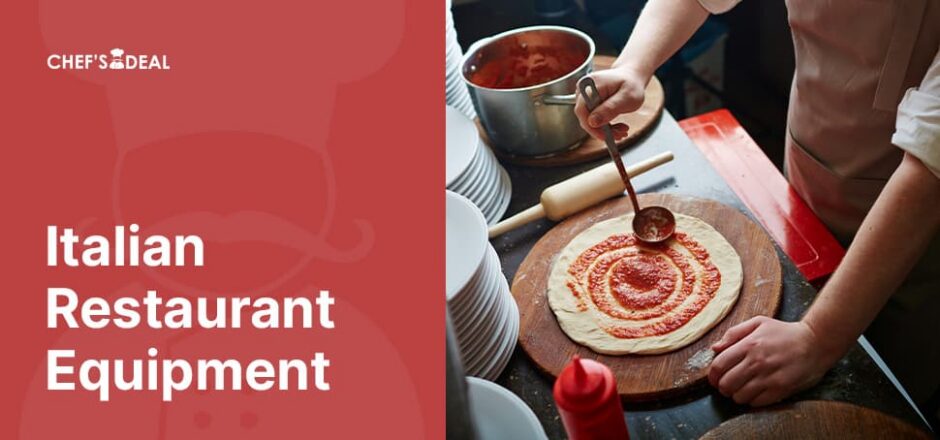
An Italian restaurant needs pasta-making equipment (extruder, sheeter, or ravioli machine), a pizza oven matched to volume, commercial refrigeration across reach-in units, walk-in storage, and refrigerated prep tables, a dishwasher sized to cover count, and a full complement of cookware and smallwares.
A full-service Italian restaurant, a pizzeria, a gelato shop, and a mobile food truck each carry a different equipment inventory, but pasta-making equipment and the pizza oven set the permanent ceiling on how many covers a kitchen can turn out each night in every one of those formats. Total equipment investment for a new Italian restaurant runs $40,000 to over $150,000 depending on concept and volume, and the spread between those numbers comes almost entirely from two line items: a countertop pasta extruder starts around $6,000 while a floor-model unit or dedicated ravioli machine runs past $30,000, and an electric deck oven starts near $5,000 while an installed wood-fired masonry oven can exceed $40,000.
Spending in proportion to real production throughput is what separates a well-budgeted kitchen from an overspent one: the pasta machine and the oven deserve the largest share of capital since an undersized unit in either category becomes a nightly revenue ceiling, while smallwares, secondary cookware, and prep tables are where mid-tier or used equipment cuts 30-40% off the budget with minimal risk.
TL;DR
- Core equipment list: range/stovetop, pizza or deck oven, pasta machine, reach-in and prep refrigeration, commercial dishwasher, prep tables, cookware, and dishware.
- Pasta equipment: extruders for high-volume dry-style shapes (15 to 50+ lbs / 6.80 to 22.68+ kg per hour), sheeters for fresh sheet pasta, dedicated ravioli machines for filled-pasta programs.
- Pizza ovens: wood-fired for authenticity and marketing appeal, gas for consistency and speed, electric for tight spaces without exhaust access; deck and conveyor formats for high volume.
- Refrigeration: reach-in units for daily service, walk-ins for bulk and cheese/charcuterie programs, refrigerated prep rails for pizza and pasta lines; prioritize ENERGY STAR models with R-290 refrigerant and strong compressor warranties.
- Dishwashers: conveyor systems for full-service volume (70 to 480 racks per hour), under-counter for small footprints, ventless heat-recovery systems where no exhaust hood is available.
- Budget: expect $40,000 to $150,000+ in total equipment capex depending on concept; the pasta machine and pizza oven are the largest Italian-specific line items.
- Buy new for pasta machines and dishwashers; refrigeration and prep tables are the safest categories to buy used.
Equipment Needed by Concept: Full-Service, Pizzeria, Gelato & Food Truck
Italian-style businesses have different concepts, such as full-service, pizzeria, food truck, or gelato, that require different equipment inventories.
| Concept | Core Equipment | Key Note |
| Full-Service Italian | Pasta machines, range, deck oven, refrigeration units (reach-ins and walk-ins), dishwashers, full dishware program | Pasta equipment and refrigeration are the throughput-critical investments. See Pasta-Making Equipment and Refrigeration & Cold Storage sections |
| Pizzeria-Focused | Pizza ovens (wood-fired, gas, or deck), refrigerated prep tables, dough mixer | Oven type determines menu diversity, installation costs. See “Pizza Ovens” section |
| Gelato-Focused | Batch freezer, gelato machines, display case, pan storage, dipping cabinets | A distinct equipment program from the main kitchen, see “Gelato Station Equipment” section |
| Food Truck / Mobile Pizza | Compact deck oven, mobile ventilation, 12V/propane-compatible refrigeration | Power and space considerations determines equipment diversity and sizing. See “Food Truck & Mobile Pizza Operations” section |
Core Kitchen Equipment Checklist for a New Italian Restaurant
A new Italian restaurant requires the following equipment, listed in order of installation priority:
1. Commercial range/stovetop: a minimum of a six-burner range for sauce production, pasta finishing, and secondi. An additional flat-top or char-broiler section is needed if the menu includes grilled meats.
2. Oven: a pizza deck oven, convection oven, or combination, depending on concept
3. Dough preparation equipment: commercial dough mixers, dough dividers, rounders, and sheeters for high-volume production.
4. Pasta-making equipment: an extruder, sheeter, or ravioli machine sized to projected covers per day
5. Refrigeration: at minimum 1 two-section reach-in refrigerator, one reach-in freezer, and a refrigerated prep table for the pizza or pasta line
6. Prep tables: stainless steel work tables with undershelf storage, sized to the available prep area
7. Commercial dishwasher: under-counter for operations below roughly 100 covers per night, conveyor/rack systems above that threshold
8. Cookware: stockpots, rondeau pots, sauté pans, pizza pans, screens, and specialty items covered in the cookware section below
9. Small and countertop appliances: immersion blenders, stand mixer, food processor
10. Dishware and service items: pasta bowls, secondi plates, family-style platters
11. Dry and cold storage: shelving, ingredient bins, and the humidity-controlled storage covered in the ingredient storage section
What Types of Cookware are Best for Italian Cuisine?
The best cookware for Italian cuisine is heavy-bottomed stainless steel or aluminum-core sauté pans and rondeau pots for sauce work, carbon steel pans for searing proteins, and large-capacity stockpots, 40 qt (37.85 L) and above, for pasta cooking.
Must-Have Small & Countertop Appliances for an Italian Kitchen
The best countertop appliances that every Italian kitchen needs are an immersion blender for finishing soups and emulsifying sauces directly in the pot, a commercial stand mixer, 20 qt (18.93 L) or larger, for pizza and pasta dough, a food processor for pesto, fillings, and breadcrumb work, and a countertop pasta roller for small-batch or specialty pasta runs.
What Kind of Dishware is Best for Serving Italian Food?
The best dishware for serving Italian food is wide, shallow pasta bowls, typically 9 to 12 in (22.86 to 30.48 cm) in diameter, to hold sauce against the pasta while presenting the dish attractively. Flat, wide-rimmed plates suit secondi and contorni. Family-style service requires large oval or round platters, 14 to 18 in (35.56 to 45.72 cm), in sufficient quantity to run simultaneous large-party tables.
How to Properly Store Ingredients in an Italian Restaurant Kitchen
Italian restaurant kitchens have three storage requirements beyond standard refrigeration.
First, flour and semolina need dry storage with humidity control, ideally at or below 60% relative humidity, because moisture absorption alters the hydration behavior of pasta and pizza dough. Store flour in sealed, food-grade bins off the floor, and buy in quantities the kitchen turns over within four to six weeks.
Second, olive oil requires strict FIFO rotation away from heat and light; oil stored near cooking equipment degrades measurably within weeks.
Third, cured meats and cheeses need dedicated cold storage at higher humidity than a standard reach-in provides: a cheese and salumi program performs best in a walk-in zone or dedicated cabinet held at 38°F to 42°F (3.33°C to 5.56°C) with 60% to 70% humidity, separated from strong-odor ingredients.
Pasta-Making Equipment: Extruders, Sheeters & Ravioli Machines Compared
Fresh pasta production equipment, extruders, sheeters, and ravioli machines are a priority for every Italian restaurant serving homemade pasta.
Pasta Extruders vs Sheeters vs Ravioli Machines: Which for Your Volume?
- Pasta Extruders mix and press dough through bronze or brass dies to produce various pasta shapes, such as rigatoni, spaghetti, fusilli, and bucatini, at a continuous volume. The Arcobaleno AEX series illustrates the capacity ladder: the countertop AEX18 produces 15 to 20 lbs (6.80 to 9.07 kg) of fresh pasta per hour from a 5.5 lb (2.49 kg) batch capacity on a standard 120V connection, the AEX30 Stella steps up to 30 lbs (13.61 kg) per hour with programmable digital controls and water-cooled dough temperature management, and the floor-standing AEX50 produces up to 50 lbs (22.68 kg) per hour for high-volume and wholesale-adjacent operations.
- Sheeters produce flat-sheet pasta that extruders cannot, including lasagna, pappardelle, tagliatelle, and sheets that feed filled-pasta production. Machines in the Imperia & Monferrina RMN220 lineup and La Monferrina’s combination units roll consistent-thickness sheets at restaurant volume, and La Monferrina’s combination extruder-sheeter models (P6 and P12 classes) cover both formats in one footprint.
- Ravioli and filled-pasta machines, such as the Dominioni RS160 class and comparable Italgi units, automate forming, filling, and sealing processes.
Commercial Pasta Machine Comparison Table
| Model | Type | Output | Format | Best Fit |
| Arcobaleno AEX18 | Extruder + mixer | 15–20 lbs/hr (6.80–9.07 kg/hr) | Countertop, 120V | New restaurants, up to ~150 pasta covers/day |
| Arcobaleno AEX30 Stella | Extruder + mixer | Up to 30 lbs/hr (13.61 kg/hr) | Countertop, digital controls | Medium-volume, 150–250 covers/day |
| Arcobaleno AEX50 | Extruder + mixer | Up to 50 lbs/hr (22.68 kg/hr) | Floor model | High-volume, multi-unit, retail pasta programs |
| La Monferrina P6 / P12 | Combination extruder-sheeter | Model-dependent | Countertop to floor | Menus needing both extruded and sheet pasta |
| Imperia & Monferrina RMN220 | Sheeter | Sheet production | Countertop | Fresh sheet pasta, lasagna, filled-pasta feed |
| Dominioni RS160 class | Ravioli machine | Automated filled pasta | Floor/countertop | Signature ravioli/filled-pasta programs |
| Bottene / Italgi | Extruders & combination units | Model-dependent | Various | Alternative European suppliers; verify parts support |
How to Set Up a Pasta Cooking Station Efficiently
To set up an efficient pasta station, the pasta cooker or rethermalizer should be directly adjacent to the pass, with the sauce station within one step of the pasta cooker. The workflow should start with pre-portioned fresh pasta held cold, dropped to order, transferred directly into a finishing pan of sauce, plated, and passed.
Tools for Making Traditional Italian Sauces
The necessary tools to make traditional Italian sauces are a food mill for passata and smooth tomato sauces (producing texture a blender cannot replicate), an immersion blender for emulsified and cream-based sauces, a traditional mortar for pesto where texture is part of the identity, and the wide, heavy-bottomed sauté pans providing a large evaporation surface that fast reductions require.
Pizza Ovens: Choosing the Right Type for Your Volume
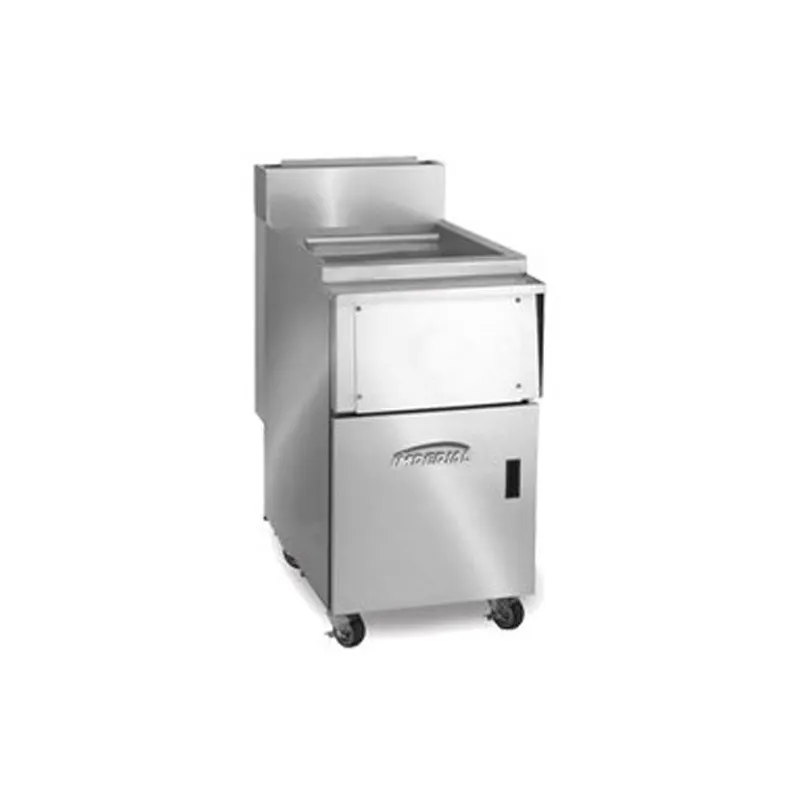
To choose the right type of pizza oven for your volume, decide on the fuel type (wood-fired, gas, or electric) and format (high-volume deck, conveyor, or single-unit ovens).
Wood-Fired vs Gas vs Electric Pizza Ovens
- Wood-fired ovens reach 800°F to 900°F (426.67°C to 482.22°C), producing the char, blistering, and 90-second bake that defines Neapolitan-style pizza. Additionally, a wood-fired oven itself enhances visual appeal. However, they lead to higher installation costs, increased fuel-handling workload, and a skill requirement for managing the fire.
- Gas ovens, including gas-fired deck and dome ovens, deliver consistent, thermostat-controlled temperatures with fast ramp-up and no fuel-handling burden. For most operations, gas is the balanced solution in terms of volume and consistency.
- Electric ovens are a practical cooking solution for businesses that lack access to exhaust systems, such as urban operations and mobile operations.
High-Volume Deck & Conveyor Ovens vs. Single-Unit Ovens
Oven format, whether it is high volume, conveyor, or single unit, depends on the foot traffic and service count. A single-deck oven baking 4 to 6 pizzas per cycle, at 6 to 8 minutes per bake, supports roughly 40 to 60 pizzas per hour with a skilled oven hand.
When projected peak demand exceeds 150-200 pizzas per night, a multi-deck configuration or a conveyor oven is the correct oven type. All gas and solid-fuel ovens, regardless of their format, require appropriate hood ventilation, which you should confirm with your local authority.

Refrigeration & Cold Storage for Italian Kitchens
Refrigeration and cold storage simultaneously support secure ingredient preservation, fresh pasta holding, cheese and salumi programs, dough management, and standard cold storage.
Reach-In vs. Walk-In vs. Refrigerated Prep Tables: What to Choose
- Reach-in refrigerators meet standard cold storage and daily service stock needs in Italian restaurants, and a two-section unit per major station zone is essential in a full-service kitchen.
- Walk-in coolers are the primary bulk storage units for handling large stocks of cheese, charcuterie ingredients, and high-volume dough management that exceeds reach-in capacity. Operations above roughly 150 seats or with significant in-house curing/cheese programs need walk-in volume.
- Refrigerated prep tables streamline assembly and preparation with a refrigerated topping rail that keeps mozzarella, sauces, and toppings at a safe temperature right at the prep station.
Commercial Refrigerator Brand & Warranty Comparison
The commercial refrigeration market is led by a group of manufacturers that offer varying warranty terms and features.
| Brand / Series | Representative Model | Key Differentiator | Warranty (verify current terms) |
| True T-Series | T-49-HC (49 cu ft / 1,387.6 L, 2-section) | R-290, 33°F–38°F (0.5°C–3.33°C) holding, ENERGY STAR | 7-year parts, labor & compressor on current listings |
| Traulsen G Series | G20010/G20011 class | Premium build, microprocessor controls | Strong compressor coverage; verify by model |
| Turbo Air M3 Series | M3R47-2-N class | Self-cleaning condenser reduces maintenance failures | Multi-year parts/labor plus extended compressor |
| Hoshizaki Steelheart/HR | R2A-FS class | Ducted airflow, stainless construction | Extended parts/labor and compressor terms |
| Beverage-Air Horizon | RB49HC-1S class | Value-positioned full-size units | Standard parts/labor plus compressor term |
| Continental | Standard reach-in line | Broad configuration availability | Verify by model |
| Delfield Specification Line | Spec-series reach-ins | Specification-grade build for design-driven projects | Verify by model |
Walk-In Coolers for Volume Storage
Kolpak, Nor-Lake (Kold Locker series), and Bally are the established walk-in manufacturers, and the specification variables that matter are panel R-value, floor configuration, and lead time. For higher energy efficiency, panel insulation should be in the R-25+ range for coolers. Quick-ship and modular panel programs from these manufacturers can cut lead times from months to weeks and shorten the installation time.
Refrigerated Prep Tables for a Pizza & Pasta Line
Refrigerated prep tables like Delfield and Randell (FX Series class) streamline the food prep and service by keeping all ingredients mise en place. For an efficient pizza line, you should specify a rail with enough pan positions for the full topping set, typically 60 to 93 in (152.40 to 236.22 cm) of table length for a full-menu pizzeria, and confirm the rail holds pans at or below 41°F (5°C) in your actual ambient kitchen conditions.
Commercial Dishwashers for High-Volume Italian Restaurants
Italian service generates heavy dish volume, pasta bowls, sauce-coated pans, and multi-course place settings, and dishwasher capacity has to be sized to that load rather than to seat count alone.
Rack/Conveyor vs. Under-Counter vs. Ventless Dishwashers
- Conveyor/rack systems are the full-service standard above roughly 100 covers per night, processing 70 to 480 racks per hour depending on model.
- Under-counter units serve smaller footprints and lower volume at 20 to 40 racks per hour.
- Ventless heat-recovery conveyor systems condense their own steam and recover the heat, eliminating the need for an exhaust hood over the dish pit and providing a genuine solution for facilities where adding hood capacity is impossible or prohibitively expensive.
Commercial Dishwasher Brand & Spec Comparison
| Brand / Model Class | Format | Published Capacity | Notable Spec |
| Hobart CL64e/CL64eN Advansys | Conveyor | 342 racks/hr | 0.39 gal (1.48 L) per rack; ENERGY STAR; drain water energy recovery |
| Meiko M-iQ | Conveyor | Model-dependent | Heat-recovery engineering; low water/energy per rack |
| Winterhalter PT Series | Door-type/passthrough | Model-dependent | Reverse-osmosis rinse options for spot-free glassware |
| Champion R-Series | Rack conveyor | Model-dependent | Established U.S. service network |
| CMA Dishmachines EST-44 | Conveyor | Model-dependent | Value-positioned conveyor category |
| Stero STPCW class | Conveyor | Model-dependent | Heavy-duty pot/pan-capable configurations |
| Jackson CRE Series | Conveyor | Model-dependent | Compact conveyor footprints |
| Insinger RL-30 class | Rack conveyor | Model-dependent | Institutional-grade build |
Verify racks-per-hour and water-consumption figures against current manufacturer spec sheets before purchase, as figures update by model year.
Ventless & Heat-Recovery Dishwasher Systems
Ventless and heat-recovery dishwasher systems support operations for business owners without hood capacity. Hobart’s Advansys ventless conveyor line and Meiko’s AirConcept heat-recovery systems solve a specific installation constraint: no exhaust hood required over the machine. Ventless machines carry a higher equipment price than their vented equivalents but entail lower ventilation retrofit costs.
Espresso Machines & Beverage Equipment
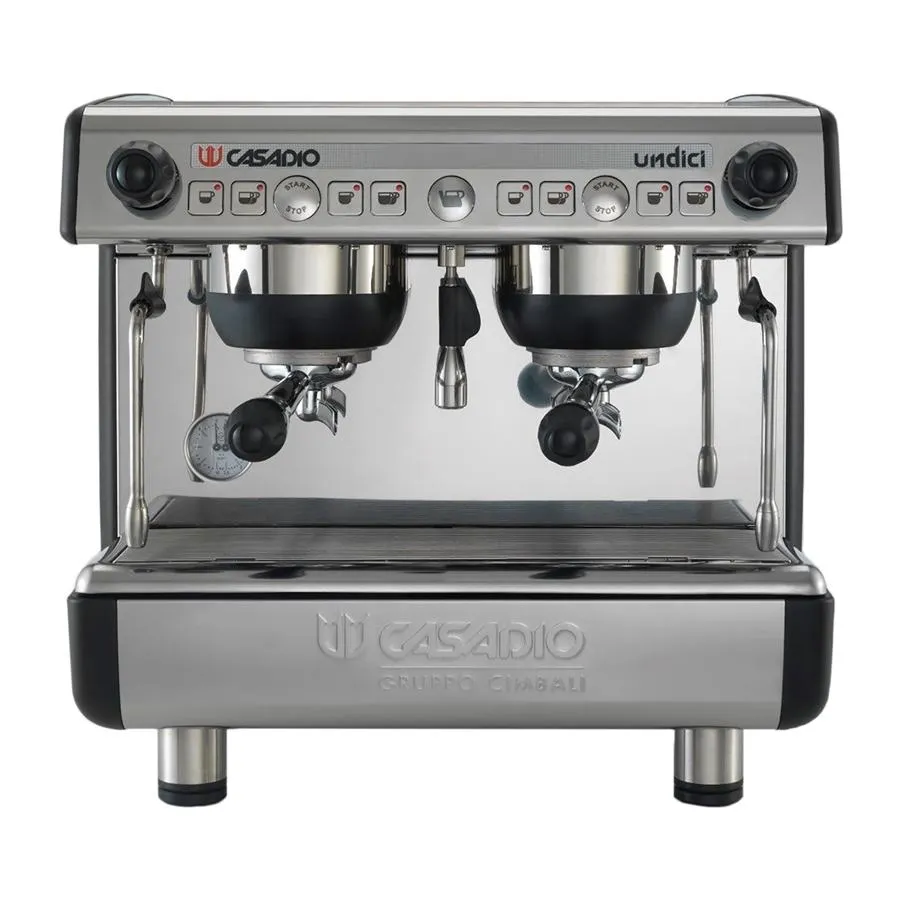
Professional-grade espresso machines offer thermal stability under back-to-back volume and boiler capacity, and steam milk and pull shots simultaneously through a full post-dinner rush. A commercial espresso machine paired with a commercial-grade grinder is a perfect combination for a full-service Italian restaurant to serve delicious coffee.
Gelato Station Equipment
A gelato program in an Italian restaurant requires three pieces of commercial ice cream equipment: a batch freezer to produce the gelato, a display case, and pan storage. Pozzetti-style, lidded wells maintain temperature consistently but hide the product, while spatula-style display cases offer greater visual appeal but more temperature exposure.

Grills & Specialty Equipment for Italian Meats
Char-broilers deliver the open-flame char for the delectable look of meats like bistecca alla fiorentina and grilled secondi, while a flat-top complements them for items that need surface contact rather than flame. A rotisserie provides a practical method for porchetta-style recipes while enhancing visual appeal.
Recommended Brands by Equipment Category
Top Pasta Machine Brands
Arcobaleno covers the extruder capacity ladder from countertop to floor-model output; La Monferrina and Imperia & Monferrina lead combination extruder-sheeter units; Dominioni and Italgi specialize in automated ravioli and filled-pasta lines; Bottene is the alternative European option worth checking for parts and service support before ordering.
Top Refrigeration Brands
True leads on refrigerant efficiency and warranty length; Traulsen and Hoshizaki lead on premium build quality; Turbo Air differentiates on its self-cleaning condenser; Beverage-Air and Continental cover the value tier. Kolpak, Nor-Lake, and Bally lead walk-in coolers, where panel R-value and quick-ship lead times matter more than brand name.
Top Commercial Dishwasher Brands
Hobart and Meiko lead the ventless/heat-recovery segment; Winterhalter differentiates on reverse-osmosis rinse for spot-free glassware; Champion and Insinger lead on established U.S. service networks; CMA and Stero cover the value and heavy-duty pot/pan-capable tiers respectively.
Budgeting for Italian Restaurant Equipment
Total equipment investment for an Italian restaurant typically costs $40,000 to over $150,000, with concept, volume, and the new-versus-used mix determining the spread. The espresso program, priced separately below, is the one line item most easily deferred if the opening budget is tight.
Cost Breakdown by Equipment Category
| Category | Typical Range (New) | Notes |
| Pasta-making equipment | $6,000 – $30,000+ | Countertop extruder to floor-model or ravioli machine |
| Pizza oven | $5,000 – $40,000+ | Electric deck at the low end; installed wood-fired masonry at the high end |
| Refrigeration (reach-ins, prep tables, walk-in) | $12,000 – $45,000 | Walk-in installation is the largest variable |
| Commercial dishwasher | $4,000 – $30,000 | Under-counter to ventless conveyor |
| Range, grill & cooking line | $8,000 – $25,000 | Six-burner range plus char-broiler/flat-top |
| Cookware & smallwares | $3,000 – $8,000 | Stockpots, rondeaus, saute pans, tools |
| Dishware & service | $2,500 – $7,000 | Pasta bowls, plates, platters at 2.5–3× seat count |
| Espresso program | $8,000 – $20,000 | Machine, grinder, water treatment |
Cost-Effective Equipment Options Without Cutting Corners
You can reduce your overall investment cost by spending where throughput lives and economizing where it does not. The pasta machine and pizza oven are throughput-critical units, and an undersized machine in either category becomes a nightly ceiling on revenue. The dishwasher is next in priority for full-service volume. Smallwares, secondary cookware, prep tables, and shelving are the categories in which mid-tier or used options perform properly, while offering savings of 30% to 40%.
New vs Used Equipment for an Italian Restaurant
Safe to buy used: refrigeration reach-ins and stainless prep tables, mechanically simple, easy to inspect (run temperature checks and inspect compressor age), and heavily discounted on the secondary market. Stainless work tables are effectively risk-free when used.
Risky to buy used: pasta machines and commercial dishwashers. Used pasta machines carry a risk of proprietary parts. Dies, augers, and mixing components for European-made machines can be slow and expensive to source, and a machine missing its die set can cost more to complete than a new unit. Used dishwashers frequently arrive with scale buildup and worn pumps, and they depend on service contracts and chemical supplier relationships that don’t transfer with a private sale.
Middle ground: ranges and ovens can be purchased for use if inspected by a professional. If the gas valve and thermostat wear out, it will create an expensive problem for your budget.
Kitchen Layout Essentials for an Italian Restaurant
Pasta station-to-station and pizza oven placement are two workflow relationships that are genuinely distinct in the Italian kitchen layout:
Pasta Station-to-Pass Workflow
A la minute pasta service requires physical adjacency between three points: the pasta cooker, the sauce-finishing burners, and the pass. Fresh pasta cooks in one to three minutes and must move directly from the water to the finishing pan to the plate. In practice, this means dedicating a contiguous line segment for pasta cooking and sauce finishing at the pass end of the line, with refrigerated drawer storage for portioned pasta built under the station itself.
Pizza Oven Placement & Clearance
Wood-fired and masonry ovens are structural decisions before they are kitchen decisions: a masonry oven can weigh 2,000 to 6,000+ lbs (907.18 to 2,721.55+ kg), requiring floor-load verification. All oven types require clearance to combustibles and other equipment. Additionally, pizza ovens need to be positioned next to the make station (refrigerated prep table) for a straight-line make-bake-pass flow. Hood requirements apply per oven type and local code.
Equipment for Food Truck & Mobile Pizza Operations
A mobile foodservice operation’s equipment list is comprehensive and tailored to power limits, water capacity, ventilation constraints, and road travel, which changes with each specification.
- Compact Pizza Ovens for Food Trucks: Electric and gas countertop deck ovens sized to mobile power and propane capacity are realistic options; a compact gas deck oven that bakes 2 to 4 pizzas per cycle supports roughly 25 to 40 pizzas per hour.
- Choosing a Prep Table for a Mobile Pizza Operation: Specify the narrowest refrigerated prep rail that holds your full topping set, typically 27 to 48 in (68.58 to 121.92 cm), and verify its amp draw against the truck’s total electrical budget before purchase.
- Refrigeration Options for Food Trucks: Undercounter and drawer refrigeration suit tight galleys better than reach-ins, and 12V/propane-compatible units solve the overnight-holding problem when shore power isn’t available.
- Ventilation Systems for Mobile Pizza Kitchens: Compact, low-profile mobile hood systems handle gas cooking exhaust within a truck’s height and power constraints.
- Food Truck Kitchen Layout & Maintenance: The food truck kitchen layout should be a single straight line, including the prep, make station, oven, and pass window. Mobile ovens incur vibration wear that stationary units never see. So you should check deck stones, door hinges, and gas connections on a weekly schedule, re-torque connections after long hauls, and hold cold chain discipline rigorously.
Scaling Equipment for Multi-Unit Italian Restaurant Groups
- Advantages of Modular Kitchen Equipment for Multi-Location Consistency: Standardized, swappable components and equipment like identical pasta stations, prep rail configurations, and oven specifications across locations offer faster new-location buildouts, transferable staff training, and consolidated parts and service for multi-branch groups. This standardized equipment inventory reduces operational costs with bulk spare parts, fewer training needs, and lower maintenance spending.
- Current Trends in Italian Restaurant Equipment: Three current trends in the Italian Restaurant Equipment market are ventless dishwashing systems that remove hood constraints from site selection, ENERGY STAR-qualified R-290 refrigeration that cuts energy costs and qualifies for utility rebates, and compact multi-function pasta stations with combination extruder-sheeter units.
Maintaining Italian Restaurant Equipment
| Frequency | Pasta Machines | Ovens | Refrigeration | Dishwashers |
| Daily | Disassemble & clean dies, auger, hopper | Brush decks, clear debris | Check temps, wipe gaskets | Drain, clean screens & wash arms |
| Weekly | Inspect die wear, deep-clean mixing chamber | Clean interior, check door seals | Clean condenser coil area, inspect gaskets | De-lime check, inspect curtains/nozzles |
| Monthly | Lubricate per manual, check motor/belt | Calibrate thermostat, inspect burners/stones | Full condenser coil cleaning, drain line check | Full de-lime cycle, pump inspection |
| Quarterly/Annual | Professional service inspection | Professional service; masonry inspection for wood-fired | Refrigerant/compressor professional check | Professional service, chemical system audit |
Pasta machine dies are the one maintenance topic genuinely specific to this equipment category, and they are the most commonly damaged component in restaurant pasta programs. Bronze and brass dies must be cleaned immediately after every production run to prevent dough buildup using only soaking and soft brushes, not metal tools.
You must dry dies completely before storage to prevent corrosion, store them in dedicated padded containers rather than loose in drawers, and inspect channels monthly for wear.
Sourcing Italian Restaurant Equipment: Suppliers & What to Verify
Sourcing Italian Restaurant Equipment requires careful planning and purchasing procedures to ensure that the distributor is an authorized dealer with access to genuine parts and stateside technical support.
Before purchasing any European-made pasta machine, verify three things: that the supplier is an authorized distributor for the brand (confirm on the manufacturer’s own website), that replacement dies, augers, and wear parts are stocked domestically or available on a stated lead time, and that warranty service is performed by technicians the manufacturer recognizes.
FAQs About Italian Restaurant Equipment
What safety equipment is required in an Italian restaurant kitchen?
An Italian restaurant kitchen requires a fire suppression system over all cooking equipment, Class K fire extinguishers, a stocked first-aid kit, and slip-resistant flooring or mats in the wet zones around the pasta cooker and dish station.
What kitchen equipment is necessary for making authentic Italian dishes?
Authentic Italian dish preparation requires specialized pasta equipment mentioned in the “Pasta-Making Equipment” and “Pizza Ovens” sections, as well as the traditional cookware set (rondeau pots, food mill, heavy saute pans) covered in the “Cookware” section above.
How do I upgrade my Italian restaurant kitchen efficiently?
To upgrade your Italian restaurant kitchen efficiently, prioritize the highest-throughput bottleneck first rather than replacing all the equipment. In most Italian kitchens, the bottleneck is either the pasta or the oven, and you need to replace that equipment first.
Conclusion
Equipping an Italian restaurant is a sequence of matched decisions: pasta equipment sized to real projected covers, an oven whose fuel type and format fit both the concept and the building, refrigeration layered across reach-ins, walk-in storage, and service-line prep tables, and a dishwasher that keeps pace with a pasta-heavy dish load. The categories where specification matters most, the pasta machine and the pizza oven, are the ones that set the kitchen’s permanent throughput ceiling, which is why they deserve the deepest research and the largest share of the budget, while smallwares and secondary equipment offer safe savings.
Buy new where proprietary parts and service contracts matter (pasta machines, dishwashers); buy used with confidence where mechanical simplicity allows it (refrigeration, prep tables); verify authorized-dealer status before importing European equipment; and build maintenance, especially daily die care, into closing routines from day one.
Chef’s Deal carries commercial pasta equipment, pizza ovens, refrigeration, dishwashers, and the full smallwares program covered in this guide, with equipment sizing guidance, competitive pricing, free shipping, and financing options available across the catalog.

