

Thawing cabinets are purpose-built commercial refrigeration units that defrost frozen food safely under precise temperature and airflow control. They keep products below the 41°F (5°C), the FDA Danger Zone threshold, throughout the entire cycle. Restaurants in Tennessee, foodservice businesses across the Southeast, and high-volume operators nationwide rely on these systems to protect food quality, reduce drip loss, and meet HACCP requirements.
| Thawing Cabinets: Key Takeaways | |
| Topic | Key Point |
| What it is | A temperature-controlled commercial unit that defrosts frozen food safely, keeping it below 41°F (5°C) at all times |
| Safe temp range | 33°F–41°F (0.556°C–5°C): above freezing, below the FDA danger zone |
| How it works | Precision electronic controls + high-velocity circulating airflow + humidity management |
| vs. refrigerator | Faster and safer: dedicated thawing units circulate air at controlled velocity; refrigerators thaw too slowly and risk cross-contamination |
| vs. room temp | Room temperature thawing is a critical food safety violation: bacterial growth accelerates rapidly above 41°F (5°C) |
| Compliance | Meets HACCP, FDA Food Code, and NSF standards |
| Best for | Restaurants, catering operations, butcher shops, food production facilities |
| Buying factors | Capacity, temperature precision, airflow system, cleaning design, energy efficiency |
What Is a Thawing Cabinet?
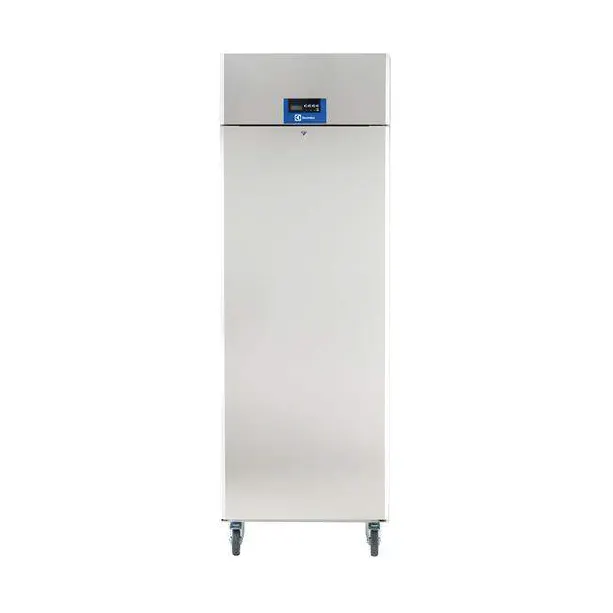
A thawing cabinet is a temperature-controlled commercial appliance that defrosts frozen food using electronic precision controls and high-velocity circulating airflow. It consistently maintains temperatures below 41°F (5°C). Thawing cabinets differ from standard reach-in refrigerators in their airflow design: they accelerate surface heat transfer around frozen product while keeping the food below the bacterial danger threshold.
Thawing cabinets bridge the gap between frozen storage and active food preparation. Walk-in freezers and blast chillers handle long-term storage and rapid chilling. Thawing cabinets handle the reverse: bringing product from a frozen state to a ready-to-cook temperature. This controlled thawing results in faster, safer, and more consistent defrosting without ever exposing food to conditions that accelerate microbial growth.
Why is Controlled Thawing Important in Commercial Kitchens?
Controlled thawing matters because bacterial growth accelerates rapidly once food enters the danger zone above 41°F (5°C). Room-temperature thawing routinely pushes the surface temperatures of meat, poultry, and seafood past this threshold within the first hour.
- The FDA Food Code prohibits room temperature thawing precisely because of this risk.
- HACCP protocols require documented temperature control at every stage of food handling.
- Thawing is one of the most frequently cited failure points during health inspections.
Uncontrolled thawing also degrades food quality. Rapid or uneven defrosting ruptures cell membranes, increases drip loss on proteins, and compromises texture in high-value items.
Commercial kitchens in Nashville and across the Southeast that serve fresh Southern proteins, Gulf seafood, or USDA-graded beef face direct financial exposure when thawing practices fall short of standards.
How Do Thawing Cabinets Work?
Thawing cabinets work by combining precision electronic temperature control with high-velocity circulating airflow to defrost frozen food evenly. Each component of the system targets a specific variable that directly affects thaw rate, food safety, and final product quality.
- Temperature control: Digital thermostats hold cabinet temperature between 33°F (0.556°C) and 41°F (5°C). Precision compressors minimize cycling swings that allow brief warm excursions in conventional refrigerators.
- Airflow circulation: High-velocity fans force conditioned air uniformly across all loaded shelves and product surfaces. This convective airflow transfers heat away from product surfaces faster than still-air thawing in a refrigerator.
- Humidity management: Thawing cabinets regulate relative humidity to minimize product dehydration during extended thaw cycles. Controlled moisture levels reduce surface drying, preserve protein color, and protect delicate seafood from moisture loss.
- Time-controlled thawing cycles: Many units offer programmable thaw timers and automatic shut-off. Operators can load product at the end of one shift and retrieve ready-to-cook proteins at the start of the next.
Thawing Cabinet vs. Refrigerator vs. Room Temperature
Thawing cabinets outperform both refrigerators and room-temperature thawing on every food-safety and operational metric that matters in a commercial kitchen. They are also more efficient than the running water method. The comparison clarifies when each method is appropriate and where the risks lie.
- Refrigerator thawing is safe but slow. A large frozen item requires at least 24 hours per 4–5 lb (1.814–2.267 kg) in a refrigerator (USDA). High-turnover commercial kitchens, including restaurants in Tennessee, cannot accommodate that lead time.
- Room-temperature thawing violates the FDA Food Code and HACCP protocols. Food left in ambient air reaches a surface temperature above 41°F (5°C) within 30 to 60 minutes. Pathogens such as Salmonella and Listeria begin multiplying immediately.
- Running-water thawing is conditionally acceptable under FDA guidelines when the water temperature remains below 70°F (21.1°C), and the water flows continuously. It is appropriate for small items and emergencies, but impractical for batch volumes and wasteful on water resources.
- Microwave thawing is FDA-approved only if followed by immediate cooking. Food can quickly enter the “Danger Zone” because it heats unevenly. This method is suitable for small, uniform portions but impractical for batch thawing or large roasts.

What are Safe Thawing Temperatures and Food Safety Guidelines?
Safe thawing temperatures ensure food remains safe throughout the entire defrost cycle. Follow FDA Food Code Section 3-501.13, HACCP time-temperature control requirements, and local guidelines for food safety compliance.
- FDA Food Code (Section 3-501.13): FDA permits 3 thawing methods: under refrigeration at 41°F (5°C) or below; under running water at 70°F (21.1°C) or below; or in a microwave, followed by immediate cooking.
- HACCP compliance: Thawing is a Critical Control Point in most commercial HACCP plans. Temperature logs and time records from thawing cabinets provide auditable documentation during health inspections.
- NSF/ANSI standards: Commercial thawing units meeting NSF certification confirm that materials are food-safe and that the unit maintains required temperatures under load.
- Tennessee Department of Health: The TN Department of Health requires commercial kitchens in Nashville and across Tennessee to thaw food under refrigeration or by one of the other FDA-approved methods. Room temperature thawing is a documented violation.
3 Main Types of Commercial Thawing Equipment
Commercial thawing equipment comprises 3 distinct unit types: dedicated thawing cabinets, thawing refrigerators, and rapid-thaw units. Certain multi-functional equipment, such as blast chillers and combi ovens, also offer thawing modes.
1. Thawing Cabinets (Active/Controlled Thawing)
Thawing cabinets are specialized commercial solutions that combine high-velocity airflow with precision digital temperature controls. They defrost food up to 4 times faster than passive methods. They use active sensors to monitor surface temperatures and automatically switch to standard refrigeration once the food reaches 41°F (5°C).
- Thawing cabinets are ideal for restaurants, butcher shops, commissaries, and any operation with regular high-volume thawing needs.
- Most cabinets feature humidified air systems that prevent the meat from drying out.
- Dutch-door configurations minimize cold air loss.
2. Thawing Refrigerators (Passive Thawing)
Thawing refrigerators are purpose-built units optimized for slower, extended thaw cycles suited to operations that plan protein rotation 24 to 48 hours in advance. They rely on passive convection to maintain a constant temperature at or below 41°F (5°C) without active airflow acceleration.
- Thawing refrigerators are ideal for institutional kitchens or catering businesses with predictable production schedules.
- The lower-velocity airflow offers a gentler thaw profile.
- Standard models provide the capacity to store large batches of proteins overnight.

3. Rapid Thaw Units (Accelerated Thawing)
Rapid thaw units are high-performance systems engineered for the fastest safe defrost cycles. They utilize advanced methods, such as vacuum-steam technology, to transfer heat. These units are designed for urgent or high-speed processing.
- Rapid thaw units are ideal for central kitchens, food manufacturers, and other high-throughput operations.
- Faster thaw cycles require more active monitoring.
- Rapid thaw technology drastically reduces prep lead times and minimizes drip loss.
Secondary and Multi-Function Thawing Equipment
Some commercial kitchens use multi-function units that include controlled thawing as one of several food safety programs.
- Blast chillers with thawing cycles: Advanced blast chillers/freezers include reverse-cycle thawing programs that maintain safe temperatures throughout the defrost cycle. These units combine rapid chilling and controlled thawing in a single footprint.
- Combi ovens (defrost mode): Modern combi ovens offer low-temperature, humidity-assisted defrost modes. This is a secondary thawing method only. Food safety rules require immediate cooking following oven-based defrosting.
What are the Benefits of Using a Thawing Cabinet in Your Kitchen?
The benefits of using a thawing cabinet include improved food safety, reduced waste, and consistent product quality. These units preserve texture, automate thawing cycles, and minimize labor.
- Food safety compliance: Using purpose-built equipment is the safest way to meet the FDA Food Code thawing and HACCP documentation requirements. Thawing cabinets eliminate one of the most commonly cited sources of health inspection violations for commercial kitchens in Nashville.
- Reduced waste: Controlled thawing at low temperatures and managed humidity reduces drip loss from proteins. Uncontrolled room temperature or rapid water thawing ruptures cell membranes and expels moisture, resulting in a loss of sellable weight. Preserving yield on premium proteins protects food cost percentages.
- Better texture retention: Slow, temperature-controlled defrost within the safe range prevents cellular damage. The result is firmer, better-textured proteins that cook and plate consistently, which is particularly important for premium cuts served in fine-dining and steakhouse restaurants in Tennessee.
- Labor savings: Programmable thaw cycles allow kitchen managers to load thawing cabinets at the close of service and retrieve ready-to-cook proteins at opening. This automated operation eliminates manual monitoring and reduces active preparation labor.
- Consistency: Every batch thaws under identical documented conditions. Even thaw profiles produce consistent food quality across all production days, reducing variability in prep times, cook results, and finished plate quality. High-volume operations depend on this consistency to maintain output standards.
How to Choose the Right Thawing Cabinet
Choosing the right thawing cabinet requires evaluating 5 operational criteria: capacity, temperature control precision, airflow system design, cleaning features, and energy efficiency. Each criterion affects food safety compliance, daily throughput, and long-term operating cost.
- Size and match the unit to daily volume: Two-section reach-in models can thaw up to 300 lb of portion-sized frozen food per section. Manufacturers also specify the number of pans a unit can accommodate to help you size it correctly.
- Verify temperature precision against compliance needs: High-end units promise a ±1°F (0.556°C) accuracy. This precision is critical because a cabinet with a wider variance risks food surface drifting into the Danger Zone.
- Evaluate airflow design for load uniformity: High-velocity fan systems that deliver air from multiple directions thaw loaded shelves evenly without cold or warm spots. Thawing cabinets with adjustable fan speeds enable tailoring the thaw rate to product type.
- Prioritize cleaning system design: Removable shelves, smooth stainless-steel liner surfaces, and tool-free access to components reduce sanitation labor. Units with removable door gaskets and cleanout ports simplify deep cleaning without partial disassembly.
- Assess energy efficiency relative to operating hours: NSF and ENERGY STAR certifications confirm tested performance under real commercial conditions. High-volume kitchens should prioritize ENERGY STAR-rated models to control utility costs.

Cleaning and Maintaining a Thawing Cabinet
Cleaning and maintaining a thawing cabinet requires structured routines to prevent bacteria buildup and foul odors. Cleaning frequency depends on use intensity, but daily surface cleaning is the baseline for any commercial operation.
- Daily cleaning: Wipe interior surfaces, shelves, and door gaskets with a food-safe sanitizer after each use. Remove moisture and food residue promptly to prevent bacterial growth and maintain hygienic conditions between thawing cycles.
- Weekly deep cleaning: Remove shelves and clean all interior parts thoroughly. Use a non-corrosive cleaner for coils and airflow areas, and check drain lines to prevent blockages that can cause standing water and hygiene issues.
- Odor prevention: Clean regularly with enzyme-based or approved sanitizers to reduce protein-related odor buildup. Follow manufacturer guidelines for replacing odor-control filters or components to keep the cabinet fresh and suitable for food storage.
- Drainage maintenance: Keep drain lines clear to prevent water buildup, which can lead to bacterial growth. Flush drains with sanitizer and inspect drip pans to ensure proper water removal and safe operation.
- Temperature calibration checks: Test the cabinet temperature regularly using a calibrated thermometer. Accurate temperature control is essential for food safety. Handle any deviation immediately to maintain compliance with safe thawing standards.
Common Mistakes When Thawing Food in Commercial Kitchens
The most common thawing mistakes in commercial kitchens include thawing at room temperature, poor cleaning, overcrowding, and incorrect temperature settings. These errors increase the risk of contamination and reduce operational efficiency.
- Thawing at room temperature: Leaving food at ambient temperature quickly raises the surface temperature above 41°F (5°C), while the core remains frozen. This creates ideal conditions for bacterial growth and violates HACCP and food safety guidelines.
- Improper cleaning: Skipping daily sanitation or weekly deep cleaning allows residue and moisture to build up. This leads to bacterial growth and cross-contamination, especially on shelves, drains, and door seals.
- Overcrowding: Overloading thawing cabinets blocks airflow and causes uneven thawing. Outer layers may warm too quickly while inner portions remain frozen, increasing thaw time, energy use, and the risk of inconsistent food quality.
- Incorrect temperature settings: Setting temperatures above 41°F (5°C) reduces food safety. Thawing cabinets rely on controlled airflow, not higher heat, to speed thawing, so raising temperatures increases risk without meaningful performance benefits.
Which Businesses Should Use Thawing Cabinets?
Thawing cabinets are ideal for any business handling daily volumes of frozen protein, poultry, or seafood. Restaurants, catering operations, butcher shops, and food production facilities use them to improve food safety, speed up prep, and ensure consistent results.
- Restaurants: High-volume restaurants rely on thawing cabinets to safely defrost meat within tight prep windows. Full-service restaurants in Tennessee thaw large volumes of protein daily and cannot afford the time or the food safety risks of refrigerator-only thawing.
- Catering operations: Thawing cabinets allow caterers to load product 6 to 24 hours before service and retrieve ready-to-cook proteins at the exact start of production. This ensures food is ready on schedule, eliminates guesswork, and supports high-pressure event timelines.
- Butcher shops: Butchers benefit from reduced drip loss and better texture when thawing in controlled environments. This preserves sellable weight and quality, especially for premium cuts, improving profitability and customer satisfaction.
- Food production facilities: Commissary kitchens, food manufacturers, and large institutional foodservice operations process daily volumes measured in hundreds or thousands of pounds. They need the HACCP documentation capabilities and precision of thawing cabinets to satisfy auditors and certification requirements.
FAQs About Thawing Cabinets
What temperature should a thawing cabinet be?
A thawing cabinet should keep food at or below 41°F (5°C) to meet FDA Food Code requirements. Some units use controlled airflow above this range, but food surface temperature must remain ≤41°F for safety.
How often should thawing cabinets be cleaned?
Thawing cabinets should be cleaned after each use cycle with a food-safe sanitizer. A thorough deep cleaning is the minimum weekly standard for high-use commercial operations.
How long does it take to thaw food safely?
Thawing cabinets can process food in 6–24 hours, depending on load size. Refrigerator thawing takes about 24 hours per 4–5 lb (1.814–2.267 kg), so a 10 lb (4.535 kg) item may require 48 hours or more.
Is thawing at room temperature safe?
No. Room temperature thawing is unsafe and prohibited by the FDA Food Code. Food can enter the danger zone above 41°F (5°C) within 30–60 minutes, increasing the risk of bacterial growth.
Can a refrigerator replace a thawing cabinet?
Yes, a refrigerator is a safe alternative, but it cannot match the speed or volume capacity of a dedicated thawing cabinet.
Conclusion
Thawing cabinets are a direct investment in food safety compliance, product quality, and kitchen efficiency. They eliminate the food safety risks of room-temperature thawing, outperform standard refrigerators in speed and throughput, and deliver documented temperature control. They are the safest means of meeting HACCP requirements across every commercial food service category.
Explore Commercial Thawing Equipment at Chef’s Deal
Chef’s Deal supplies commercial thawing cabinets and thawing refrigerators from trusted brands at competitive pricing. Operators can benefit from flexible financing options up to 84 months, free shipping on qualifying orders, and expert support. Browse the full collection of thawing refrigerators and cabinets to compare capacity, configurations, and certifications side by side.

